| Here are the FeedBlitz blog updates for ignoble.experiment@arconati.us
 Top 10 (unofficial) solar system mysteries (NASA) We've all wondered at some point or another what mysteries our Solar System holds. After all, the eight planets (plus Pluto and all those other dwarf planets) orbit within a very small volume of the heliosphere (the volume of space dominated by the influence of the Sun), what's going on in the rest of the volume we call our home? As we push more robots into space, improve our observational capabilities and begin to experience space for ourselves, we learn more and more about the nature of where we come from and how the planets have evolved. But even with our advancing knowledge, we would be naive to think we have all the answers, so much still needs to be uncovered. So, from a personal point of view, what would I consider to be the greatest mysteries within our Solar System? Well, I'm going to tell you my top ten favourites of some more perplexing conundrums our Solar System has thrown at us. So, to get the ball rolling, I'll start in the middle, with the Sun. ( None of the following can be explained by dark matter, in case you were wondering… actually it might, but only a little…) (...)
Read the rest of Ten Mysteries of the Solar System (2,886 words)
© Ian O'Neill for Universe Today, 2008. | Permalink | One comment | Add to  del.icio.us del.icio.us  digg digg
Who's linking ?  Technorati Technorati  BlogPulse BlogPulse  Google Google
Want more on these topics ? Browse the archive of posts filed under Astronomy, Cosmology, Physics, Planetary Formation, Solar Astronomy, Space Flight. 

 Barack Obama and John McCain Remember a few months ago when "space" seemed to be a non-issue for the candidates in this year's US presidential election? But now space seems to be a hot topic. John McCain was in Florida today where he met with 20 leaders from the space industry for a roundtable discussion, and Barack Obama was in Florida last week, to stump for votes. Perhaps both candidates are recalling the 2000 presidential election that hinged on the Florida vote. Hanging chads aside, an important issue in Florida these days is the projected job losses that will be incurred in the gap after the space shuttle is retired in 2010 and before the Constellation program makes its first flights in about 2015, and both candidates have met with members of NASA's workforce and other NASA officials to discuss this issue. Also, both McCain and Obama recently updated their positions on their space-related agendas on their websites, with both devoting quite a bit of "space" to space. (...)
Read the rest of The Battle for the Space Vote (347 words)
© Nancy Atkinson for Universe Today, 2008. | Permalink | 4 comments | Add to del.icio.us digg
Who's linking ? Technorati BlogPulse Google
Want more on these topics ? Browse the archive of posts filed under NASA. 

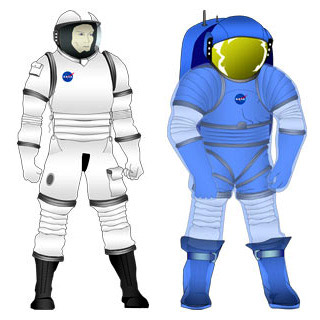
 Proposed spacesuits from Oceaneering, Inc. Image: NASA NASA has terminated a contract with the company it hired to design and construct new spacesuits for use with the new Orion spacecraft after determining it made a mistake in evaluating costs. In terminating the contract NASA hopes to avoid litigation. In June, NASA announced it had selected Oceaneering International, Inc. to build the new spacesuits, but Hamilton Sundstrand, the lead contractor that has supplied spacesuits for NASA since the 1960's filed a formal protest with the Government Accounting Office on the decision, asking NASA to review its reasoning on the contract award. Hamilton Sundstrand disagreed with the way NASA evaluated the costs for their proposal. NASA has now issued a press release saying "corrective action is appropriate," and they have "determined that a compliance issue requires the termination of the contract" with Oceaneering "for the convenience of the government." It appears NASA did some bad math, or used questionable processes to make its decision for the contract. (...)
Read the rest of NASA Cancels Spacesuit Contract to Avoid Litigation (143 words)
© Nancy Atkinson for Universe Today, 2008. | Permalink | 2 comments | Add to del.icio.us digg
Who's linking ? Technorati BlogPulse Google
Want more on these topics ? Browse the archive of posts filed under Astronomy. 


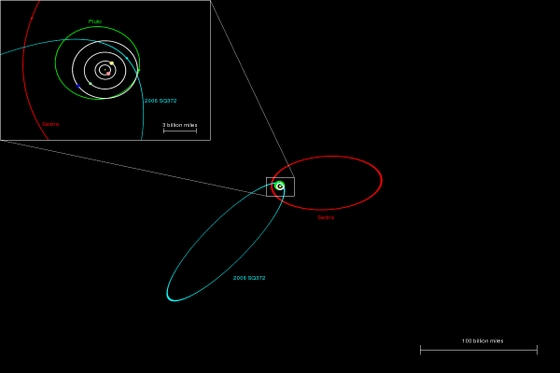
Astronomers announced today that a new "minor planet" with an unusual orbit has been found just two billion miles from Earth, closer than Neptune. Using the Sloan Digital Sky Survey, astronomers detected a small, comet-like object called 2006 SQ372, which is likely made of rock and ice. However, its orbit never brings it close enough to the sun for it to develop a tail. Its unusual orbit is an ellipse that is four times longer than it is wide, said University of Washington astronomer Andrew Becker, who led the discovery team. The only known object with a comparable orbit is Sedna — the distant, Pluto-like dwarf planet discovered in 2003. But 2006 SQ372's orbit takes it more than one-and-a-half times further from the Sun, and its orbital period is nearly twice as long.
(...)
Read the rest of Astronomers Find a New "Minor Planet" near Neptune (506 words)
© Nancy Atkinson for Universe Today, 2008. | Permalink | 12 comments | Add to del.icio.us digg
Who's linking ? Technorati BlogPulse Google
Want more on these topics ? Browse the archive of posts filed under Astronomy. 

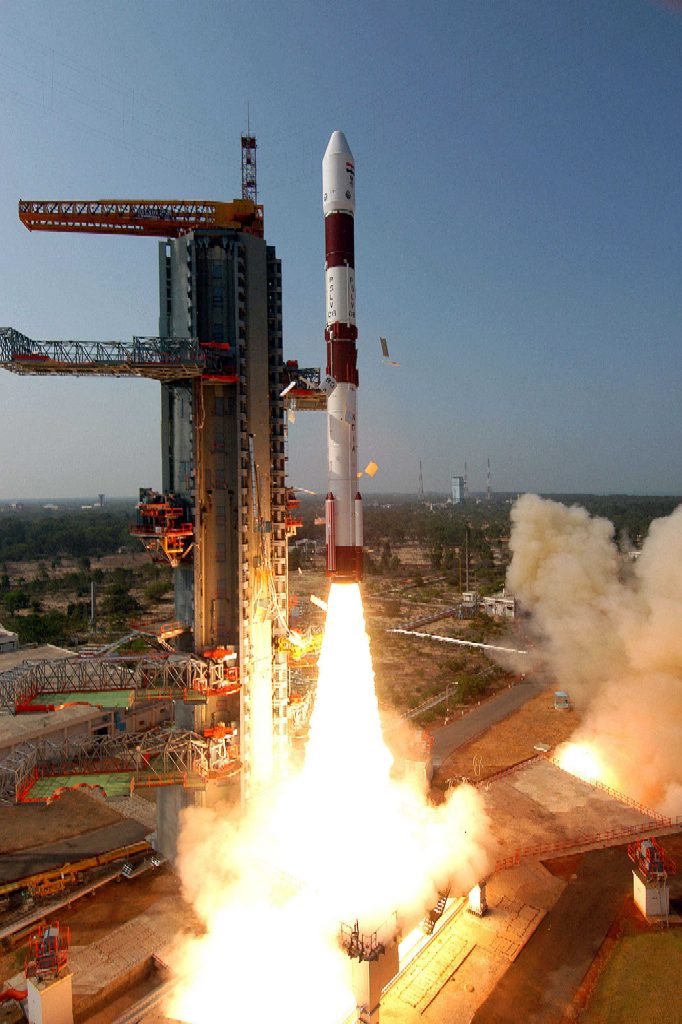
 The Indian Polar Satellite Launch Vehicle (ISRO) India will send their first mission to the Moon in September. Chandrayaan-1 has been built and will be launched from Indian soil and sent on a mission to study the lunar surface. The Indian Space Research Organization (ISRO) will use its highly successful Polar Satellite Launch Vehicle (PSLV) to get the lunar probe into space. This is an impressive mission for a small space agency, making huge strides in the exploration of space… (...)
Read the rest of India has Big Plans for Lunar Exploration (409 words)
© Ian O'Neill for Universe Today, 2008. | Permalink | 8 comments | Add to del.icio.us digg
Who's linking ? Technorati BlogPulse Google
Want more on these topics ? Browse the archive of posts filed under Moon, Space Flight. 

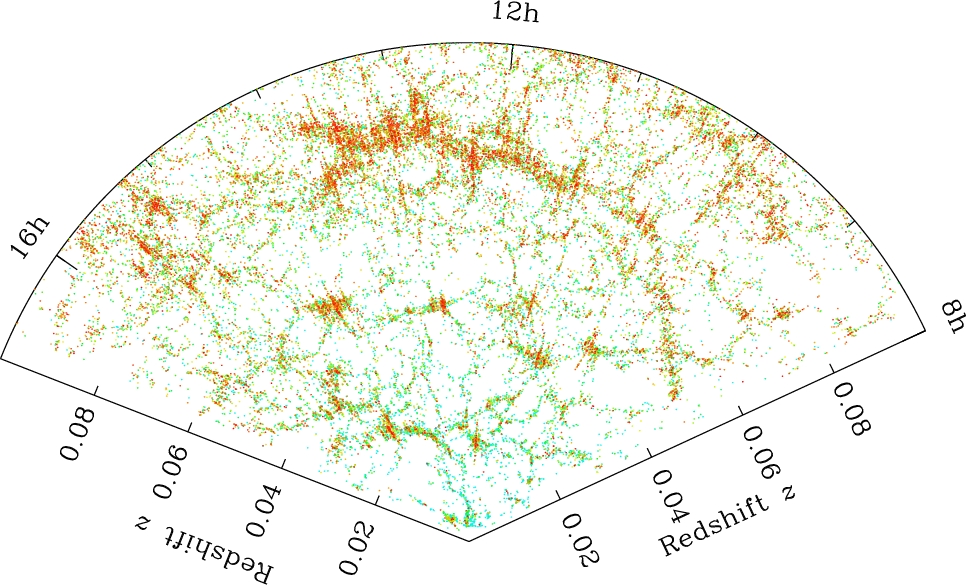
 Map of distribution of galaxies. Credit: M. Blanton and the SDSS. Cosmic voids really are devoid of matter. Astronomers have found that even the pervasive 'dark matter' which accounts for about 80% of the mass of the universe is not present in these voids, which are areas of vast emptiness in space that can be tens of millions of light-years across. "Astronomers have wondered for a quarter-century whether these voids were 'too big' or 'too empty' to be explained by gravity alone," said University of Chicago researcher Jeremy Tinker, who led the new study using data from the Sloan Digital Sky Survey II (SDSS-II). "Our analysis shows that the voids in these surveys are exactly as big and as empty as predicted by the 'standard' theory of the universe."
(...)
Read the rest of Dark Matter is Missing From Cosmic Voids (385 words)
© Nancy Atkinson for Universe Today, 2008. | Permalink | 18 comments | Add to del.icio.us digg
Who's linking ? Technorati BlogPulse Google
Want more on these topics ? Browse the archive of posts filed under Dark Matter, galaxies. 

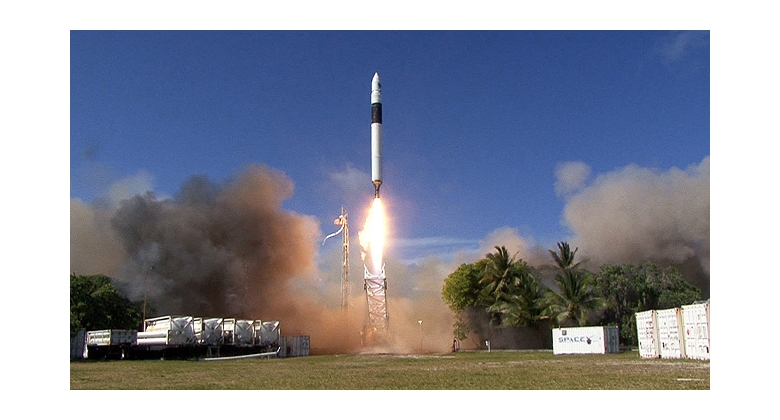
 Falcon 1 lifts off from Kwajalein Atoll, South Pacific August 2nd (SpaceX) On August 2nd, SpaceX made the surprise announcement that the third flight of the Falcon 1 rocket system would launch at 8pm (PST) that day. The world rushed to watch the first commercial flight of this impressive private-sector rocket via the web from a live feed on board. The first launch attempt was aborted due to a minor parameter fluctuation of 1% out of "normal" operating conditions, but the launch crew very quickly re-fuelled and prepared Falcon 1 for a second launch attempt within the hour. The second launch attempt appeared to be flawless, Merlin 1c engine roaring to life, lifting the rocket into the atmosphere. All seemed good, SpaceX seemed on track and very confident. However, minutes into the flight, the live video feed was cut and it was being reported an anomaly had occurred. It wasn't until later in the week that SpaceX CEO Elon Musk gave details about the "anomaly." SpaceX recently released video footage of the entire launch, up to the point where the stage separation problem occurred, spinning the ill-fated vehicle out of control… (...)
Read the rest of Video of SpaceX Falcon 1 Flight 3 Launch Shows Stage Separation Anomaly (626 words)
© Ian O'Neill for Universe Today, 2008. | Permalink | 7 comments | Add to del.icio.us digg
Who's linking ? Technorati BlogPulse Google
Want more on these topics ? Browse the archive of posts filed under Space Flight. 

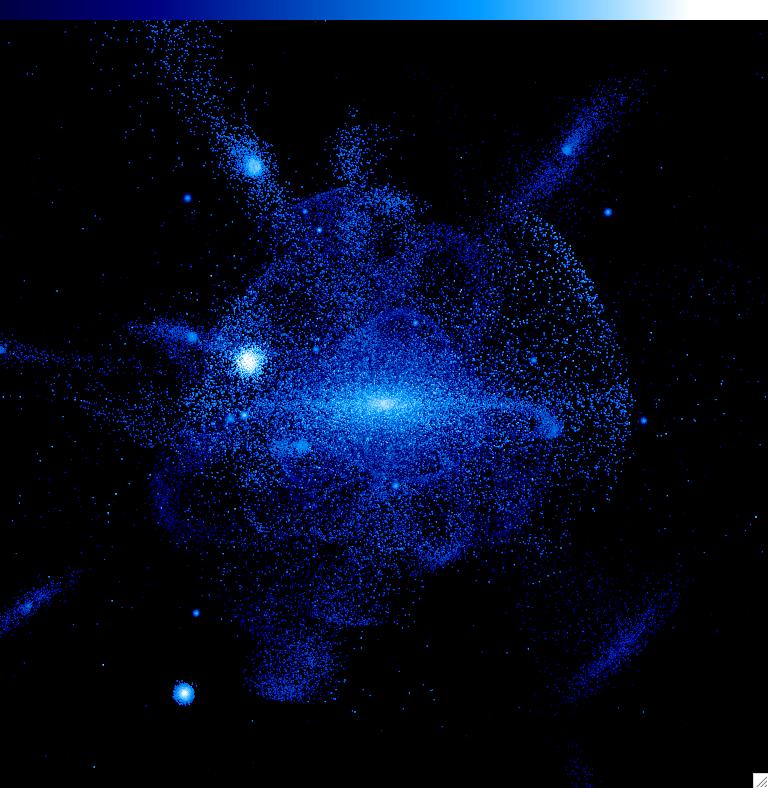
 Model of a our galaxy showing trails of stars torn from disrupted satellite galaxies. Credit: K. Johnston, J. Bullock The halo of stars that envelops the outer Milky Way galaxy is like a "jumble of pasta" said one researcher, describing criss-crossed patterns of stellar streams revealed in new data from the Sloan Digital Sky Survey (SDSS). These stars appear to have been ripped away from the dwarf galaxies that are companions to our own galaxy, creating messy, spaghetti-like streams of stars in the outer edge of the Milky Way. The SEGUE (Sloan Extension for Galactic Understanding and Exploration) of the Sloan Survey is mapping the structure and stellar makeup of the Milky Way Galaxy and has found numerous new small streams of stars mixed and tangled among larger streams that had been mapped out over the last decade. It appears the Milky Way's thievery is creating quite a mess. (...)
Read the rest of Milky Way Creates a Mess by Stealing Stars from Nearby Galaxies (367 words)
© Nancy Atkinson for Universe Today, 2008. | Permalink | 7 comments | Add to del.icio.us digg
Who's linking ? Technorati BlogPulse Google
Want more on these topics ? Browse the archive of posts filed under galaxies. 

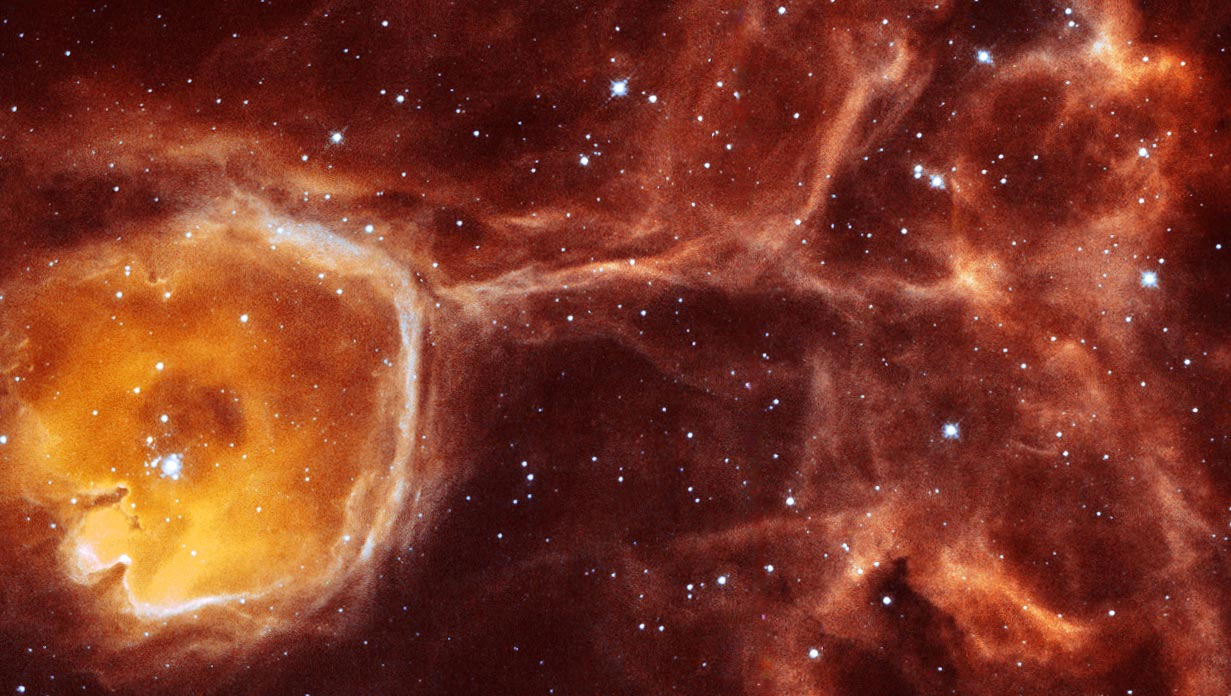
 Hubble image of N44F, the Celestial Geode. Last week, we posted the image above as part of our "Where In The Universe" challenge, where we test our readers' visual knowledge of our universe. This incredible and unusual Hubble image of object N44F, known as the "Celestial Geode" is a gas cavity carved by the stellar wind and intense ultraviolet radiation from a hot young star. Readers were fascinated by the object and wanted to know more. One of our regular readers, Jorge, asked this question about N44F: "Why is it that we see the back "wall" of the bubble, we see the side walls, but we don't see the front wall?" I wasn't able to answer that question, so I sought out one of the astronomers responsible for this image, Dr. You-Hua Chu, professor at the University of Illinois, Urbana-Champaign. Not only did Dr. Chu provide wonderful information about the image, but one of her former students, Dr. Rosie Chen provided Universe Today with an exclusive Spitzer Space Telescope image of the Celestial Geode that has never been published before on the internet.
(...)
Read the rest of Astronomers Answer Your Questions About "Celestial Geode" (622 words)
© Nancy Atkinson for Universe Today, 2008. | Permalink | 5 comments | Add to del.icio.us digg
Who's linking ? Technorati BlogPulse Google
Want more on these topics ? Browse the archive of posts filed under Astronomy. 

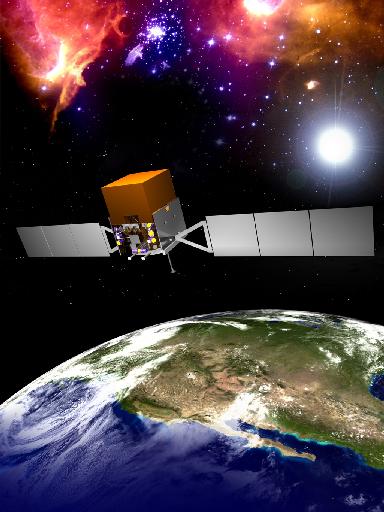
 Artists impression of GLAST in orbit. Credit: NASA After a 60-day checkout period, science operations have begun in earnest for GLAST, the Gamma ray Large Area Space Telescope, which is now surveying the gamma-ray sky. Launched on June 11, 2008, the GLAST spacecraft has been undergoing calibrations of the two instruments on board, the LAT (Large Area Telescope) and the GBM (GLAST Burst Monitor) — more details on the instruments in a moment. But during the checkout phase both instruments made significant observations of gamma rays. "Given that these detections were made with just the engineering data observations, the future is full of promise, and we are very excited," said Dr. Steve Ritz, GLAST Project Scientist in his GLAST blog. At the end of August, there will be a formal release of the first-light images taken by the spacecraft. Also at that time, NASA will rename the observatory. I don't know about you, but I'm sort of attached to the name "GLAST." But it will be interesting to find out its new, official name. (...)
Read the rest of GLAST Science Operations Underway – Now, About That Name… (271 words)
© Nancy Atkinson for Universe Today, 2008. | Permalink | 8 comments | Add to del.icio.us digg
Who's linking ? Technorati BlogPulse Google
Want more on these topics ? Browse the archive of posts filed under Gamma Ray Bursts, Satellites. 

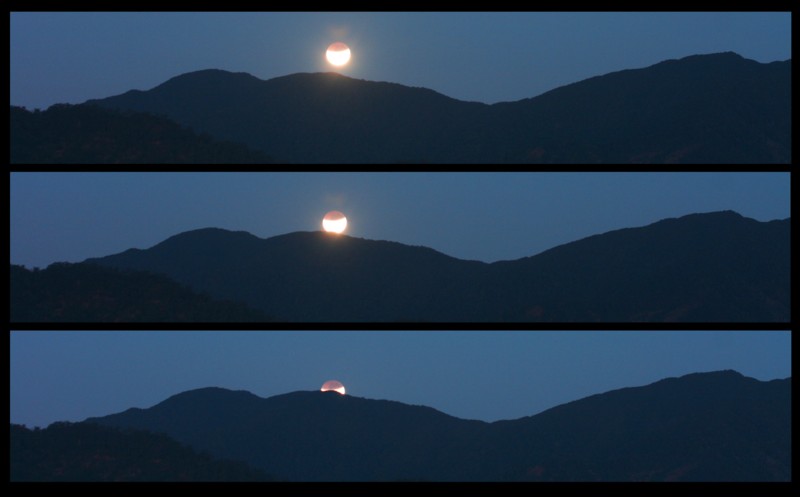
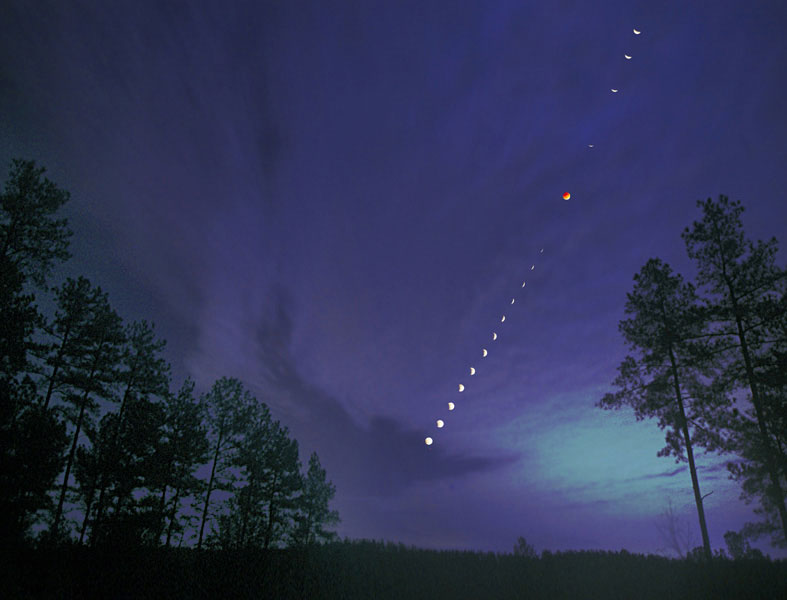
 Eclipse - J. Whires/NASA Greetings, fellow SkyWatchers! Heads up to observers in most of Asia, Australia, Europe, Africa and South America for Saturday night's partial lunar eclipse. For everyone else, be sure to keep a watch on western ecliptic plane as Mercury, Venus and Saturn join together for a dazzling weekend show! Although the Moon, will keep us in the "pits" we'll still take a look at the "Eye of the Archer" and go "Butterfly" hunting. Now, let's wait on night and slip outside… Together. (...)
Read the rest of Weekend SkyWatcher's Forecast - August 15-17, 2008 (942 words)
© Tammy Plotner for Universe Today, 2008. | Permalink | 2 comments | Add to del.icio.us digg
Who's linking ? Technorati BlogPulse Google
Want more on these topics ? Browse the archive of posts filed under Astronomy, What's Up. 

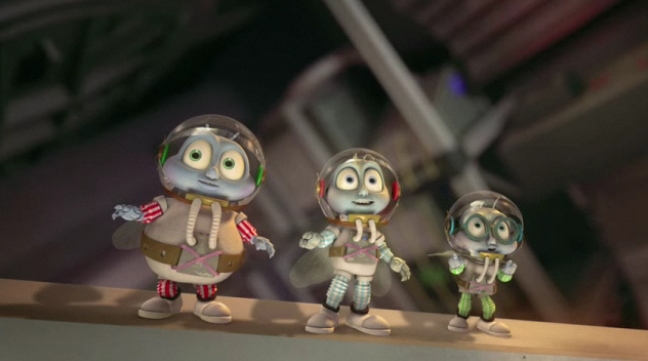
 The fly-sized heroes (from left-to-right): Scooter, Nat and I.Q. (© nWave) On August 3rd, the new animated movie "Fly Me to the Moon" premiered at the Directors Guild of America Theatre in Hollywood, LA. In a very fortunate turn of events Fraser sent me there to watch the first US screening of this "made for 3D" space-exploration adventure. I've been bursting to write a review on the experience, but I had to wait until the film went on general release on August 15th before I could spill the beans. Now the day has come, here's the inside story of this visually stunning tale about three flies (yes, the insects) that hitch a ride on the 1969 Apollo 11 mission to the Moon… (...)
Read the rest of Film Review: "Fly Me to the Moon" (1,893 words)
© Ian O'Neill for Universe Today, 2008. | Permalink | 7 comments | Add to del.icio.us digg
Who's linking ? Technorati BlogPulse Google
Want more on these topics ? Browse the archive of posts filed under Moon. 

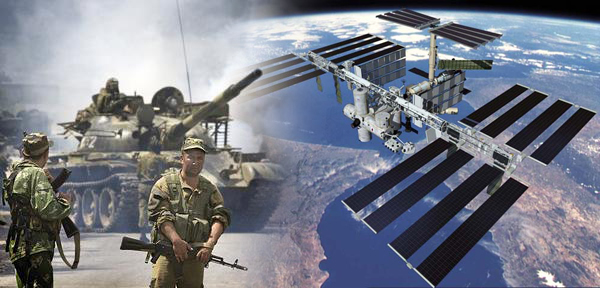
 Could the conflict in Georgia sour US-Russia relations, jeopardizing US access to the ISS? (Telegraph/NASA) The conflict between Georgia and Russia over the disputed region of South Ossetia may have huge consequences for NASA's ability to send astronauts to the International Space Station in the future. The US has criticised the Russian military action, prompting concerns for the future NASA use of the Russian Soyuz space vehicle. This comes at a particularly critical time, as concerns were already high due to the Shuttle decommissioning in 2010. The US is only allowed to use Soyuz up until 2011 as that is when the exemption from the Iran Non-Proliferation Act runs out. If US-Russian relations turn even more sour, an extension to the exemption may not be allowed, freezing the US out of any involvement with routine manned access into space. US Senator Bill Nelson (Democrat), an outspoken critic of the government's funding of the US space program, has brought these concerns to light blaming the Bush administration for an over reliance on Russia for future space access… (...)
Read the rest of Could Conflict in Georgia Block US Access to the Space Station? (585 words)
© Ian O'Neill for Universe Today, 2008. | Permalink | 28 comments | Add to del.icio.us digg
Who's linking ? Technorati BlogPulse Google
Want more on these topics ? Browse the archive of posts filed under Military, NASA, Space Station. 


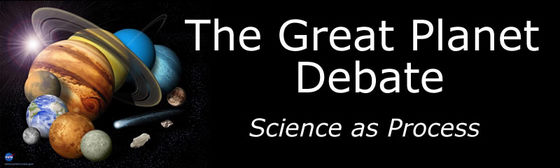
A debate today between astronomer Neil deGrasse Tyson and planetary scientist Mark Sykes, moderated by NPR's Ira Flatow, addressed the issue of Pluto's planetary status. There was lots of arm-waving and finger-pointing, endless interruptions, disagreements on details big and small, and battling one-liners. The two scientists sat at a table with the moderator between them and Flatow was often obscured by Tyson and Sykes getting in each other's faces in eye-to-eye confrontation. At one point, Flatow was hit by Tyson's ebullient arm motions. Yes, it was heated. But it was fun, too. It ended up being not so much a debate between the Pluto-huggers and the Pluto-haters as a disagreement over the lexicon of astronomy and planetary science and, primarily, the definition of a planet. Pluto's planetary status was definitely not decided here, and the debate concluded with an amicable agree-to-disagree concurrence that the scientific process is an ongoing, evolving practice. But it wasn't without fireworks.
(...)
Read the rest of Tyson and Sykes Duke Out the Great Planet Debate; Flatow Almost Flattened (1,161 words)
© Nancy Atkinson for Universe Today, 2008. | Permalink | 21 comments | Add to del.icio.us digg
Who's linking ? Technorati BlogPulse Google
Want more on these topics ? Browse the archive of posts filed under Pluto, Science. 

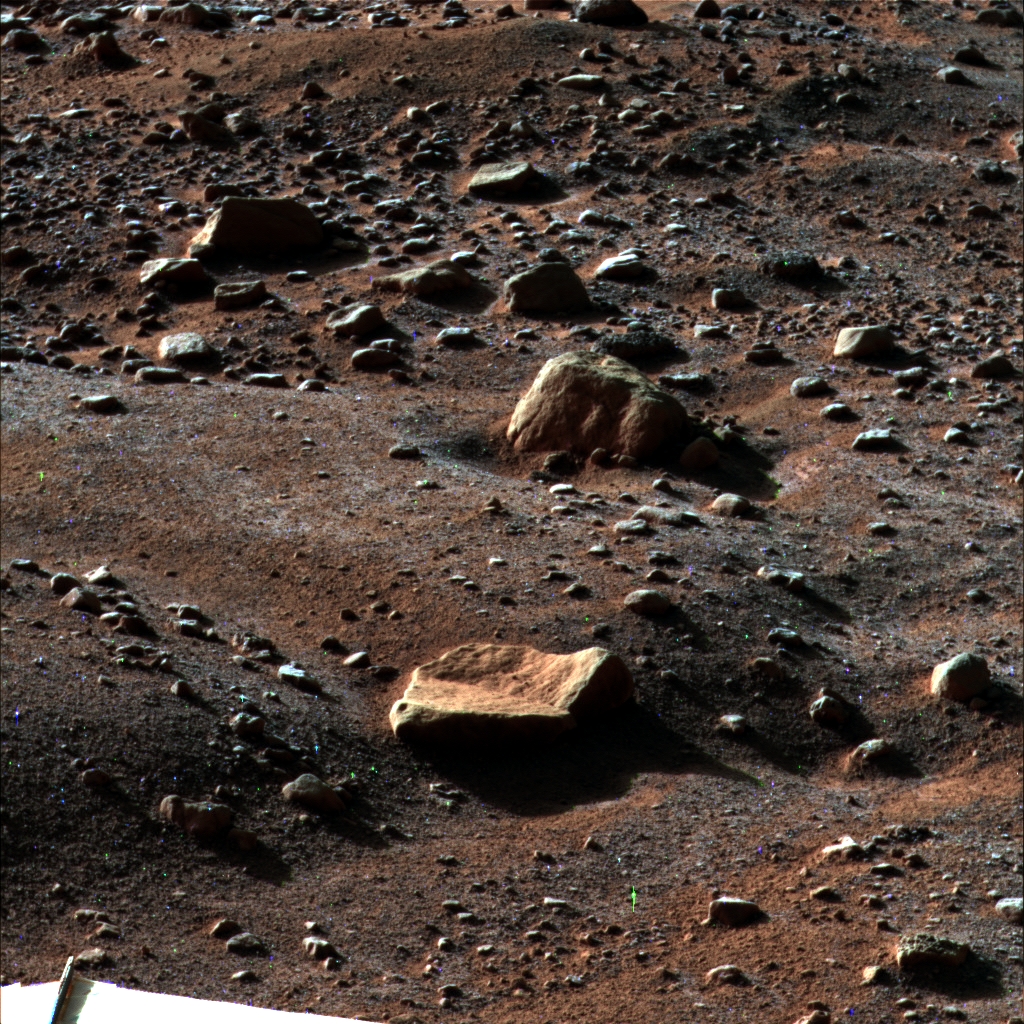
 3-D image of a dust grain from Phoenix's Atomic Force Microscope. Credit: NASA/JPL/Caltech/U of Arizona/U of Neuchatel What is Mars ubiquitous dust really like, close-up? Scientists from the Phoenix missions are finding out with the Atomic Force Microscope (AFM), an instrument that is providing the highest magnification of anything seen from another world. A couple of months ago the Phoenix Mars Lander used its optical microscope to image small grains of the Martian soil. Now, the spacecraft has switched on the AFM to take the first-ever 3-dimensional image of a single particle of Mars' dust. The AFM can detail the shapes of particles as small as about 100 nanometers, about one one-thousandth the width of a human hair. That is about 100 times greater magnification the optical microscope. The article is rounded, and about one micrometer, or one millionth of a meter, across. It is a speck of the dust that cloaks Mars. Such dust particlets color the Martian sky pink, feed storms that regularly envelop the planet and produce Mars' distinctive red soil.
(...)
Read the rest of Mars Dust Grains Imaged by Atomic Force Microscope (353 words)
© Nancy Atkinson for Universe Today, 2008. | Permalink | One comment | Add to del.icio.us digg
Who's linking ? Technorati BlogPulse Google
Want more on these topics ? Browse the archive of posts filed under Mars, Missions. 

 Former Astronaut John Herrington Former NASA astronaut and Rocketplane test pilot John Herrington has a new state-of-the-art vehicle of choice: a bike. But it's a touring bike fully loaded with a GPS, laptop, broadband phone, and digital and video cameras. Herrington is embarking on a cross country bike trek to promote and encourage student participation in science, technology, engineering and mathematics (STEM). Herrington, once a college dropout who went on to fly in space in 2002 on the STS-113 mission, hopes he can help make a difference and impact on children by sharing his experiences and providing web-based, hands-on activities using STEM skills to solve problems while following his journey. Herrington also wants to encourage children to pursue their dreams and seek out exciting opportunities. "The generation that grew up in the age of the Apollo program and the journey to the moon was motivated by the excitement of space and the possibilities that it brought to the nation," said Herrington. "Those kinds of possibilities to explore the unknown and make new discoveries still exist, but we must motivate students to learn and have a way to connect what they learn to what they do on a daily basis." (...)
Read the rest of Former Astronaut to Bike Across US for Education (397 words)
© Nancy Atkinson for Universe Today, 2008. | Permalink | 2 comments | Add to del.icio.us digg
Who's linking ? Technorati BlogPulse Google
Want more on these topics ? Browse the archive of posts filed under Science. 

 Meteorites. Credit: NASA Astronomers studying ways to deal with incoming near-Earth asteroids (NEA) that might be on a collision course with our planet want to know in detail what these space rocks are made of. The better they "know the enemy" the better they can come up with ways to destroy or change the course of NEAs. Since we've only studied a couple of asteroids up close with spacecraft, the best way to learn more about the composition of asteroids should be fairly easy: just look at meteorites that fall to Earth, which are small chunks of asteroids. But in doing so, researchers discovered quite a huge discrepancy. The vast majority of asteroids that whiz by Earth are of a type that matches only a tiny fraction of the meteorites that most frequently hit our planet. This difference has had astronomer scratching their heads. But a team of researchers has now found what it believes is the answer to the puzzle. The smaller rocks that most often fall to Earth, it seems, come straight in from the main asteroid belt out between Mars and Jupiter, rather than from the near-Earth asteroid population.
(...)
Read the rest of Solving the Asteroid – Meteorite Puzzle (480 words)
© Nancy Atkinson for Universe Today, 2008. | Permalink | 6 comments | Add to del.icio.us digg
Who's linking ? Technorati BlogPulse Google
Want more on these topics ? Browse the archive of posts filed under Asteroids, Meteorites. 

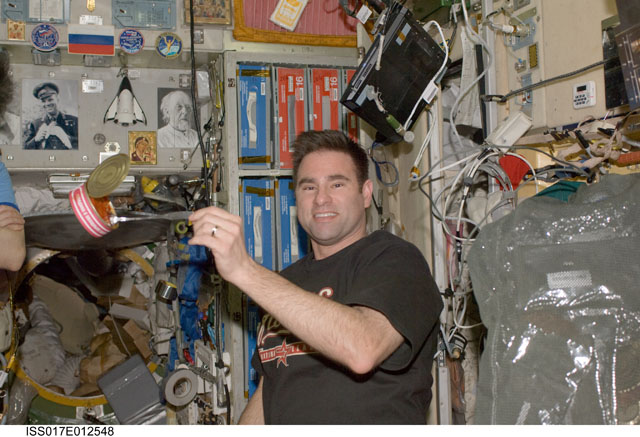
 Astronaut Greg Chamitoff on board the ISS. Credit: NASA Astronauts are usually gregarious and quite pleasant people who like to share their experiences of living and working in space. Current International Space Station resident Greg Chamitoff is no different, and he is now ready and waiting to answer any burning questions you may have about human space flight. NASA offers a "Ask the Expert" website for many of its human missions, where the public can submit questions and astronauts or other NASA personnel answer with written and/or audio replies. But the past few space shuttle missions have been so jam-packed with ISS construction activities, there hasn't been time in the schedule for astronauts to answer any questions from the public. However, Chamitoff will be on board the ISS for a couple of months, and he has some time to answer a few questions. Questions will be transmitted to Greg from Mission Control each week and his answers to a few of them will be available here. (...)
Read the rest of Have a Question About Space? Ask an Astronaut (116 words)
© Nancy Atkinson for Universe Today, 2008. | Permalink | 2 comments | Add to del.icio.us digg
Who's linking ? Technorati BlogPulse Google
Want more on these topics ? Browse the archive of posts filed under NASA. 

| 









































No comments:
Post a Comment
Keep a civil tongue.