This site is an experiment in sharing news and content. Almost everything here came from email newsletters.
Pages
▼
2022/03/09
Chernobyl nuclear power plant has lost electricity
Chernobyl nuclear power plant has lost electricity | Russian invasion of Ukraine: Live updates on impacts to science | Shackleton's lost Endurance ship discovered beneath Antarctic sea
Created for ignoble.experiment@arconati.us | Web Version
Chernobyl’s nuclear power plant and all the facilities in the Chernobyl exclusion zone have been completely disconnected and are now without electricity, Ukraine’s state energy company has announced.
Russian forces attacked the defunct nuclear facility on the very first day of the invasion (Feb. 24), seizing it after heavy fighting and taking its roughly 210 staff hostage, Live Science previously reported. Now that the plant has been disconnected from the electrical grid, the roughly 20,000 spent nuclear fuel units held in the plant's cooling tanks will no longer receive active cooling.
Russia launched a war against Ukraine on Feb. 24, 2022, targeting more than a dozen cities and the Chernobyl nuclear site within the first day of the invasion.
The ongoing war not only threatens Ukraine's continued existence as an independent country, but the conflict will likely have wide-reaching ramifications for science-related industries and organizations the world over. In addition, the potential for nuclear war and damage to Ukraine's various nuclear sites pose a threat to public health and the environment, on a global scale.
As the war continues, Live Science will be sharing live updates on how the conflict is impacting various scientific fields, the energy sector and the space industry. We'll also be covering developments related to nuclear weapons and power plants, as well as relevant health news, such as the state of medical supply chains in Ukraine and updates on how the COVID-19 pandemic is unfolding in the region.
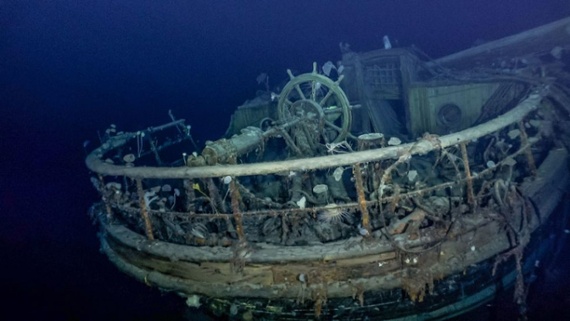
(Falklands Maritime Heritage Trust / National Geographic)
The wreck of the steam-yacht Endurance, which famously sank in 1915 during an Antarctic expedition by the polar explorer Ernest Shackleton, has been rediscovered by searchers using autonomous underwater vehicles.
The shipwreck was found at a depth of 9,869 feet (3,008 meters) beneath West Antarctica's Weddell Sea, according to the Falklands Maritime Heritage Trust (FMHT), which sponsored the search.
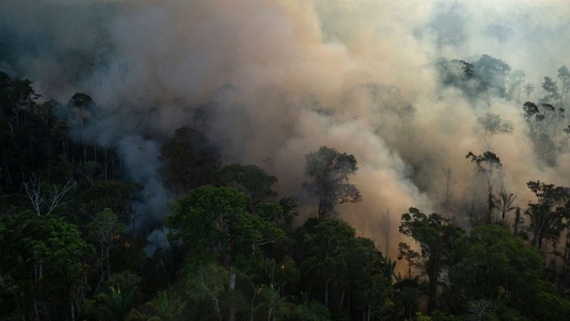
If deforestation continues, the Amazon rainforest could reach a critical tipping point where most of it transforms into a dry savanna, a new study warns.
The study, published Monday (March 7) in the journal Nature Climate Change, suggests that more than 75% of the rainforest has steadily lost "resilience" since the 2000s, meaning those portions of the rainforest now can't recover as easily from disturbances, such as droughts and wildfires. Regions of the rainforest that show the most profound losses in resilience are located near farms, urban areas and areas used for logging, Inside Climate News reported.
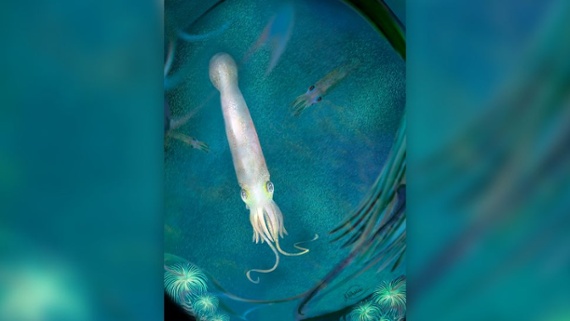
Octopuses and vampire squid are famous for their eight arms, but one of the oldest relatives of the group that includes them didn't get the memo.
This newly described creature, named Syllipsimopodi bideni after President Joe Biden, had a total of 10 arms when it was alive during the Carboniferous period about 328 million years ago, a new study finds. The beastie was wee, with a mantle (the upper head, not including the eyes or arms) measuring 3 inches (7.7 centimeters) long, about the length of an adult's palm. It's the oldest record ever of a vampyropod — a group that includes octopuses and vampire squid (Vampyroteuthis infernalis) — pushing the group's existence back 82 million years. The new date supports evidence from molecular clock models that calculate, based on the expected rate of genetic mutations, when an animal likely evolved, the researchers said.
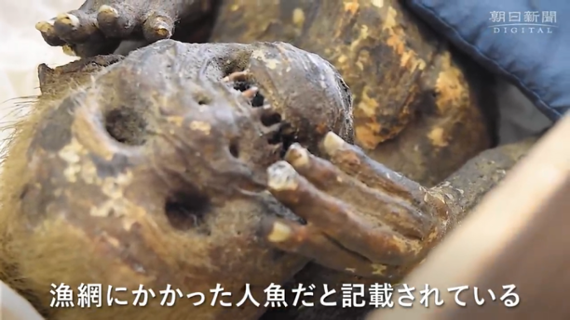
Researchers in Japan are investigating the origins of a nightmarish, 300-year-old mummified "mermaid," which has been worshipped for centuries due to its supposed medicinal properties. The haunting remains are most likely a gruesome amalgam of a monkey's torso sewed onto a fish's tail, potentially embellished with hair and nails from a human.
Hiroshi Kinoshita, board member of the Okayama Folklore Society, discovered the mermaid mummy, which is around 12 inches (30.5 centimeters) long, inside a box at a temple in Okayama Prefecture. He first became aware of the mummy after he found a picture of the bizarre specimen in an encyclopedia of mythical creatures. A fisherman supposedly caught the specimen sometime between 1736 and 1741, and he subsequently sold it to an affluent family, according to a note left inside the mummy's box. Researchers still don't know exactly how the mermaid ended up inside the temple, according to Japanese news site The Asahi Shimbun.











No comments:
Post a Comment
Keep a civil tongue.