This site is an experiment in sharing news and content. Almost everything here came from email newsletters.
Pages
▼
2022/03/08
Russia's Ukraine invasion could imperil international science
Russia's Ukraine invasion could imperil international science | What is the coldest city in the world? | Astronomers detect largest organic molecule ever found in a stellar 'dust trap'
Created for ignoble.experiment@arconati.us | Web Version
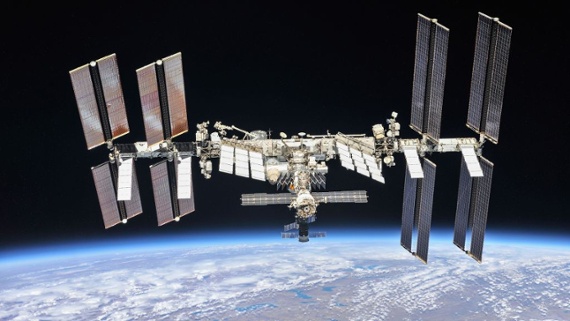
The Russian invasion of Ukraine, which has forced at least 1 million people to flee their homes, and has already seen thousands of Ukrainian civilians killed, could also have wide-reaching and prolonged ramifications for scores of industries and organizations, including many designed to be apolitical.
Global efforts that could suffer include international science collaborations, which focus predominantly on the pursuit of technological and scientific progress. They do this by harnessing knowledge from all corners of the globe: The intention is to create positive change through collaborative effort, and generally operate without political interference.
In a letter Antarctic explorer Ernest Shackleton wrote to his friend Kitty Pogson, a London socialite, during his expedition in September 1902, he describes the extreme cold and its catastrophic effects on the crew.
"We unfortunately lost one of our men in a very bad blizzard by his falling over an ice cliff, and we nearly lost one of the lieutenants and three more men," Shackleton wrote. "The weather is pretty cold now, the lowest temperature having been -62 F [minus 52.2 C]."
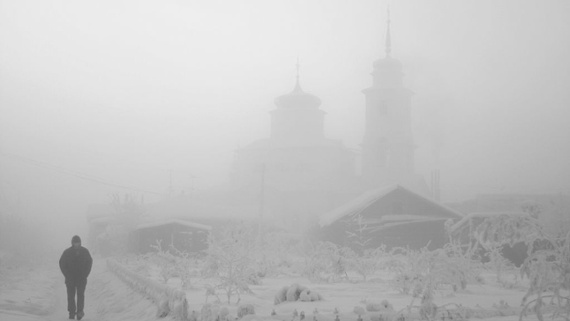
Nowadays, only a few thousand people — mainly scientists — visit Antarctica every year. Although Antarctica is the coldest continent, city dwellers on other parts of the globe routinely weather temperatures that are just as frigid. So what is the coldest city in the world?
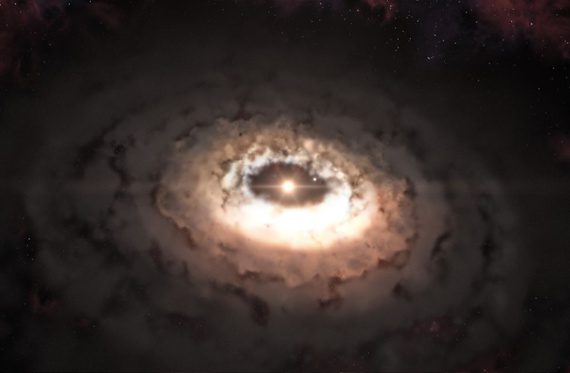
Astronomers have detected the largest organic molecule ever seen in a cloud of planet-forming dust, potentially offering new insights into the way that the building blocks of life end up on planets.
Using the Atacama Large Millimeter/submillimeter Array (ALMA) telescope in Chile, researchers studied the light emitted by different molecules in the lopsided ring of dust and ice surrounding the young star IRS 48, located about 444 light-years from Earth in the constellation Ophiuchus.
(Bernard Dupont, CC BY-SA 2.0, via Wikimedia Commons)
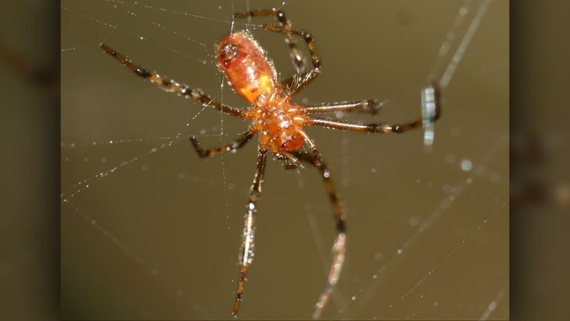
Pack hunting spiders exist in places other than your nightmares. While most spiders enjoy solitary lives, 20 of the roughly 50,000 known spider species live in colonies. One species, Anelosimus eximius, lives in extremely large colonies of up to 1,000 individual spiders that work together to build webs spanning several meters. When prey falls into their web, these social spiders coordinate and attack their victim together, which allows them to take down much larger prey than they could if they hunted alone. Until now, exactly how these spiders carry out such coordinated attacks was a mystery.
It turns out, the spiders use vibrations in their mega-web to choreograph a synchronized swarming process, the study found.
A 70 million-year-old fossil unearthed in Transylvania is a newfound species of freshwater turtle that likely survived the extinction event that wiped out the nonavian dinosaurs.
Researchers initially found the reptilian fossil at a site called Haţeg Basin in Romania in the 1990s. The remains include near-complete sections of the turtle's carapace (upper shell) and plastron (lower shell), as well as a bone from one of its arms and another from its pelvis. Based on these body parts, the researchers estimated that the turtle would have had a body length of around 7.5 inches (19 centimeters), they reported in a new study. The team named the new species Dortoka vremiri in honor of Mátyás Vremir, an expert in Cretaceous vertebrates who died in 2020.










No comments:
Post a Comment
Keep a civil tongue.