| Here are the FeedBlitz blog updates for ignoble.experiment@arconati.us
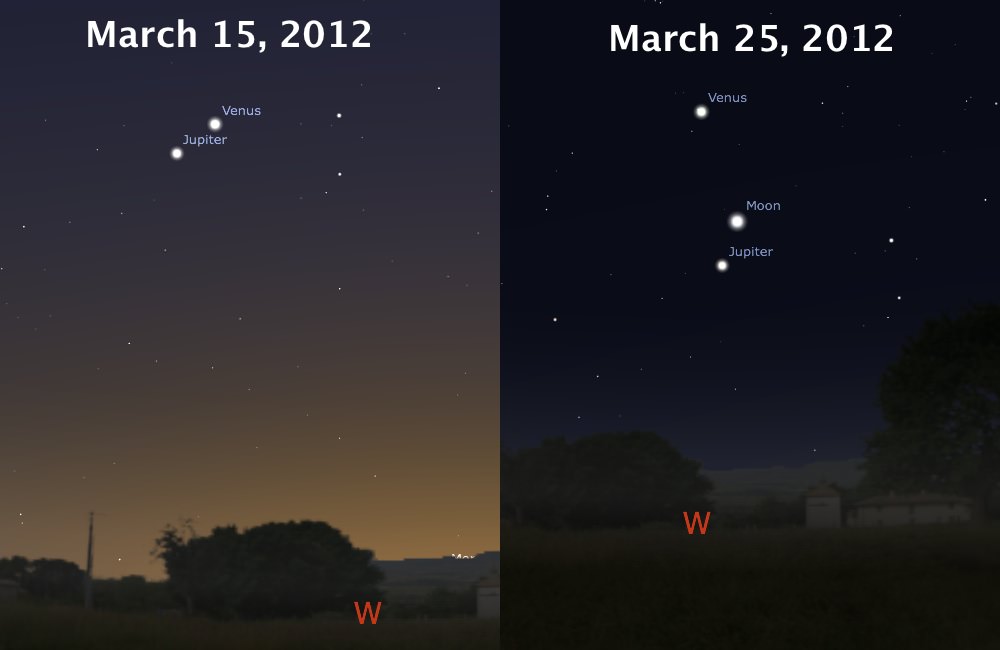
 The two conjunctions. Image credit: Stellarium In case you’re the only person on Earth who hasn’t heard about it yet, Venus and Jupiter will be in conjunction on March 15th, 2012, passing within 3° of each other. The two planets have been getting closer and closer in the sky for the last month, and now it’s time to see them side-by-side. Venus is the higher, brighter object, and Jupiter is the lower dimmer one. Of course, Venus and Jupiter aren’t actually close to one another in the sky. They’re really separated by millions of kilometres. But from our perspective here on Earth, we see the two objects closely lined up. That’s a conjunction. On March 15th, 2012 at 10:37 UTC, Venus and Jupiter reach 3° distance from one another. That’s approximately 6 times the width of the full Moon.
(...)
Read the rest of Venus-Jupiter Conjunction, March 15th, 2012 (228 words)
© Fraser for Universe Today, 2012. | Permalink | No comment | Add to del.icio.us
Post tags:
Feed enhanced by Better Feed from Ozh 

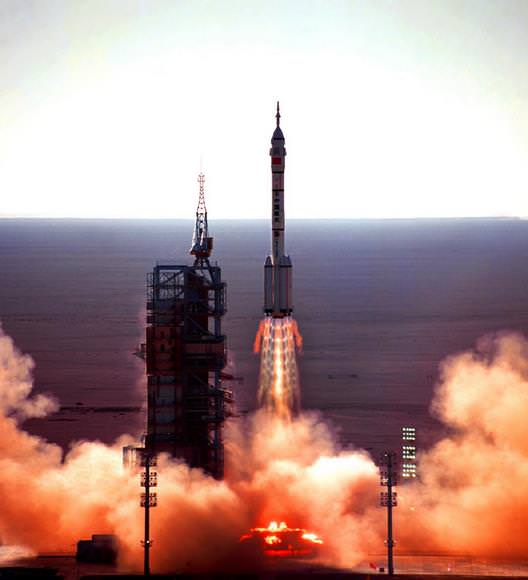
 Long March rocket launching the Shenzhou 5. Credit: Wikimedia Officials from the Chinese Space Agency announced today that they’ve completed crew selection for their next team of spacefarers – called taikonauts – and this time, the team includes some women. The next major mission for China will be the first manned docking mission to the Tiangong-1 space station. This station was launched in September 2011, and was successfully docked with the unmanned Shenzhou-8 spacecraft back in November. And so the next major step in the Chinese plans is for Shenzhou-9 to perform a manned docking with the station. Three taikonauts will be on board, and that crew might include some women – the first time the Chinese will have sent women to space. This mission is already progressing nicely. The Shenzhou-9 spacecraft and its Long March-2F rocket have been completed. And if everything goes as planned, they’ll launch and perform the manned docking some time between June and August 2012. The final composition of the Shenzhou-9 crew hasn’t been announced yet, so it might still be a few more years before the Chinese women finally get their chance to fly to space. Original Source: Xinhua
© Fraser for Universe Today, 2012. | Permalink | 2 comments | Add to del.icio.us
Post tags:
Feed enhanced by Better Feed from Ozh 

 The two sides of the Moon. Image credit: LRO When we look at the Moon, we see these amazing variations of light and dark. And depending on your orientation on Earth, you might see the famous “Man in the Moon”, or maybe the “Rabbit in the Moon”. The darker areas are known as maria, smooth lava fields created by ancient volcanic eruptions on the Moon. But why do we see this face of the Moon, and not a different side?
(...)
Read the rest of Why Does the “Man in the Moon” Face Earth? (389 words)
© Fraser for Universe Today, 2012. | Permalink | No comment | Add to del.icio.us
Post tags:
Feed enhanced by Better Feed from Ozh 

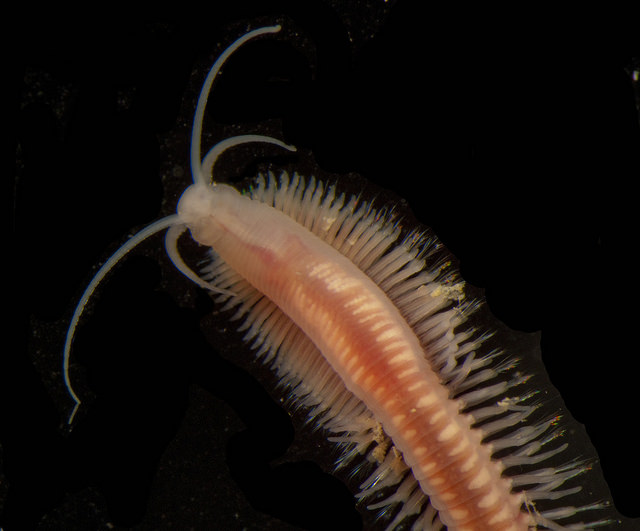
 A type of worm from the Dorvilleids family. The first known species to consume Archaea. A couple of consumption stories crossed my desk today, so I thought I’d merge them together. The bottom line is that everything’s on the menu. If there’s energy to be extracted from something, life is going to find a way to consume it. We’ve got a deep sea worm that seems to be able to thrive from any of the three main branches of life on Earth – the first known example of a creature that consumes Archaea. And then there’s the discovery of a fungus capable of consuming large amounts of polyurethane plastic.
(...)
Read the rest of Life Will Always Find a Way… To Eat Everything (328 words)
© Fraser for Universe Today, 2012. | Permalink | 3 comments | Add to del.icio.us
Post tags:
Feed enhanced by Better Feed from Ozh 

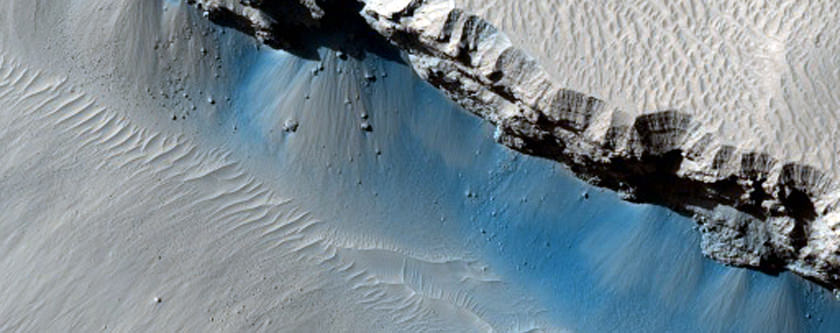
 Boulders on the floor of Cerberus Fossae. Credit: NASA/JPL/University of Arizona Compared to Earth, Mars is a relatively quiet planet, geologically speaking. Actually, very quiet, as in pretty much dead. While it has volcanoes much larger than any here, they have been inactive for a very long time; the latest studies suggest however that volcanic activity may have continued until only a matter of millions of years ago. That seems like an eternity to our human sense of time, but geologically, it is quite recent. There is also the massive canyon system Valles Marineris, much larger than the Grand Canyon here on Earth, and evidence for ancient hot springs, glaciers, etc. which also show that Mars was once much more active than it is today.
Now, there is also evidence that marsquakes (as in earthquakes here) continued to shake the planet until only a few million years ago, and may even still happen today. (...)
Read the rest of Does Mars Still Shake, Rattle and Roll? (275 words)
© Paul Scott Anderson for Universe Today, 2012. | Permalink | No comment | Add to del.icio.us
Post tags: Mars, Mars Reconaissance Orbiter
Feed enhanced by Better Feed from Ozh 

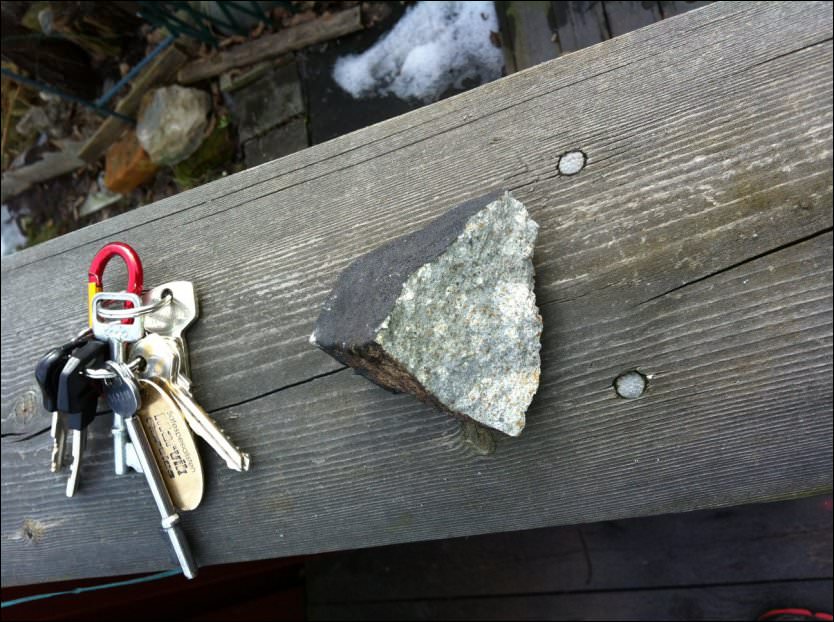
 This meteorite struck the Thomassen family's cabin in Oslo. (Photo: Rune Thomassen) A family in Oslo got a surprise when they visited their allotment garden cabin for the first time this season and found that a 585-gram (20 oz.) meteorite had ripped a hole through the roof. The space rock was discovered “lying five or six metres away,” the cabin’s owner, Rune Thomassen, told the local newspaper VG. Such an event is rare in Norway; since 1848 the country has noted only 14 meteorite discoveries. (...)
Read the rest of Valuable Space Rock Crashes Into Oslo Cabin (234 words)
© Jason Major for Universe Today, 2012. | Permalink | One comment | Add to del.icio.us
Post tags: Mars, meteor, meteoritten, Norway, Oslo, Thomassen
Feed enhanced by Better Feed from Ozh 

 Tornadoes swept the Midwest US on March 2, 2012. In this image, clouds are rendered using thermal infrared (heat) and visible imagery from the Geostationary Operational Environmental Satellite-East (GOES-East). Background land information is from the Moderate Resolution Imaging Spectroradiometer (MODIS).
Image credit: NOAA-NASA GOES Project/NASA Earth Observatory. The 2012 tornado season got off to a rousing start. Between February 28th and March 3rd, two deadly storm systems developed in the southern United States. The storms spawned numerous tornadoes that together killed at least 52 people. This kind of extreme tornado activity, so early in the year, has fueled fears that global warming will increase the severity and duration of the tornado season. But, scientific studies show that this is not necessarily to be expected.
(...)
Read the rest of Fears of Tornado Catastrophes Due to Global Warming Unfounded (828 words)
© Irene. Antonenko for Universe Today, 2012. | Permalink | 14 comments | Add to del.icio.us
Post tags: Climate Change, Natural Disasters, tornadoes, weather
Feed enhanced by Better Feed from Ozh 

| 













No comments:
Post a Comment
Keep a civil tongue.