

Neatorama |
- Is Iceland The Tip Of A Submerged Continent?
- Bring Some Noise!
- Animal Crossing Monopoly?!?
- Leopard and Cow Have a Unique Bond
- How Much Time Do Politicians Spend Looking At Their Phones?
- What Troops Ate In The Revolutionary War
- Shark Dandruff For Coral Reef Conservation
- The Dye That Helped Create An Empire
| Is Iceland The Tip Of A Submerged Continent? Posted: 08 Jul 2021 01:11 PM PDT
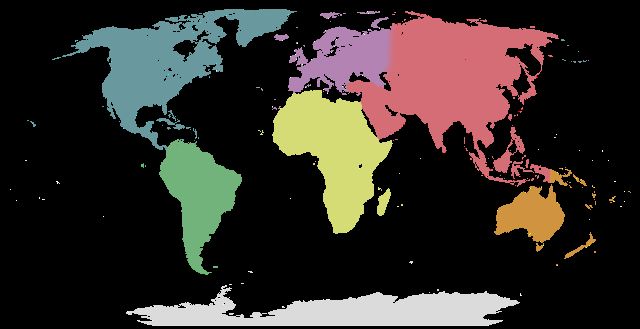
An international team of geologists have found a geological secret under Iceland. Meet 'Icelandia,' a sunken continent hidden underneath the country and the surrounding ocean. Scientists now believe that the sunken land mass covers an area ~600,000 km2 . The discovery challenges scientific ideas about the extent of continental crusts in the North Atlantic region, as Phys Org details: Speaking about the new theory, Professor Foulger said, "Until now Iceland has puzzled geologists, as existing theories that it is built of and surrounded by oceanic crust are not supported by multiplegeological data. For example, the crust under Iceland is over 40 km thick—seven times thicker than normal oceanic crust. This simply could not be explained. "However, when we considered the possibility that this thick crust is continental, our data suddenly all made sense. This led us immediately to realize that the continental region was much bigger than Iceland itself—there is a hidden continent right there under the sea. "There is fantastic work to be done to prove the existence of Icelandia but it also opens up a completely new view of our geological understanding of the world. Something similar could be happening at many more places. Image via wikimedia commons  |
| Posted: 08 Jul 2021 01:10 PM PDT |
| Posted: 08 Jul 2021 09:20 AM PDT
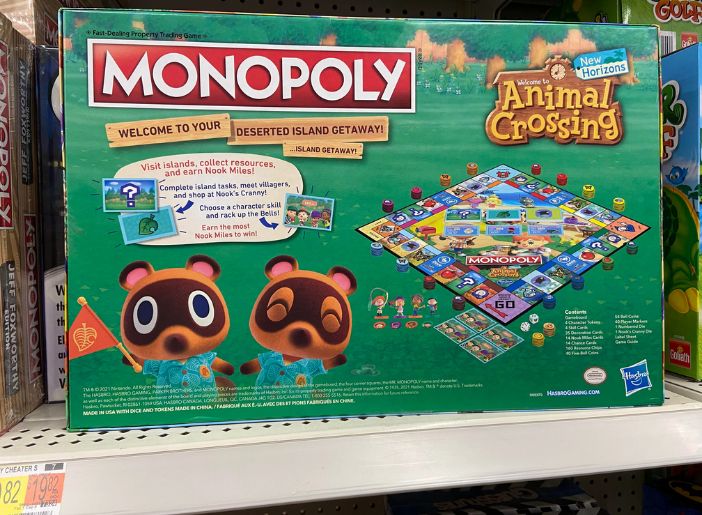
Take your dreams of building an island getaway to a board game! Bear with me, I know that statement doesn't make sense at first, but hear me out: Animal Crossing Monopoly. Thanks to photos initially shared by reddit user calysunflower, we now know that a Monopoly game has been made inspired by Animal Crossing: New Horizons! The board game will be released in August 2021, and can be preordered here. Image credit: calysunflower |
| Leopard and Cow Have a Unique Bond Posted: 08 Jul 2021 09:20 AM PDT
|
| How Much Time Do Politicians Spend Looking At Their Phones? Posted: 08 Jul 2021 09:19 AM PDT
There's no harm in spending a lot of hours on your favorite gadget, provided that you're doing it in your free time. However, if you're casually browsing on your phone during work-- then that's a different story, especially if you're a politician. An AI is now out for politician's necks as they call out political figures who spend time on their phones during parliament sessions. The AI, called The Flemish Scrollers, is a computer program that uses facial recognition to automatically call out politicians in the Flemish province of Belgium: Launched Monday, Depoorter's system monitors daily livestreams of government meetings onYouTube to assess how long a representative has been looking at their phone versus the meeting in progress. If the AI detects a distracted person, it will publicly identify the party by posting the clip — on Instagram@TheFlemishScrollers, and Twitter@FlemishScroller. The accused representative will be named and shamed with their social media handles. The bot also politely requests they "pls stay focused!" According to Depoorter'swebsite, if there is no session in progress, the software will begin analyzing and learning from archived livestreams instead. Whether this means the software will routinely post evidence of past distraction wasn't clear. Depoorter did not immediately respond to a request for comment. Image credit: Dries Depoorter |
| What Troops Ate In The Revolutionary War Posted: 08 Jul 2021 09:18 AM PDT
It's true that an army moves on its stomach, since troops who aren't fed won't be able or willing to fight. While there is plenty to complain about in modern-day MREs and the C-rations that came before, those are luxuries compared to what was fed to soldiers of the American Revolution. The rebels had no government infrastructure behind their supplies, but they did the best they could. At the beginning, the Continental Congress declared how much of different foods each man should be allotted, and Washington ordered that each soldier carry two days worth of provisions. But as the war dragged on, food was harder to come by.
The supply situation got so bad that soldiers were impelled to steal food from civilian settlements. The British had their own problems with food supplies as well. Read about the difficulties of getting enough to eat during the American Revolutionary War at The Drive. -via Fark |
| Shark Dandruff For Coral Reef Conservation Posted: 08 Jul 2021 09:18 AM PDT
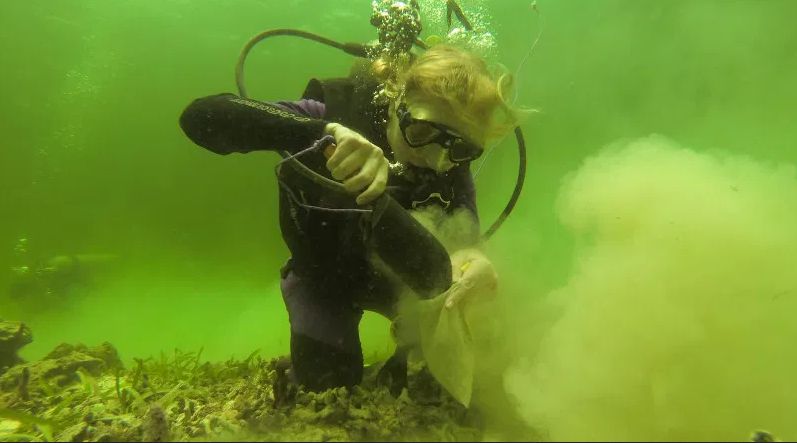
Sharks get dandruff? Now that's something I never knew until today! Smithsonian scientists revealed that a shark's shedded dermal denticles can protect coral reefs from declining. The denticles are microscopic scales that cover a shark's body, which protects them from abrasion by hard substances and ectoparasite attachment. Scientists hope that the denticles can be used for innovative reef conservation strategies: Just as humans shed dry skin and dandruff, sharks shed their denticles, which accumulate in marine sediments. The oldest denticles found so far, in the Harding Sandstone of Colorado, are about 455 million years old. STRI paleobiologist, Aaron O'Dea, pieces together clues from fossil- and modern coral reefs to reconstruct baseline conditions before human colonization, and to understand how ecological and evolutionary processes change through time. "Placoderms in the Paleozoic, and then marine reptiles in the Mesozoic, were larger and ate sharks." O'Dea explained. "Placoderms ruled the oceans for around 70 million years and marine reptiles of the Mesozoic ruled for more than 100 million years. Sharks are only top predators now because extinction events preferentially took out other groups but allowed sharks to survive. Sharks seem to have remarkable evolutionary resilience and I was fascinated to work on a technique that would help us explore how sharks have fared more recently when humans step into the picture." Image credit: STRI |
| The Dye That Helped Create An Empire Posted: 08 Jul 2021 09:18 AM PDT
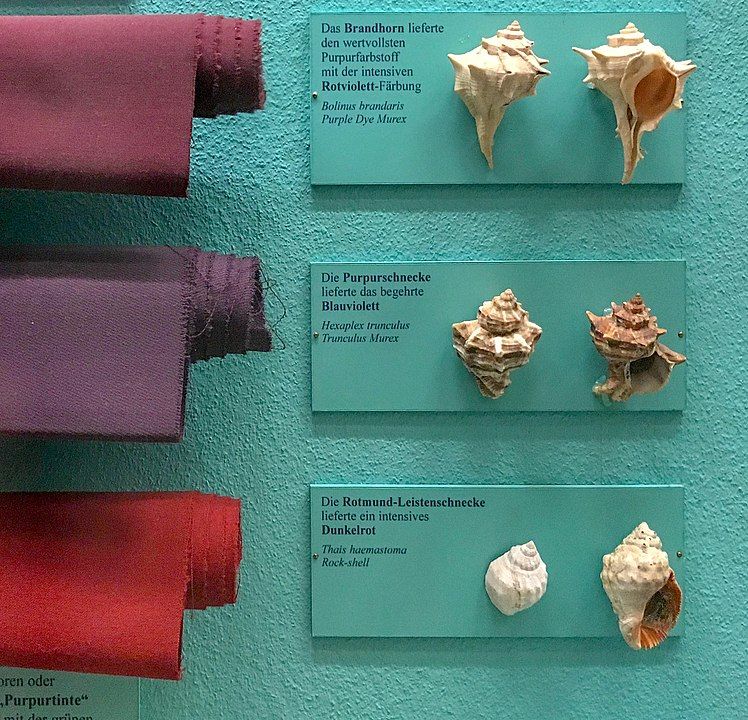
The Phoenician empire thrived as one of the most influential and advanced civilizations in the Mediterranean during ancient times. Phoenician merchants participated in trade by exchanging cedarwood, olive oil, metals, ivory, and Phoenician purple dye, the most coveted of their wares. Also called Tyrian purple, the dye was popular until the days of the Roman empire, symbolising wealth, abundance, and royalty. The production of the dye took a lot of resources and manpower, as This City Knows details: Production of fabric in antiquity demanded substantial labor, more so than other crafts. In the case of Phoenician purple, extracting this dye required tens of thousands of sea snails, called Murex initially. The process further demanded an army of laborers. The biological pigment was extracted from the snail mucus. It was pretty difficult to acquire, but the end result was various shades of lasting colors that hardly ever fade but instead become brighter with wearing and exposure to elements. The Phoenicians were generally secretive about their method of manufacture, however, some ancient sources such as the Roman naturalist Pliny the Elder did account for it. Pliny notes in his first century A.D. book Natural History that two types of sea snails, Murex trunculus and Murex brandaris, were used to extract raw muddy liquid the snails leeched from the mucus glands. The first type was used to make blue-purple dye known as royal blue, while the second gave the more distinctive Tyrian purple. Image credit: TeKaBe, CC BY-SA 4.0 |


| You are subscribed to email updates from Neatorama. To stop receiving these emails, you may unsubscribe now. | Email delivery powered by Google |
| Google, 1600 Amphitheatre Parkway, Mountain View, CA 94043, United States | |


No comments:
Post a Comment
Keep a civil tongue.