Sponsor

2025/04/05

The Art of the Squeal

Political Spectacle and Economic Molotov Cocktail  ‌ ‌ ‌ ‌ ‌ ‌ ‌ ‌ ‌ ‌ ‌ ‌ ‌ ‌ ‌ ‌ ‌ ‌ ‌ ‌ ‌ ‌ ‌ ‌ ‌ ‌ ‌ ‌ ‌ ‌ ‌ ‌ ‌ ‌ ‌ ‌ ‌ ‌ ‌ ‌ ‌ ‌ ‌ ‌ ‌ ‌ ‌ ‌ ‌ ‌ ‌ ‌ ‌ ‌ ‌ ‌ ‌ ‌ ‌ ‌ ‌ ‌ ‌ ‌ ‌ ‌ ‌ ‌ ‌ ‌ ‌ ‌ ‌ ‌ ‌ ‌ ‌ ‌ ‌ ‌ ‌ ‌ ‌ ‌ ‌ ‌ ‌ ‌ ‌ ‌ ‌ ‌ ‌ ‌ ‌ ‌ ‌ ‌ ‌ ‌ ‌ ‌ ‌ ‌ ‌ ‌ ‌ ‌ ‌ ‌ ‌ ‌ ‌ ‌ ‌ ‌ ‌ ‌ ‌ ‌ ‌ ‌ ‌ ‌ ‌ ‌ ‌ ‌ ‌ ‌ ‌ ‌ ‌ ‌ ‌ ‌ ‌ ‌ ‌ ‌ ‌ ‌ ‌ ‌ ‌ ‌ ‌ ‌ ‌ ‌ ‌ ‌ ‌ ‌ ‌ ‌ ‌ ‌ ‌ ‌ ‌ ‌ ‌ ‌ ‌ ‌ ‌ ‌ ‌ ‌ ‌ ‌ ‌ ‌ ‌ ‌ ‌ ‌ ‌ ‌ ‌ ‌ ‌ ‌ ‌ ‌ ‌ ‌ ‌ ‌ ‌ ‌ ‌ ‌ ‌ ‌ ‌ ‌ ‌ ‌ ‌ ‌ ‌ ‌ ‌ ‌ ‌ ‌ ‌ ‌ ‌ ‌ ‌ ‌ ‌ ‌ ‌ ‌ ‌ ‌ ‌ ‌ ‌ ‌ ‌ ‌ ‌ ‌ ‌ ‌ ‌ ‌ ‌ ‌ ‌ ‌ ‌ ‌ ‌ ‌ ‌ ‌ ‌ ‌ ‌ ‌ ‌ ‌ ‌ ‌ ‌ ‌ ‌ ‌ ‌ ‌ ‌ ‌ ‌ ‌ ‌ ‌ ‌ ‌ ‌ ‌ ‌ ‌ ‌ ‌ ‌ ‌ ‌ ‌ ‌ ‌ ‌ ‌ ‌ ‌
Truth and Trends
April 05, 2025

The Art of the Squeal

Dear Reader,

It’d be ridiculous if we didn’t talk about it today.

It was the week — the kind that reminds you markets don’t move on earnings or trends alone. They move on fear. On narrative. On a single podium.

And this time, the man behind that podium was President Trump serving his second term and clearly enjoying the spotlight again.

This past Wednesday, during what was officially billed as a "Liberation Day" speech, Trump laid it out in no uncertain terms: a blanket 10% tariff on all imports. All of them.

With even higher rates for China (34%) and the E.U. (20%).

The response? Swift and chaotic squeals from all sides.

The Dow dropped 1,600 points. The S&P 500 shed nearly 5%. Apple (AAPL) and Amazon (AMZN) lost billions in market cap in hours.

And Ford (F)? Investors treated it like someone had just announced that combustion engines were illegal.

But here’s the thing: This wasn’t a policy error. It wasn’t even an economic misstep.

It was the point.

Trump’s tariffs weren’t designed to quietly rebalance trade.

They were a rallying cry — equal parts political spectacle and economic Molotov cocktail.

The Political Theater

We’re not here to speculate on political motives. We’re here to interpret them through the lens of markets.

But when the president uses a nationally televised address to declare economic war on most of the world, you can’t exactly separate politics from investing.

Trump is in the thick of his second term and gearing up to reshape his legacy.

And what better way to do that than to revive the policies that put him on the map in 2016?

Except this time, it’s not incremental. There’s no build-up. No teasing. Just a sweeping, sudden policy that throws sand into the gears of global trade and dares markets to blink.

And blink they did.

The truth is, everyone from Beijing to Brussels knew tariffs were back on the table.

But no one expected this scale — especially not in the middle of a global economic cooldown. The European Commission issued a scathing statement within hours. China, ever the master of measured retaliation, slapped 34% tariffs on all U.S. goods before the sun even set in D.C.

According to the Associated Press and White House transcripts, the policy rollout was deliberate.

The administration stated the move was necessary to "restore competitive fairness" and protect U.S. industries that have long suffered from "decades of imbalanced trade."

But whether it’s fairness or force, the global response was unanimous: retaliation. Europe and Asia are already drafting counters. Even Canada is rumored to be considering agricultural levies.

What complicates the picture further is the domestic narrative.

Tariffs may not poll well with economists, but among certain voter blocs, they play like greatest hits.

The Midwest manufacturing base, battered but not broken, sees this as a comeback. Rust Belt towns are hearing promises of factories spinning again.

And if you're wondering how markets are supposed to digest that kind of emotional fuel — well, they can’t, which is why this story is far from over.

Enrique is always quick to point something like this out. He’s been preparing a series of notes relating to market turmoil and how to take care of it psychologically.

As he always says, if you’re worried about something happening in the market, you’re actually just worried about your portfolio strategy. The latter is the only thing you can change here.

That’s why he gave points to watch on Thursday during any market chaos, whether that’s a tariff spectacle or a meteor about to strike Earth.

And as we’ve been saying, this week’s speech? Pure spectacle.

But that doesn’t mean it didn’t move markets.

Tariffs have become the new rate hikes.

Not because they act the same way, but because they inject the same kind of uncertainty. And uncertainty — especially politically manufactured uncertainty — is kryptonite to stability. This is why the moment the president finished speaking, Wall Street began repricing everything.

Investors suddenly found themselves weighing outcomes not in earnings estimates or GDP forecasts — but in probabilities.

Probabilities that the E.U. would hit back hard. That China might crack down on U.S. companies doing business there. That supply chains (already on shaky post-COVID footing) might start snapping again.

In this way, tariffs act as a multiplier — not just of prices, but of fear.

They don’t move markets in a straight line. They bend them around corners, triggering reactions that cascade through sectors like a domino run.

This week, one of the more under-the-radar casualties was semiconductors.

Intel (INTC), Broadcom (AVGO), and Qualcomm (QCOM) each fell more than 5% — not because their earnings reports were bad, but because their supply chains stretch across Asia like a spider web.

The Magnificent 7 big tech stocks lost over $1 trillion in market cap on Thursday.

And even though it’s not precisely the reason why Enrique is dubbing a little-known company the “Nvidia Killer”, it helps the thesis.

What’s more, if Nvidia itself loses $1 trillion in market cap over the next 12 months (see here), the market could be in much more pain than what we saw at the end of the week.

And queue the adage… with crisis comes opportunity.

Click here to check out the research.

One wrong move in a retaliatory tariff, and suddenly the whole thing snaps.

Agricultural names also suffered. Deere (DE) and Archer-Daniels-Midland (ADM) slid as traders braced for potential hits to U.S. crop exports.

China is a major buyer of American soybeans and grain — two markets that have historically been the first to get whacked when trade tensions spike.

And when Beijing issued its countermeasures, agricultural tariffs were rumored to be in the first batch.

Even shipping got crushed. Maersk, FedEx (FDX), and UPS (UPS) all dropped sharply as investors recalibrated assumptions around global freight volumes. No one wants to move goods that can’t clear customs without a 34% markup.

All of that trickled into retail, too. Walmart (WMT), Target (TGT), and Costco (COST) — names that had previously been considered stable — each saw 2-4% losses.

And again, not because their customers vanished, but because their imported inventory just got more expensive.

Another overlooked angle was the impact on small-cap stocks.

While the headlines focused on the trillion-dollar names, regional manufacturers, mid-tier retailers, and industrial suppliers got wrecked.

Companies like Generac (GNRC), Steelcase (SCS), and Brunswick (BC) saw significant drawdowns despite having strong balance sheets.

The market didn’t care. The algorithm read “tariff exposure,” and the selling began.

And that feeling? Widespread dread.

Even before the tariffs take effect, portfolios were acting like they already had.
Major Announcement Out of Silicon Valley…

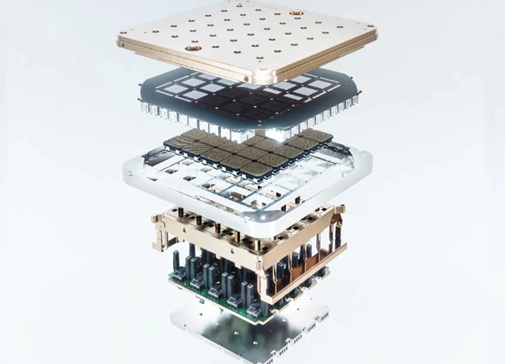
A major upcoming project from Elon Musk and Nvidia has flown relatively under the radar in the wake of widespread DOGE layoffs and the “Tesla Takedown” protests, and James Altucher has discovered an opportunity to bank 50x in the next year off the back of it. You need to get eyes on as soon as possible, there’s not a ton of time to get in on this opportunity. Click here to get the details now.

What Comes Next (Even If We’re Not Predicting It)

This story is not over. Not by a long shot. The scheduled implementation date of April 5 for the across-the-board tariffs means that next week could be just as volatile — if not more so.

Already, multiple industries are lobbying for exemptions.

Semiconductor manufacturers. Auto parts suppliers. Even consumer tech groups. And you can bet there are backchannels being worked in Washington to soften or delay the blow.

But until anything is confirmed, the market will keep dancing to the tune of uncertainty.

Greg pointed out in his Friday piece that markets may have overcorrected in certain pockets.

Not because things aren’t bad, but because not all bad news is priced the same way.

A 5% drop in a company with no Chinese exposure might just be panic, not pricing. And when the smoke clears, those are the names that often bounce hardest.

Meanwhile, we're entering Q2 earnings season with a completely different context.

Analyst estimates haven’t caught up to the new tariff regime. That means surprises — both positive and negative — are back on the menu.

And what about the consumer?

That’s the silent axis of this whole play. As prices rise and choice shrinks, spending behavior may shift faster than analysts expect.

If tariffs stick through the summer, don’t be surprised if you see a fall retail season defined by discounting and inventory write-downs.

It won’t just be the headline names feeling it — it’ll be felt in trucking, packaging, and even digital ads.

That’s why this week wasn’t about just one event. It was the beginning of a new theme.

One where politics and portfolio strategy are now holding hands tightly. And anyone pretending otherwise is bound to get caught leaning the wrong way.

Tariffs aren’t just an economic instrument. They’re a narrative weapon. And in this market, narrative is everything.

And if you’ve made it to the end of this week still holding onto your thesis, your positions, and your mental clarity — you’ve already outperformed.

That’s one of the major reasons why an underlying philosophy, psychology, and market toolkit — something Ian was covering on Tuesday with support and resistance — is vital at moments like this.

We’ll be with you every step of the way.

Until tomorrow,
Nick
Editor, Truth & Trends

“The Nvidia Killer”

Elon Musk is set to revolutionize the AI industry with his latest invention. 
It could make a lot of people rich in the process…
All while triggering a crash of up to 50% in the next 12 months in Nvidia and other popular AI stocks.
Which is why this former hedge-fund manager is calling it “the Nvidia killer”. 
Click here to see Elon Musk’s new invention now. 

Paradigm
© 2025 Paradigm Press, LLC. 1001 Cathedral Street, Baltimore MD 21202. By submitting your email address, you consent to Paradigm Press, LLC. delivering daily email issues and advertisements. To end your Truth & Trends e-mail subscription and associated external offers sent from Truth & Trends, feel free to click here.

Please note: the mailbox associated with this email address is not monitored, so do not reply to this message. We welcome comments or suggestions at AskGreg@paradigmpressgroup.com. This address is for feedback only. For questions about your account or to speak with customer service, contact us here or call (844)-731-0984. Although our employees may answer your general customer service questions, they are not licensed under securities laws to address your particular investment situation. No communication by our employees to you should be deemed as personalized financial advice.

We allow the editors of our publications to recommend securities that they own themselves. However, our policy prohibits editors from exiting a personal trade while the recommendation to subscribers is open. In no circumstance may an editor sell a security before subscribers have a fair opportunity to exit. The length of time an editor must wait after subscribers have been advised to exit a play depends on the type of publication.

All other employees and agents must wait 24 hours after on-line publication or 72 hours after the mailing of a printed-only publication prior to following an initial recommendation. Any investments recommended in this letter should be made only after consulting with your investment advisor and only after reviewing the prospectus or financial statements of the company.

Truth & Trends is committed to protecting and respecting your privacy. We do not rent or share your email address. Please read our Privacy Statement. If you are having trouble receiving your Truth & Trends subscription, you can ensure its arrival in your mailbox by whitelisting Truth & Trends.

Reference Number: 000055791417

No comments:

Post a Comment

Keep a civil tongue.

Label Cloud

Technology (1464) News (793) Military (646) Microsoft (542) Business (487) Software (394) Developer (382) Music (360) Books (357) Audio (316) Government (308) Security (300) Love (262) Apple (242) Storage (236) Dungeons and Dragons (228) Funny (209) Google (194) Cooking (187) Yahoo (186) Mobile (179) Adobe (177) Wishlist (159) AMD (155) Education (151) Drugs (145) Astrology (139) Local (137) Art (134) Investing (127) Shopping (124) Hardware (120) Movies (119) Sports (109) Neatorama (94) Blogger (93) Christian (67) Mozilla (61) Dictionary (59) Science (59) Entertainment (50) Jewelry (50) Pharmacy (50) Weather (48) Video Games (44) Television (36) VoIP (25) meta (23) Holidays (14)

Popular Posts (Last 7 Days)