You just can't wash it the way you do in October. ͏ ͏ ͏ ͏ ͏ ͏ ͏ ͏ ͏ ͏ ͏ ͏ ͏ ͏ ͏ ͏ ͏ ͏ ͏ ͏ ͏ ͏ ͏ ͏ ͏ ͏ ͏ ͏ ͏ ͏ ͏ ͏ ͏ ͏ ͏ ͏ ͏ ͏ ͏ ͏ ͏ ͏ ͏ ͏ ͏ ͏ ͏ ͏ ͏ ͏ ͏ ͏ ͏ ͏ ͏ ͏ ͏ ͏ ͏ ͏ ͏ ͏ ͏ ͏ ͏ ͏ ͏ ͏ ͏ ͏ ͏ ͏ ͏ ͏ ͏ ͏ ͏ ͏ ͏ ͏ ͏ ͏ ͏ ͏ ͏ ͏ ͏ ͏ ͏ ͏ ͏ ͏ ͏ ͏ ͏ ͏ ͏ ͏ ͏ ͏ ͏ ͏ ͏ ͏ ͏ ͏ ͏ ͏ ͏ ͏ ͏ ͏ ͏ ͏ ͏ ͏ ͏ ͏ ͏ ͏ ͏ ͏ ͏ ͏ ͏ ͏ ͏ ͏ ͏ ͏ ͏ ͏ ͏ ͏ ͏ ͏ ͏ ͏ ͏ ͏ ͏ ͏ ͏ ͏ ͏ ͏ ͏ ͏ ͏ ͏
|
HOW TO WASH A CAR IN 95 DEGREES.
|
|
The rules change above 85.
Here they are.
|
|
Hey buddy,
It's August. It's 95 out, the only window you have is Saturday at 1pm, and your driveway does not come with shade.
Every detailing article says the same thing. Don't wash in the sun. Great advice if you own a shop. Useless if you own a driveway.
So here is what actually goes wrong in the heat, and how to work around it.
|
|
Why heat wrecks a wash
The problem isn't the sun. It's what the sun does to standing water.
Your hose water is carrying dissolved calcium and magnesium. Typical municipal tap runs 300 to 500 ppm of total dissolved solids. A genuine spot-free rinse needs to be under 50.
On a cool panel that water hangs around long enough for you to pick it up with a towel, and the minerals leave with it. On a black hood sitting past 140 degrees, the water is gone in seconds and the minerals stay put.
Then heat makes it worse. Those deposits are alkaline, your clear coat is slightly acidic, and warm paint softens and swells just enough for the mineral crystals to settle in below the surface.
That's the difference between a spot you wipe off and an etch you polish out. One costs you thirty seconds. The other costs you an afternoon and a machine polisher.
|
|
The hot-weather wash protocol:
-
Hand test before anything else. Palm flat on the hood for three seconds. If you can't hold it there, the car is too hot to get wet. Rinse the whole thing down with cool water and give it five minutes to come down.
-
Work one panel at a time, top down. Not half the car at once. Soap that panel, rinse that panel, dry that panel, then move to the next one. Soaping the whole car and letting the hood bake while you scrub the rear bumper is how most heat damage actually happens.
-
Never let anything go matte. If a wet panel starts to dull or streak while you're looking at it, that's evaporation starting. Hit it with the hose again before your towel touches it.
-
Sheet rinse instead of blasting. Pull the nozzle off and let low pressure water flood down from the top of each panel. Surface tension drags most of the water off the car in one sheet, and every ounce that leaves on its own is an ounce that can't dry into a spot.
-
Dry while the paint is still wet. Dragging a dry towel across hot paint puts micro scratches and streaks in with the same pass.
Which brings us to the part Dale gets asked about every August...
The drying aid you can mix in your garage:
Find a spray bottle you've already emptied. Rinse it out with hot water until there is zero soap left in it. Leftover surfactant will streak every panel you're about to touch, and this only works because the coating is surfactant free to begin with.
Then fill it 1/4 Armor Shield Lite (or Armor Shield Graphene), 3/4 distilled water. Distilled matters. Tap water is the exact thing you're trying to keep off the paint, so mixing your drying aid with it defeats the whole exercise. A gallon of distilled is about a dollar at any grocery store.
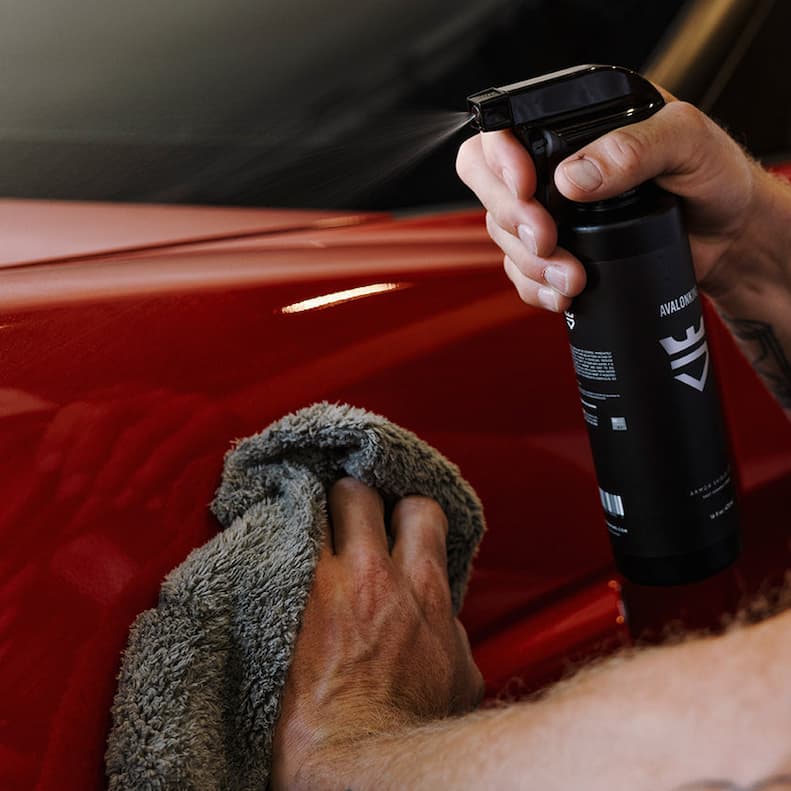
Set the nozzle to the fine mist setting (if you haven't noticed all our bottles have 2 settings), and mist the wet panel lightly right before you dry it.
Two things happen at once. The beads lose their surface tension and slide off instead of sitting there evaporating, and the towel gets enough lubricity to take the panel in one pass instead of four.
Four ounces of Lite/Graphene makes a 16oz bottle of drying aid. That's a summer of washes, and you're leaving a thin layer of SiO2 or graphene supercharged protection behind every time.
|
|
*fine mist setting is where its at
|
|
|
|
|
Why the towel matters more in August than in April
A small towel is fine when the paint is cool. You have all the time in the world.
In direct sun you don't. Every extra pass, and every stop to wring out a soaked towel, is more time for the panel to dry itself while you're busy.
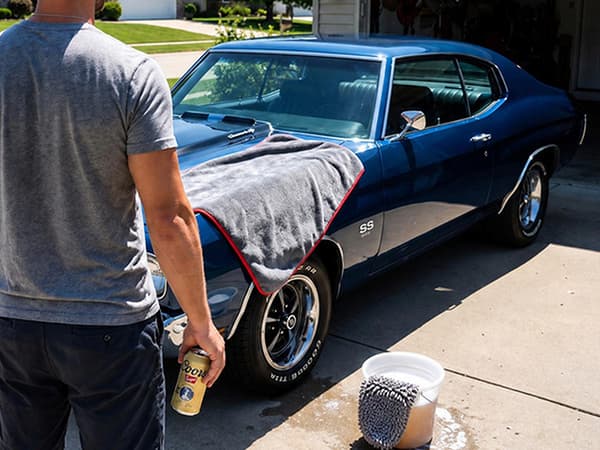
Our Ultra-Thick Drying Towel is 35 by 24 inches at 1200 GSM, double layer plush. It holds enough water to take a full panel without wringing, and it's soft enough to sit on coated paint without marring it. Fewer passes, less standing water, nothing left to bake in.
*these are known to sell out, especially when we mention them like this and don't have many in stock.
Two honest warnings before you go:
Mix the bottle in small batches, because diluted SiO2 doesn't keep as long as the concentrate.
And if the panel is genuinely hot to the touch, cool it with the hose before you spray anything on it. Any ceramic spray on scorching paint will flash before you can level it, and that might leave high spots you have to remove later.
Nothing on that car gets to dry by itself. Not the soap, not the rinse, not the last bead sitting on the mirror cap.
|
|
|
|
|




No comments:
Post a Comment
Keep a civil tongue.