

Neatorama |
- The New, Nicer Nero
- The Best Opening Theme Songs In Television History, Ranked
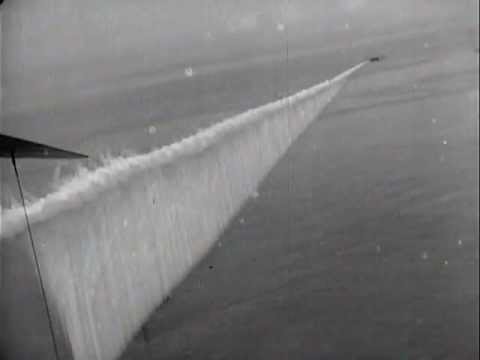
- Hiding a Ship with Smoke
- Do We Have Victorians to Thank for Consumerism?
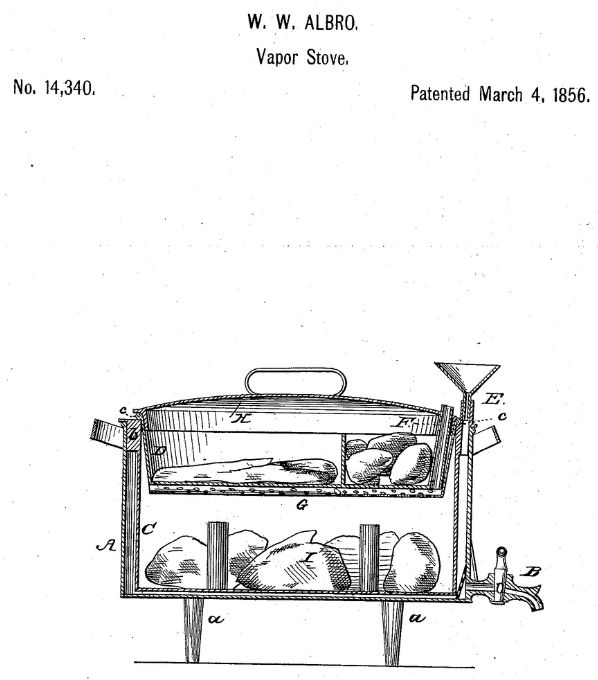
- Cooking Meat Without Fire
- The Internet Archive Can Now Prevent Research Papers From Vanishing
- This Kitten Sweetly Sleeps With A Chicken
- Wikipedia Apparently Has A Massive Impact On Tourism!
- The Source Of All Sexual Energy
| Posted: 20 Sep 2020 09:35 AM PDT
The popular view of Roman Emperor Nero is that of Peter Ustinov's performance in Quo Vadis. People who know nothing else of Nero know that he fiddled while Rome burned. While that might be true, it doesn't tell the entire story. We think of Nero as a cruel sociopathic tyrant because of the stories that followed him all these centuries. Most of them are quite embellished, if not totally made up.
John Drinkwater is the author of a new Nero biography, in which the Roman emperor appears to be a run-of-the-mill ruler, a young man who preferred to write poetry and sing than deal with politics. He did have his mother killed, but the story of Nero obliviously letting Rome burn was nonsense. Nero was no angel, but neither was he the despot he's been portrayed to be. Read what the historians say about Emperor Nero at Smithsonian.  |
| The Best Opening Theme Songs In Television History, Ranked Posted: 20 Sep 2020 09:05 AM PDT
What makes a good TV theme song? Is one good because it's memorable, because it's a repurposed classic, because it illustrates the show well, or because the creative department made awesome graphics for the intro? Using all these criteria, Vince Mancini ranked the 25 best TV theme songs. |
| Posted: 20 Sep 2020 09:05 AM PDT
|
| Do We Have Victorians to Thank for Consumerism? Posted: 20 Sep 2020 09:05 AM PDT The Victorian era was when colonialism and the Industrial Revolution collided, and the fashion was to collect interesting objects, or any objects at all, to stuff one's home with. Disposable income led to rampant consumerism, and an obsession with "things." The Sambournes were an example, if not the epitome of this consumerism.
While Britain was the prime example of consumerism at the time, and the reason we call it the Victorian Era at all, examples of runaway acquisition could be found all over the world. Read about the rise of "things" at Literary Hub.-via Strange Company |
| Posted: 20 Sep 2020 09:05 AM PDT
Today, we have self-heating cans of soup, that use a chemical reaction to produce heat. It's not a new idea. In fact, a recipe from 13th-century tells us how to do it.
The part about timing the cooking hints that this method might be used while traveling, in a wagon or boat, when no fire would be possible. The same technique, with differences in technology, has been used in the centuries since, which you can read about at Old & Interesting. -via Metafilter |
| The Internet Archive Can Now Prevent Research Papers From Vanishing Posted: 20 Sep 2020 09:05 AM PDT
Most institutions are now investing in online journals or platforms for accessibility. Sure, it's easier to find research papers and academic journals that can aid us in our studies, but what happens when institutions stop paying for web hosting or the platform's service? There's a high risk that the research stored within those services or platforms will disappear. Archivists at the Internet Archive are hard at work preserving open-access journals permanently, as Vice details: Between 2000 and 2019, nearly 200 open-access journals and the research papers they published have vanished from the internet, according to a new study published on arxiv preprint server. Nine-hundred more inactive, open-access journals are also at high risk of vanishing in the near future, the researchers found. Of the 176 journals they identified, around one-third vanished from the web within one year of the last publication, taking their articles and research down with them. Since 2017, archivists at the Internet Archive have worked to preserve open-access journals permanently. "Of the 14.8 million known open access articles published since 1996, the Internet Archive has archived, identified, and made available through the Wayback Machine 9.1 million of them," Brian Newbold at the Internet Archive wrote on Tuesday. To expand those efforts, IA launched the Fatcat editable catalog with an open API for anyone to contribute open-access scholarly works, as well as a new platform for searching through those archives Image via Vice |
| This Kitten Sweetly Sleeps With A Chicken Posted: 20 Sep 2020 06:06 AM PDT
Warning for major amounts of cuteness! Watch as a British Shorthair kitten sweetly sleeps with a tiny chicken. You might think it's a waste of almost two minutes of your time, but no, it won't be. Watching two different animals getting along and becoming cuddly with each other is totally not a waste of time. |
| Wikipedia Apparently Has A Massive Impact On Tourism! Posted: 20 Sep 2020 06:06 AM PDT
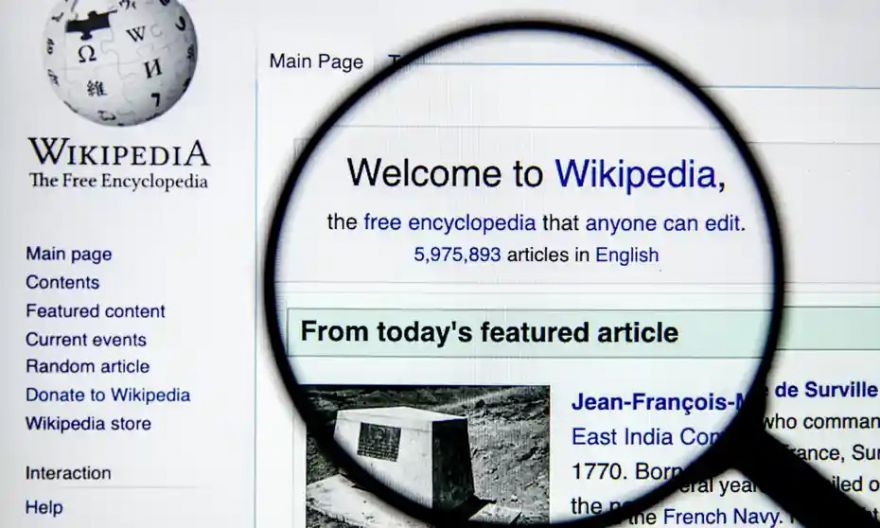
Tourism chiefs can drive business to their towns or cities by simply updating or editing their Wikipedia page. Who could have known that that method is one of the most cost-effective ways to promote tourism? Economists at the Collegio Carlo Alberto in Turin, Italy, and ZEW in Mannheim, Germany, found that a few simple edits to a Wikipedia page could lead to an extra £100,000 a year in tourism revenue, as the Guardian detailed: The researchers randomly selected cities across Spain to receive targeted improvements to their Wikipedia pages, adding a few paragraphs of information on their history and local attractions, as well as high-quality photos of the local area. It didn't take an expert, either. Most of the content added was simply translated over from the Spanish Wikipedia into either French, German, Italian or Dutch. Doing so had an immediate and remarkable effect: adding just two paragraphs of text and a single photo to the article increased the number of nights spent in the city by about 9% during the tourist season. In some instances, the increase was even larger. For cities with barely anything on their Wikipedia pages, a minor edit could raise visits by a third. "If we extend this to the entire tourism industry, the impact is large," write the authors, Marit Hinnosaar, Toomas Hinnosaar, Michael Kummer and Olga Slivko. "Its impact could be in billions of euros." Image via the Guardian |
| The Source Of All Sexual Energy Posted: 20 Sep 2020 06:06 AM PDT
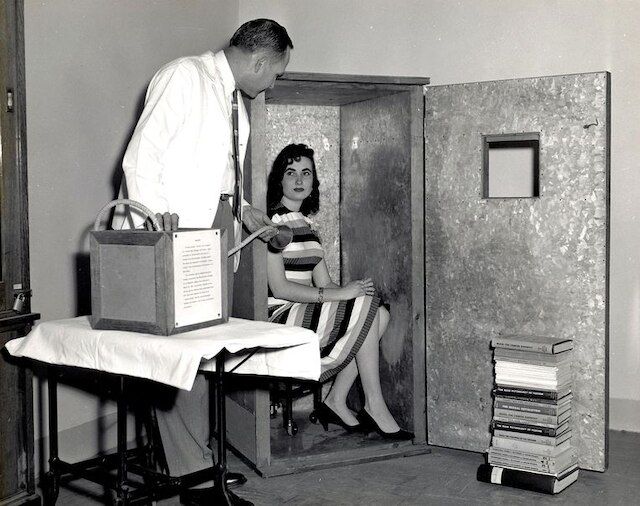
Well, that's what Wilhelm Reich thought. The psychoanalyst believed he had discovered "orgone" energy, what he believed was the cosmic source of all sexual energy. Reich even went as far as building and selling "orgone accumulators," items that he claimed could concentrate a person's energy when they sat inside them. Would you believe such a thing if it was presented today? I wouldn't, and neither did the psychoanalytic community during the time he released his outlandish claims. Check out Popular Science's podcast, The Weirdest Thing I Learned This Week, to hear more about this cosmic sex source! Image via Popular Science |




| You are subscribed to email updates from Neatorama. To stop receiving these emails, you may unsubscribe now. | Email delivery powered by Google |
| Google, 1600 Amphitheatre Parkway, Mountain View, CA 94043, United States | |
No comments:
Post a Comment
Keep a civil tongue.