

Neatorama |
- Accidentally Composing Songs That Already Exist
- Studying The Sun’s Dusty Environment
- How The Ancestral Puebloans Survived The Devastating Droughts In New Mexico
- Doggo Gently Takes Away Pen From His Human
- For Christmas 2020, Watch a Dumpster Fire for an Hour
- Isaac Newton’s Attempts to Unlock Secret Code of the Pyramids
- An Icy Night in Ukraine
- The Rise and Fall of Peoria's Cookie Monster
- Treating Cystic Fibrosis And Cancer Using Synthetic Llama Antibodies
- Man-made Mass Now Likely Outweighs Life On Earth
- Fallen Tree Gushes Water
- Muppet Bloopers
- Streamer Freaks Out When She Finds An Extremely Rare Pokemon
- Anecdotes About Historical Figures
- Robot Vacuum Cleaners Can Be Used To Spy On You
| Accidentally Composing Songs That Already Exist Posted: 12 Dec 2020 08:51 PM PST
With the millions of songs that are published in the world, it has become difficult for composers to create something new, with a unique melody, chord progression, and melody. (Image Credit: Daniel Thrasher/ YouTube)
 |
| Studying The Sun’s Dusty Environment Posted: 12 Dec 2020 08:49 PM PST
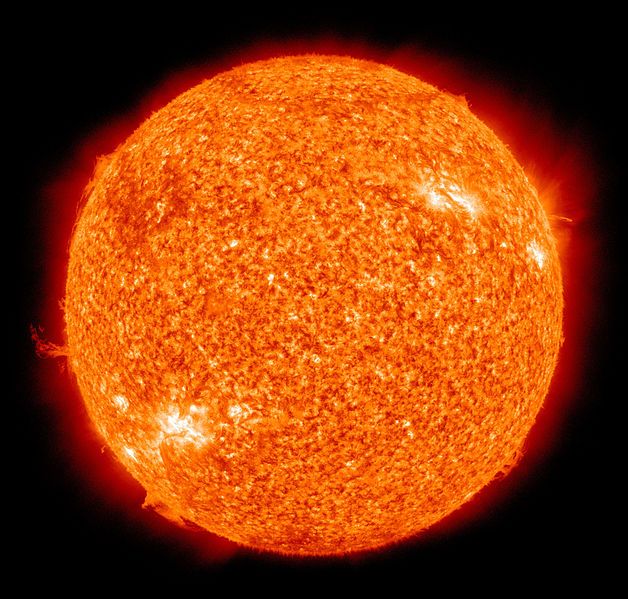
How did planets in the galaxies form? Researchers from the Laboratory for Atmospheric and Space Physics (LASP) at the University of Colorado Boulder are diving deep to the mystery of how planets like ours were formed by examining the dust that surrounds the Sun. The pursuit comes by way of NASA's Parker Solar Probe, a pioneering mission that has taken scientists closer to Earth's home star than any spacecraft to date. Over two years, the probe has circled the sun six times, hitting maximum speeds of roughly 290,000 miles per hour. In the process, the Parker team has learned a lot about the microscopic grains of dust that lie just beyond the sun's atmosphere, said David Malaspina, a space plasma physicist at LASP. In new research, for example, he and his colleagues discovered that the densities of these bits of rock and ice seem to vary wildly over the span of months--not something scientists were expecting. [...] "By learning how our star processes dust, we can extrapolate that to other solar systems to learn more about planet formation and how a cloud of dust becomes a solar system," he said. Learn more about this over at EurekAlert. (Image Credit: NASA/SDO (AIA) / Wikimedia Commons) |
| How The Ancestral Puebloans Survived The Devastating Droughts In New Mexico Posted: 12 Dec 2020 08:48 PM PST
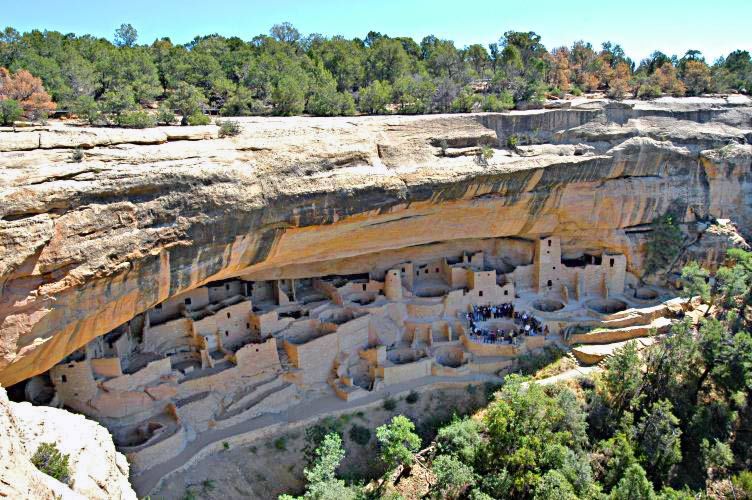
The Ancestral Puebloans have lived for hundreds of years in what is now western New Mexico — a treacherous and arid landscape. For a time, this place experienced devastating droughts, and these droughts have affected them. But thanks to their creativity and ingenuity, the Ancestral Puebloans survived these droughts. How? By melting ancient ice found deep in the caves. Exploring an ice-laden lava tube of the El Malpais National Monument and using precisely radiocarbon- dated charcoal found preserved deep in an ice deposit in a lava tube, USF geosciences Professor Bogdan Onac and his team discovered that Ancestral Puebloans survived devastating droughts by traveling deep into the caves to melt ancient ice as a water resource. Dating back as far as AD 150 to 950, the water gatherers left behind charred material in the cave indicating they started small fires to melt the ice to collect as drinking water or perhaps for religious rituals. Working in collaboration with colleagues from the National Park Service, the University of Minnesota and a research institute from Romania, the team published its discovery in Scientific Reports. The droughts are believed to have influenced settlement and subsistence strategies, agricultural intensification, demographic trends and migration of the complex Ancestral Puebloan societies that once inhabited the American Southwest. Researchers claim the discovery from ice deposits presents "unambiguous evidence" of five drought events that impacted Ancestral Puebloan society during those centuries. Learn more about this over at ScienceDaily. Now that's persistence. (Image Credit: Lorax/ Wikimedia Commons) |
| Doggo Gently Takes Away Pen From His Human Posted: 12 Dec 2020 08:48 PM PST
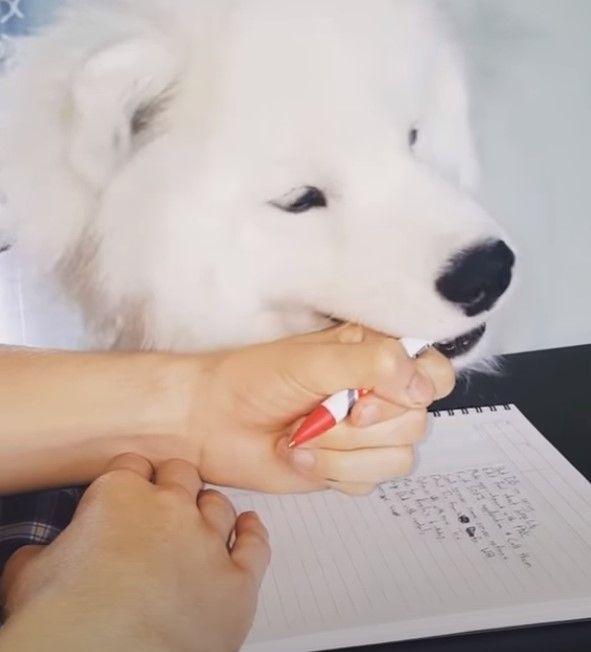
Echo the Samoyed dog knows the importance of having balance between work and play, so when he saw that his human was still working, he gently took the pen away from her hand to remind her that it's time to take a break and play with him. What a thoughtful doggo. Via Dogs Addict (Image Credit: DailyPicksandFlicks/ YouTube)
|
| For Christmas 2020, Watch a Dumpster Fire for an Hour Posted: 12 Dec 2020 07:56 PM PST
Sitting in front of a fireplace on a cold winter night is one of the special joys of winter life. Yule log videos are a substitute for those of us who lack a functional fireplace. You can try videos with Lil Bub the cat, Nick Offerman, or the corpse of Darth Vader. But this is 2020. So it's more appropriate that this dumpster fire of a year feature a dumpster fire celebration. That's why AM/FM, an advertising agency in Edmonton, Alberta created this symbolic view of the year with Christmas carols playing softly in the background. The materials burned are themselves representative of 2020: CTV News quotes a partner in the agency: "We filmed it for an hour straight and just threw stuff in a watched it burn," said Anderson. "It was interesting for sure." Each of the 2020-related items were handpicked by the team and had its own backstory. "Struggling with puzzles, not wearing ties, the White Claw craze. They were all just little inside things I think that our team shared and went through and it was a good laugh for all of us," said Anderson. "The sourdough starter was hilarious to me because I couldn't get mine started for the life of me." -via Dave Barry |
| Isaac Newton’s Attempts to Unlock Secret Code of the Pyramids Posted: 12 Dec 2020 07:56 PM PST
Like Da Vinci before him, Sir Isaac Newton was a polymath with plenty of claims to fame. He explained gravity. He developed calculus. He invented the cat flap. But Newton's not-so-public interests are just as fascinating. He studied alchemy and theology, as evidenced in his voluminous unpublished papers. Three pages of Newton's notes about his research of Egyptian pyramids are up for auction by Sotheby's.
Read about Newton's obsession with Egyptian pyramids at the Guardian. -via Strange Company |
| Posted: 12 Dec 2020 07:56 PM PST Winter is always fun from r/funny Earlier this week, Kiev had an ice storm which left a coating on everything, including roads, sidewalks, and ramps. Security cameras caught people trying to negotiate the perils of ice-covered bricks, particularly one woman who put in an inordinate amount of effort before giving in. In our next foreign aid package, we need to include salt and YakTrax. Click on the image above to start the video. -via reddit |
| The Rise and Fall of Peoria's Cookie Monster Posted: 12 Dec 2020 07:42 PM PST
Peoria artist Joshua Hawkins was commissioned to paint a mural in Peoria, Illinois. The work had to be completed over Thanksgiving weekend, and he would be well paid. The requested art was of Sesame Street's Cookie Monster, holding a cookie with the caption "Peace, Land, and Cookies" in Russian. So Hawkins did the work, on a building owned by Nate Comte.
The mystery man who had hired Hawkins had said he was Comte, and Hawkins had been paid in full. The real Comte was so mad that he quickly painted over the mural, so it only existed for about a week. However, art lovers of Peoria and elsewhere have turned the now-white wall into a shrine, mourning the loss of Cookie Monster. There was also backlash against Comte. Comte now plans to commission a local artist to paint a different mural on the wall. We still don't know who paid for the first mural. -via Metafilter |
| Treating Cystic Fibrosis And Cancer Using Synthetic Llama Antibodies Posted: 12 Dec 2020 07:42 PM PST
Llamas are known for very soft wool, but they can offer much more than that. They have amazing antibodies that, according to a 2018 study made by scientists from the United States, could be key towards making a universal flu vaccine. But that's not all that their antibodies can offer. Now, new research published in the journal Nature Methods has created a synthetic antibody inspired by llamas to stop the human body from destroying imperfect, but still functional proteins. The novel technology could be used to treat several conditions including cystic fibrosis, cancer and epilepsy. Many genetic diseases result in mutated proteins being churned out by our cells, and while some of these are still able to carry out their function our bodies will ultimately destroy them. The imperfect proteins are marked by our cell's quality control system with a peptide called ubiquitin. While this is a necessary cell function, preventing these proteins from being destroyed can sometimes be beneficial as while they are imperfect some are still capable of doing their job. Deubiquitinase enzymes (DUBs) can be employed to remove the "for destruction" tags but allowing them to remove tags from all imperfect proteins would be harmful and so such therapies need to be targeted. Here is where our magical llama antibodies come into play, as study authors Henry Colecraft and his student, Scott Kanner, identified a means of targeting DUBs using nanobodies. Nanobodies are tiny antibodies which are produced by llamas, camels and alpacas, and they bind with their targets with uniquely reliable specificity. They are used in place of antibodies because antibodies' function changes when acting inside cells, unlike nanobodies. Learn more about this study over at IFL Science. Cool! (Image Credit: Pezibear/ Pixabay) |
| Man-made Mass Now Likely Outweighs Life On Earth Posted: 12 Dec 2020 07:42 PM PST
Man-made stuff is now likely to be officially heavier than the mass of the natural world. A new research published in Nature, which has detailed the "crossover point" between man-made mass and living biomass, seems to suggest this. Considering the fact that we today are largely dependent on manufactured materials, we know that it is inevitable that we would soon outweigh nature. Still, it is still surprising at how it happened so soon. The weight of roads, buildings and other constructed or manufactured materials is doubling roughly every 20 years, and authors of the research said it currently weighed 1.1 teratonnes (1.1 trillion tonnes). As mankind has ramped up its insatiable consumption of natural resources, the weight of living biomass—trees, plants and animals—has halved since the agricultural revolution to stand at just 1 teratonne currently, the study found. Estimating changes in global biomass and manmade mass since 1990, the research showed that the mass of human-produced objects stood at just three percent of the weight of biomass at the start of the 20th century. But since the post-World War II global production boom, manufacturing has surged to the extent that humans now produce the equivalent of the weight of every person on Earth every week on average. Learn more about this over at PHYS.org. What are your thoughts about this one? (Image Credit: Ribastank/ Pixabay) |
| Posted: 12 Dec 2020 07:42 PM PST
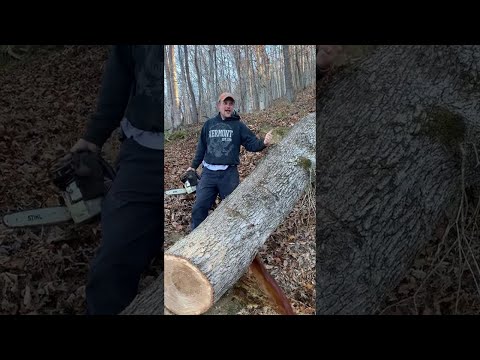
Two friends were cutting a path in the woods to a hunting stand near Mallie, Kentucky. When they cut down one particular tree, the cut in the trunk poured out water for three to four minutes. And it's not just dripping water out; there's a lot of pressure behind that flow. -via Born in Space |
| Posted: 12 Dec 2020 07:42 PM PST
It's March 30, 1977. Jim Henson and his colleagues at what would eventually become the Creature Shop are filming Emmet Otter's Jug-Band Christmas. The script calls for a drum to roll past Emmet and Ma Otter. It's not rolling correctly, though. But, in take after take, muppeteers Jerry Nelson and Frank Oz, stay in character. -via Super Punch |
| Streamer Freaks Out When She Finds An Extremely Rare Pokemon Posted: 12 Dec 2020 07:42 PM PST
"How rare is it?" you ask? It's a 1 in 500,000 chance. Or if you want it in percentage, it's 0.00002% chance of getting, and that's why it's understandable that Twitch streamer AjentVee freaked out when she found the Pokemon she's been tracking down for the past month. The Pokemon gods have blessed her. AjentVee has spent the last month or so tracking down a "shiny" Sinistea in Pokémon Sword and Shield as part of her overall goal to catch an entire Pokédex's worth of these elusive, alternatively colored pocket monsters. But that's not all: She also wanted her Sinistea to be "authentic," which means that it's one of the select few members of its species with a rare mark on the bottom of its teacup. This means that every time AjentVee encountered a Sinistea, there was a one in 500,000 chance it would be both "shiny" and "authentic." By her own estimation, it only took 4,000 attempts, so I'd say she got off lucky! Not only that, but the Sinistea that ended up being authentic was the first shiny she encountered that day, and at just 11 minutes into her stream at that. Epic! (Image Credit: AjentVee/ Kotaku) |
| Anecdotes About Historical Figures Posted: 12 Dec 2020 07:42 PM PST
When donkeys and horses mate, they produce beings called mules — strong four-legged creatures that ate little. Seeing that these mules would be a great asset for young America's farms, George Washington longed to have donkeys and have them mate with the horses. But Washington's desire to breed mules hit a stumbling block. America didn't have any good male donkeys (or "jacks," as he called them). The best jacks were in Spain, who wouldn't export them. Washington spent years negotiating with diplomats to change this, and finally, the king agreed [to] ship a couple to him. This is just one of the anecdotes that Cracked.com has documented at their site. Check out the other anecdotes, which star Henry VIII, Abraham Lincoln, Peter the Great, and Teddy Roosevelt, over at the site. (Image Credit: Marzena7/ Pixabay) |
| Robot Vacuum Cleaners Can Be Used To Spy On You Posted: 12 Dec 2020 07:42 PM PST
It seems that the robot vacuum cleaners that you have at your home not only can pick up the dust and dirt in your home. It can also pick up your private conversations. Computer scientists from NUS have demonstrated this capability through their work which was presented last month at the Association for Computing Machinery's Conference on Embedded Networked Sensor Systems (SenSys 2020). The novel method, called LidarPhone, repurposes the Lidar sensor that a robot vacuum cleaner normally uses for navigating around a home into a laser-based microphone to eavesdrop on private conversations. [...] The core of the LidarPhone attack method is the Lidar sensor, a device which fires out an invisible scanning laser, and creates a map of its surroundings. By reflecting lasers off common objects such as a dustbin or a takeaway bag located near a person's computer speaker or television soundbar, the attacker could obtain information about the original sound that made the objects' surfaces vibrate. Using applied signal processing and deep learning algorithms, speech could be recovered from the audio data, and sensitive information could potentially be obtained. Learn more about this over at TechXplore. Scary. (Image Credit: National University of Singapore/ TechXplore) |











| You are subscribed to email updates from Neatorama. To stop receiving these emails, you may unsubscribe now. | Email delivery powered by Google |
| Google, 1600 Amphitheatre Parkway, Mountain View, CA 94043, United States | |
No comments:
Post a Comment
Keep a civil tongue.