Plus: Microplastics found in 'all' human testicles
͏ ͏ ͏ ͏ ͏ ͏ ͏ ͏ ͏ ͏ ͏ ͏ ͏ ͏ ͏ ͏ ͏ ͏ ͏ ͏ ͏ ͏ ͏ ͏ ͏ ͏ ͏ ͏ ͏ ͏ ͏ ͏ ͏ ͏ ͏ ͏ ͏ ͏ ͏ ͏ ͏ ͏ ͏ ͏ ͏ ͏ ͏ ͏ ͏ ͏ ͏ ͏ ͏ ͏ ͏ ͏ ͏ ͏ ͏ ͏ ͏ ͏ ͏ ͏ ͏ ͏ ͏ ͏ ͏ ͏ ͏ ͏ ͏ ͏ ͏ ͏ ͏ ͏ ͏ ͏ ͏ ͏ ͏ ͏ ͏ ͏ ͏ ͏ ͏ ͏ ͏ ͏ ͏ ͏ ͏ ͏ ͏ ͏ ͏ ͏
Welcome to The Independent's weekly round-up on the climate crisis, and the solutions to tackle it. Thanks for reading - SM |
|
|
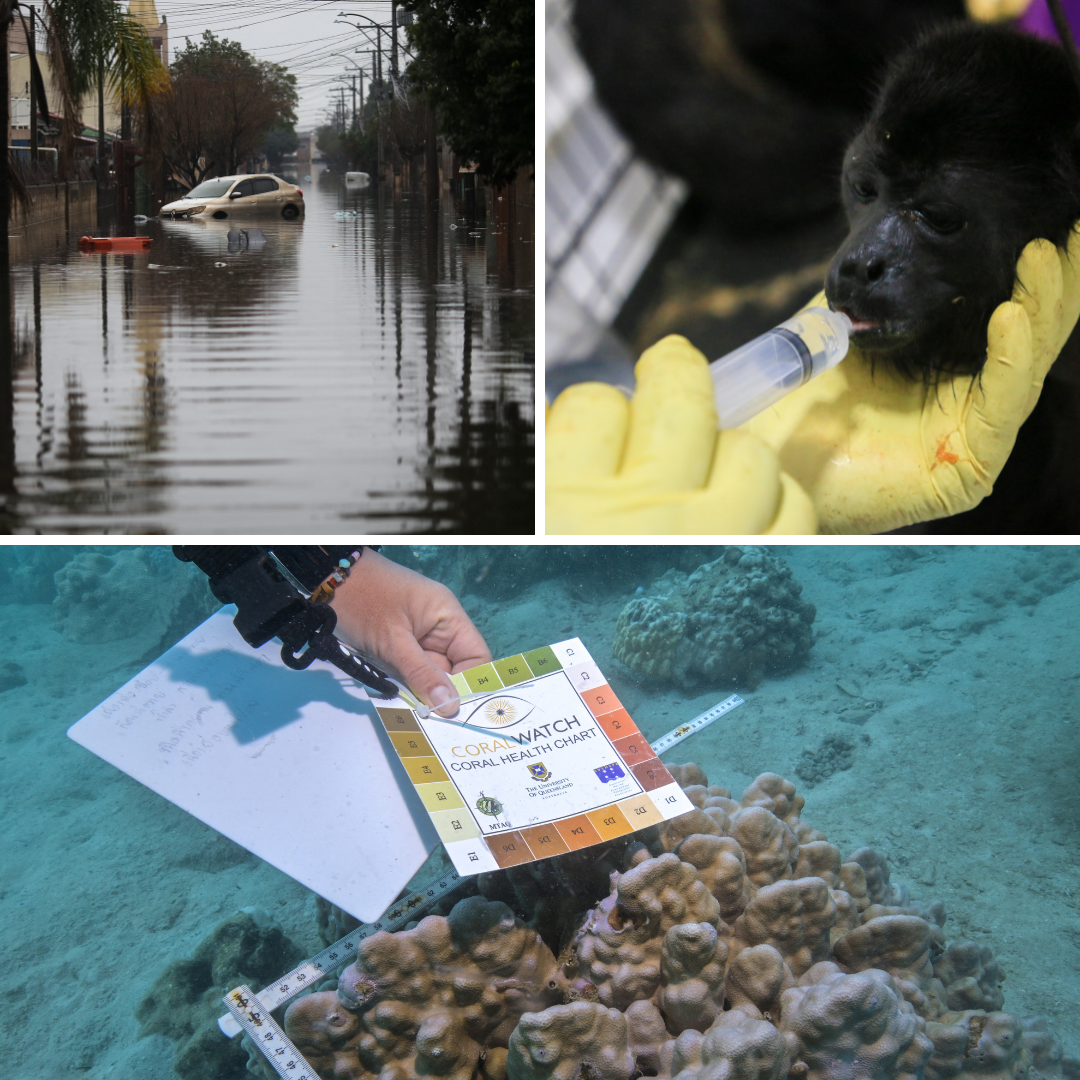
From top left clockwise: A car is partially submerged in a flooded street in the Sarandi neighborhood, one of the hardest hit by the heavy rains in Porto Alegre, Rio Grande do Sul state, Brazil; A veterinarian feeds a young howler monkey rescued amid extremely high temperatures in Tecolutilla, Tabasco state, Mexico; A marine biologist uses a coral health chart to measure bleached corals at a reef in Koh Mak, Trat province, Thailand (Credit: AFP via Getty Images, AP, Reuters) |
|
|
A vast Antarctic glacier is more vulnerable to melting than previously thought, according to new research, with potentially devastating consequences for billions of people.
The Thwaites Glacier — dubbed the "Doomsday" glacier because of the grave impacts for global sea level rise if it melts — is breaking down "much faster" than expected, according to a peer-reviewed study published on Monday in the academic journal, Proceedings of the National Academy of Sciences.
Using satellite imagery, scientists determined that widespread contact between the glacier and warm ocean water is speeding up the melting process.
The climate crisis is interrupting natural processes across large parts of the continent, according to the Antarctic and Southern Ocean Coalition.
The glacier, roughly the size of the United Kingdom, could cause global sea levels to rise more than two feet if it melts completely, according to the study.
"Thwaites is the most unstable place in the Antarctic and contains the equivalent of 60 centimeters of sea level rise," study co-author Christine Dow said in a statement.
"The worry is that we are underestimating the speed that the glacier is changing, which would be devastating for coastal communities around the world," she continued.
Read the full story here.
Meanwhile, worrying research has revealed how microplastics are breaching the "most intimate aspects of human health".
Scientists have found that these dangerous tiny particles were present in every sample of human and canine testicles they studied, raising concerns about male fertility.
In recent years, scientific studies have shown microplastics are present everywhere, from the water we drink to the food we eat and even inside human organs.
Now scientists are worried that by getting into our reproductive organs, microplastics could have an impact on the fertility of human beings.
"The question we must ask ourselves is: what will it take for us to rethink our relationship with plastic? Is the prospect of sperm counts falling to zero by 2045 enough to kick us into action?" asks Sian Sutherland, co-founder of A Plastic Planet and the Plastic Health Council, in response to the study.
"The health, and existence, of future generations depends on our ability to innovate and transition away from our addiction to plastic."
Read the full story here.
More climate news this week from The Independent
Plastics in birds' stomachs release toxic chemicals, study suggests
Freak weather causes 'absolutely shocking' plague of bush flies in Australia
Experts warn of record Atlantic hurricanes this summer – and they could come early
Young Alaskans sue state over gas project they say threatens their future
Thai sea temperatures hit 'boiling' record, bleaching almost all coral
How the climate crisis is making turbulence worse and flying more dangerous
|
|
|
"Low-lying communities and entire countries could disappear forever. We would witness a mass exodus of entire populations on a biblical scale. And we would see ever-fiercer competition for fresh water, land and other resources." |
|
|
Life in the climate crisis |
|
|
Enjoy 6 months, completely FREE |
With the election date set, our mission to provide unbiased journalism has never been more important. As the only quality news source that refuses to take political sides, you can rely on our commentary and analysis to help you make sense of the key elections in the UK and US. |
You may cancel at any time. Offer ends 31 May |
|
|
|
|
|
|
Join the conversation or follow us |
|
|
Download the free Independent app |
|
|
Please do not reply directly to this email You are currently registered to receive The Independent's climate newsletter. To unsubscribe from The Independent's climate newsletter, or to manage your email preferences please click here. This e-mail was sent by Independent Digital News and Media Ltd, 14-18 Finsbury Square, London EC2A 1AH. Registered in England and Wales with company number 07320345
Read our privacy notice and cookie policy
|
|
| |




No comments:
Post a Comment
Keep a civil tongue.