Wearing amber specs saw me tossing and turning until 4 a.m. last week.
͏ ͏ ͏ ͏ ͏ ͏ ͏ ͏ ͏ ͏ ͏ ͏ ͏ ͏ ͏ ͏ ͏ ͏ ͏ ͏ ͏ ͏ ͏ ͏ ͏ ͏ ͏ ͏ ͏ ͏ ͏ ͏ ͏ ͏ ͏ ͏ ͏
| | | Sponsored by | |  | | | | |
 In the spirit of Sir Isaac Newton — who famously poked around behind his eyeball with a bodkin to see what happened — I recklessly decided to wear amber-tinted, blue-blocking reading glasses all day, every day, last week. Result: I completely trashed my ability to fall asleep before 4 a.m. I later learned that you should only wear them for a couple of hours before bedtime, otherwise your brain is tricked by "virtual darkness" into thinking it's the middle of the night. | | However, once I saw sense and only wore them in the evening, my sleep cycle quickly returned to normal. But why wear blue-blocking lenses at all? | | | | | | | Lights, camera, amber,
Tim Snaith
Newsletter Editor, Healthline |  | | Written by Tim Snaith
December 10, 2025 • 5 min read | | | | | | | |
| | 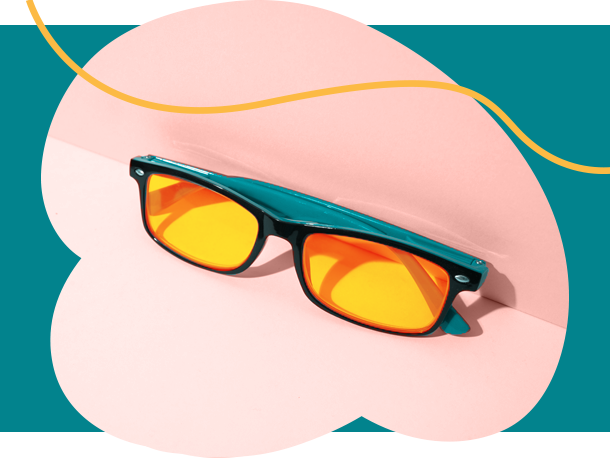 | | | | The pros and cons of 'virtual darkness' | | I spend a lot of time looking at screens — all throughout the working day, another couple of hours using my phone, another MacBook, and my Kindle immediately before sleeping. I spend most of my waking hours exposed to artificial light, much of it blue. | | Blue light has gained a reputation for being especially damaging, particularly in the evening and right before bed, but the evidence is not clear-cut. Short-wave light, regardless of its color, can affect your circadian rhythm. | | One way to reduce your exposure is to wear glasses that block these shorter wavelengths. I recently bought a pair that cut out 99% of blue and green light by being orange-tinted (clear blue blockers don't prevent eyestrain, according to the American Academy of Ophthalmology). | | 🟠 What's so special about orange? | | Wearing these creates what researchers call "virtual darkness," tricking your brain into nighttime mode even when you're looking at screens or walking around outside in the sunshine. Your eyes contain special sensors called intrinsically photosensitive retinal ganglion cells (ipRGCs) that detect "daytime" solely based on blue and green light. | | When you wear proper orange glasses, these sensors stop firing. Your brain effectively thinks you're in total darkness, even if you're looking at a lit screen or sitting in a bright room. This signals that your body should produce melatonin — the sleep hormone — as if the lights were off. It's also why wearing true blue- and green-blocking lenses all day can lead to sleeplessness, as I discovered to my cost last week. My brain had no intention of shutting down and going to sleep until nearly dawn, thanks to my muddled brain chemistry. | | The strongest validation for these glasses comes from research into bipolar disorder. The ongoing BLUES trial is testing "adaptive dosing," where patients adjust their use of amber lenses based on symptoms. For example, wearing the glasses for 14 hours during manic episodes, but only for 2 hours before bed during stable periods. With psychiatrists already reporting success in real-world clinics, these amber lenses are emerging as a powerful, nondrug tool for long-term mood stability. | | ▶️ Beyond bipolar | | For people with Delayed Sleep Phase Syndrome — extreme night owls who struggle to fall asleep until 2 a.m. or later — orange glasses show benefits. One 2016 study found that wearing orange glasses 2 to 3 hours before the desired bedtime can manually "advance" the circadian clock, helping people feel sleepy earlier than their body would naturally. | | For most people, the practical takeaway is straightforward: If you're having trouble sleeping and use screens in the evening, wearing orange glasses for 2 to 3 hours before bedtime might help. They won't cure insomnia or replace good sleep hygiene, but they provide a biological signal that it's nighttime, something our ancestors got automatically from sunset, but that we've lost in our artificially lit world. | | ⏰ Just remember the timing. Your brain needs blue light during the day to function properly. Orange glasses are strictly an evening tool, not an all-day solution. | | | | 🌟 Over to you: What's your secret weapon for restful sleep at a regular time? Email wellnesswire@healthline.com and let us know. | | | | | | | | Sponsored by | | | | | | Let it grow | | | | | | |  | | Minoxidil for Men through Hims | | Topical minoxidil is a popular hair loss treatment approved by the Food and Drug Administration (FDA). Hims offers access to an extra-strength version that you can apply to your head twice a day to try and stimulate hair growth. Keep in mind that minoxidil can potentially lead to an itchy, dry, scaly, irritated, or burning scalp, so be sure to consult your doctor before using it. | | | Every product we recommend has gone through either Healthline's or Optum Now's vetting processes. If you buy through links on this page, we may receive a small commission or other tangible benefit. Healthline has sole editorial control over this newsletter. Potential uses for the products listed here are not health claims made by the manufacturers. Healthline and Optum Now are owned by RVO Health. | | | | | | | | | | | |   | | | | | | | | Until next time, |  | Take care of yourself, and we'll see
you again soon! | | |  | | |  | | This edition was powered by | | a walk in the morning sunshine. | | | | | | | | View in browser
Did a friend send you this email? Subscribe here.
To see all newsletters, click here.
Privacy | Unsubscribe
We may feature your messages to our inbox within our content. Please do not provide any personal identifiable information. Replies may be edited for length and clarity. For more, see our Privacy Policy.
Our website services, content, and products are for informational purposes only. Healthline does not provide medical advice, diagnosis, or treatment and should not be used as a substitute for medical advice from a healthcare professional. Healthline encourages you to make any treatment decisions with your healthcare professional.
Every product we recommend has gone through either Healthline's or Optum Now's vetting processes. If you buy through links on this page, we may receive a small commission or other tangible benefit. Healthline has sole editorial control over this newsletter. Potential uses for the products listed here are not health claims made by the manufacturers. Healthline and Optum Now are owned by RVO Health.
© 2025 RVO Health
1101 Red Ventures Drive
Fort Mill, SC 29707 | | | | |   | | |
Popular Posts (Last 7 Days)
-
From Waitrose's carb renaissance to the rise of high-end food theft, plus what top chefs really eat on Boxing Day ͏ ͏ ...
-
-
| |


No comments:
Post a Comment
Keep a civil tongue.