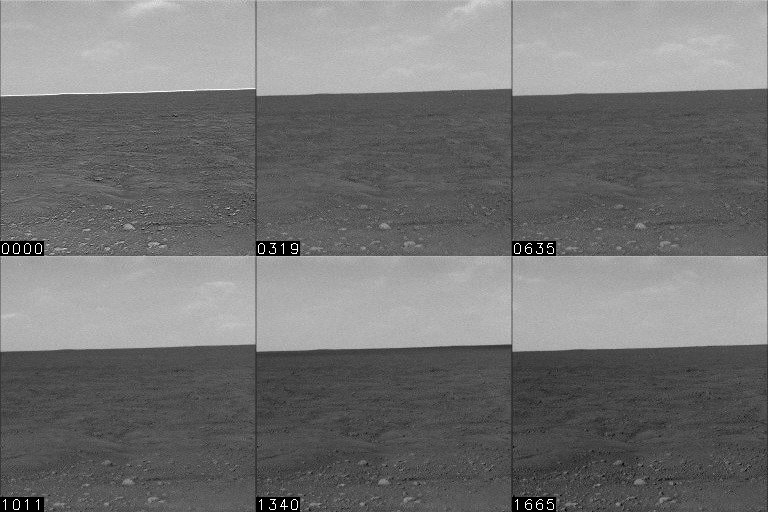
Remember the movies of clouds floating above the Phoenix Lander? Further study with the lander's Lidar instrument has detected snow falling from Martian clouds. "The clouds are composed of ice crystals, and some of the crystals are large enough to fall through the atmosphere," said Jim Whiteway, lead scientist for the Meteorological Station on Phoenix. Whiteway and several researchers shared recent findings from Phoenix at a press briefing today. "So snow is falling from the clouds and we are going to be watching very closely over the next month for evidence that the snow is actually landing on the surface. This is a very important factor in the hydrological cycle on Mars, with the exchange of water between the surface and the atmosphere."
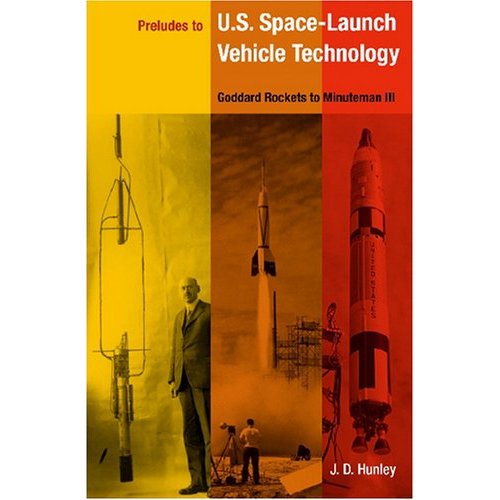
Preludes to U.S. Space-Launch Vehicle Technology: Goddard Rockets to Minuteman III
A simple lesson in school physics provides the fundamental theory behind rockets. Simply put, by quickly pushing lots of exhaust out, the great mass of a rocket will ascend. Yet, as is often the case, putting theory into practise is anything but simple. J.D. Hunley in his book 'Preludes to U.S. Space-Launch Vehicle Technology - Goddard Rockets to Minuteman III' presents the many painful, exciting steps that made this technological marvel a practical mode of transport. The reader will find that rocket theory is fine, but it's through the engineering that people have really shown the height to which they can arise. (...) Read the rest of Book Review: Preludes to U.S. Space-Launch Vehicle Technology - Goddard Rockets to Minuteman III (483 words)
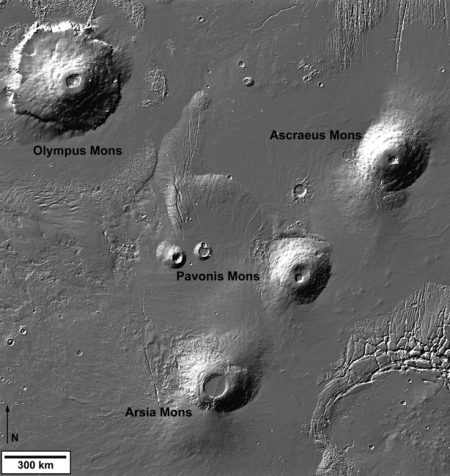
This week we have another new host for the Carnival of Space: Twisted Physics. Learn about the legacy of Challenger, low gravity volcanoes, and the plucky little rovers that could.
And if you're interested in looking back, here's an archive to all the past carnivals of space. If you've got a space-related blog, you should really join the carnival. Just email an entry to carnivalofspace@gmail.com, and the next host will link to it. It will help get awareness out there about your writing, help you meet others in the space community - and community is what blogging is all about. And if you really want to help out, let me know if you can be a host, and I'll schedule you into the calendar.
Finally, if you run a space-related blog, please post a link to the Carnival of Space. Help us get the word out.
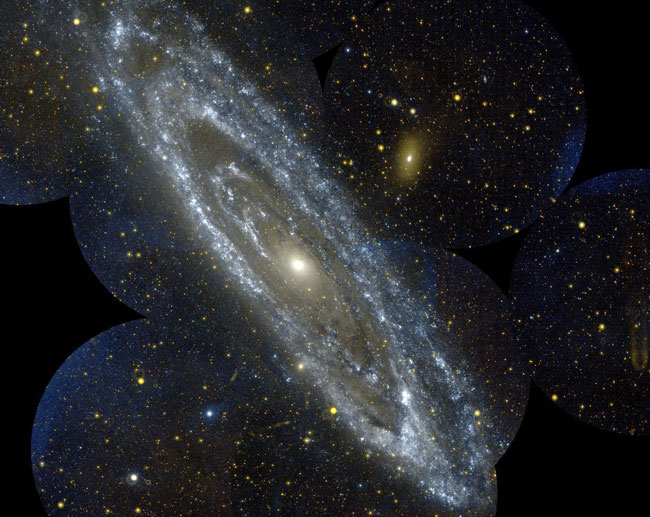
Another week, another roundup of your questions. This week listeners asked: will reaching light speed destroy the Universe? When is Andromeda going to look really, really cool with the unaided eye? Why didn't dark matter all turn into black holes? And there's even more. If you've got a question for the Astronomy Cast team, please email it in to info@astronomycast.com and we'll try to tackle it for a future show.
Look around you. Breathe in some air. Everything you can see and feel was formed in a star. Today we'll examine that long journey that matter has gone through, forged and re-forged in the hearts of stars. In fact, the device you're using to listen to this podcast has some elements formed in a supernova explosion.
A major failure on the Hubble Space Telescope has shut down science operations, as the spacecraft is unable to send any data to Earth, according to an article on NASA Spaceflight.com. The failure is on the "Side A" control system. There is also a back-up system, Side B which has never been used. Attempts will be made to switch to Side B later this week. This switch has never been attempted during the lifetime of the telescope, but it is hoped that the switch will work, allowing the HST to return to functionality. This may have an impact on the STS-125's mission to repair the Hubble, delaying it to 2009, if managers decide to send up a replacement unit, or if a mitigation plan fails to restore the Telescope's functionality.
Update: NASA held a news conference this afternoon, and said the servicing mission — which was going to launch on Oct. 14 — is definitely on hold. They will attempt to turn on Side B later this week, and depending on how that goes, they are working on a plan to have the shuttle servicing mission bring up and install a spare Science Instrument Command and Data Handling System sometime in 2009. Phil has the dicey details over at Bad Astronomy (...) Read the rest of Major Failure On the Hubble Space Telescope; Repair Mission Options Being Weighed (241 words)
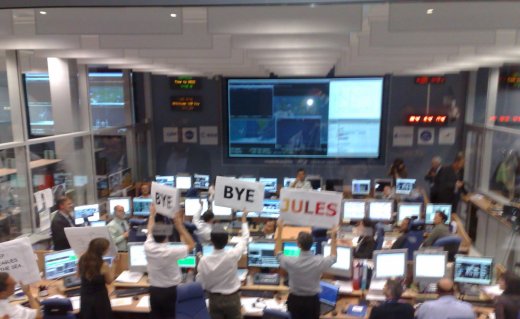
ESA's ATV Control Room following de-orbit burn. Credit: ESA
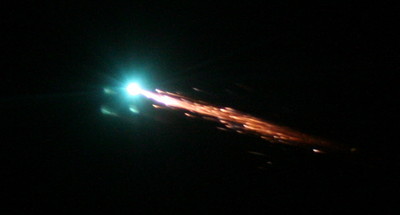
Europe's Jules Verne Automated Transfer Vehicle (ATV) successfully completed its six-month mission today with a controlled destructive re-entry over the South Pacific. Following a final de-orbit burn at 14:58 CEST which slowed its velocity by 70 m/s, the ATV entered the upper atmosphere at an altitude of 120 km at 15:31 CEST. It broke up at an altitude of 75 km with the remaining fragments falling into the Pacific some 12 minutes later. The break-up was monitored by two aircraft, a Gulfstream V, and a NASA DC-8. "The operations went perfectly; there was no hiccup at all." said ESA's mission director Alberto Novelli. "There is a very big feeling of accomplishment because the mission went perfectly from end to end. At the same time we are a little bit sad. The six months (of operation) were very intense and demanding, so there is a mixed feeling. But we are looking forward to start preparing for the following mission." Update: the first images from the re-entry have just been posted:
The commercial spaceflight company Space X successfully launched its Falcon 1 unmanned booster, becoming the first private company to send a rocket into orbit. The two-stage rocket lifted off at 7:16 p.m. EDT (23:16 GMT) from the the launch site on the Kwajalein Atoll in the about 2,500 miles (4,023 km) southwest of Hawaii. This successful launch comes almost two months after an engine timing error during stage separation caused the failure of Space X's third Falcon 1 test. If you missed watching the live webcast, below is the video. Watching the live webcast was wonderful; the people who actually built this rocket could be heard cheering in the background as each milestone in the climb to orbit was reached. Congratulations to everyone at Space X!
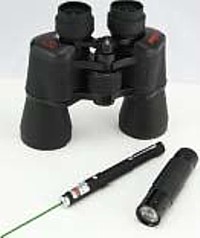
Are you ready for one very sweet and complete optics package? For anyone who does astronomy outreach work, is interested in practicing binocular astronomy or is just looking for a great teaching tool, I've got something you really need to take a look at… the Celestron 10X50 UpClose Binoculars and Green Laser Pointer Optics Kit. (...) Read the rest of Celestron Optics Kit - One Heck Of A Teaching Tool! (1,098 words)
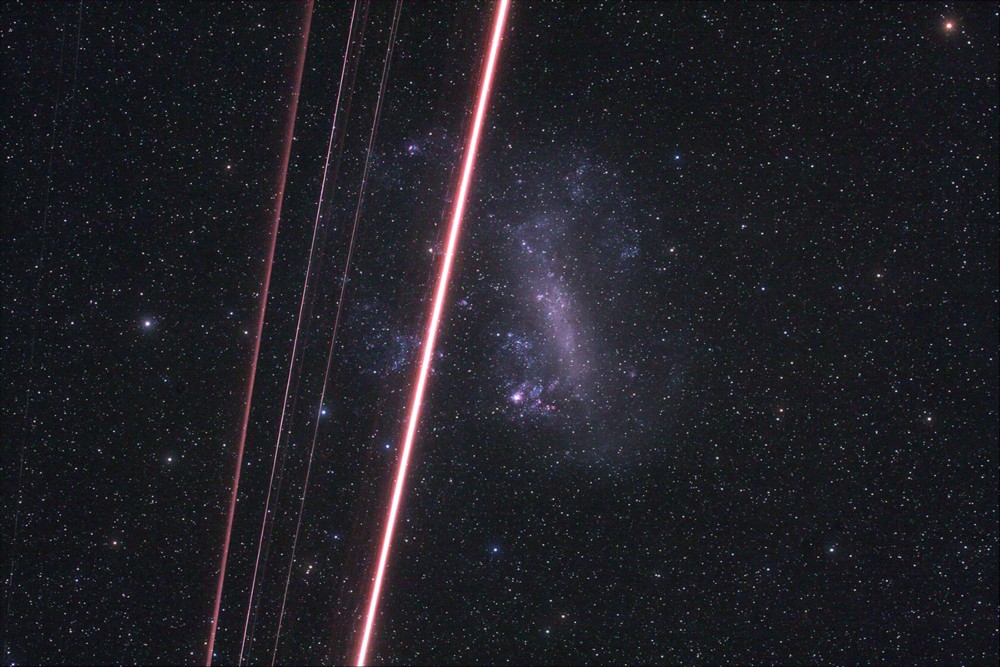
While imaging the Large Magellanic Cloud, astrophotographer Doug Robertson got a real surprise when he went to process his data…. He'd accidentally recorded the uncontrolled return of the intermediate stage of a recent Russian rocket launch that just put three GLOSNASS satellites into orbit. (...) Read the rest of Russian "Space Junk" - Caught In The Act (496 words)
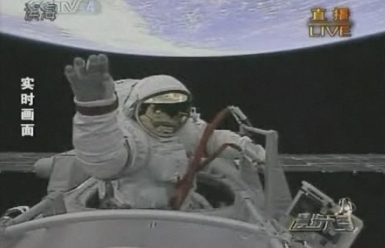
It's official, China has become the third nation to successfully carry out a spacewalk in Earth orbit. Fighter pilot Zhai Zhigang was the first to exit the Shenzhou-7 module at 16:30 Beijing Time (08:30 GMT), as the Chinese space agency streamed live video of the event. Zhai lifted himself through the hatch and waved at the camera attached to the service module on the outside of the craft, with Earth looming overhead. Shortly after, crew mate Liu Boming emerged to hand Zhai a small Chinese flag which he waved enthusiastically. The extra-vehicular activity (EVA) lasted for about 15 minutes. At the start of the EVA, Zhai said, "I'm feeling quite well. I greet the Chinese people and the people of the world." (...) Read the rest of China's First Spacewalk a Success (Video) (294 words)
Greetings, fellow SkyWatchers! It's a dark sky weekend and a great opportunity to really get to know some unusual deep sky objects - like brilliant open clusters and tiny compact galaxy groups. Even if you just sit outside and stargaze, you might catch a member of the Alpha Aurigid meteor shower! Are you ready? Then get out your binoculars and telescopes and let's head out for adventure… (...) Read the rest of Weekend SkyWatcher's Forecast - September 26-28, 2008 (945 words)
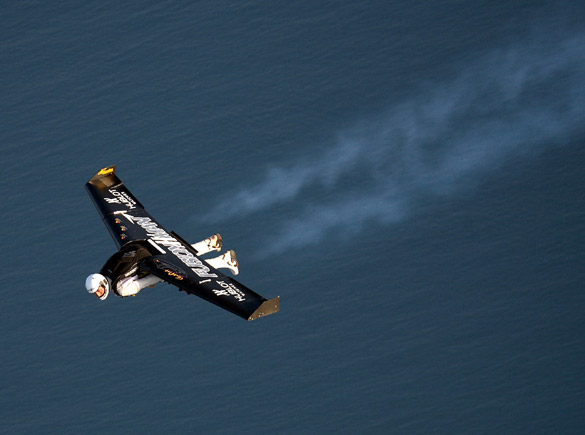
Fusionman soars across the English Channel. Credit: Times Online
In May, Swiss adventurer Yves Rossy, who calls himself "Fusionman," flew with a jetpack strapped to his back for just 5 minutes. Today he soared from France to England across the English Channel, becoming the first person to cross the 35 km (22 miles) body of water in such a way. Rossy, a pilot who normally flies an Airbus airliner, was dropped from an airplane over France and used his specially made jetpack, flying at speeds of up to 193 kph (120 mph) to make the crossing in 13 minutes. "Everything was perfect," he said afterwards. "I showed that it is possible to fly a little bit like a bird." See more images and video below. (...) Read the rest of Fusionman Flies Again, This Time Across the English Channel (301 words)
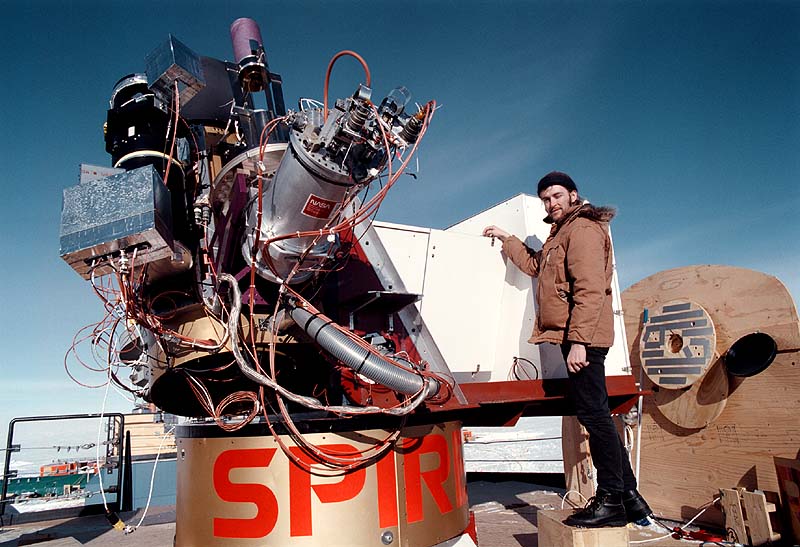
In May 2000, Australian astrophysicist Dr Rodney David Marks died from acute methanol poisoning whilst stationed at the US Amundsen-Scott South Pole Station. He was a 32 year old "brilliant and witty" scientist, whose death shocked his family and friends. The media jumped on this story, citing the tragedy as the "first South Pole murder," but there was little evidence to suggest anyone else was involved. Unfortunately it appears that New Zealand investigators have been hampered by a lack of co-operation by the organizations that run the facility, so it remains unclear whether Marks' death was the result of foul play or tragic accident… (...) Read the rest of Astrophysicist's South Pole Death Remains a Mystery After Eight Years (811 words)
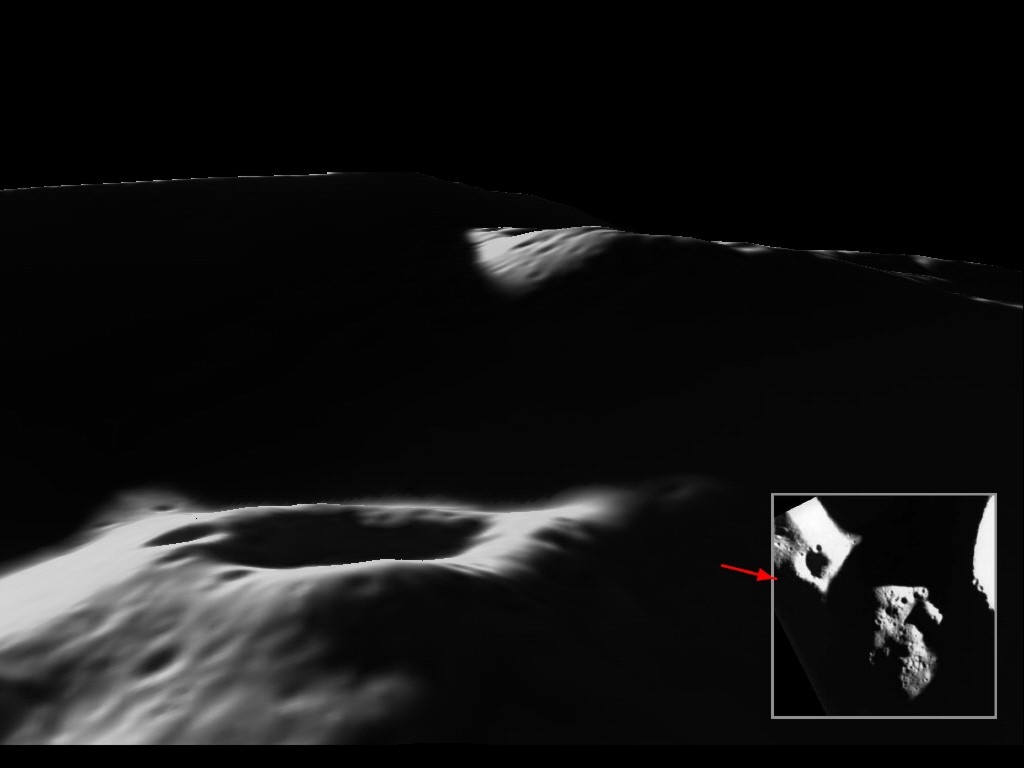
Scientifically speaking, where is the best place on the Moon to set up a colony for research? Hands down, it has to be the Moon's south pole. Mountainous areas near the rim of Shackelton Crater provide areas of almost continual sunlight, meaning solar power would be constantly available. In addition, the shadowed craters are in constant darkness and may hold water ice, a potential water supply that would be a vital resource for any lunar base. Plus it would be a great place to set up a lunar telescope. Recently, three-dimensional views of this region were released by the European Space Agency, taken by the SMART-1 spacecraft, providing unprecedented details of what has been called the "Peak of Eternal Light." Moon base designers, take a look… (...) Read the rest of Future Moon Base Site Imaged in 3-D (411 words)
NASA's Mars Reconnaissance Orbiter has revealed hundreds of small fractures exposed on the Martian surface that billions of years ago directed flows of water through underground Martian sandstone. Researchers used images from the spacecraft's HiRISE (High Resolution Imaging Science Experiment) camera. Images of layered rock deposits at equatorial Martian sites show the clusters of fractures to be a type called deformation bands, caused by stresses below the surface in granular or porous bedrock. "Groundwater often flows along fractures such as these, and knowing that these are deformation bands helps us understand how the underground plumbing may have worked within these layered deposits," said Chris Okubo of the U.S. Geological Survey in Flagstaff, Ariz. (...) Read the rest of Ancient Groundwater Flows Revealed on Mars (346 words)
In a bold move, astronomers have begun a new search to understand and explain the origin, nature and prevalence of intelligent life in the universe. Called WETI, which stands for Wait for Extra Terrestrial Intelligence, the institute employs an entirely novel approach to achieve its goals. Instead of actively searching for extraterrestrial intelligence, the idea is to simply wait: Wait until the ETs find us. "Waiting is a notoriously underappreciated method in our efforts to search for extraterrestrial intelligence," says the WETI website. "It is cheaper and less stressful than any other type of research. It is also environmentally friendly and does not cause global warming, terrorism or nuclear conflicts." WETI's overall objective? To set a new gold standard for scientifically meaningful waiting, and to provide humankind a new purpose as they wait. (...) Read the rest of New Search for Extraterrestrials Waits for No One, Er…, Everyone (655 words)
Solar wind output is at its lowest since accurate records began 50 years ago. This finding comes from the seasoned ESA/NASA solar probe Ulysses, which completed nearly three polar orbits of the Sun from 1993 to 2008 (it is still functioning today, but at a reduced capacity). Although a weakening of the solar wind may not sound very important, the effects of this reduction will have serious implications, diminishing the natural defences of the heliopause (our Solar System's invisible barrier) which protects us from high energy cosmic rays blasting through intergalactic space… (...) Read the rest of Solar System's Protective Shield is Weakening; Solar Wind Velocity at Record Low (644 words)
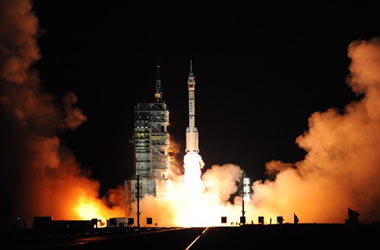
China successfully launched its third manned spacecraft today with three astronauts on board. During the mission, they will attempt the country's first-ever space walk. The Long March II-F rocket carrying the Shenzhou-7 spacecraft blasted off from the Jiuquan Satellite Launch Center in the northwestern Gansu Province at 9:10 p.m. local time. Onboard pilots Zhai Zhigang, Liu Boming and Jing Haipeng are will orbit Earth for three days. The astronauts, called taikonauts, told the ground control center that they felt "physically sound" in the first few minutes of the flight. (...) Read the rest of China Launches Manned Spacecraft (230 words)
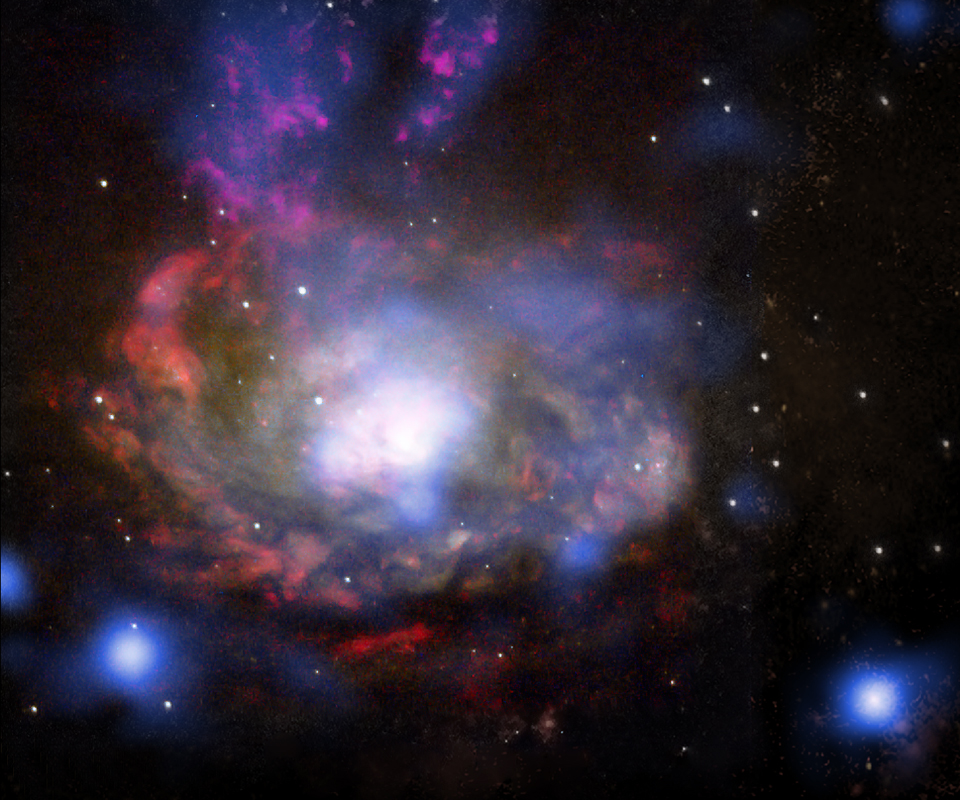
Composite image of the nearby Circinus Galaxy. Credit: X-ray (NASA/CXC/Columbia/F.Bauer et al); Visible light (NASA/STScI/UMD/A.Wilson et al.)
Back in 2001, astronomer Franz Bauer noticed a bright, variable source in the Circinus spiral galaxy, using NASA's Chandra X-ray Observatory. Although the source displayed some exceptional properties Bauer and his Penn State colleagues could not identify its nature confidently at the time. But now, seven years later Bauer and his team have confirmed this object was a supernova. By combining online data in the public archives from 18 different ground- and space-based telescopes, one of the nearest supernovae in the last 25 years, SN1996cr, has finally been identified. "It's a bit of a coup to find SN 1996cr like this, and we could never have nailed it without the serendipitous data taken by all of these telescopes. We've truly entered a new era of 'internet astronomy'," said Bauer. (...) Read the rest of 'Internet Astronomy' Uncovers Supernova (422 words)
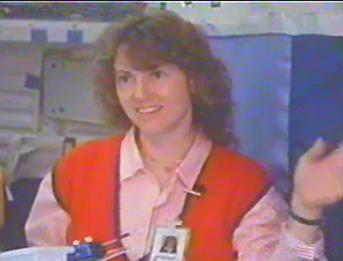
Christa McAuliffe. Credit: Challenger's Lost Lessons
Christa McAuliffe's life tragically ended on January 28th, 1986 when Space Shuttle Challenger exploded 73 seconds after launch, killing all seven crewmembers. She was about to make history, becoming the first teacher in space, giving unique lessons from orbit to students back on Earth. McAuliffe never had the chance to fulfill her dream of teaching from space and in the aftermath of the accident, her lesson plans were filed away by NASA with sadness and grief. The lessons were incomplete, unfinished, and most regrettably, they were never were taught. But now, 22 years later, the lessons are alive again, brought back to life by NASA engineer Jerry Woodfill who says he came across McAuliffe's lessons by accident. (...) Read the rest of Teacher-Astronaut's Legacy Uncovered 22 Years After Challenger Disaster (1,563 words)
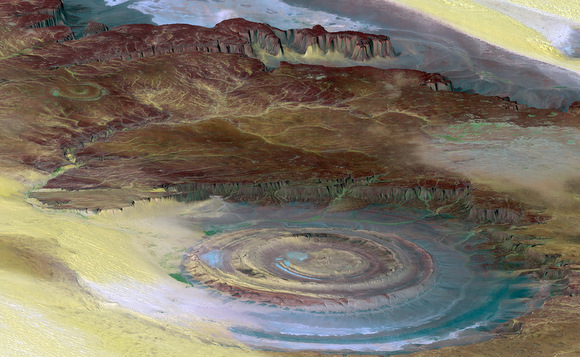
It's time once again for this week's Where In The Universe challenge. Take a look at the image above and try to determine where in the universe this image was taken. Give yourself extra points if you can name the spacecraft responsible for taking this image. As always, no peeking below before you make your guess. And comments are welcome if you want to share how well you did!
Wake up, all you variable star observers!! According to AAVSO Alert Notice 384 released just minutes ago, the cataclysmic variable star - GK Persei - is beginning to wake up and appears to be entering another outburst. (...) Read the rest of Observing Alert: Outburst of GK Persei (250 words)
Images of layered sedimentary deposits and deltas on Mars have provided evidence for lakes and flowing rivers that carried eroded material downstream. A team of researchers also believes there is evidence for precipitation in the Red Planet's past. "For years scientists have been suspecting that the current appearance of the landscape has, in part, been shaped by rivers that cut into the surface," said Ernst Hauber of the German Aerospace Center. “We can see layered sediments where these valleys open into impact craters. The shape of certain sediments is typical for deltas formed in standing water." Hauber and his team also believe that surface runoff from rain or snowmelt completes the picture of past water on Mars. (...) Read the rest of Evidence of Rain on Mars (435 words)
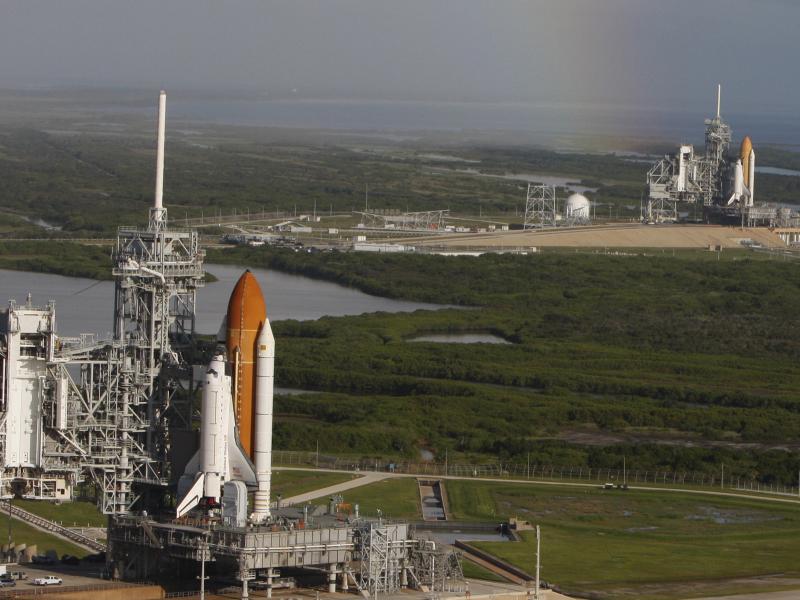
Atlantis and Endeavour on pads 39 A and B. Credit: NASA
Because of delays and complications from Hurricane Ike, the launch date for space shuttle Atlantis' STS-125 mission to service the Hubble Space Telescope has been delayed four days until Oct. 14 at 10:19 p.m. EDT. The delay is not a surprise. The crew and mission controllers missed out on a week of valuable training time when they were forced to evacuate the Houston area when Hurricane Ike which hit on September 13. "You come to the question of either slipping the launch or cutting out events," said STS-125 Commander Scott Altman when the crew arrived at Kennedy Space Center on Tuesday to prepare for a launch rehearsal. "All [our training] needs to be done and we have to make it happen before we fly… And that, of course, may mean a bit of a slip." With Atlantis' launch delay, subsequently shuttle Endeavour's STS-126 supply mission to the International Space Station, also will move from Nov. 12 to Nov. 16 at 7:07 p.m. EST. (...) Read the rest of Shuttle Mission to Hubble Delayed (327 words)













































No comments:
Post a Comment
Keep a civil tongue.