| Here are the FeedBlitz blog updates for ignoble.experiment@arconati.us
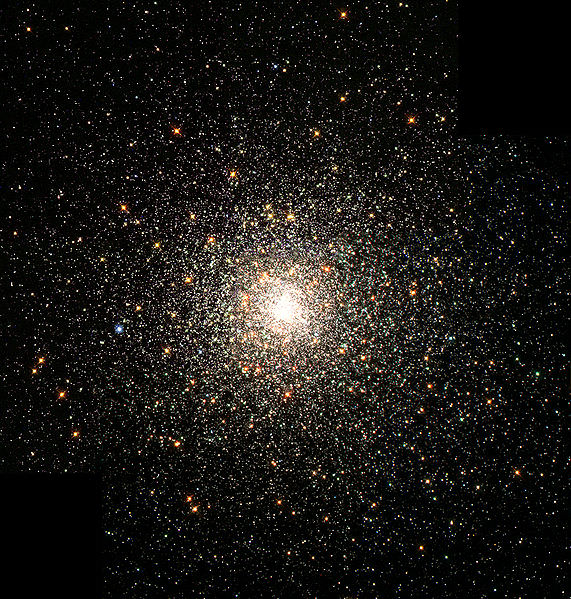
 M80 Image Credit: NASA, The Hubble Heritage Team, STScI, AURA Hanging onto the outskirts of our Milky Way galaxy like cockle burs on a shaggy dog’s coat, globular clusters contain over hundreds of thousands of stars. Estimated to be up to ten billion years old, these spherical stellar seed pods are gravitationally bound together and tend to be more dense towards their cores. We’ve long known all the stars contained within a globular cluster to be about the same age and the individual members most likely formed at the same time as the parent galaxy – but what we weren’t expecting was change. (...)
Read the rest of Globular Clusters Are Real Oddballs (509 words)
© tammy for Universe Today, 2011. | Permalink | 6 comments | Add to del.icio.us
Post tags:
Feed enhanced by Better Feed from Ozh 

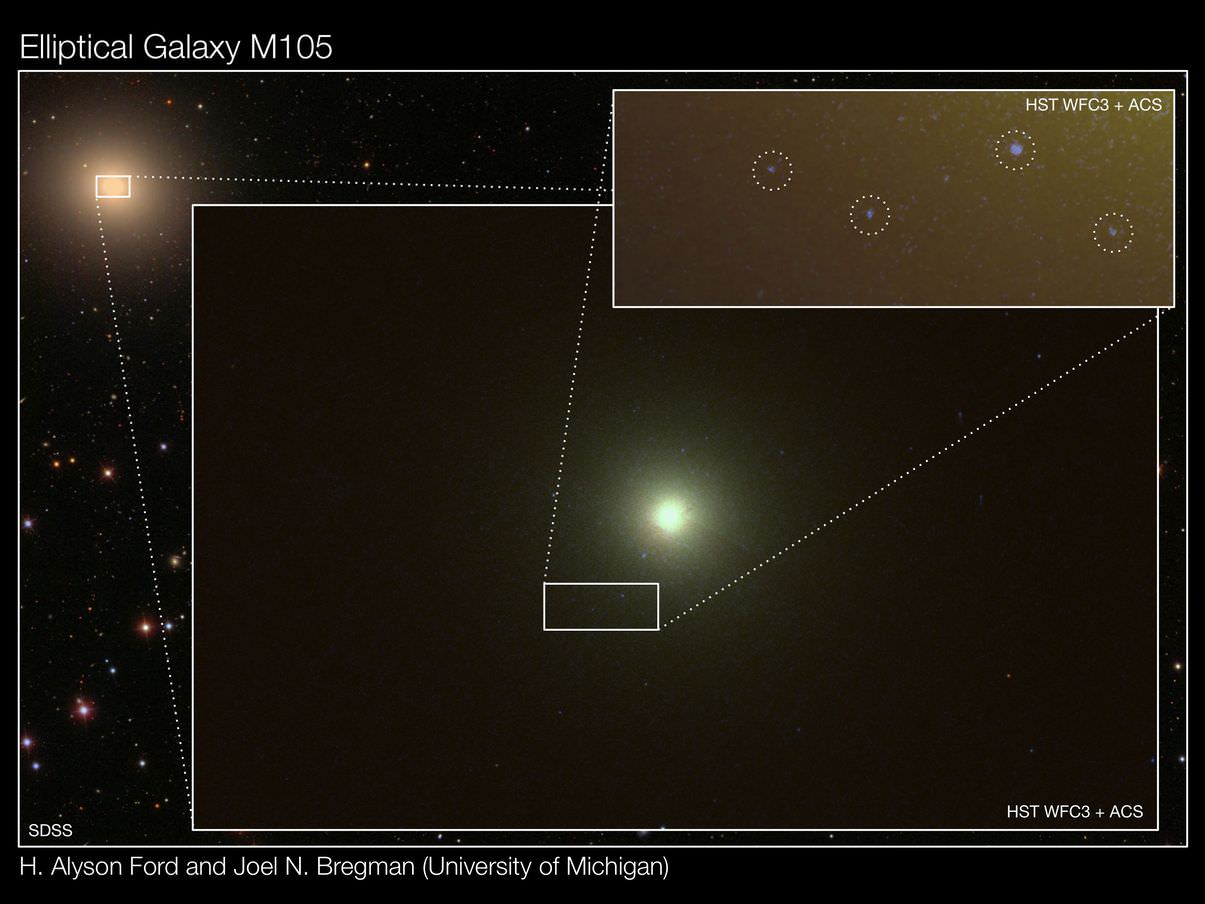
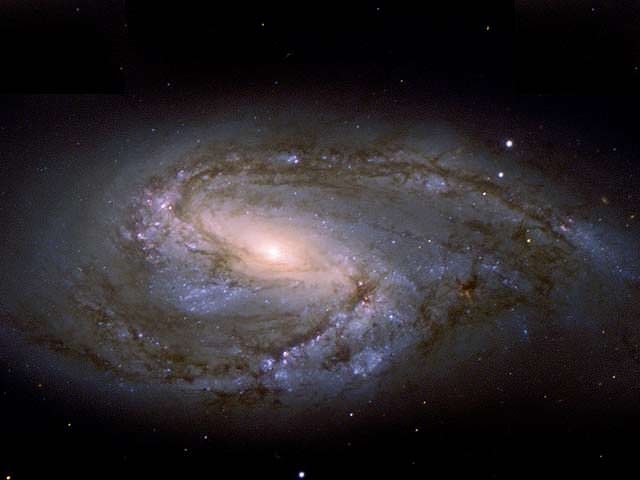
 University of Michigan astronomers examined old galaxies and were surprised to discover that they are still making new stars. The results provide insights into how galaxies evolve with time. There was a time when most astronomers concluded that elliptical galaxies were a lot like their globular clusters – full of similarly evolved and aged stars. But not anymore. Thanks to the resolving power of the Hubble Space Telescope, a team of researchers from the University of Michigan were able to peer into the heart of Messier 105 and pick out several young stars and clusters. Apparently, “The reports of my death have been greatly exaggerated…” (...)
Read the rest of Dead Galaxy? Don’t Think So. (580 words)
© tammy for Universe Today, 2011. | Permalink | 7 comments | Add to del.icio.us
Post tags:
Feed enhanced by Better Feed from Ozh 

 The Spirit rover's last panoramic image, taken before its fourth Martian winter on on Sol 2175, or February, 2010. Credit: Mosaic by Marco De Lorenzo and Ken Kremer, image NASA/JPL/Cornell University. Today’s Astronomy Picture of the Day (APOD) features an image mosaic put together in part by Universe Today’s Ken Kremer, along with his imaging partner Marco De Lorenzo. It’s the last thing the Spirit rover ever saw: a panoramic view of the Home Plate region of Gusev Crater where the rover now silently sits. In the background are the Columbia Hills, where Spirit climbed and investigated Husband Hill. Visible are parts of Spirit herself and the stark but enticing landscape where Spirit will be forever mired in sand. Congrats to Ken and Marco for being featured on APOD!
© nancy for Universe Today, 2011. | Permalink | No comment | Add to del.icio.us
Post tags: Mars, Mars Exploration Rovers, Missions, Spirit Rover
Feed enhanced by Better Feed from Ozh 

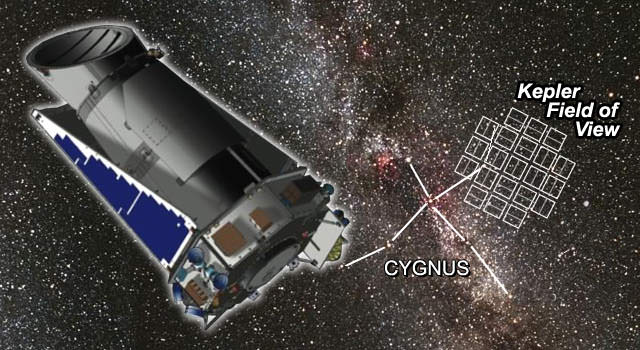
 Artist concept of Kepler in space. Credit: NASA/JPL Early on in the hunt for extra solar planets, the main method for discovering planets was the radial velocity method in which astronomers would search for the tug of planets on their parent stars. With the launch of NASA’s Kepler mission, the transit method is moving into the spotlight, the radial velocity technique provided an early bias in the detection of planets since it worked most easily at finding massive planets in tight orbits. Such planets are referred to as hot Jupiters. Currently, more than 30 of this class of exoplanet have had the properties of their emission explored, allowing astronomers to build a picture of the atmospheres of such planets. However, one of the new hot Jupiters discovered by the Kepler mission doesn’t fit the picture. (...)
Read the rest of Exoplanet Kepler-7b Unexpectedly Reflective (603 words)
© jvois for Universe Today, 2011. | Permalink | 7 comments | Add to del.icio.us
Post tags: Extrasolar Planets, Kepler mission
Feed enhanced by Better Feed from Ozh 

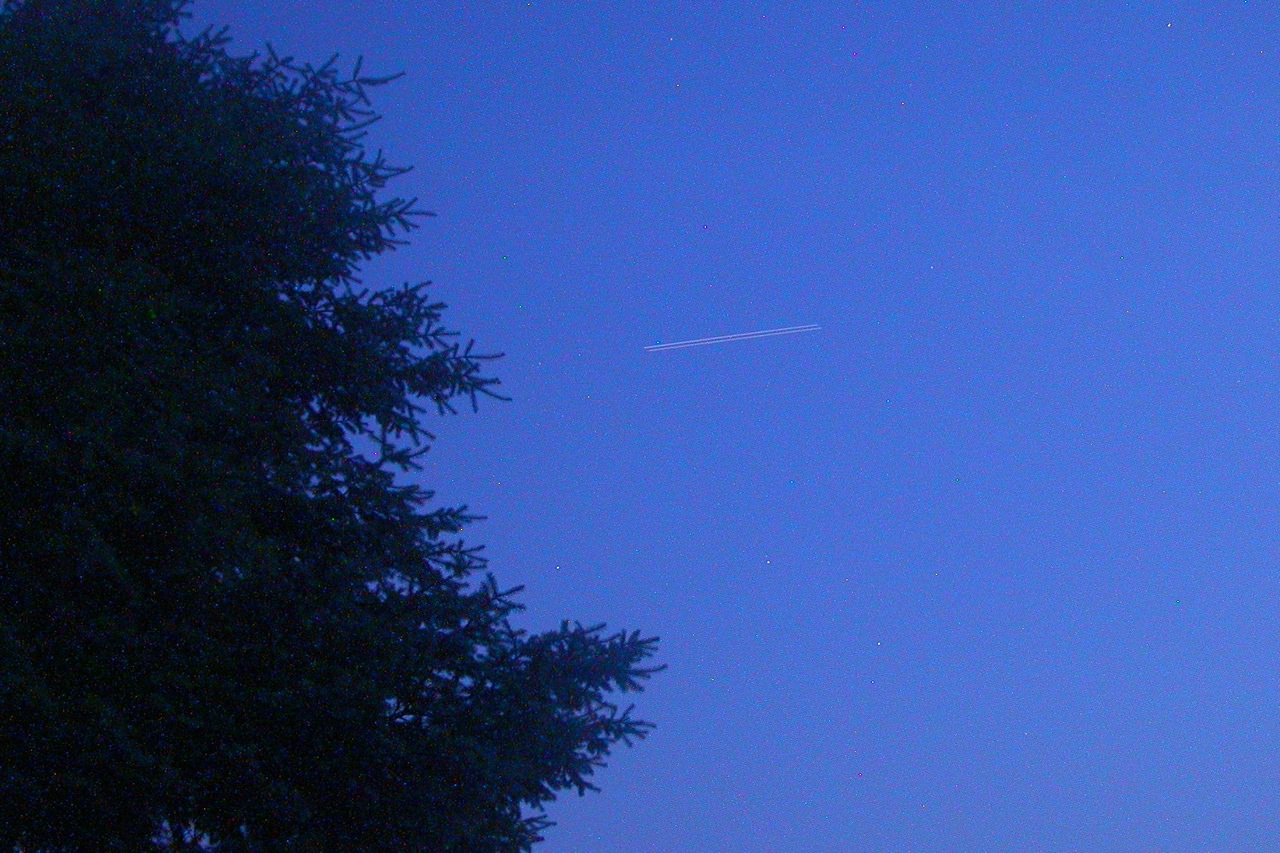
 The ISS and space shuttle Endeavour as seen from Lancaster County, Pennsylvania at 4:50am EDT on May 30, 2011. Credit and Copyright 2011: Beth Katz UPDATE: And we have a sighting! Beth Katz from Pennsylvania in the US sent us this image,an 8 second exposure of the ISS and Endeavour taken early this morning. “We observed them seeming even further apart and then closer as they moved away from us,” Beth said via email. Space shuttle Endeavour will undock from the ISS just before midnight EDT on Sunday night/Monday morning at 11:55 pm EDT (3:55 UTC) and depending where you live, you might have an opportunity to see the two spaceships flying in tandem. People in Europe might have the chance to see the two spaceships right after they separate in the early morning hours, and people in the US/Canada/Mexico might be able to see the two flying close to each other. This is an incredible sight, and will be the last opportunity to see Endeavour in orbit, as she will be retired after she lands and completes the STS-134 mission. The station and shuttle will appear in the night or early morning sky as a closely-spaced pair of bright lights. The ISS is bigger, so will appear as the brighter object trailing the smaller Discovery as they move across the sky. On Monday night/Tuesday morning, there will be another chance to see the two ships, although they will be widely separated. To find out if you’ll be able to see the two spaceships in your area, there are a few different sites to check out: (...)
Read the rest of Double Spaceship Sighting Alert — and Last Chance to See Endeavour in Orbit (104 words)
© nancy for Universe Today, 2011. | Permalink | 2 comments | Add to del.icio.us
Post tags: Endeavour, Observing, Space Shuttle, Space Station, STS-134
Feed enhanced by Better Feed from Ozh 

| 













No comments:
Post a Comment
Keep a civil tongue.