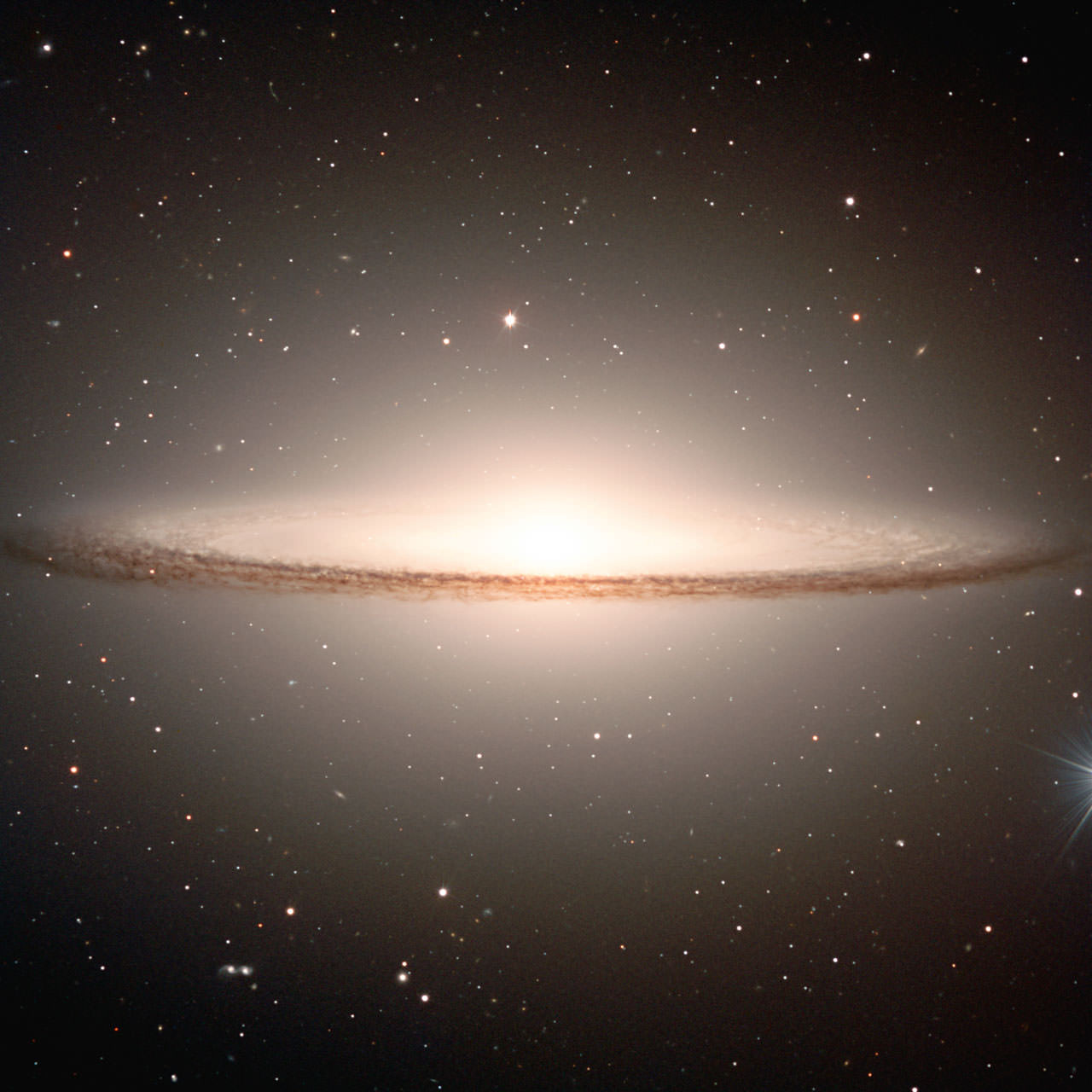
Supernova 1994D. The supernova is the bright point in the lower-left. It is a type Ia thermonuclear supernova like those described by Howell. The supernova is on the edge of galaxy NGC 4526, depicted in the center of the image. Credit: NASA/Hubble Space Telescope
It’s called a Type Ia supernovae and it shines with the luminosity of a billion suns. For all intents and purposes, once they explode they’re dead… But it ain’t so. They might have a core of ash, but they come back to life by sucking matter from a companion star. Zombies? You bet. Zombie stars… And they can be used to measure dark energy. (...) Read the rest of Dark Energy… And Zombie Stars! (667 words)
And if you're interested in looking back, here's an archive to all the past Carnivals of Space. If you've got a space-related blog, you should really join the carnival. Just email an entry to carnivalofspace@gmail.com, and the next host will link to it. It will help get awareness out there about your writing, help you meet others in the space community – and community is what blogging is all about. And if you really want to help out, sign up to be a host. Send an email to the above address.
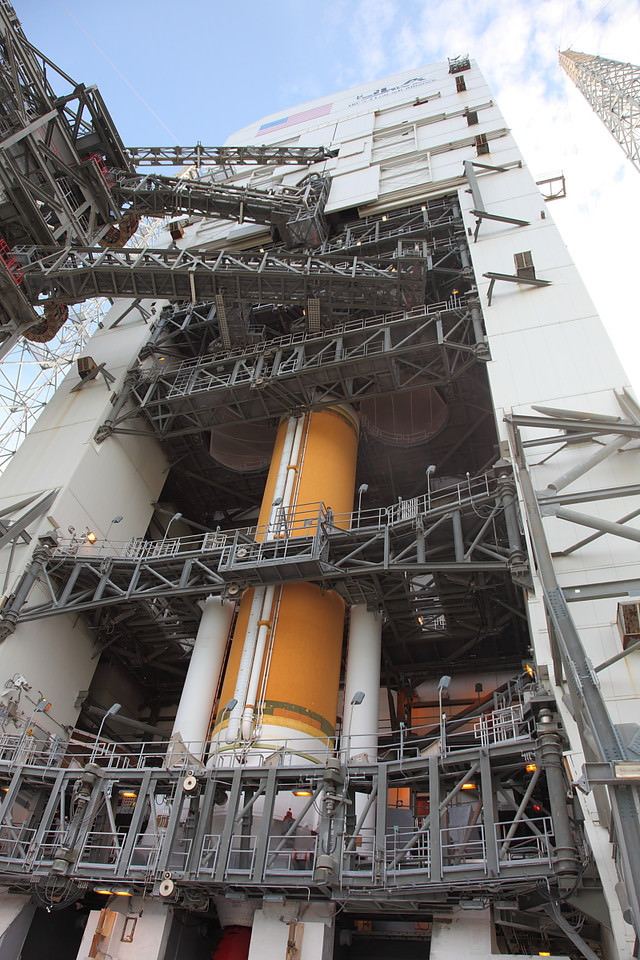
The tour of this Delta IV Medium rocket, was extensive and highlighted how United Launch Alliance sends payloads to orbit. Photo Credit: Alan Walters/awaltersphoto.com
CAPE CANAVERAL Fla. – Space Launch Complex 37 is where United Launch Alliance (ULA) Delta IV rockets send their payloads into orbit. It is an expansive complex with all the prerequisite requirements to launch rockets as well as birds, alligators and mosquitoes – lots of mosquitoes.(...) Read the rest of Launch Complex 37B: Level by Level (727 words)
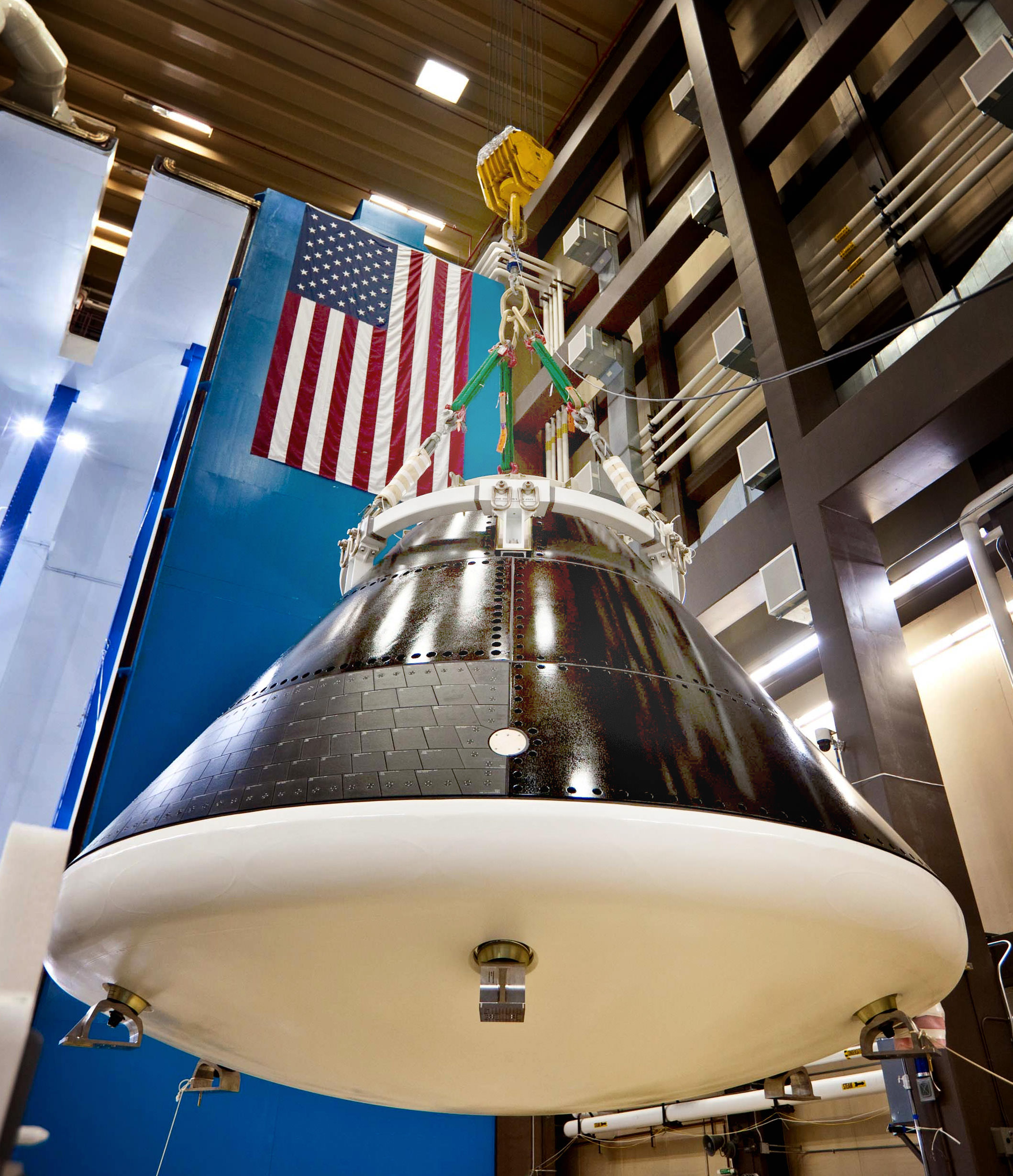
Assembly of NASA's first Orion Crew Module is complete Shown here is the first Orion/Multi-Purpose Crew Vehicle (MPCV) being hoisted into position in the Reverberant Acoustic Lab at Lockheed Martin's Waterton Facility near Denver, Colorado where it will undergo ground tests simulating the harsh environment of deep space. Credit: Lockheed Martin
Assembly of NASA's first Orion Crew vehicle that could actually launch to space has been accomplished by prime contractor Lockheed Martin Corporation at the firm's Waterton space systems facility located near Denver, Colorado, where the spacecraft is slated to begin a severe testing process that will help confirm crew safety.
Orion is NASA's next generation spacecraft designed to send human crews to low Earth Orbit and beyond to multiple deep space destinations throughout our solar system including the Moon, Mars and Asteroids. Orion was recently recast as the MPCV or Multi Purpose Crew Vehicle in the NASA Authorization Act of 2010.(...) Read the rest of First Orion Assembled at Denver, Another Orion Displayed at Kennedy Space Center (570 words)
The concept of accelerating expansion does get you wondering just how fast the universe can end up expanding by. Theorists think that the rate of expansion might become so extreme as to produce a Big Rip. Or, after fiddling with the math a bit, maybe just a Little Rip? Credit: NASA.
One of a number of seemingly implausible features of dark energy is that its density is assumed to be constant over time. So, even though the universe expands over time, dark energy does not become diluted, unlike the rest of the contents of the universe.
As the universe expands, it seems that more dark energy appears out of nowhere to sustain the constant dark energy density of the universe. So, as times goes by, dark energy will become an increasingly dominant proportion of the observable universe – remembering that it is already estimated as being 73% of it.(...) Read the rest of Astronomy Without A Telescope – Big Rips And Little Rips (594 words)
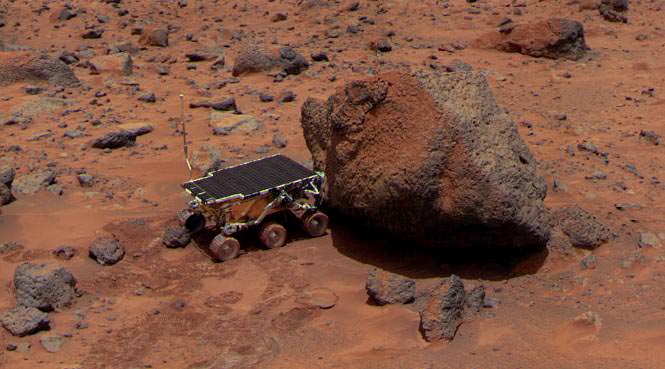
Sojourner rover taking its Alpha Proton X-ray Spectrometer measurement. Credit: NASA
It’s called a carbonate and it’s a mineral that’s common to water-logged formations… be it here on Earth, or on Mars. Until now only a few carbonate deposits have been found on Mars, but scientists are beginning to suspect it has been hiding all along under a thin layer of iron oxide. Because rust never sleeps… (...) Read the rest of Martian “Rust” Could Possibly Point To Past Water (417 words)
Is there — or was there ever — life on Mars? And will we ever definitively find out? After multiple unmanned missions to Mars, we still can’t answer those questions, but the possibility of life on the Red Planet has intrigued us for decades and our interest in Mars still runs high. Here’s a video produced by the PBS affiliate in San Francisco, California, KQED and their science and environment series QUEST. It looks at our past fascination of Mars and how NASA scientists are hoping the Mars Science Lab rover will help them solve the mysteries of Mars.
Panoramic view of Noctilucent Clouds from Kendal Castle in the UK. Credit: Stu Atkinson
Mysterious "night shining" or Noctilucent Clouds are beautiful to behold, and here are some gorgeous examples what skywatchers in the UK have been experiencing. Stu Atkinson took this stunning panoramic view from Kendal Castle. (Click image for access to a larger version). NLCs are usually seen during the summertime, appearing at sunset. They are thin, wavy ice clouds that form at very high altitudes and reflect sunlight long after the Sun has dropped below the horizon. Scientists don't know exactly why they form, and they seem to be appearing more and more in recent times.
The traditional picture of galaxy growth is not pretty. In fact, it’s a kind of cosmic cannibalism: two galaxies are caught in ominous tango, eventually melding together in a fiery collision, thus spurring on an intense but short-lived bout of star formation. Now, new research suggests that most galaxies in the early Universe increased their stellar populations in a considerably less violent way, simply by burning through their own gas over long periods of time. (...) Read the rest of Ancient Galaxies Fed On Gas, Not Collisions (307 words)
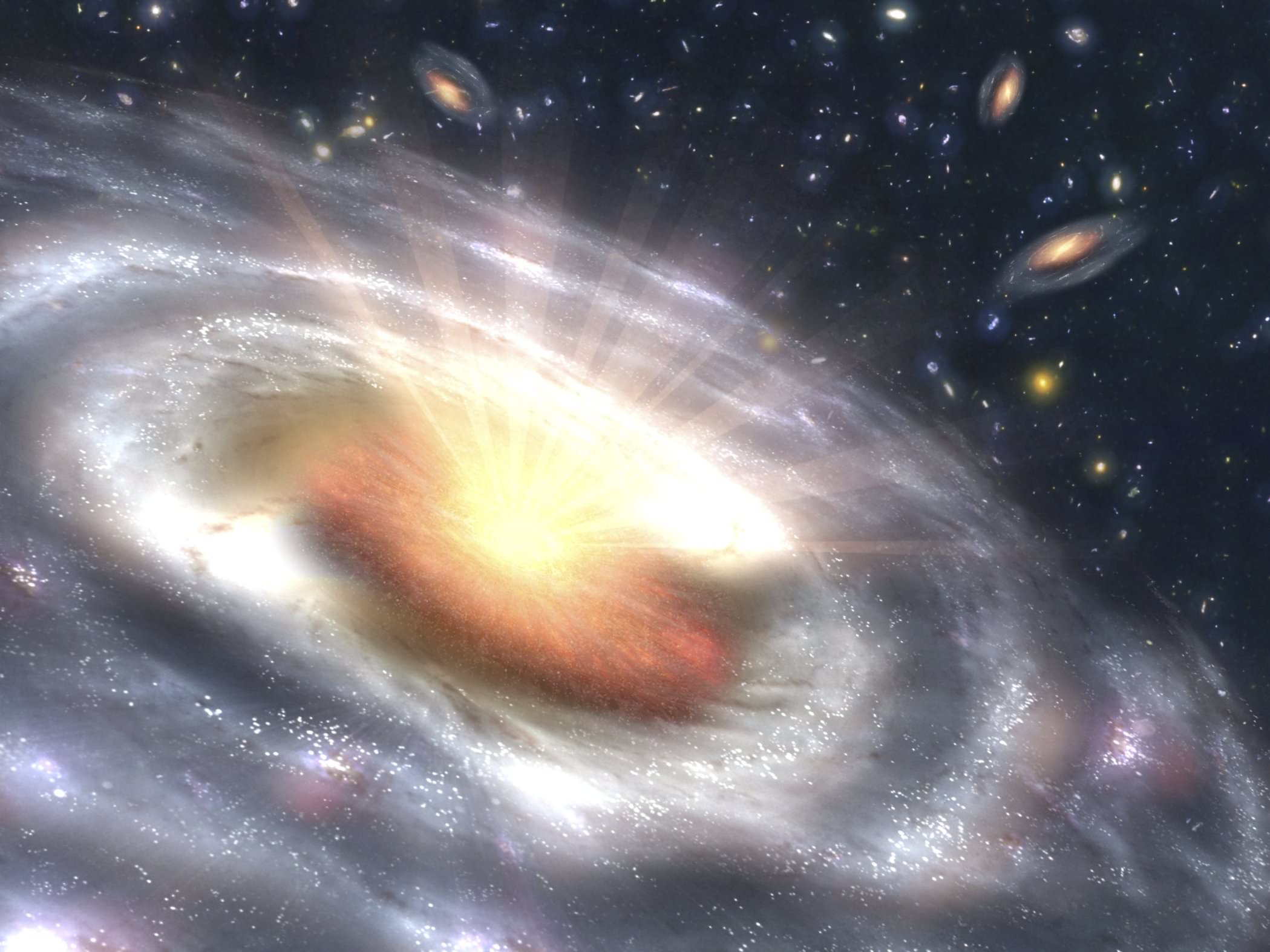
Astronomers have uncovered yet another clue in their quest to understand the Universe’s early life: the most distant quasar ever observed. At a redshift of 7.1, it is a relic from when the cosmos was just 770 million years old – just 5% of its age today. (...) Read the rest of Most Distant Quasar Opens Window Into Early Universe (258 words)
















No comments:
Post a Comment
Keep a civil tongue.