| Here are the FeedBlitz blog updates for ignoble.experiment@arconati.us
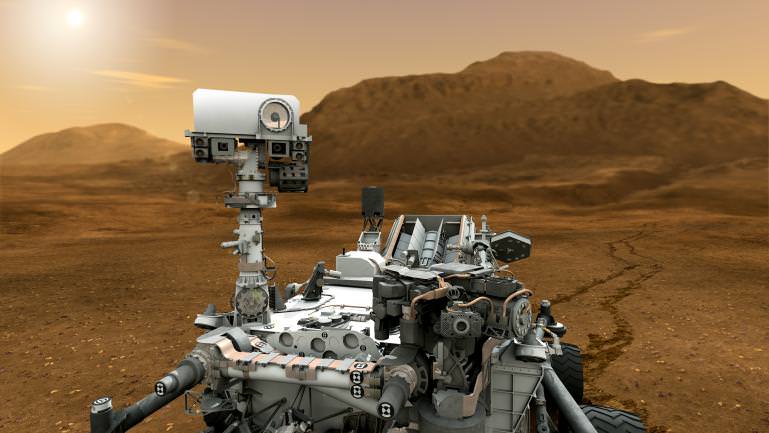
 NASA's Mars Science Laboratory Curiosity rover is currently cruising to Mars and is already investigating the lethality of the interplanetary space radiation environment to humans. After touchdown, Curiosity will investigate Mars' past or present ability to sustain microbial life. Credit: NASA/JPL-Caltech Barely two weeks into the 8 month journey to the Red Planet, NASA's Curiosity Mars Science Lab (MSL) rover was commanded to already begin collecting the first science of the mission by measuring the ever present radiation environment in space. Engineers powered up the MSL Radiation Assessment Detector (RAD) that monitors high-energy atomic and subatomic particles from the sun, distant supernovas and other sources. RAD is the only one of the car-sized Curiosity's 10 science instrument that will operate both in space as well as on the Martian surface. It will provide key data (...)
Read the rest of Curiosity Starts First Science on Mars Sojurn – How Lethal is Space Radiation to Life's Survival (737 words)
© Ken Kremer for Universe Today, 2011. | Permalink | One comment | Add to del.icio.us
Post tags: Curiosity Rover, Gale crater, humans to Mars, Mars, Mars Rovers, NASA, Search for Life, space radiation
Feed enhanced by Better Feed from Ozh 

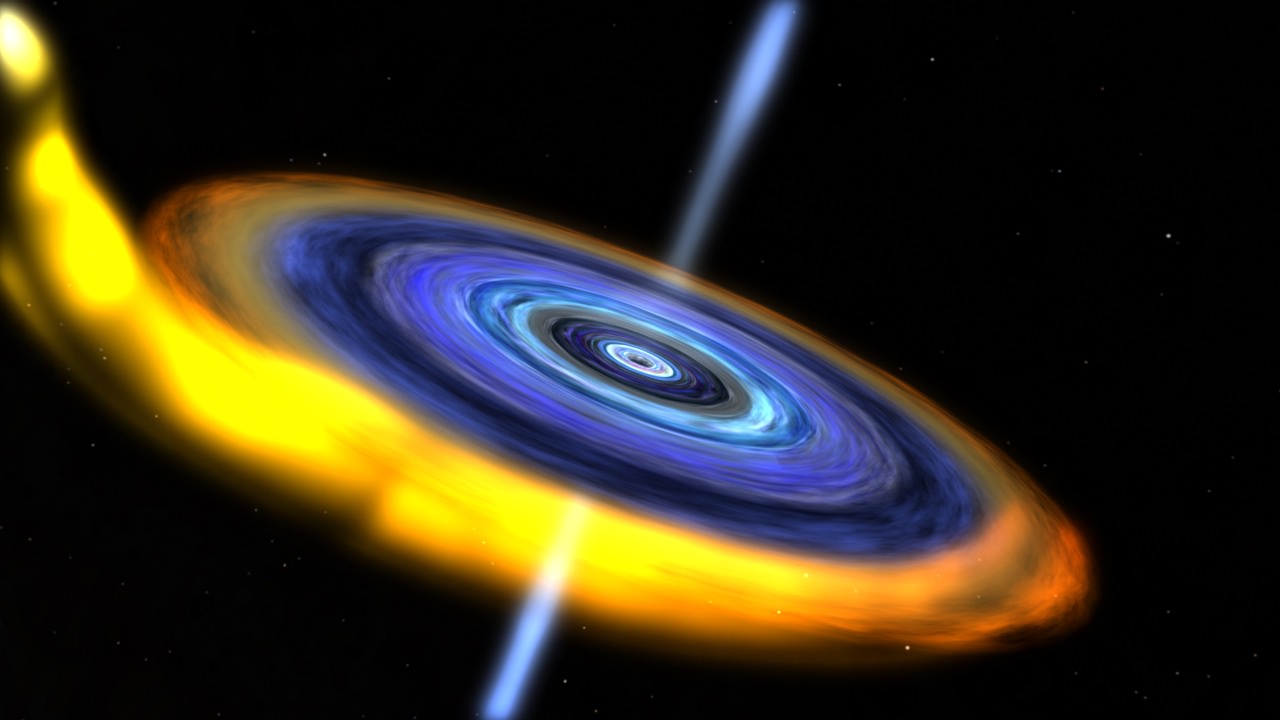
 Artist's rendering showing the jet fully established. Credit: NASA/Goddard Space Flight Center/CI Lab Is everything quiet in deep space? Not hardly. It’s a place jammed with noises of all kinds. So much noise, in fact, that it could be quite difficult to pick up a faint signature of something small… something like the smallest black hole known. Thanks to NASA’s Rossi X-ray Timing Explorer (RXTE) , an international team of astronomers have found the pulse they were looking for and it’s a pattern that’s only been seen in one other black hole system. Its name is IGR J17091-3624 and it’s a binary system which consists of a normal star and a black hole with a mass that measures only about three times solar. In theoretical terms, that’s right at the edge where possibility of being a black hole begins. (...)
Read the rest of In The Still Of The Night… Listening To The “Heartbeat” Of A Tiny Black Hole (612 words)
© tammy for Universe Today, 2011. | Permalink | 2 comments | Add to del.icio.us
Post tags: Black Hole Binary Systems, Black Hole Heartbeat, Smallest Black Hole
Feed enhanced by Better Feed from Ozh 

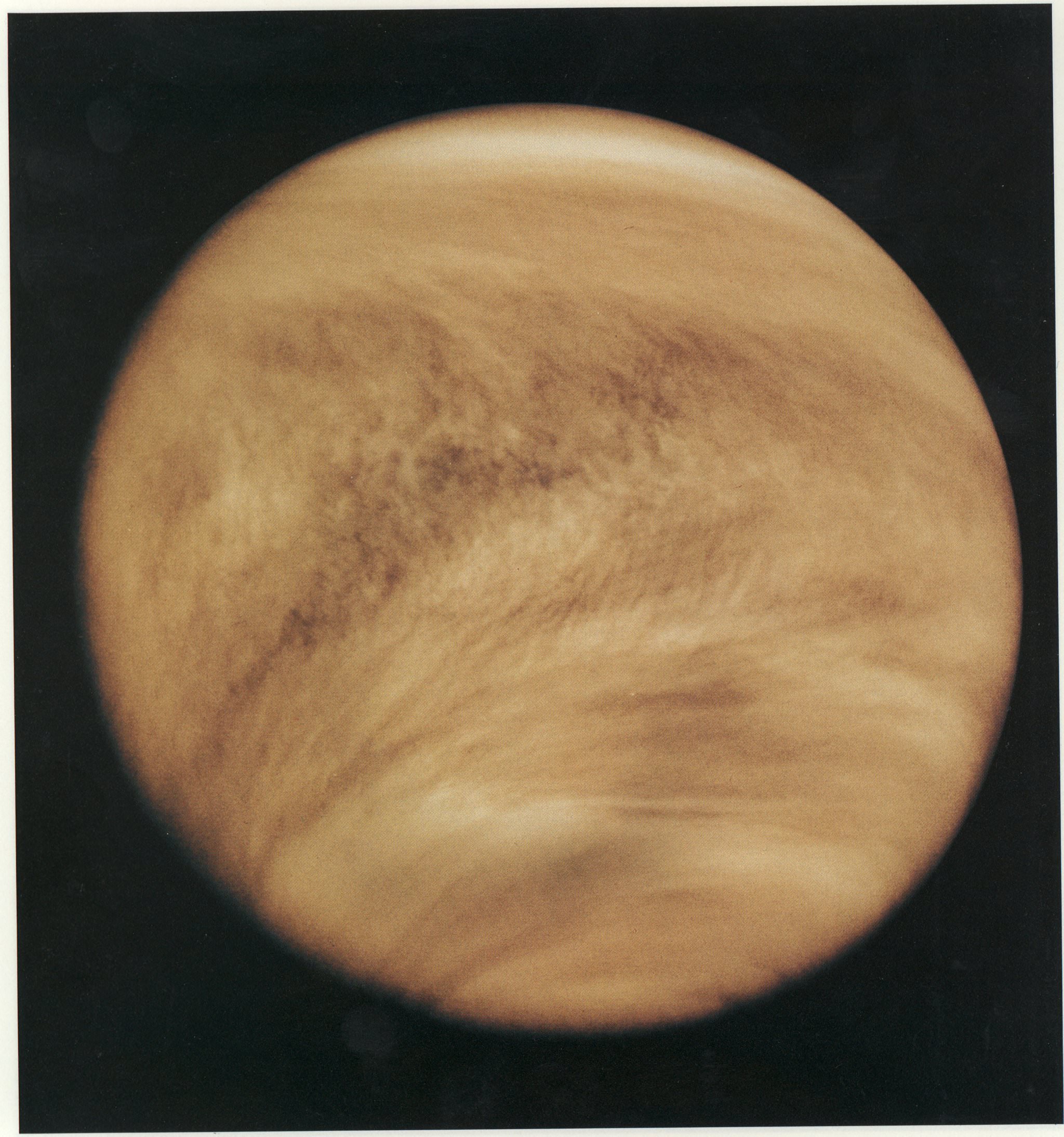
 Venus as seen by the Pioneer orbiter in 1979. Image Credit: NASA/courtesy of nasaimages.org In the mid-1960s, before any Apollo hardware had flown with a crew, NASA was looking ahead and planning its next major programs. It was a bit of a challenge. After all, how do you top landing a man on the Moon? Not wanting to start from scratch, NASA focused on possible missions that would use the hardware and software developed for the Apollo program. One mission that fit within these parameters was a manned flyby of our cosmic twin, Venus. (...)
Read the rest of Missions that Weren’t: NASA’s Manned Mission to Venus (662 words)
© Amy Shira Teitel for Universe Today, 2011. | Permalink | 15 comments | Add to del.icio.us
Post tags: NASA, Space Exploration, Space Flight, Venus
Feed enhanced by Better Feed from Ozh 

 Comet Lovejoy photographed remotely with the FRAM telescope in Argentina on Dec. 17 by a Czech team of Jakub Cerny, Jan Ebr, Martin Jelinek, Petr Kubanek, Michael Prouza and Michal Ringes. Click to see the original image and more on the kommet.cz website. It was almost a pre-holiday miracle that Comet Lovejoy survived its close encounter with the Sun on Dec. 15, 2011. But now, the feisty comet is making a 'merry and bright' comeback, re-sprouting its tail and showing up brilliantly when seen with binoculars and in telescopic images from southern hemisphere skywatchers. "It was a big surprise that after going through the solar atmosphere it re-emerged with a beautiful tail," Karl Battams told Universe Today. Battams is with Naval Research Laboratory and has been detailing the Comet Lovejoy's incredible journey on the Sungrazing Comets website. "And basically within a day it was as bright after the encounter as it was before." The beautiful image above was taken on Dec. 17, 2011, clearly showing two gorgeous tails on Comet Lovejoy. See more from the Czech team that took the image at their website, Kommet.cz. As much as this comet has surprised everyone, no one is going out on a limb and predicting it will become visible with the naked eye. But who knows? The comet's discoverer, Austrailian amateur astronomer Terry Lovejoy was able to image the comet in the day time! ” I am hopeful of a nice binocular comet low in the dawn around Christmas time,” Lovejoy said on the Ice in Space website. (...)
Read the rest of Surprising Comet Lovejoy Now Becoming Merry and Bright (314 words)
© nancy for Universe Today, 2011. | Permalink | No comment | Add to del.icio.us
Post tags: Comet Lovejoy, Comets
Feed enhanced by Better Feed from Ozh 

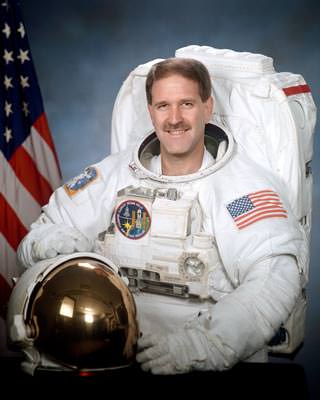
 John Grunsfeld. Credit: NASA As was rumored earlier, NASA has named physicist and former astronaut John Grunsfeld as their new associate administrator for the Science Mission Directorate. “It is an honor and a privilege to be offered the opportunity to lead NASA’s Science Mission Directorate during this exciting time in the agency’s history,” Grunsfeld said. “Science at NASA is all about exploring the endless frontier of the Earth and space. I look forward to working with the NASA team to help enable new discoveries in our quest to understand our home planet and unravel the mysteries of the universe.” Grunsfeld is taking over for Ed Weiler, who retired from NASA on Sept. 30, and Grunsfeld will officially start his new job on Jan. 4, 2012.
(...)
Read the rest of Former Astronaut John Grunsfeld to Lead NASA Science Directorate (212 words)
© nancy for Universe Today, 2011. | Permalink | No comment | Add to del.icio.us
Post tags: NASA, Science
Feed enhanced by Better Feed from Ozh 

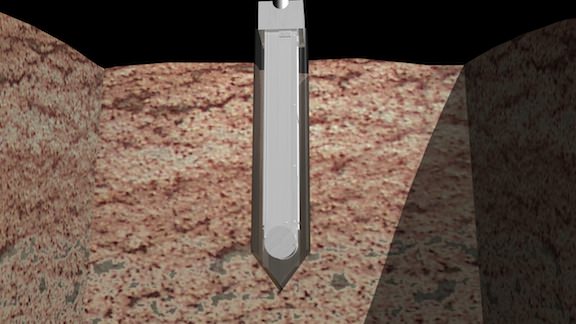
 This is an artist's concept of a comet harpoon embedded in a comet. The harpoon tip has been rendered semi-transparent so the sample collection chamber inside can be seen. Credit: NASA/Chris Meaney/Walt Feimer It’s not easy to sample a comet. These outer solar system traveler’s speed around the inner solar system at 241,000 km/h (150,000 mph) – twisting and turning while spewing chunks of ice, dust and debris. To consider landing on one becomes a logistical nightmare, but how about shooting at it? Why not send a mission to rendezvous with these frozen, inhospitable rocks and insert a probe? A method like this could even mean a sample could be taken where a landing would be impossible! Thanks to the work of scientists at NASA’s Goddard Space Flight Center in Greenbelt, Maryland, a new comet “harpoon” is being designed to make comet sample returns not only more efficient, but more detailed. (...)
Read the rest of New NASA Probe – The Comet Harpoon (1,003 words)
© tammy for Universe Today, 2011. | Permalink | 3 comments | Add to del.icio.us
Post tags: Comet Harpoon, Comet Sample Mission
Feed enhanced by Better Feed from Ozh 

 The Flaming Star Nebula. Image Credit: Robert Collins Robert captured this image of the IC 405, also known as the Flaming Star nebula on December 15, 2011. IC 405 is a combination of emission and reflection nebula located 1,500 light years away in the constellation Auriga. The nebula surrounds the bright blue O-type main sequence star named AE Aurigae. Robert also provided us with the details of the image: SV105 F7
SFF7-21
Microtouch Focuser
iEQ45 with pier
St8300M @ -15 C
FW8-8300
Baader filters Guided by PHD, Orion SSAG & Orion 50mm guide scope
Captured with Nebulosity 12/15/2011
Processed by Pixinsight, Photoshop and Nebulosity. Noise Ninja, Carboni, & Focus Magic. 5 x 10 min Ha filter
7 x 10 min Red filter
6 x 10 min Green filter
6 x 10 min Blue filter “The Ha data was blended with the red data using the Vicent Peris method (Pixinsight) as demonstrated in Harry’s Astro Shed. The Luminance channel is a reapplication of the luminace from the HaRGB.”
Check out Robert’s Flickr page for more photos. Want to get your astrophoto featured on Universe Today? Join our Flickr group, post in our Forum or send us your images by email (this means you’re giving us permission to post them). Please explain what’s in the picture, when you took it, the equipment you used, etc.
© dcast for Universe Today, 2011. | Permalink | No comment | Add to del.icio.us
Post tags: Astrophotos, nebula
Feed enhanced by Better Feed from Ozh 

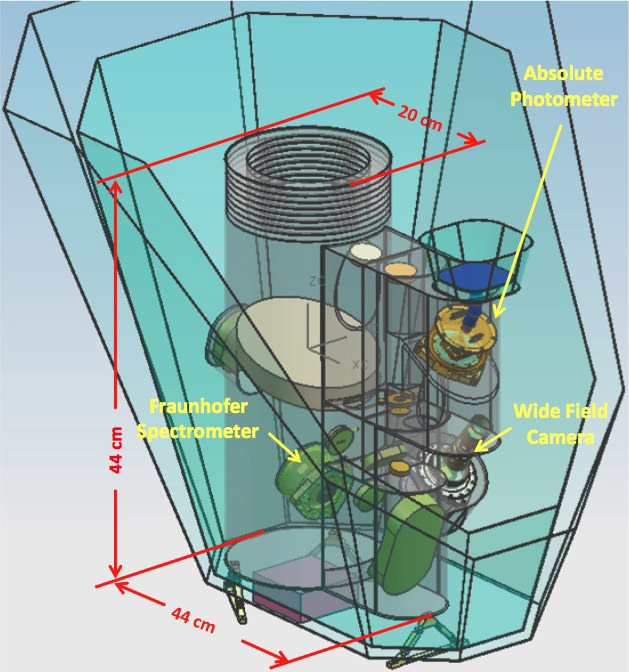
 ZEBRA (Zodiacal dust, Extragalactic Background and Reionization Apparatus) is a small, passively cooled optical to near-infrared instrument package that could be added to an outer solar system probe. Credit: NASA/JPL/Caltech Editors note — Science journalist and author Bruce Dorminey spoke to two NASA scientists about the possibility of mounting a telescope on a spacecraft for an outer planets mission. Light pollution in our inner solar system, from both the nearby glow of the Sun and the hazy zodiacal glow from dust ground up in the asteroid belt, has long stymied cosmologists looking for a clearer take on the early Universe. But a team at NASA, JPL and Caltech has been looking into the possibility of hitching an optical telescope to a survey spacecraft on a mission to the outer solar system. (...)
Read the rest of NASA Considers Sending a Telescope to Outer Solar System (1,269 words)
© Bruce Dorminey for Universe Today, 2011. | Permalink | 3 comments | Add to del.icio.us
Post tags: Extragalactic Background and Reionization Apparatus, Missions, NASA, ZEBRA (Zodiacal dust
Feed enhanced by Better Feed from Ozh 

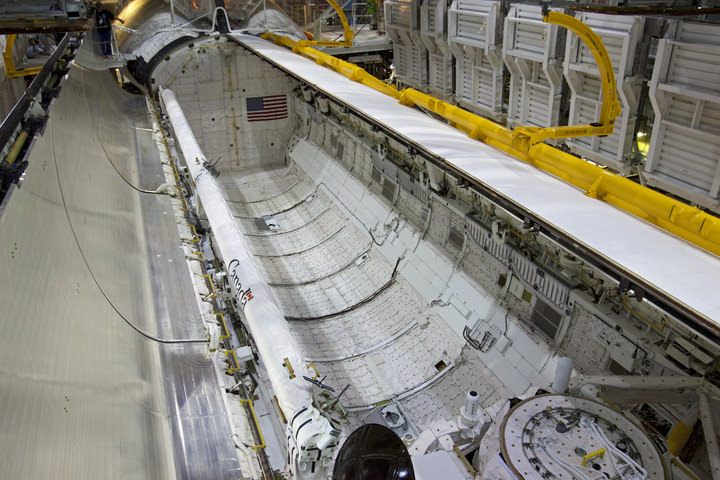
 In Orbiter Processing Facility-1 at NASA's Kennedy Space Center in Florida, space shuttle Discovery's payload bay is moments away from being concealed from view as its doors swing shut with the aid of yellow-painted strongbacks, hardware used to support and operate the doors when the shuttle is not in space. Discovery was powered down and the doors were closed for the final time during Space Shuttle Program transition and retirement activities. Credit: NASA/Kim Shiflett Space Shuttle Discovery was powered down forever and the payload bay doors were locked tight for the final time on Friday, Dec. 16, by technicians at NASA’s Kennedy Space Center (KSC) in Florida. Take a good last glimpse inside the retiring Discovery's payload bay as the clamshell like doors seal off all indigenous US human spaceflight capability for several years at a minimum. The historic "Power Down" came after both of the 60 foot long cargo bay doors were swung shut this morning for the last time inside the shuttle hanger known as Orbiter Processing Facility-1 (OPF-1) – in the shadow of the cavernous Vehicle Assembly Building (VAB). (...)
Read the rest of NASA Terminates Power, Locks Cargo Doors on Retiring Shuttle Discovery (680 words)
© Ken Kremer for Universe Today, 2011. | Permalink | 4 comments | Add to del.icio.us
Post tags: kennedy space center, NASA, OPF-1, Orbiter Processing Facility, shuttle retirement, Smithsonian Air and Space museum, Space Shuttle, Space Shuttle Discovery, VAB, Vehicle Assembly Building
Feed enhanced by Better Feed from Ozh 

|