| Here are the FeedBlitz blog updates for ignoble.experiment@arconati.us
 Newly detected series of narrow linear troughs are known as graben, and they formed in highland materials on the lunar farside. These graben are located on a topographic rise with several hundred meters of relief revealed in topography derived from LROC stereo images. Image Credit: NASA/GSFC/Arizona State University/Smithsonian Institution Recent images from NASA's Lunar Reconnaissance Orbiter Camera provide evidence that the lunar crust may be pulling apart in certain areas. The images reveal small trenches less than a kilometer in length, and less than a few hundred meters wide. Only a small number of these features, known as graben, have been discovered on the lunar surface. There are several clues in the high-resolution images that provide evidence for recent geologic activity on the Moon. (...)
Read the rest of Recent Geologic Activity on the Moon? (315 words)
© Ray Sanders for Universe Today, 2012. | Permalink | 2 comments | Add to del.icio.us
Post tags: ASU, Lunar Reconnaissance Orbiter
Feed enhanced by Better Feed from Ozh 

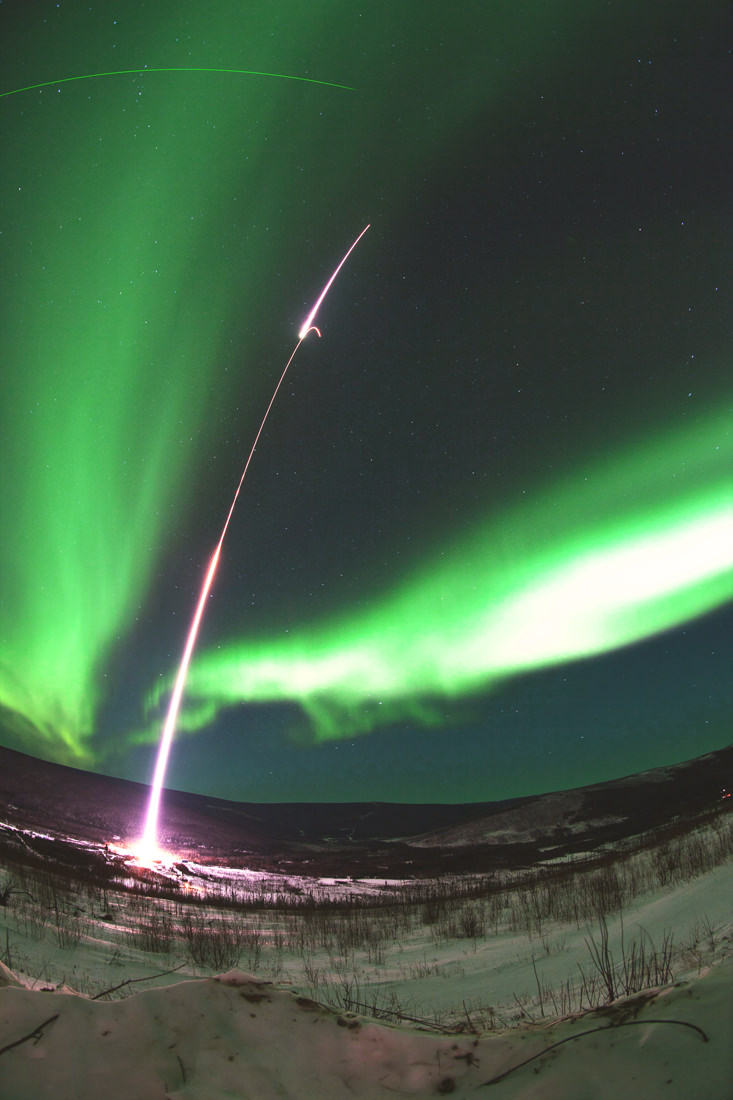
 A two-stage Terrier-Black Brant rocket arced through aurora 200 miles above Earth as the Magnetosphere-Ionosphere Coupling in the Alfvén resonator (MICA) mission investigated the underlying physics of the northern lights. Stage one of the rocket has just separated and is seen falling back to Earth. Photo by Terry E. Zaperach, NASA. Over the weekend, a two-stage sounding rocket launched into a sky shimmering with green aurora. On board were instruments that will help shed new light on the physical processes that create the Northern Lights and further our understanding of the complex Sun-Earth connection. "We're investigating what's called space weather," said Steven Powell from Cornell University. "Space weather is caused by the charged particles that come from the Sun and interact with the Earth's magnetic field. We don't directly feel those effects as humans, but our electronic systems do."
(...)
Read the rest of Dramatic Rocket Launch Into an Aurora (343 words)
© nancy for Universe Today, 2012. | Permalink | 3 comments | Add to del.icio.us
Post tags: aurora, launches, Poker Flat Range
Feed enhanced by Better Feed from Ozh 

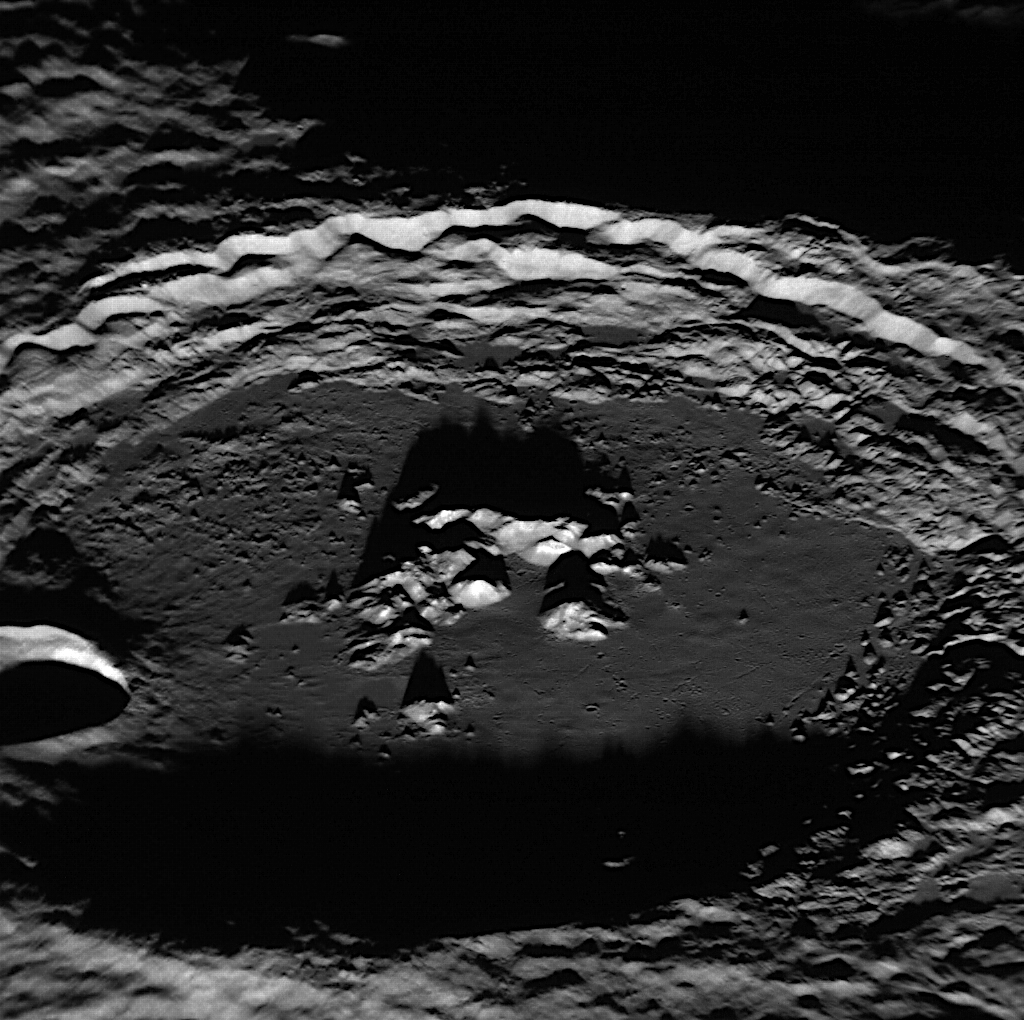
 MESSENGER image of Mercury's Amaral crater The 68-mile (109-km) -wide Amaral crater on Mercury reveals its brightly-tipped central peaks in this image, acquired by NASA’s MESSENGER spacecraft on Feb. 4, 2012. Long shadows are cast by the crater’s peaks and rugged rim (north is to the left.) The image was acquired as a high-resolution targeted observation with MESSENGER’s Narrow-Angle Camera (NAC) on its Mercury Dual Imaging System (MDIS). (...)
Read the rest of Bright Peaks, Dark Shadows (164 words)
© Jason Major for Universe Today, 2012. | Permalink | 2 comments | Add to del.icio.us
Post tags: Amaral, crater, hollows, Mercury, MESSENGER, Tarsila
Feed enhanced by Better Feed from Ozh 

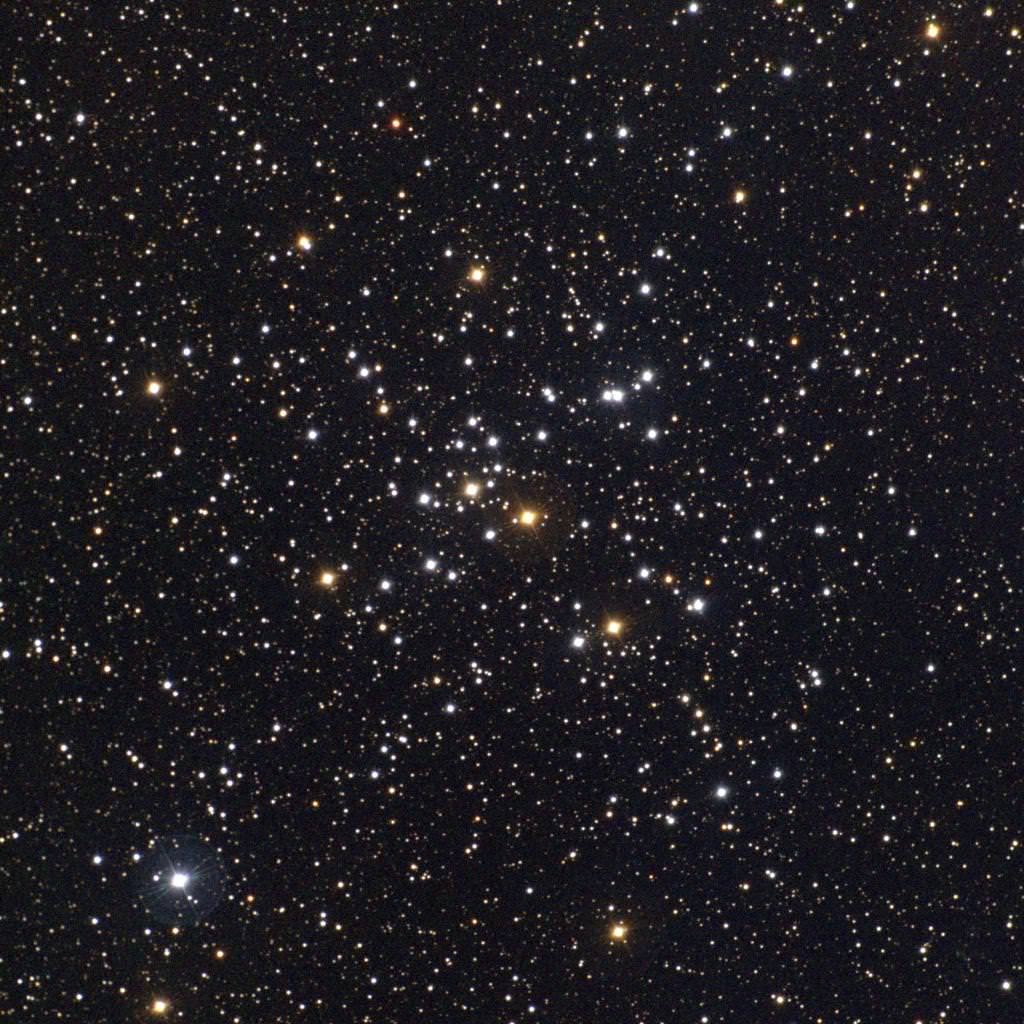
 Messier 41 - Credit: NOAO/AURA/NSF Greetings, fellow SkyWatchers! It’s going to be an awesome week as we watch the planets – Mars, Saturn, Jupiter, Venus and Mercury – dance along the ecliptic plane. You don’t even need a telescope for this show! But that’s not all. We’ll take a look at a wealth of bright star clusters, challenging studies and lots more. I’ll see you in the back yard… (...)
Read the rest of Weekly SkyWatcher’s Forecast: February 19-25, 2012 (2,406 words)
© tammy for Universe Today, 2012. | Permalink | One comment | Add to del.icio.us
Post tags: crab nebula, Herschel Objects, M41, Messier Objects. Tycho's Supernova, pulsar, T Tauri
Feed enhanced by Better Feed from Ozh 

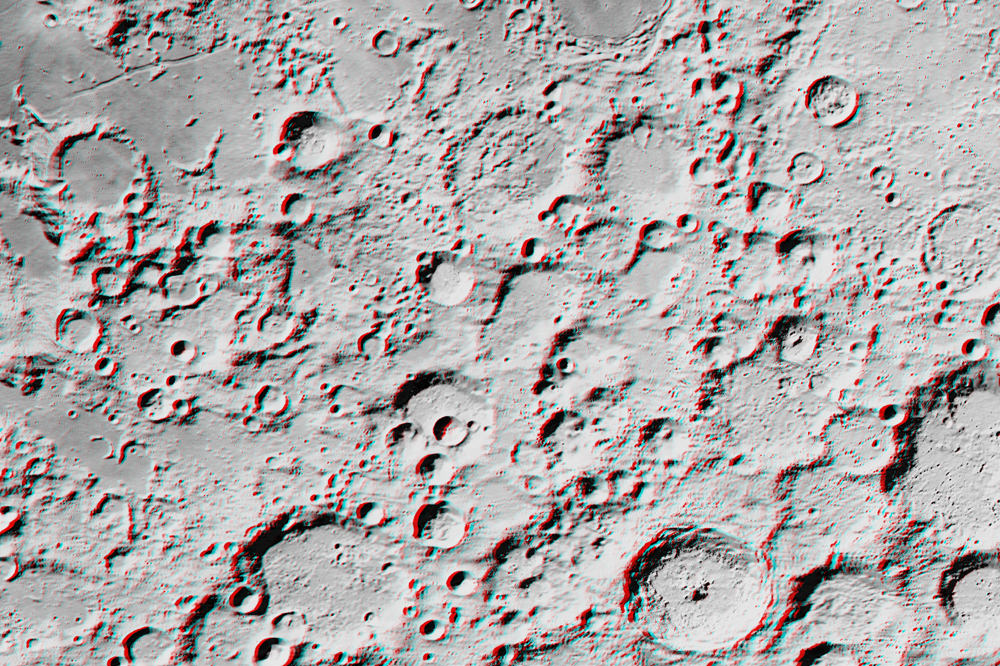
 This AIPP image is a 1,000-by-666-pixel section of the full-resolution 3-D map that Jeffrey Ambrozia will create, which will ultimately be a 5,398-by-7,000-pixel graphic. This shows Heinsius crater. Image courtesy Jeffrey Ambroziak. Love 3-D images? Interested in maps? Want to explore the Moon? Then a new Kickstarter project may be just what you are looking for. Jeffrey Ambroziak, creator of a specialized 3-D map projection method, will be producing what he calls the first true 3-D map of the Moon, and he is offering space enthusiasts the chance to get either digital or paper copies of the map, created from recently released data from the Lunar Reconnaissance Orbiter. Interest in the project has skyrocketed, and while the goal of $5,000 has already been reached by more than double that amount, Ambroziak is now thinking of what more he can offer to backers of his PopView 3D Moon Map. "We're at a place now where you can do some interesting research on your own, and it doesn't necessarily require a large institution," Ambroziak said by phone. "I love the idea of using Kickstarter to give interested and passionate space aficionados the opportunity to work with us."
(...)
Read the rest of Get Your Own Unprecedented 3-D View of the Moon (629 words)
© nancy for Universe Today, 2012. | Permalink | 4 comments | Add to del.icio.us
Post tags: 3 D, Citizen Science, kickstarter, Maps, Moon
Feed enhanced by Better Feed from Ozh 


In case you missed it, here’s our interview with Caltech astronomer Mike Brown. Mike and his team discovered Eris and many other large objects in the Kuiper Belt. We talked about Pluto and Eris, of course, but also about Mike’s other favorite objects in the Solar System like Europa and Titan.
© Fraser for Universe Today, 2012. | Permalink | 6 comments | Add to del.icio.us
Post tags:
Feed enhanced by Better Feed from Ozh 

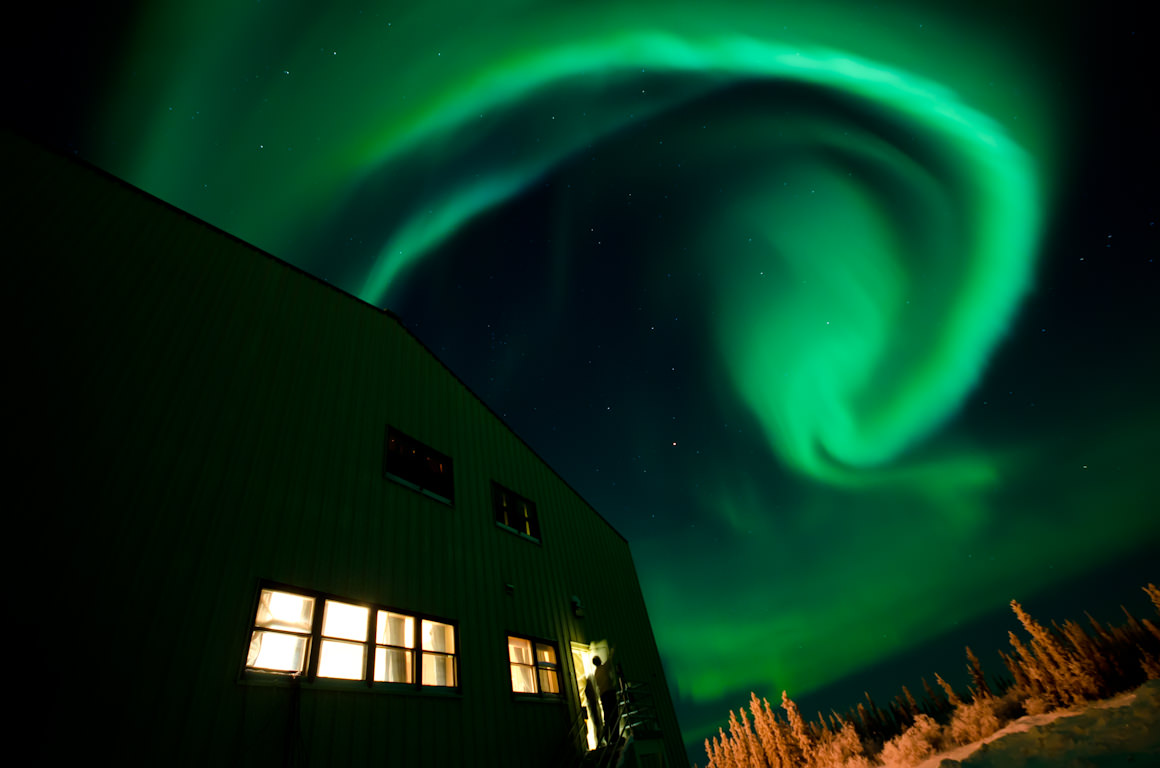
 Swirling Aurora. Image Credit: Jason Ahrns Jason Ahrns captured this beautiful image of the Aurora from Fort Yukon, Alaska. The aurora was caused by an unexpected geomagnetic storm that took place on February 15, 2012. He used a Nikon D7000 camera in taking this photo. Here’s a link to Jason’s Flickr page for more stunning pictures of the aurora. Want to get your astrophoto featured on Universe Today? Join our Flickr group, post in our Forum or send us your images by email (this means you’re giving us permission to post them). Please explain what’s in the picture, when you took it, the equipment you used, etc.
© dcast for Universe Today, 2012. | Permalink | One comment | Add to del.icio.us
Post tags: Astrophotos, aurora borealis, northern lights
Feed enhanced by Better Feed from Ozh 

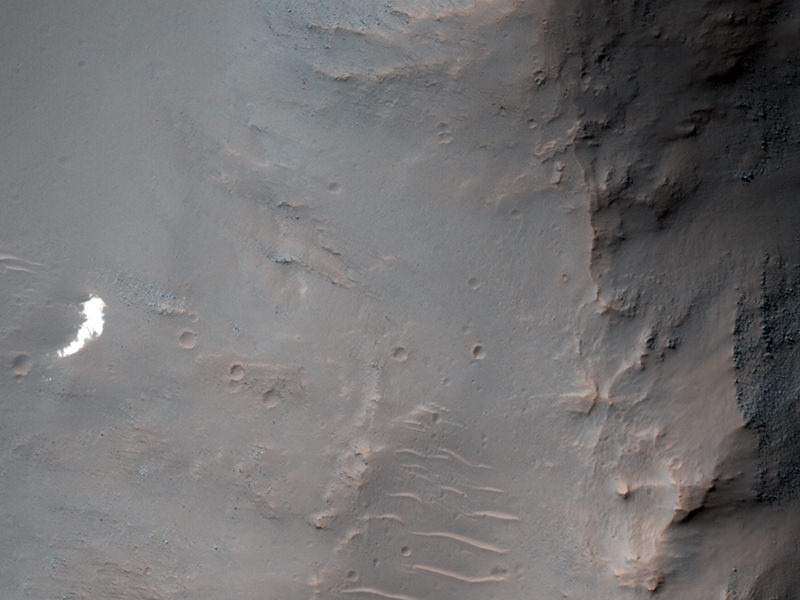
 The 'lost' Soviet Mars 6 lander may be somewhere in this image. Credit: NASA/JPL/University of Arizona Mars could be considered a spacecraft graveyard. The planet is just a hard place to get to – and especially land on — and there are several 'lost' spacecraft lying somewhere on Mars' surface. The Soviet Mars 6 lander arrived at Mars on March 12, 1974. The records detail that the descent module entered the atmosphere and the parachute opened at 09:08:32 UT, and during that time, the craft was collecting and returning data. However, contact with the descent module was lost at 09:11:05 UT, about the time it was expected to reach the surface. "Because we know that the parachute opened and have some idea where it was headed, we have a chance of locating the hardware on the surface with HiRISE," said Alfred McEwen, principal investigator for HiRISE, the High Resolution Imaging Science Experiment camera on board the Mars Reconnaissance Orbiter.
(...)
Read the rest of Can You Find the Lost Soviet Mars 6 Lander in this Image? (184 words)
© nancy for Universe Today, 2012. | Permalink | 15 comments | Add to del.icio.us
Post tags: HiRISE, Mars, Mars 6 Lander, Mars Reconnaissance Orbiter (MRO)
Feed enhanced by Better Feed from Ozh 

| 
















No comments:
Post a Comment
Keep a civil tongue.