| Here are the FeedBlitz blog updates for ignoble.experiment@arconati.us

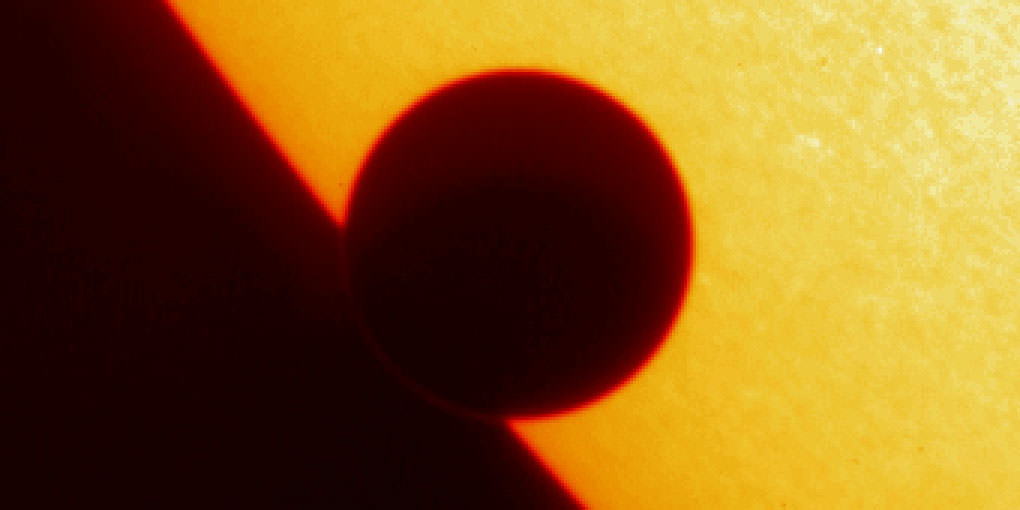
Venus is moving in! The LASCO C3 coronograph on board the SOHO spacecraft has been watching the approach of Venus for its last solar transit until 2117. With coronagraphs, the Sun is blocked by an occulting disk, seen here in blue, so that SOHO can observe the much fainter features in the Sun’s corona. The actual size of the Sun is represented by the white disk.
(...)
Read the rest of Video: Venus Moving in for a Transit (75 words)
© nancy for Universe Today, 2012. | Permalink | No comment |
Post tags: soho, sun, Venus
Feed enhanced by Better Feed from Ozh 

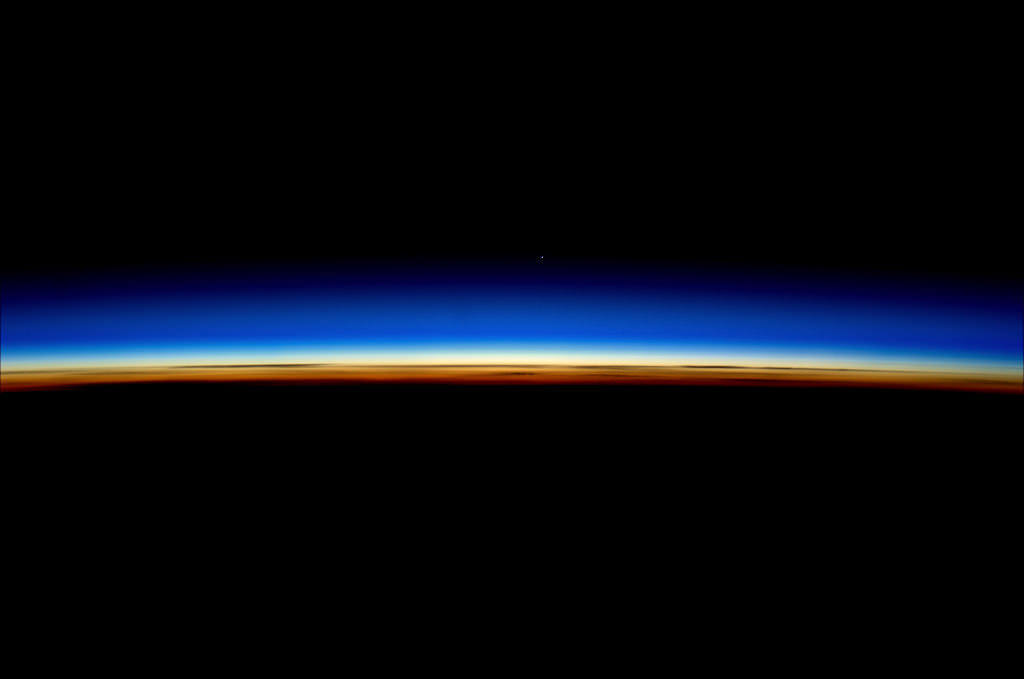
 Venus photographed from the ISS (ESA/NASA) ESA astronaut Andre Kuipers captured this stunning image of Earth’s limb with Venus shining brightly above on the morning of June 4, 2012. While it’s a fantastic shot in its own right, it’s just a warm-up for tomorrow’s big transit event, which will be watched by millions of people all over the world — as well as a select few aboard the ISS! (...)
Read the rest of Tomorrow’s Transit Will be the First Photographed From Space (344 words)
© Jason Major for Universe Today, 2012. | Permalink | No comment |
Post tags: #tov2012, Andre Kuipers, Don Pettit, Earth, esa, ISS, NASA, photo, Transit of Venus
Feed enhanced by Better Feed from Ozh 

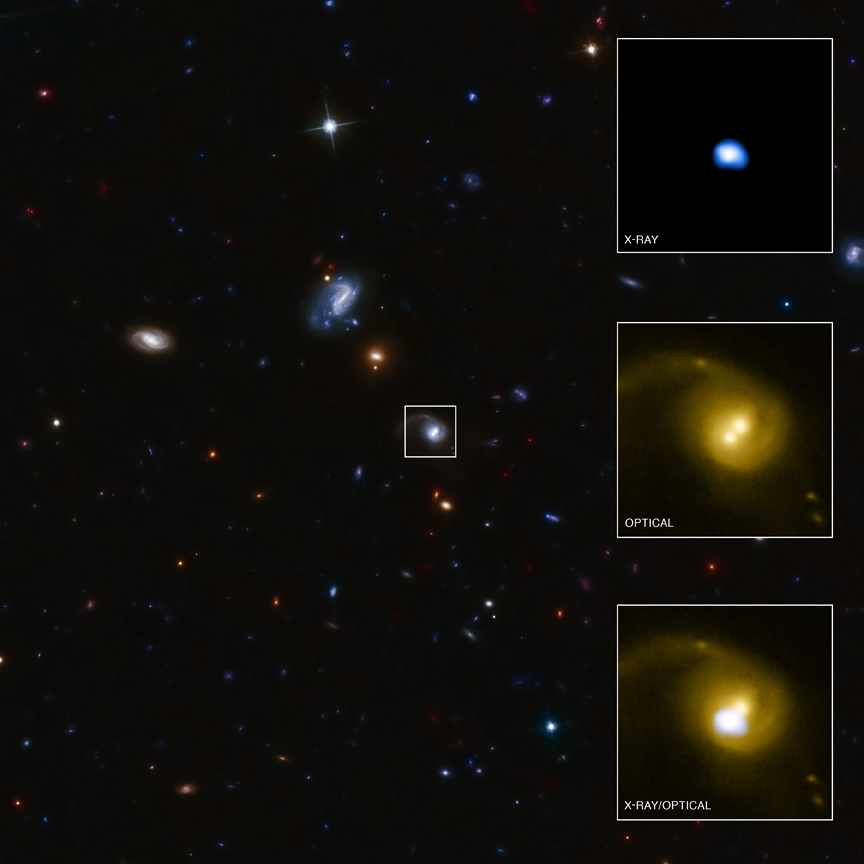
 A composite image of galaxy CID-4 shows evidence the black hole is being ejected. Credit: X-ray: NASA/CXC/SAO/F.Civano et al; Optical: NASA/STScI; Optical (wide field): CFHT, NASA/STScI Talk about a tough neighborhood! Even black holes aren't welcome in galaxy CID-42, located about 4 billion light-years away from Earth. Astronomers using the Chandra X-Ray Observatory have found strong evidence that a massive black hole is being ejected from this galaxy, moving out at a speed of several million kilometers per hour. This phenomenon, known as a recoiled black hole, happens due to a gravitational wave "kick" from the merger of two black holes. While this event is likely to be rare, it could mean that there could be giant black holes roaming undetected out in the vast spaces between galaxies.
(...)
Read the rest of Are Rogue Black Holes Wandering the Universe? (599 words)
© nancy for Universe Today, 2012. | Permalink | 4 comments |
Post tags: Black Holes, Chandra
Feed enhanced by Better Feed from Ozh 

 Transit of Venus in 2004 by NASA's TRACE spacecraft. Image credit: NASA/LMSAL Venus will make a rare transit across the face of the Sun on June 5/6, 2012 and for this historic event, Universe Today will be coordinating unprecedented live coverage. Starting at 20:00 UTC (2:00 p.m. PDT, 5 pm EDT) on Tuesday, June 5, a live 8-hour webcast will provide views from around the world using multiple telescopes along with commentary from astronomers, space scientists and other special guests. Viewers will also have the chance to interact and ask questions about this uncommon event to learn more about its significance in aiding our understanding of the Solar System.
(...)
Read the rest of Watch the 2012 Transit of Venus Live! (360 words)
© nancy for Universe Today, 2012. | Permalink | 4 comments |
Post tags: Hangouts, Live broadcasts, Venus
Feed enhanced by Better Feed from Ozh 

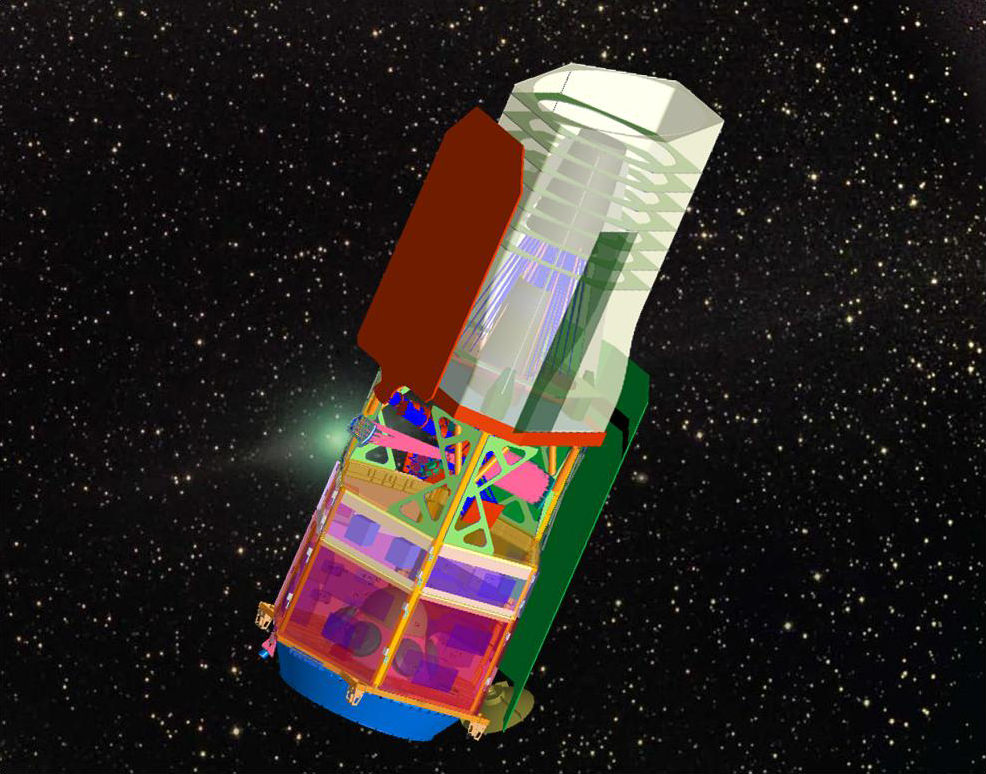
 Could two unused satellites given to NASA help resurrect the proposed WFIRST mission? Credit: NASA NASA will be getting two unused space surveillance satellites from the US's National Reconnaissance Office, which could possibly be used to search for dark energy. In articles in the Washington Post and the New York Times, NASA and NRO officials revealed the two unused and not-fully-built satellites are available for NASA to use as they see fit. While the satellites don't have astronomical instruments and are still in a warehouse, they do have 2.4-meter (7.9 feet) mirrors, just like Hubble, with a wider field of view and a maneuverable secondary mirror that makes it possible to obtain better-focused images. "This is a total game changer," said David N. Spergel of Princeton, quoted in the New York Times, who is co-chairman of a committee on astronomy and astrophysics for the National Academy of Sciences.
(...)
Read the rest of Surprise! NASA Gets Two ‘Free’ Hubble-like Space Telescopes (391 words)
© nancy for Universe Today, 2012. | Permalink | 19 comments |
Post tags: Hubble Space Telescope, jwst, NASA, NRO, WFIRST
Feed enhanced by Better Feed from Ozh 

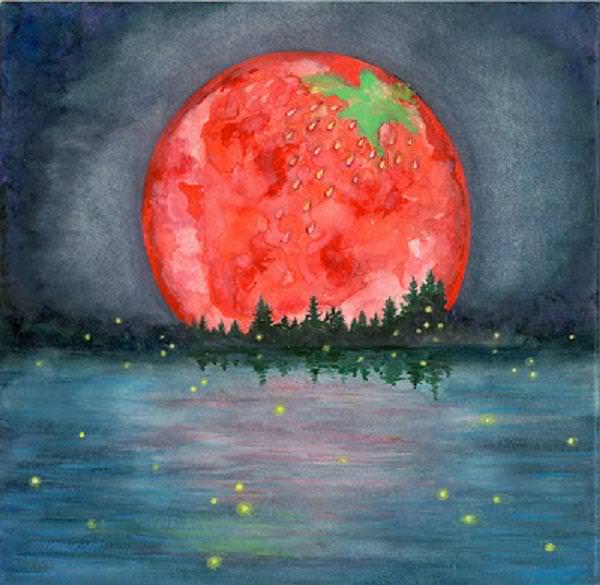
 Composite of 10 images from the Partial Lunar Eclipse on June 4, 2012 from Mexico City. Credit: Genaro Grajeda Early on June 4th, the full “Strawberry” Moon passed through the shadow of Earth, producing a partial lunar eclipse. It was visible across the ‘Pacific’ side of Earth, from Asia to North America, and began at about 10:00 UTC (3:00 a.m. PDT), reaching its maximum at 11:03 UTC (4:03 a.m. PDT). At most about 38% of the Moon’s diameter was in shadow. Some great images are coming in, like this collage of 10 photos from Genaro Grajeda in Mexico City, taken from 3:55 a.m. to 6:35 a.m. See more below, and for any of the images, click for larger versions and/or the original version!
(...)
Read the rest of Stunning Partial Lunar Eclipse Images from June 4, 2012 (244 words)
© nancy for Universe Today, 2012. | Permalink | One comment |
Post tags: eclipses, lunar eclipse
Feed enhanced by Better Feed from Ozh 


If you’ve seen the excellent BBC/Science Channel series “Wonders of the Universe,” you know that host Brian Cox’s natural enthusiasm for astronomy is nothing short of infectious. His explanations of far-out concepts bring the mysteries of our Universe down to Earth for everyone to understand… and now he and HarperCollins UK have brought them even closer — right to your iPad. Now, here on Universe Today you can win a free copy of the app as well as a signed copy of his Wonders of the Universe or Wonders of the Solar System hardcover book! (...)
Read the rest of Enter the Universe Today “Wonders of the Universe” Contest! (378 words)
© Jason Major for Universe Today, 2012. | Permalink | 2 comments |
Post tags: app, Astronomy, books, Brian Cox, contest, iPad, universe, Wonders of the Universe
Feed enhanced by Better Feed from Ozh 

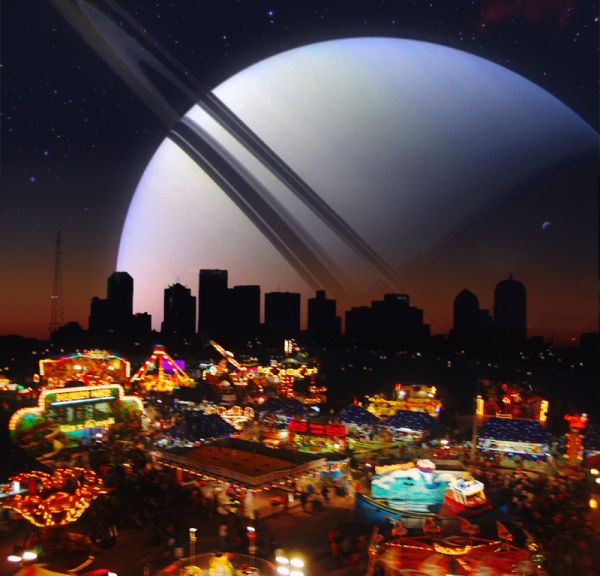
 Graphic Courtesy of Dave Reneke Greeting, fellow SkyWatchers! It’s gonna’ be a great week! We start off with a partial lunar eclipse of the Strawberry Moon, head into the historic Venus Transit, study some Herschel objects, catch both the Scorpid and Arietid Meteor Showers, practice some binocular astronomy and even take on some challenge objects! How awesome is that? Whenever you’re ready, just follow me into the back yard… (...)
Read the rest of Weekly SkyWatcher’s Forecast: June 4-10, 2012 (3,060 words)
© tammy for Universe Today, 2012. | Permalink | 2 comments |
Post tags: Globular Cluster, Herschel Objects, June Arietid Meteor Shower, partial lunar eclipse, Saturn, venus transit
Feed enhanced by Better Feed from Ozh 

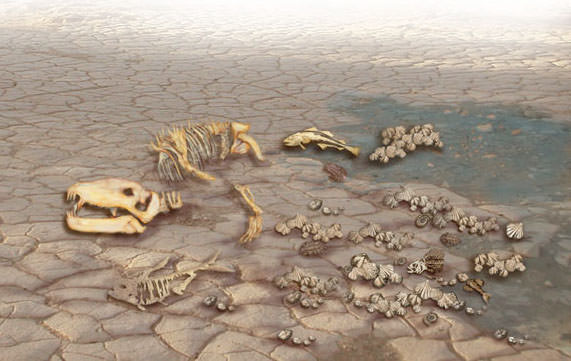
 Based on fossil records, around 252 million years ago over 90% of all species on Earth died out, effectively resetting evolution. (Image: Lunar and Planetary Institute) Hey, remember that one time when 90% of all life on Earth got wiped out? I don’t either. But it’s a good thing it happened because otherwise none of us would be here to… not remember it. Still, the end-Permian Extinction — a.k.a. the Great Dying — was very much a real crisis for life on Earth 252 million years ago. It makes the K-T extinction event of the dinosaurs look like a rather nice day by comparison, and is literally the most catastrophic event known to have ever befallen Earthly life. Luckily for us (and pretty much all of the species that have arisen since) the situation eventually sorted itself out. But how long did that take? (...)
Read the rest of When Everything On Earth Died (458 words)
© Jason Major for Universe Today, 2012. | Permalink | 111 comments |
Post tags: biology, dinosaurs, Earth, extinction, pangaea, Permian, planet
Feed enhanced by Better Feed from Ozh 

| 
















No comments:
Post a Comment
Keep a civil tongue.