| Here are the FeedBlitz blog updates for ignoble.experiment@arconati.us

Surrounding our planet like vast invisible donuts (the ones with the hole, not the jelly-filled kind) are the Van Allen radiation belts, regions where various charged subatomic particles get trapped by Earth’s magnetic fields, forming rings of plasma. We know that the particles that make up this plasma can have nasty effects on spacecraft electronics as well as human physiology, but there’s a lot that isn’t known about the belts. Two new satellites, scheduled to launch on August 23, will help change that.
(...)
Read the rest of New Satellites Will Tighten Knowledge of Earth’s Radiation Belts (313 words)
© Jason Major for Universe Today, 2012. | Permalink | No comment |
Post tags: belts, Earth, GSFC, Launch, magnetosphere, plasma, radiation, RBSP, Satellites, ULA, Van Allen
Feed enhanced by Better Feed from Ozh 


When a star suffered an untimely demise at the hands of a hidden black hole, astronomers detected its doleful, ululating wail — in the key of D-sharp, no less — from 3.9 billion light-years away. The resulting ultraluminous X-ray blast revealed the supermassive black hole’s presence at the center of a distant galaxy in March of 2011, and now that information could be used to study the real-life workings of black holes, general relativity, and a concept first proposed by Einstein in 1915.
(...)
Read the rest of A Star’s Dying Scream May Be a Beacon for Physics (510 words)
© Jason Major for Universe Today, 2012. | Permalink | No comment |
Post tags: AGN, Black Holes, Cosmology, Einstein, relativity, Swift, universe, X-ray
Feed enhanced by Better Feed from Ozh 


US President Barack Obama called up the Mars Science Laboratory team at the Jet Propulsion Laboratory today, August 13, congratulating them on the perfect landing of the Curiosity rover one week ago today. “What you did on Mars was incredibly impressive," the President said, "with those 76 pyrotechnics going on in perfect succession, the 500,000 lines of code working exactly the way you guys had ordered them, it’s really mind boggling what you’ve been able to accomplish. Being able to get that whole landing sequence to work the way you did, it’s a testimony to your team."
(...)
Read the rest of President Obama Calls with Congratulations for Mars Science Laboratory Team (437 words)
© nancy for Universe Today, 2012. | Permalink | 10 comments |
Post tags: Curiosity, Mars, Mars Science Laboratory
Feed enhanced by Better Feed from Ozh 


Caption: Perseid Meteors with Lunar & Planetary Conjunction on August 12, 2012. Credit: John Chumack.
Here’s some great views of the Perseid Meteor Shower from Universe Today readers around the world. Over the weekend was the peak of the annual meteor shower that never seems to disappoint! We start with one of our “regulars,” John Chumack from his observatory in Yellow Springs, Ohio, USA. But there were also many other objects in John’s field of view, including the waning crescent Moon, Venus, and Orion rising over the observatory dome, the Pleaides, Hyades, and Jupiter, too. John used a odified Canon Rebel Xsi & 17mm lens at F4, ISO 400, and a 20 second exposure. See more of John’s wonderful astrophotos at his Flickr page or at his website, Galactic Images. More beautiful shots below:
(...)
Read the rest of Astrophotos: The 2012 Perseid Meteor Shower from Around the World (324 words)
© nancy for Universe Today, 2012. | Permalink | 2 comments |
Post tags: Meteor Showers, perseid meteor shower, perseids
Feed enhanced by Better Feed from Ozh 


Greetings, fellow SkyWatchers! Even if you missed the peak of the Perseid meteor shower, there will still be plenty of “strays” to sparkle this week’s dark nights. For astronomy without a telescope, be sure to check out all the planetary alignments – and tell your friends! When you’re ready to learn more about what to view and when this week, then meet me in the back yard… (...)
Read the rest of Weekly SkyWatcher’s Forecast: August 13-19, 2012 (2,536 words)
© tammy for Universe Today, 2012. | Permalink | One comment |
Post tags:
Feed enhanced by Better Feed from Ozh 


Looking like diamonds in the sky, this lovely astrophoto shows Ptolemy’s Cluster, or Messier 7, a very bright open star cluster easily visible with the naked eye near the tail of Scorpius. Taken by photographer Rolf Wahl Olsen — Sky Viking on Flickr — this beautiful, glittering cluster is about 980 light years away from Earth and has some 80 member stars within its diameter of about 25 light years. Astronomers have determined these young, bright stars are approximately 200 million years old. The cluster is visible as a hazy patch in the sky, and was first described by the ancient astronomer Ptolemy in 130 AD. Rolf said this image was taken with a bright 78% illuminated Moon nearby. Image details:
Date: 31st May 2012
Exposure: LRGB: 48:24:24:24m, total 2hrs @ -28C
Telescope: 10″ Serrurier Truss Newtonian f/5
Camera: QSI 683wsg with Lodestar guider
Filters: Astrodon LRGB E-Series Gen 2
Taken from Sky Viking’s observatory in Auckland, New Zealand Want to get your astrophoto featured on Universe Today? Join our Flickr group or send us your images by email (this means you’re giving us permission to post them). Please explain what’s in the picture, when you took it, the equipment you used, etc.
© nancy for Universe Today, 2012. | Permalink | One comment |
Post tags: Astrophotos
Feed enhanced by Better Feed from Ozh 


Image Caption: Mosaic of Mount Sharp inside Curiosity's Gale Crater landing site. Gravelly rocks are strewn in the foreground, dark dune field lies beyond and then the first detailed view of the layered buttes and mesas of the sedimentary rock of Mount Sharp. Topsoil at right was excavated by the ‘sky crane’ landing thrusters. Gale Crater in the hazy distance. This mosaic was stitched from three full resolution Navcam images returned by Curiosity on Sol 2 (Aug 8) and colorized based on Mastcam images from the 34 millimeter camera. Processing by Ken Kremer and Marco Di Lorenzo. Credit: NASA/JPL-Caltech/Ken Kremer/Marco Di Lorenzo The Curiosity rover has beamed back the first detailed images of Mount Sharp, offering a stupendous initial view of her ultimate driving goal, and is now in the midst of a crucial "brain transplant" this weekend that will transform her into a fully operational rover. The science team will direct the six-wheeled Curiosity to begin climbing Mount Sharp at some later date during the rovers’ two year primary mission after traversing and extensively investigating the floor of her landing site inside Gale Crater. (...)
Read the rest of Curiosity sees Mount Sharp Up Close and gets 'Brain Transplant' (794 words)
© Ken Kremer for Universe Today, 2012. | Permalink | 16 comments |
Post tags: Curiosity, Curiosity Rover, Mars Science Laboratory (MSL), Mars Science Laboratory (MSL) Curiosity Rover, MSL
Feed enhanced by Better Feed from Ozh 


When Curiosity executed a perfect six-wheel landing on Mars on the morning of August 6 to the excitement of millions worldwide — not to mention quite a few engineers and scientists at JPL — it immediately began relaying images back to Earth. Although the initial views were low-resolution and taken through dusty lens covers, features of the local landscape around the rover could be discerned… distant hills, a pebbly surface, the rise of Gale Crater’s central peak — and a curious dark blur on the horizon that wasn’t visible in later images. What could it have been? Another bit of lens dust? An image artifact? A piece of ancient Martian architecture that NASA demanded be erased from the image? As it turns out, it was most likely something even cooler (or at least real): the result of Curiosity’s descent stage crash-landing into the Martian surface. (...)
Read the rest of Mystery Blur in Mars Image Explained (757 words)
© Jason Major for Universe Today, 2012. | Permalink | 10 comments |
Post tags: blur, Curiosity, descent, EDL, JPL, Mars, plume, Sky Crane, Steve Sell
Feed enhanced by Better Feed from Ozh 


“One sees clearly only with the heart. Anything essential is invisible to the eyes.” - Antoine de Saint-Exupéry I didn’t expect to find a story about a stranded aviator and a cosmos-travelling boy in the United Nations bookstore in New York City. Yet there The Little Prince was, prominently displayed on a table near the door – an easy find in a bookstore dominated by tales of war, genocide and oppression of minorities. Is there a special reason why Antoine de Saint-Exupéry’s message – of hope, of learning to judge yourself before others, and of keeping a childlike wonder about the world – is embedded in such a place, I wondered?
(...)
Read the rest of Chasing The Little Prince in New York City (538 words)
© Elizabeth Howell for Universe Today, 2012. | Permalink | 3 comments |
Post tags: Antoine de Saint-Exupéry, New York City, The Little Prince
Feed enhanced by Better Feed from Ozh 


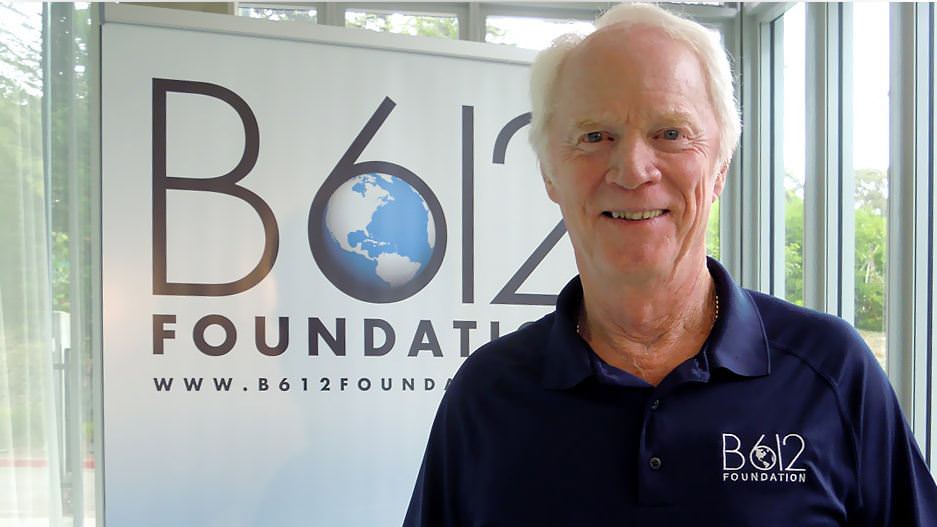
The B612 Foundation announced in June of this year that it plans to launch the first privately funded deep space mission, a space telescope that will map the inner solar system's asteroid population and chart their orbits over the next hundred years. The goal is to find every potentially Earth-impacting object out there. "This is a very practical — and necessary — project," Rusty Schweickart, Chairman Emeritus of B612, and Apollo 9 astronaut told Universe Today. "It can be done, it is exciting and we are trying to get the world to recognize that this is a great investment in the future of humanity."
(...)
Read the rest of Schweickart: Private Asteroid Mission is for the Benefit of Humanity (1,054 words)
© nancy for Universe Today, 2012. | Permalink | 6 comments |
Post tags: Asteroids, B612 Foundation, Rusty Schweickart, Sentinel Asteroid Telescope
Feed enhanced by Better Feed from Ozh 

| 




No comments:
Post a Comment
Keep a civil tongue.