| Here are the FeedBlitz blog updates for ignoble.experiment@arconati.us

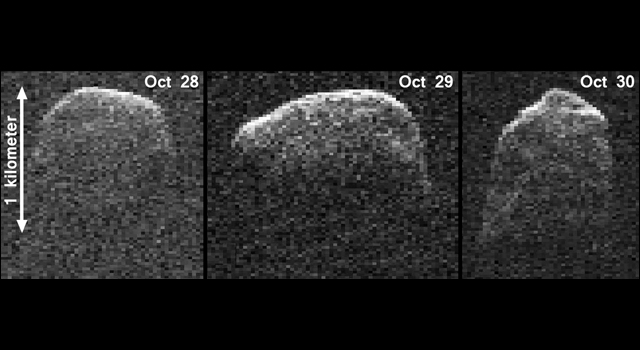
Radar images of asteroid 2007 PA8 acquired on October 28, 29 and 30. (NASA/JPL-Caltech/Gemini)
Take a good look at asteroid 2007 PA8 — over the past week it was making its closest pass of Earth for the next 200 years… and NASA’s 230-foot (70-meter) -wide Deep Space Network antenna at Goldstone, California snapped its picture as it went by.
(...)
Read the rest of Say Hello to Asteroid 2007 PA8 (213 words)
© Jason Major for Universe Today, 2012. | Permalink | No comment |
Post tags: 2007 PA8, asteroid, Goldstone, image, JPL, LINEAR, NASA, neo, PHA, radar
Feed enhanced by Better Feed from Ozh 


Another fantastic Virtual Star Party, with 5 telescopes revealing an amazing view of the night sky. We saw several favorite objects, like Andromeda, the Elephant Trunk Nebula, the Heart and Soul Nebulae, the Double Cluster in Perseus, and the Great Globular Cluster in Hercules. Mighty Jupiter made an appearance right at the end, and we saw several new objects, including the Blue Snowball Nebula, and a collection of little star clusters.
(...)
Read the rest of Virtual Star Party – Nov. 4, 2012: The Blue Snowball Edition (60 words)
© Fraser for Universe Today, 2012. | Permalink | One comment |
Post tags:
Feed enhanced by Better Feed from Ozh 


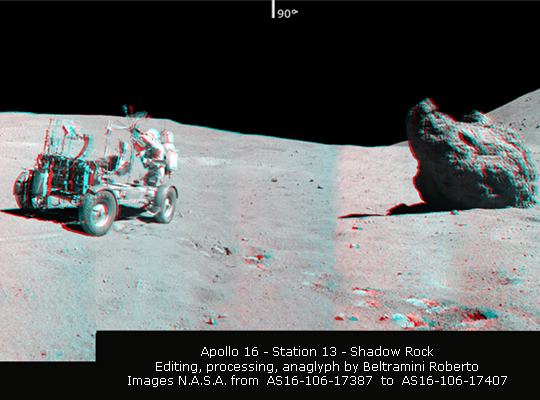
Dealing with those who think the Apollo Moon landings never happened can be frustrating. Most of us just throw up our hands in exasperation, but Italian amateur astronomer Roberto Beltramini came up with a better idea: create a full 360-degree 3-D panorama of images from Apollo 16 to show "the true depth of the views taken by astronauts Apollo," he said. "What better proof? This was the motivation that prompted me to start, but the spectacle and the interest in new ways of seeing the [Moon's] wilderness, made me go farther." This panorama has now been put into a "Zoomify" making it fully interactive and lots of fun to explore. Grab your 3-D glasses, and you can find a rock and zoom in, follow the astronauts' footprints and see one of the astronauts tinkering with the Lunar Rover. Click here and enjoy!
(...)
Read the rest of Spectacular 360-Degree 3-D Panorama from Apollo 16 (260 words)
© nancy for Universe Today, 2012. | Permalink | One comment |
Post tags: Apollo 16, Moon
Feed enhanced by Better Feed from Ozh 


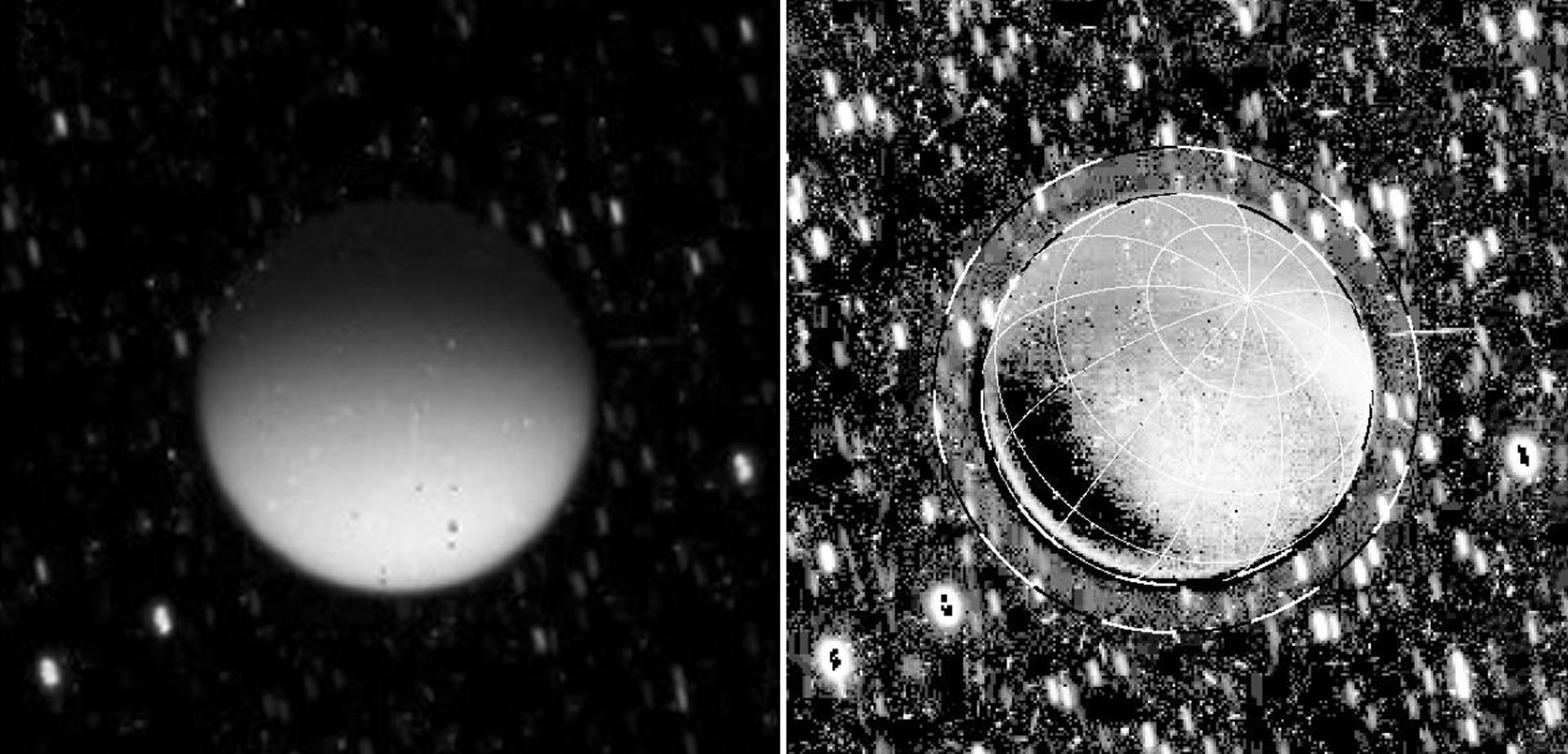
A pair of images from NASA’s Cassini spacecraft show Titan glowing in the dark.
Titan never ceases to amaze. Saturn’s largest moon, it’s wrapped in a complex, multi-layered nitrogen-and-methane atmosphere ten times thicker than Earth’s. It has seasons and weather, as evidenced by the occasional formation of large bright clouds and, more recently, an area of open-cell convection forming over its south pole. Titan even boasts the distinction of being the only other world in the Solar System besides Earth with large amounts of liquid existing on its surface in the form of exotic methane lakes and streams. We have NASA’s Cassini spacecraft to thank for these discoveries, and now there’s one more for the ceaseless explorer to add to its list: Titan glows in the dark.
(...)
Read the rest of Cassini Discovers Titan’s Glowing Atmosphere (393 words)
© Jason Major for Universe Today, 2012. | Permalink | One comment |
Post tags: airglow, Cassini, glow, haze, Moon, Robert West, Saturn, Titan
Feed enhanced by Better Feed from Ozh 


A member of the Chasing Atlantis film team captures Atlantis during its last journey to a display at the Kennedy Space Center in November 2012. (Matthew Cimone) The team behind Chasing Atlantis, an upcoming film talking about the legacy of the space shuttle program, is asking the public for help funding the post-production. This weekend, the five Canadians involved in the production opened an IndieGoGo campaign online to crowdsource $15,000 from the masses. (IndieGoGo is a similar service to Kickstarter, but unlike Kickstarter, it accepts banking information from outside of the United States.) “We’ve gone from a small road trip doc to sitting before astronauts like Chris Hadfield, and now actors such as Wil Wheaton,” wrote team member Matthew Cimone in a statement sent to Universe Today.
(...)
Read the rest of ‘Chasing Atlantis’ Film Launches Fundraising Campaign (107 words)
© Elizabeth Howell for Universe Today, 2012. | Permalink | No comment |
Post tags: Atlantis, chasing atlantis, Space Shuttle
Feed enhanced by Better Feed from Ozh 


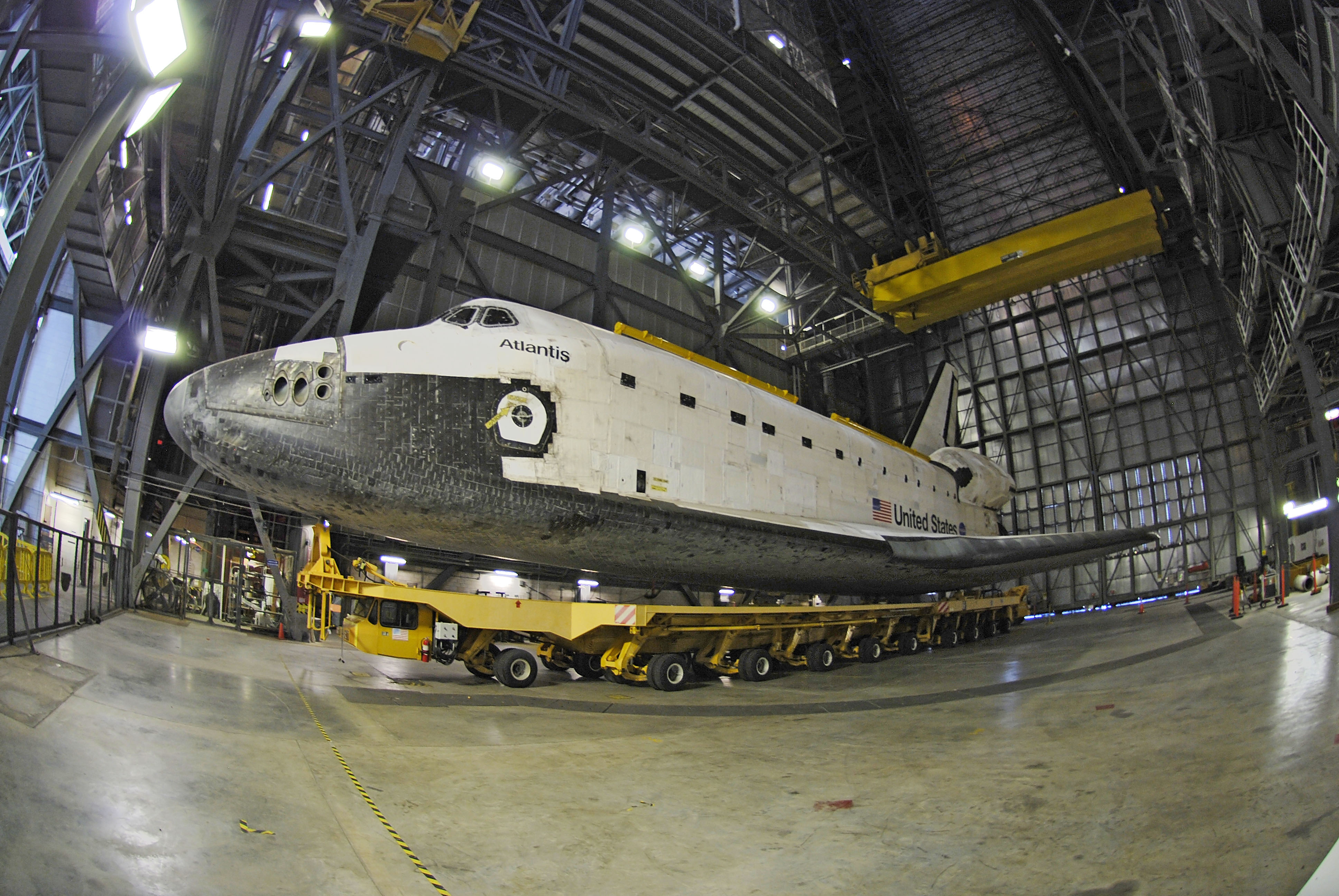
Atlantis is seen in the Vehicle Assembly Building Highbay 4 for the last time before she was rolled to her final home at the Kennedy Space Center Visitor’s Center. Credit: John O’Connor/nasatech.net
Last week was a busy one for the retired space shuttles, and here’s a gallery of images of what’s been happening lately: Atlantis was the last shuttle ever to be in the Vehicle Assembly Building, and was transported over to the Kennedy Space Center Visitor’s Complex this weekend where it will be put on permanent display. Last week the California Science center’s Samuel Oschin Space Shuttle Endeavour Display Pavilion officially opened, And unfortunately, shuttle Enterprise suffered some damage during Hurricane Sandy. (...)
Read the rest of Hurricanes, Transporters and Grand Openings: Busy Week for Retired Space Shuttles (304 words)
© nancy for Universe Today, 2012. | Permalink | No comment |
Post tags: Space Shuttles
Feed enhanced by Better Feed from Ozh 


SpaceX is developing the “Grasshopper” reusable vertical takeoff, vertical landing rocket. Back in September, the 32-meter- (106-ft-) tall Grasshopper made a tiny hop – barely lifting off the pad just to test-fire its engines. But now the Grasshopper has made a second, bigger hop. Over the weekend, Elon Musk quietly tweeted a link to a video, saying, "First flight of 10 story tall Grasshopper rocket using closed loop thrust vector & throttle control." SpaceX hasn't talked much about this rocket, but reportedly the goal with Grasshopper is to eventually create a reusable first stage for its Falcon 9 rocket, which would be able to land safely instead of falling back into the ocean and not being usable again.
(...)
Read the rest of SpaceX’s 10-Story Re-useable Grasshopper Rocket Takes a Bigger Hop (297 words)
© nancy for Universe Today, 2012. | Permalink | 18 comments |
Post tags: Commercial Space, Grasshopper, SpaceX, Verticle Launch Vertical Landing
Feed enhanced by Better Feed from Ozh 


An artist’s impression of the different configurations of asteroid belts that could occur. Image credit: NASA/ESA/A. Feild, STScI
Sure, asteroids can be planetary annihilators, scouring the surface of a world with fire and molten rock. But asteroids might also help seed a planet with the right ingredients to set up the conditions for life, and give that life encouragement to evolve more complex survival strategies. As with all things, it’s just about balance. Too many asteroids, and you’ve got an unrelenting cosmic shooting gallery, raining fiery death from above. Too few asteroids, and complex life might not get the raw material it needs to get rolling. Life never gets that opportunity to really shake things up and evolve into more complex forms.
(...)
Read the rest of You Need Just the Right Amount of Killer Asteroids to Promote Complex Life (416 words)
© Fraser for Universe Today, 2012. | Permalink | 27 comments |
Post tags:
Feed enhanced by Better Feed from Ozh 


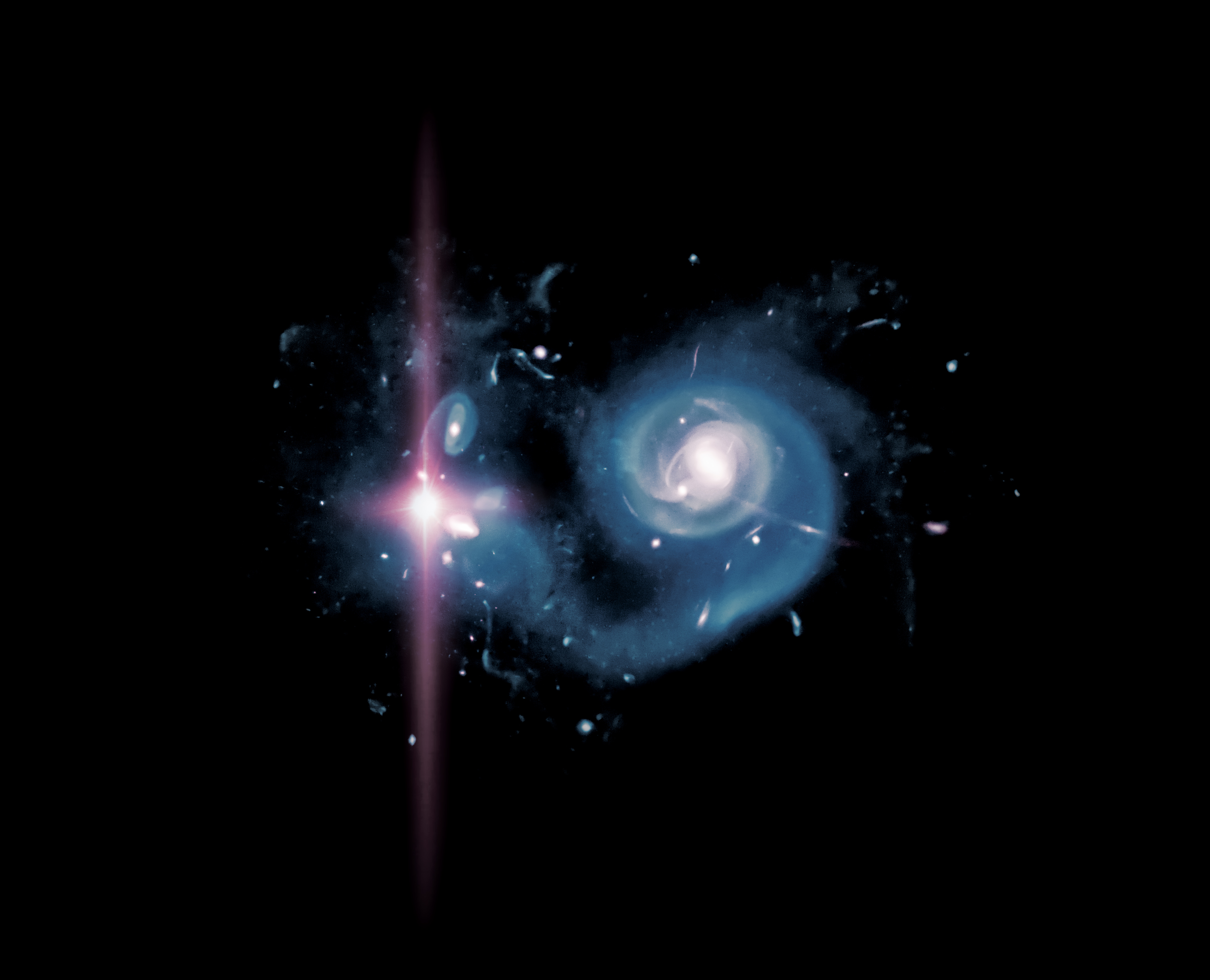
High-resolution simulation of a galaxy hosting a super-luminous supernova and its chaotic environment in the early Universe. Credit: Adrian Malec and Marie Martig (Swinburne University)
Some of the earliest stars were massive and short-lived, destined to end their lives in huge explosions. Astronomers have detected some of the earliest and most distant of these exploding stars, called 'super-luminous' supernovae — stellar explosions 10–100 times brighter than other supernova types. The duo sets a record for the most distant supernova yet detected, and offers clues about the very early Universe. “The light of these supernovae contains detailed information about the infancy of the Universe, at a time when some of the first stars are still condensing out of the hydrogen and helium formed by the Big Bang,” said Dr. Jeffrey Cooke, an astrophysicist from Swinburne University of Technology in Australia, whose team made the discovery.
(...)
Read the rest of Rare Supernova Pair are Most Distant Ever (572 words)
© nancy for Universe Today, 2012. | Permalink | 11 comments |
Post tags: CFHT, Keck Observatory, supernova
Feed enhanced by Better Feed from Ozh 


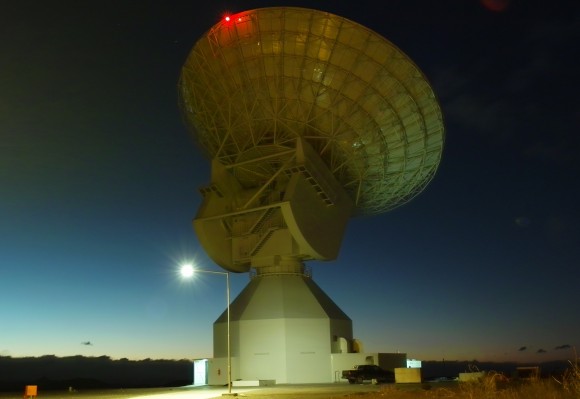
Caption: ESA’s giant Malargüe tracking station Credits: ESA/S. Marti
To keep in contact with an ever growing armada of spacecraft ESA has developed a tracking station network called ESTRACK. This is a worldwide system of ground stations providing links between satellites in orbit and ESA’s Operations Control Centre (ESOC) located in Darmstadt, Germany. The core ESTRACK network comprises 10 stations in seven countries. Major construction has now been completed on the final piece of this cosmic jigsaw, one of the world's most sophisticated satellite tracking stations at Malargüe, Argentina, 1000 km west of Buenos Aires. (...)
Read the rest of Huge New ESA Tracking Station is Ready for Duty (477 words)
© Jenny Winder for Universe Today, 2012. | Permalink | 4 comments |
Post tags: esa, ESTRACK
Feed enhanced by Better Feed from Ozh 

| 












No comments:
Post a Comment
Keep a civil tongue.