| Here are the FeedBlitz blog updates for ignoble.experiment@arconati.us
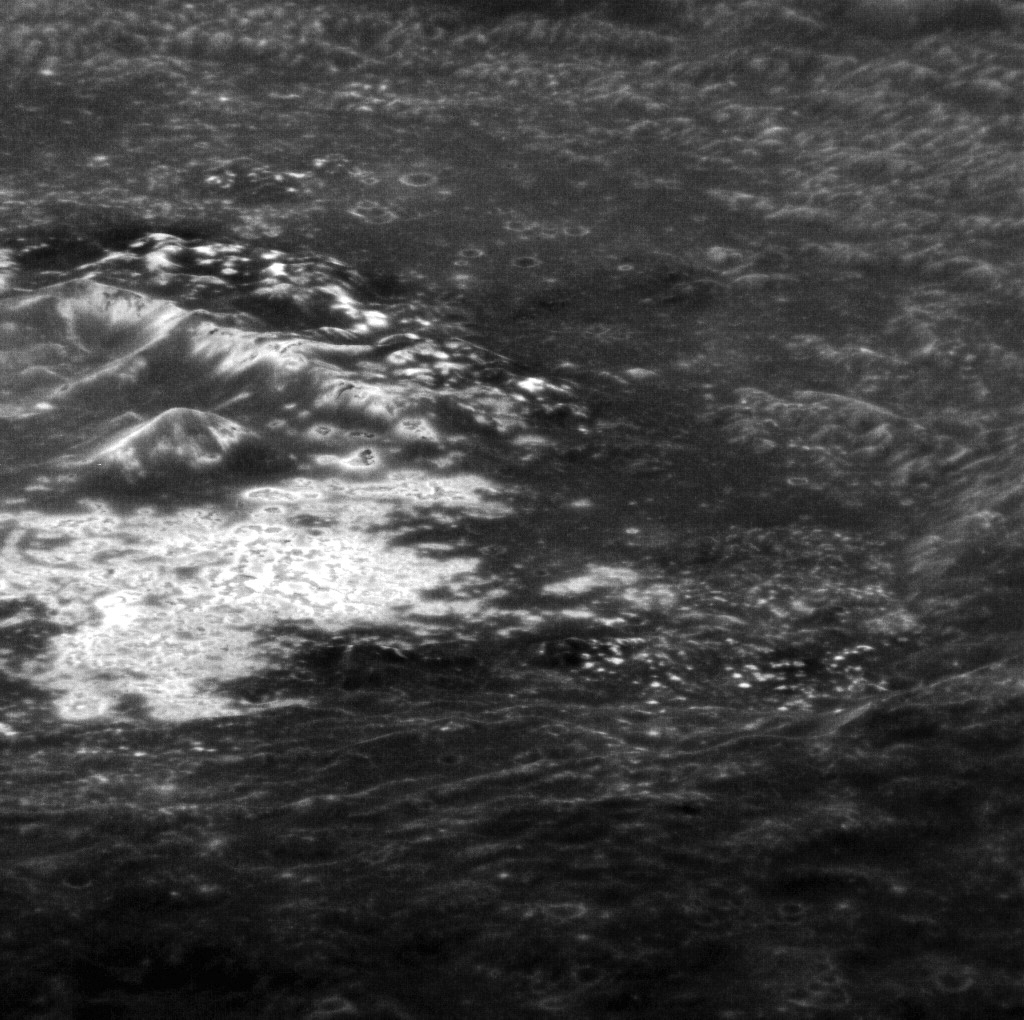
 Hi-res targeted MESSENGER image of the interior of Tyagaraja crater (north is to the right). Here’s a rather interesting view from orbit around the innermost planet: Mercury’s Tyagaraja crater, the interior of which is seen here in an oblique-angled image acquired by the MESSENGER spacecraft on November 12, 2011 (and released August 16, 2013.) (...)
Read the rest of On the Edge of Tyagaraja (172 words)
© Jason Major for Universe Today, 2013. | Permalink | No comment |
Post tags: hollows, JHUAPL, Mercury, MESSENGER, NASA, planet, Tyagaraja
Feed enhanced by Better Feed from Ozh
 The star Alnitak and Flame Nebula in Orion. Credit and copyright: César Cantú. Astrophotographer César Cantú from Mexico captured this beautiful view of the star Alnitak and Flame Nebula, both in the constellation Orion. Alnitak is the southern star in Orion's belt, and is an extremely hot star, with a temperature of 29,500 ± 1000 K. It shines brilliantly, and is about 10,000 times more luminous than the Sun. This star also makes the Flame Nebula appear to be blazing, too. Wind and radiation from Alnitak blasts away electrons from the gas in the Flame nebula, causing it to become ionized and glow in visible light. This gorgeous view was captured on August 11, 2013. Want to get your astrophoto featured on Universe Today? Join our Flickr group or send us your images by email (this means you’re giving us permission to post them). Please explain what’s in the picture, when you took it, the equipment you used, etc.
© nancy for Universe Today, 2013. | Permalink | One comment |
Post tags: Astrophotos, César Cantu, Flame Nebula, Orion
Feed enhanced by Better Feed from Ozh
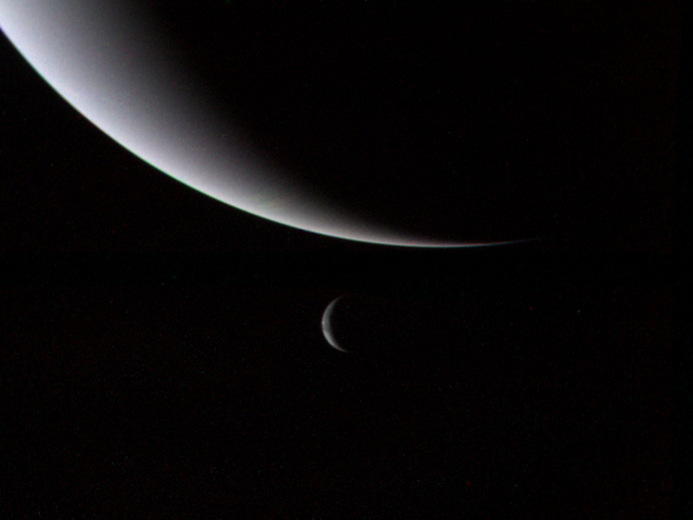
 Neptune and its large moon Triton as seen by Voyager 2 on August 28th, 1989. (Credit: NASA). If you do your own stargazing or participate in our Sunday night Virtual Star Parties, you've probably noticed we're starting to lose planetary targets in the night-time sky. August and September of this year sees Venus and Saturn to the west at dusk, with the planets Mars and Jupiter adorning the eastern dawn sky just hours before sunrise. That means there is now a good span of the night that none of the classic naked eye planets are above the horizon. But the good news is, with a little persistence, YOU can spy the outermost planet in our solar system in the coming weeks: the elusive Neptune. (Sorry, Pluto!)(...)
Read the rest of How to See Planet Neptune: Our Guide to Its 2013 Opposition (922 words)
© David Dickinson for Universe Today, 2013. | Permalink | One comment |
Post tags: neptune aquarius, neptune history, neptune opposition, neptune star party, neptune voyager, observing neptune, observing triton
Feed enhanced by Better Feed from Ozh

On this warm August evening, three astronomers shared their live view of the night sky for a Virtual Star Party. The Moon was nearly full, but instead of hating it, Mark Behrendt decided to bring it into our view for the evening. We also had fantastic views of several of the famous summer nebulae: the Lagoon, the Swan, Veil, Ring, and Dumbbell Nebula. Fraser also demonstrated his terrible skills as a space agency director, launching a few virtual rockets in the Kerbal Space Program while we waited for telescopes to update. Host: Fraser Cain Commentator: David Dickinson Astronomers: Gary Gonella, Stuart Forman, Mark Behrendt We run the Virtual Star Party as a live Google+ Hangout on Air every Sunday night when it gets dark on the West Coast. In the summer, that means 9:00 pm Pacific / 12:00 am Eastern. You can view the show live from the Universe Today YouTube page, or right here on Universe Today; we’ll embed the video on the site right before we begin. We’re always looking for more astronomers, so if this sounds like something you’d like to participate it, just drop me an email at info@universetoday.com.
© Fraser for Universe Today, 2013. | Permalink | 3 comments |
Post tags:
Feed enhanced by Better Feed from Ozh
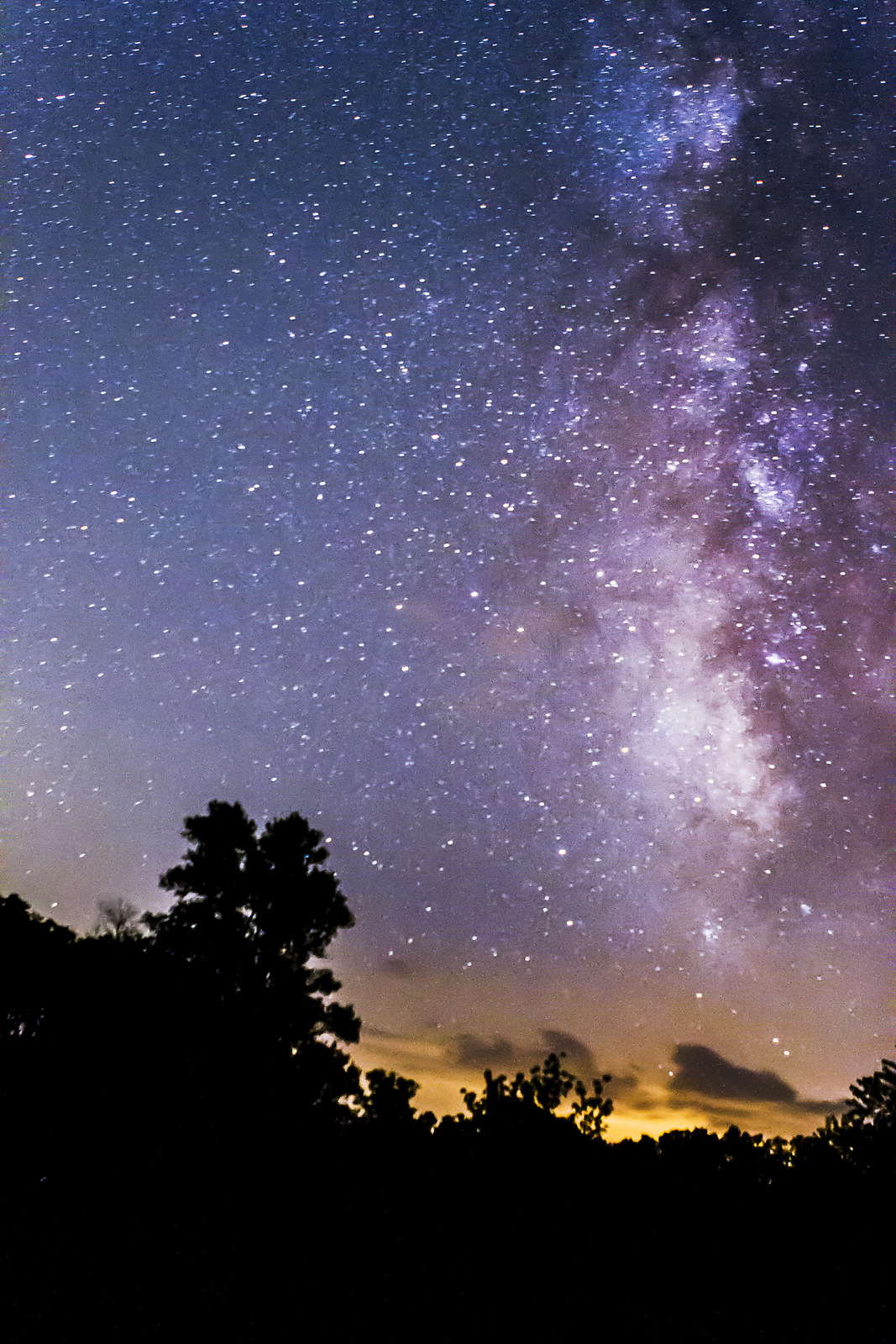
 The Milky Way arches over Jim Edgar Panther Creek State Park in Central Illinois. Credit and copyright: Ben Romang. Amateur astronomers from Illinois frequently venture out to Jim Edgar Panther Creek State Park, a 26-square mile conservation area of prairie and forest, famous for having the darkest skies in the state. But of course, lots of folks head out to the park to enjoy other things like the picturesque landscapes, the wildlife, and the solitude. This past week my friend Ben Romang went to do some camping at Panther Creek, and with a borrowed camera, wanted to make his first attempt at photographing the night sky. He was hoping to nab some Perseid meteors, but instead was overwhelmed with the beauty of the expansive sky overhead. For his first try, I think he did a pretty good job of capturing the view, don’t you?
(...)
Read the rest of Astrophoto: The Milky Way Over Panther Creek State Park (149 words)
© nancy for Universe Today, 2013. | Permalink | 2 comments |
Post tags: Astrophotos, Illinois, milky way, Sangamon Astronomical Society, Star Parties
Feed enhanced by Better Feed from Ozh

The bright new Nova Delphini 2013, as seen from Puerto Rico on August 16th, 03:13ut Credit: Efrain Morales/Jaicoa Observatory.
Since showing itself on August 14, 2013, a bright nova in the constellation Delphinus — now officially named Nova Delphini 2013 — has brightened even more. As of this writing, the nova is at magnitude 4.4 to 4.5, meaning that for the first time in years, there is a nova visible to the naked eye — if you have a dark enough sky. Even better, use binoculars or a telescope to see this “new star” in the sky. The nova was discovered by Japanese amateur astronomer Koichi Itagak. When first spotted, it was at about magnitude 6, but has since brightened. Here’s the light curve of the nova from the AAVSO (American Association of Variable Star Observers) and they’ve also provided a binocular sequence chart, too. How and where to see the new nova? Below is a great graphic showing exactly where to look in the sky. Additionally, we’ve got some great shots from Universe Today readers around the world who have managed to capture stunning shots of Nova Delpini 2013. You can see more graphics and more about the discovery of the nova on our original ‘breaking news’ article by Bob King.
(...)
Read the rest of Update on the Bright Nova Delphini 2013; Plus a Gallery of Images from our Readers (462 words)
© nancy for Universe Today, 2013. | Permalink | 7 comments |
Post tags: nova, Nova Delphini 2013, Observing, Skywatching
Feed enhanced by Better Feed from Ozh
 Venus reflected in Boulder Lake north of Duluth, Minn. two nights ago. Credit: Bob King Curious coincidences occur in the sky just as they do on Earth. Take tonight for instance. The moon is in gibbous phase or about 3/4 full – 78% to be exact – while Venus, which also undergoes phases identical to the moon, is likewise gibbous and 78% full. That’s just cool. If you have telescope, focus on Venus low in the western sky just after sunset and see a perfect replica in miniature of tonight’s moon.
(...)
Read the rest of Venus And Moon Caught In A Crazy, Phase-y Coincidence Tonight (240 words)
© Bob King for Universe Today, 2013. | Permalink | 2 comments |
Post tags: Moon, phases, Venus
Feed enhanced by Better Feed from Ozh
| 






No comments:
Post a Comment
Keep a civil tongue.