| Here are the FeedBlitz blog updates for ignoble.experiment@arconati.us
 Red sprite lightning seen over Nebraska on August 12, 2013. Credit and copyright: Jason Ahrns. When we first checked in with graduate student and astrophotographer Jason Ahrns earlier this month, he had the chance to be part of an observing campaign to try and photograph red sprite lightning from the air. Using a special airplane from the National Center for Atmospheric Research's Aircraft Facility in Boulder, Colorado, Jason was part of a team that used high-speed video cameras and digital still cameras to learn more about this mysterious lightning. They flew over the central part of the US, such as over Colorado, Nebraska, and Oklahoma. Named for the mythological sprites, which were known for being elusive, this lightning flashes quickly at high altitudes of 65-75 km (40-45 miles), but often as high as 90 km (55 miles) into the atmosphere. They are difficult to see from the ground, thus this airborne observing campaign. Here are more images and video (some at 10,000 frames per second!) taken by Jason and his team: (...)
Read the rest of More Amazing High Speed Images and Video of Sprite Lightning (204 words)
© nancy for Universe Today, 2013. | Permalink | No comment |
Post tags: Observing, Red Sprite Lightning, Sprites
Feed enhanced by Better Feed from Ozh
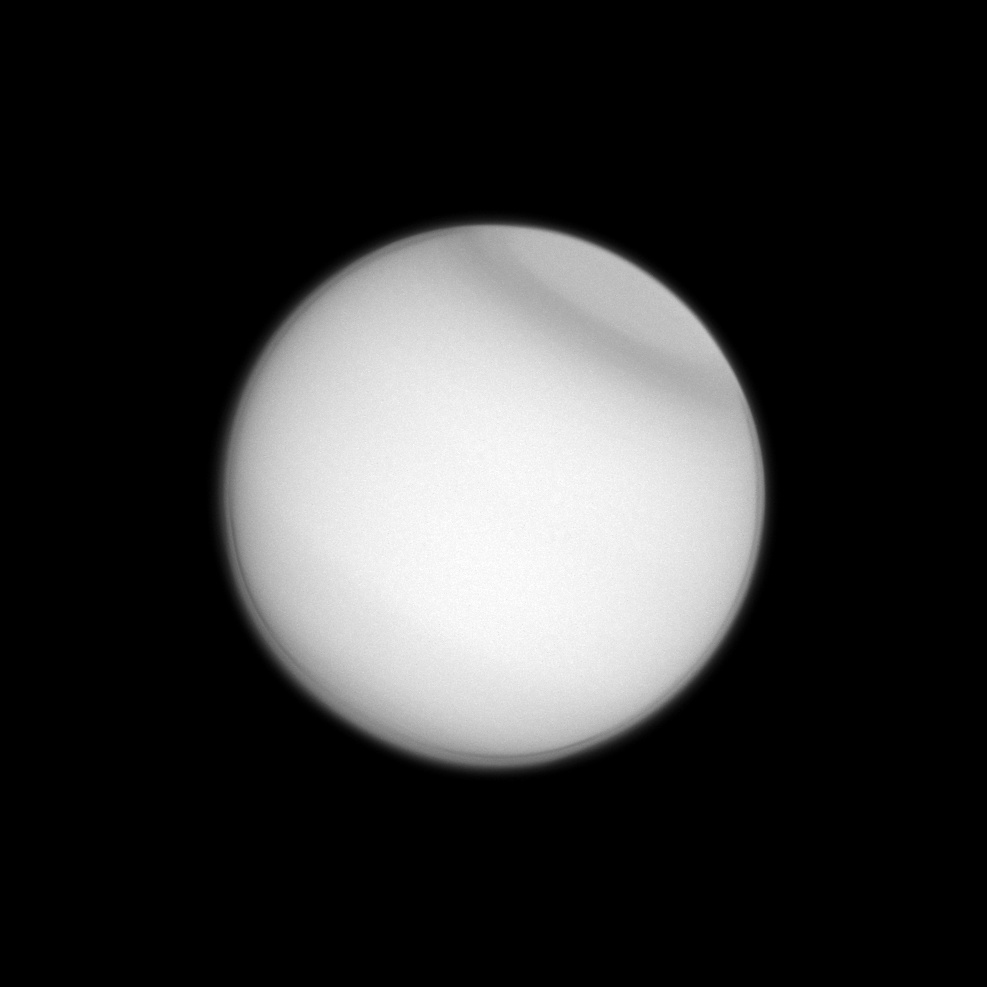
 UV image of Titan acquired by Cassini on April 13 (NASA/JPL-Caltech/SSI) As high summer slowly but steadily approaches on Saturn, Cassini is opening a window to the seasonal changes that occur not only on the ringed planet but also its moons. Here we can see a dark band developing around Titan’s north polar latitudes, a “fancy collar” made visible in ultraviolet wavelengths. Polar collars have previously been seen by both Hubble and Voyager 2, and in fact a southern version was observed by HST 5 years after the planet’s 1995 equinox. This summer collar is thought to be part of a seasonal process, related to the migration of upper-level haze material within Titan’s atmosphere. Source: CICLOPS (Cassini Imaging Central Laboratory for OPerationS)
© Jason Major for Universe Today, 2013. | Permalink | No comment |
Post tags: atmosphere, Cassini, CICLOPS, collar, haze, Moon, Saturn, Solar System, Titan
Feed enhanced by Better Feed from Ozh
 A beautiful display of the aurora borealis on June 6, 2013. The light trail across the top is the International Space Station; an airplane is off to the left. Credit: Bob King As an amateur astronomer, two of the most frequently questions I’m asked are “When is the best time to see the aurora borealis and where is the best place.” As for place, Churchill, Manitoba and Tromso, Norway come to mind, but until the transporter is invented, most of will be staying closer to home. The simple answer is north and the farther north the better. In the northern border states of the US, auroras occur fairly regularly around the time of solar maximum, when the sun peaks in storm activity. The current solar cycle tops out this summer and fall, so your chances at seeing northern lights are far better now than a year and a half ago when solar activity saw a steep decline during a protracted minimum.
(...)
Read the rest of Your Guide To When, Where and How To See The Aurora Borealis (1,922 words)
© Bob King for Universe Today, 2013. | Permalink | No comment |
Post tags: ACE, aurora, CME, flares, Kp index, northern lights, oval, POES
Feed enhanced by Better Feed from Ozh
 The Solar System: Our Home in Space (screenshot) © Philipp Dettmer Information Design The Solar System: it’s our home in space, the neighborhood that we all grew up in and where — unless we figure out a way to get somewhere else — all of our kids and grandkids and great-great-great-great-times-infinity-great-grandkids will grow up too. That is, of course, until the Sun swells up and roasts Earth and all the other inner planets to a dry crunchy crisp before going into a multi-billion year retirement as a white dwarf. But until then it’s a pretty nice place to call home, if I may say so myself. Edu-film designer Philipp Dettmer and his team have put together a wonderful little animation explaining the basic structure of the Solar System using bright, colorful graphics and simple shapes to illustrate the key points of our cosmic neighborhood. It won’t teach you everything you’ll ever need to know about the planets and it’s not advisable to use it as a navigation guide, but it is fun to watch and well-constructed, with nice animation by Stephan Rether and narration by Steve Taylor. Check out the full video below:
(...)
Read the rest of An Illustrative Explanation Of Our Solar System (76 words)
© Jason Major for Universe Today, 2013. | Permalink | 9 comments |
Post tags: animation, Earth, infographic, Jupiter, Philipp Dettmer, planets, Solar System, sun
Feed enhanced by Better Feed from Ozh
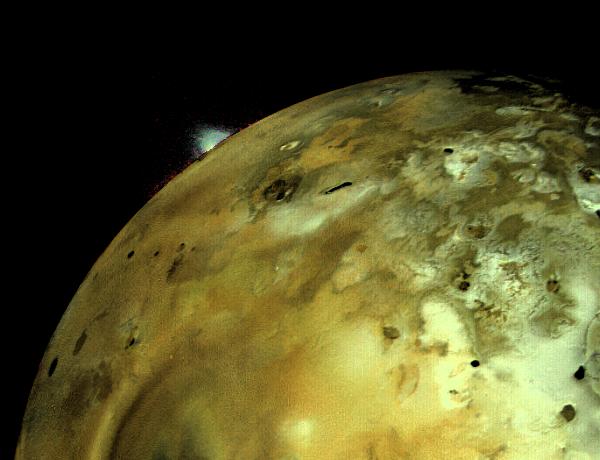
 Voyager 1 acquired this image of Io on March 4, 1979. An enormous volcanic explosion can be seen silhouetted against dark space over Io’s bright limb. Credit: NASA/JPL. Recent observations of Jupiter's moon Io has revealed a massive volcanic eruption taking place 628,300,000 km (390,400,000 miles) from Earth. Io, the innermost of the four largest moons around Jupiter, is the most volcanically active object in the Solar System with about 240 active regions. But this new one definitely caught the eye of Dr. Imke de Pater, Professor of Astronomy and of Earth and Planetary Science at the University of California in Berkeley. She was using the Keck II telescope on Mauna Kea in Hawaii on August 15, 2013 when it immediately became apparent something big was happening at Io. "When you are right at the telescope and see the data, this is something you can see immediately, especially with a big eruption like that," de Pater told Universe Today via phone.
(...)
Read the rest of Major Volcanic Eruption Seen on Jupiter’s Moon Io (372 words)
© nancy for Universe Today, 2013. | Permalink | 3 comments |
Post tags: Io, Keck Observatory, volcanoes
Feed enhanced by Better Feed from Ozh
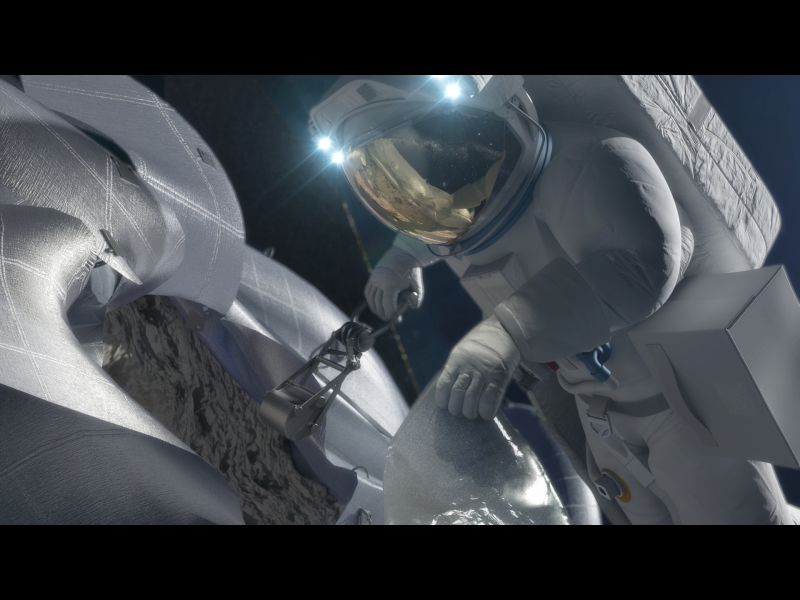
 This concept image shows an astronaut retrieving a sample from the captured asteroid. Credit: NASA. NASA has released some new photos and video animations outlining the concept of how their planned asteroid capture mission will work. The plan is to find, capture, redirect a near-Earth asteroid to a stable point near the Moon in order to explore and study it. As we've said previously, it's still unclear if NASA will receive Congressional funding or authorization to do an asteroid retrieval mission, but the agency is moving ahead with its planning work for now. NASA recently did a mission formulation review to look at some internal studies on the mission, as well as taking a look at over 400 ideas the space community submitted concerning the mission. The new images show crew operations including the Orion spacecraft’s trip to and rendezvous with the relocated asteroid, as well as astronauts maneuvering through a spacewalk to collect samples from the asteroid. You can watch the video and see more images below. (...)
Read the rest of A New Look at NASA’s Asteroid Capture Plan (188 words)
© nancy for Universe Today, 2013. | Permalink | 11 comments |
Post tags: asteroid retrieval, Asteroids, NASA
Feed enhanced by Better Feed from Ozh
| 






 Fraser Cain on Google+






No comments:
Post a Comment
Keep a civil tongue.