 | |
| This Industry Will Be Enormous By Jason Stutman | Monday, October 7th, 2013  It's extremely cold outside. The thermometer reads a chilling -67 degrees Fahrenheit, and you look up to the sky, contemplating your life choices... But there's nothing to look at. The sunlight barely makes its way through the dust storm that's been raging for nearly a month. Your family is 140 million miles away, and you're well aware that you'll never see them again... Yet in the end, you decide it's all worth it. Despite the profound sense of loneliness you feel every day, you are deeply consoled by one encouraging fact: You are among the first four human beings to colonize the planet Mars. You are a piece of history, and your name will be remembered forever. It seems like the plot of a science fiction film, but I assure you it's not. Human beings will one day live on Mars. What's more, it's likely going to happen in our lifetime. In fact, more than 200,000 people from over 140 different countries have already applied for a one-way ticket. The mission is called Mars One. It will cost an estimated $4 billion and is set for launch in 2022. That's less than a decade away... I could rattle off a million reasons why this is so important and what it means for the future of humanity. As much as I'd like to do that, though, this is a financial newsletter, and you're probably not looking for some inspirational message. That being said, you just might be wondering why I'm bringing all this up. I mean, there's no money in space... right? Advertisement Over the Next Few Months... One Small Town Will Grow Famous And it ALL revolves around the giant keyhole limpet — or, more simply, a sea snail. It's something you'd ordinarily see in a sci-fi film. But this is very real. And if you understand why this sea snail is so crucial — and what these scientists discovered while burning the midnight oil — you'll be on the fast track to 300x your money profits. Bigger than Biotech As it turns out, there's a lot more money in space than you might think. When we realize that 200,000 people are driven enough to sacrifice their entire lives, it's not surprising that money becomes an afterthought when it comes to space exploration. Ultimately, there is no stopping human curiosity. It is a characteristic our species possesses inherently; and it has driven civilization since our inception... No one knew for sure the prosperity that would stem from the accomplishments of Amerigo Vespucci and Christopher Columbus — and entire economies were built on these costly ventures. Some will argue that there is nothing to gain from space exploration in an economic sense. They will say there are no resources and, therefore, nothing to gain. Of course, these naysayers are wrong. There are actually billions of dollars' worth of rare metals and gases floating around in space, a topic we'll save for another day. The fact is tangible resources aren't the only things that create value... Often it's services that establish worth, and when those services are incredibly scarce, consumers are willing to pay top dollar. In 2012, the global space economy grew to $304 billion in commercial revenue and government budgets. That's a 6.7% increase from 2011, even in the face of NASA spending cuts. For perspective, that's more annual revenue than every biotechnology company in the world combined. Unlike the blooming biotech industry, however, investment opportunities in the commercial market are incredibly rare. It doesn't just take a lot of digging to find the right ones... it takes a lot of digging to find them at all. But that doesn't mean these opportunities are non-existent, and it doesn't mean we should completely ignore this space. After all, an opportunity passed is an opportunity lost. The fact is public investors are just beginning to show their confidence in this industry, and we are in the early days of something very, very big. Advertisement
To the untrained eye, this may look like a sloppy mess... But when energy executives look at it, all they see are dollar signs. Discover why pools just like this one are popping up all over New Zealand — and how they can make you wealthy beyond your wildest dreams. Click here for the exciting details. Step Aside, King Midas Earlier this month, Orbital Sciences (NASDAQ: ORB) became the first publicly traded company to haul cargo to the International Space Station (ISS). The mission was tied to a $1.9 billion contract to fly eight cargo missions to the ISS using Orbital's Cygnus spacecraft and Antares rocket. On average, that's $237.5 million for a delivery run of about 1,500 pounds of supplies (a single semi truck can carry over 50 times that payload). Another way of looking at it is this: $158 thousand per pound, or 7.6 times the current price of gold. The mission was "nearly flawless," according to NASA officials, and it marks an important milestone in the commercial space industry. It also marks a milestone in space investing. Orbital jumped 21% this month as a result of the launch and is up 47% this year.
Space exploration is finally a viable industry for investors. But, as we mentioned before, your options here are limited. The truth is Orbital Sciences is the only space exploration pure play you're going to find on the public market right now. We're all waiting for Elon Musk's SpaceX to file for an IPO, but there have yet to be any indicators on the horizon. You could look to Lockheed Martin (NYSE: LMT) and Boeing (NYSE: BA), but realize that defense contracting makes up the majority of their revenue. And with a recent push to cut military spending in the U.S., investors do face some risk. Nonetheless, these companies do offer significant exposure to the growing space industry. In 2012, 18% of Lockheed's revenue stemmed from its Space Systems business; and 10% of Boeing's revenue came from its Space division. With vast technical and financial resources, neither Lockheed nor Boeing is at risk of going under. So these companies will be able to safely gain traction as the space industry picks up speed. I'm bullish on these players long term, but their massive market caps undeniably limit their growth potential. These are fairly low-risk, low-reward plays. For higher rewards in the space industry, we need to look a little closer to home right now... I have a few companies to share with you, and I'm putting together my findings as we speak. Stay tuned over the next few weeks for the first release of this report. Turning progress to profits, Jason Stutman Energy and Capital's tech expert, Jason Stutman has worked as an educator in mathematics, technology, and science... Before joining the Energy and Capital team, Jason served on multiple technology development committees, writing and earning grants in educational and behavioral technologies. Jason offers readers keen insights on prominent tech trends while exposing otherwise unnoticed opportunities.
Follow Energy and Capital on    The Bottom Line | |
| This email was sent to ignoble.experiment@arconati.us . You can manage your subscription and get our privacy policy here. Energy and Capital, Copyright © 2013, Angel Publishing LLC, 111 Market Place #720, Baltimore, MD 21202. All rights reserved. No statement or expression of opinion, or any other matter herein, directly or indirectly, is an offer or the solicitation of an offer to buy or sell the securities or financial instruments mentioned. While we believe the sources of information to be reliable, we in no way represent or guarantee the accuracy of the statements made herein. Energy and Capital does not provide individual investment counseling, act as an investment advisor, or individually advocate the purchase or sale of any security or investment. Neither the publisher nor the editors are registered investment advisors. Subscribers should not view this publication as offering personalized legal or investment counseling. Investments recommended in this publication should be made only after consulting with your investment advisor and only after reviewing the prospectus or financial statements of the company in question. Unauthorized reproduction of this newsletter or its contents by Xerography, facsimile, or any other means is illegal and punishable by law. Please note: It is not our intention to send email to anyone who doesn't want it. If you're not sure why you're getting this e-letter, or no longer wish to receive it, get more info here, including our privacy policy and information on how to manage your subscription. | |
2013/10/07
This Industry Will Be Enormous


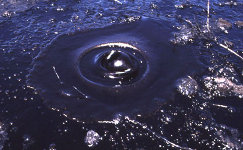 There's Millions of Dollars in This Muck!


Subscribe to:
Post Comments (Atom)
Popular Posts (Last 7 Days)
-
America's government has a renewed sense of urgency for tech innovation ...
-
Buy 3, Save 20% on pajamas and convertibles ͏ ͏ ͏ ͏ ͏ ͏ ͏ ͏ ͏ ͏ ͏ ͏ ͏ ͏ ͏ ͏ ͏ ͏ ͏ ͏ ͏ ͏ ͏ ͏ ͏ ͏ ͏ ͏ ͏ ͏...


No comments:
Post a Comment
Keep a civil tongue.