

Neatorama |
- Our Heart Affects Our Perception and Emotions
- Computers Aren’t Random
- How To Help Save Bees and Other Insect Pollinators In Little Ways
- AI Helps Drone Swarms Cooperate And Navigate Through Unfamiliar Spaces
- The Annoying Boxes Puzzle
- Self-Portrait Gets Out of Hand
- John McClane Shop Light
- Optical Illusion Body Paintings
- Israeli Archaeologists Tie Down Invention of String to More Than 120,000 Years Ago
- How To Always Get A Cat’s Attention
- What May Perhaps Be The Most Human Game of All
- Lost in Motions
- How the Maraschino Cherry Became a Comfortingly Trashy American Icon
- This Market Is Using AI To Combat The Pandemic
- Prison TikToks Are A Thing
| Our Heart Affects Our Perception and Emotions Posted: 19 Jul 2020 11:30 PM PDT
It is known that the brain is the central command of the body. It is the part of the body responsible for controlling every move that we make, and the one responsible for processing the thoughts that we have. But just as the other parts of the body depend on the brain, the brain also depends on the body. The connection goes both ways. If certain internal receptors indicate hunger, for instance, we're driven to eat; if they indicate cold, we dress more warmly. However, decades of research have also shown that those sensations do much more than alert the brain to the body's immediate concerns and needs. As the heart, lungs, gut and other organs transmit information to the brain, they affect how we perceive and interact with our environment in surprisingly profound ways. Recent studies of the heart in particular have given scientists new insights into the role that the body's most basic processes play in defining our experience of the world. More about this over at Nautilus. (Image Credit: Patrick J. Lynch, medical illustrator/ Wikimedia Commons)  |
| Posted: 19 Jul 2020 11:29 PM PDT
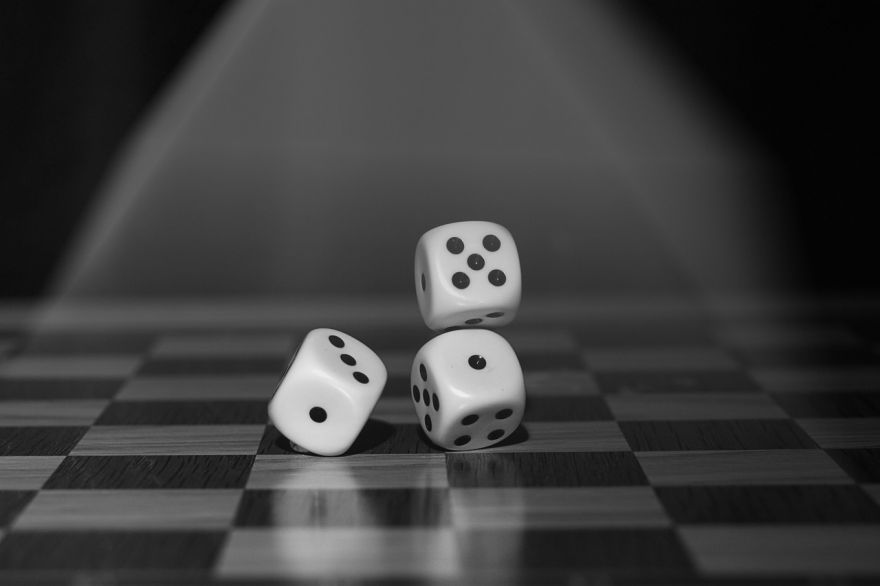
That's right. Computers aren't really random. What you get from Google's random number generator (RNG) is not pure randomness. Computers aren't supposed to generate randomness. The reason for this is software and hardware, both of which run on Boolean logic, and not probability, and this makes deterministic, and not random, outcomes. However, some computer systems have tricks up their sleeves in order to "use and manipulate randomness." In other words, there may be ways with which we can make deterministic machines generate randomness. One of the most recent efforts comes from Mansinghka's group at MIT, which will present an algorithm called Fast Loaded Dice Roller, or FLDR, at the online International Conference on Artificial Intelligence and Statistics this August. More details about this over at Quanta Magazine. (Image Credit: Pixabay) |
| How To Help Save Bees and Other Insect Pollinators In Little Ways Posted: 19 Jul 2020 11:28 PM PDT
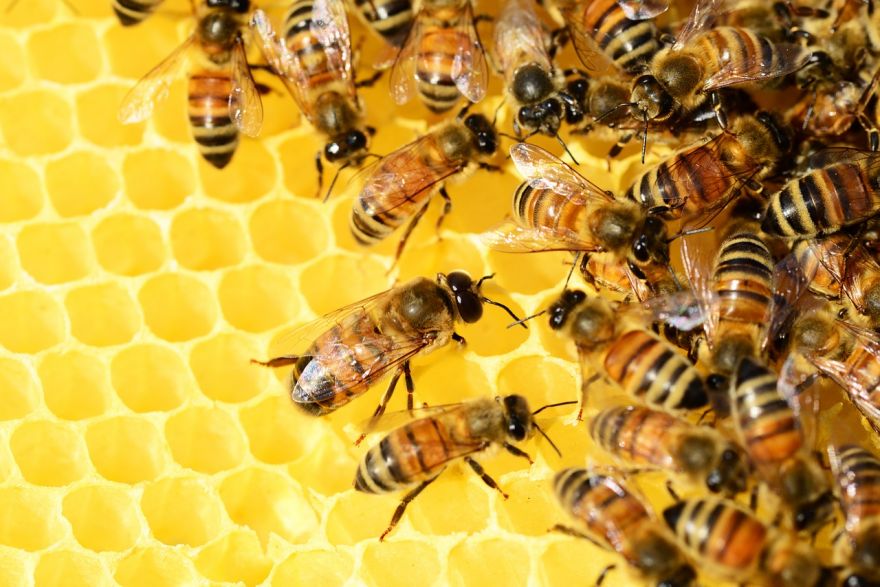
Bees and other insect pollinators such as moths and butterflies are important to our environment because of their major role in plant reproduction. Unfortunately, many of these insects are now endangered because of many factors such as climate change, pathogens, and pesticides. But they don't have to go extinct, and we can help in our own little ways to prevent that from happening. Discover Magazine lists six citizen science projects that you can join to help protect these pollinators. See them all over at the site. For now, here are some of them. (Image Credit: PollyDot/ Pixabay) |
| AI Helps Drone Swarms Cooperate And Navigate Through Unfamiliar Spaces Posted: 19 Jul 2020 11:26 PM PDT
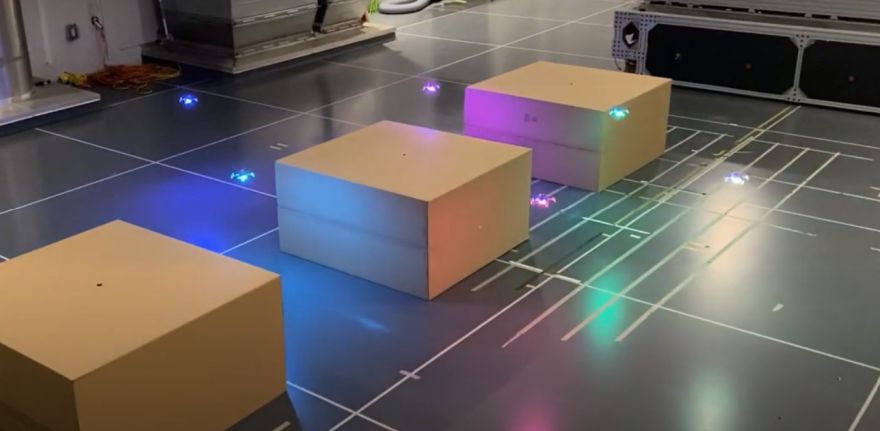
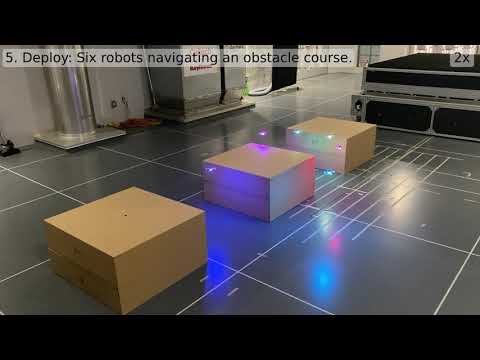
Researchers from Caltech have developed a machine-learning algorithm which allows drone swarms to navigate in tight spaces without bumping or hitting into each other. This algorithm, called Global-to-Local Safe Autonomy Synthesis (GLAS) could be useful in fancy drone light shows, as well as vital operations, such as search and rescue operations. Instead of relying on existing maps or the routes of every other drone in the swarm, GLAS has each machine learning how to navigate a given space on its own even as it coordinates with others. This decentralized model both helps the drones improvise and makes scaling the swarm easier, as the computing is spread across many robots. An additional tracking controller, Neural-Swarm, helps the drones compensate for aerodynamic interactions, such as the downwash from a robot flying overhead. Wow! (Image Credit: Aerospace Robotics and Control at Caltech/ YouTube)
|
| Posted: 19 Jul 2020 11:24 PM PDT
A puzzle recently posted at 3 Quarks Daily will make you think. Or at least it should make you think. There are two boxes on a table, one red and one green. One contains a treasure. The red box is labelled "exactly one of the labels is true". The green box is labelled "the treasure is in this box." Now, before you decide that you know, pay attention to how the question is asked. The answer and an explanation is at The Universe of Discourse. The author also addresses the many ways you could ague that you are right, even if you aren't. -via Nag on the Lake |
| Self-Portrait Gets Out of Hand Posted: 19 Jul 2020 11:23 PM PDT Early in 2019, reddit artists got hooked on a painting and made a spontaneous recursive project of painting the previous artist holding the painting. One of those artists was seamuswray. This past weekend, he's found himself stuck in another recursion loop, this one of his own making. First he did the self-portrait above, and submitted a photo of himself painting it. That was Friday. Saturday, he posted another, of himself painting the top photo. Sunday, he couldn't help but post another photo, this one again showing himself drawing the previous photo. I guess he was in too much of a hurry for paint. Will he have another picture ready for Monday, or will he have to stop and sleep or maybe even change clothes? You can check seamuswray's profile to find out. Or Instagram. |
| Posted: 19 Jul 2020 08:34 PM PDT
|
| Optical Illusion Body Paintings Posted: 19 Jul 2020 08:34 PM PDT By concealing her models in blackout paint and arranging them precisely, artist Riina Laine (content warning: artistic nudity) turns them into living vegetables. She made three as advertisements for the Finnish food company Apertit. |
| Israeli Archaeologists Tie Down Invention of String to More Than 120,000 Years Ago Posted: 19 Jul 2020 04:41 PM PDT
When humans learned to twist natural fibers together to make string or rope, it opened up a new world of useful inventions, from animal traps to clothing to sailboats. But natural fibers tend to decompose, and the oldest rope found, in a French Neanderthal cave, dates back only to around 50,000 years ago. But while we cannot yet pinpoint who invented rope, archaeologists in Israel have found evidence that manmade string existed more than 120,000 years ago. It comes from seashells found in Qafzeh Cave near Nazareth that had been populated by humans that long ago.
Without the string, it was difficult to say that the shells were tied, but a team led by archaeologist Daniella Bar-Yosef Mayer of Tel Aviv University conducted an experiment to find more clues. Read what they did to determine whether the shells were actually jewelry at Haaretz. -via Strange Company |
| How To Always Get A Cat’s Attention Posted: 19 Jul 2020 10:51 AM PDT
If you want to always get a cat's attention, whenever and wherever you are, then consider learning the German language, and the cat is sure to stop in its tracks and have its attention on you, just like what this guy did. Just kidding! What he just said wasn't really German. It was just gibberish. But hey, it still works, so why not try it? (Image Credit: Nennieinszweidrei/ Pixabay)
(Video Credit: g.catt.eng via Surya Pratama/ YouTube) |
| What May Perhaps Be The Most Human Game of All Posted: 19 Jul 2020 10:51 AM PDT
Starcraft II. Chess. Go. These are just some of the games that got taken over by AI. Professional gamers and players have been mercilessly beaten by a machine in these games. But there's still a game that the AI hasn't mastered yet, and that game could be considered as the most human game of all games in the face of the earth: poker. While it is true that AI has advanced over the years and is capable of beating professional players in poker, the AI still has lots of room for improvement. …there's still much it can't do: play more opponents, play live, or win every time. Aside from these things, the AI should also factor in the facial expressions of a player, and then try to identify if he is bluffing or not… and, unfortunately, the AI is not great at doing these things. At least, not yet. To summarize, "there's more humanity in poker than [AI] has yet conquered". Know more about the story over at Undark. What are your thoughts about this one? (Image Credit: flipchip/ LasVegasVegas.com/ Wikimedia Commons) |
| Posted: 19 Jul 2020 10:50 AM PDT
|
| How the Maraschino Cherry Became a Comfortingly Trashy American Icon Posted: 19 Jul 2020 10:50 AM PDT
You know maraschino cherries as a bright red garnish for cocktails, ice cream sundaes, and pineapple upside-down cake. There's probably a jar that's been in your refrigerator for years. Maraschinos don't resemble fresh cherries much, in either appearance or taste. So where did they come from, and how did they become a thing? In the early 1800s, the cherry-producing Luxardo family in Italy began to preserve cherries in alcohol. They were the original maraschino cherries, and they became quite popular with the rise of cocktail culture in the latter years of the 19th century. And with popularity, they spread to other manufacturers and evolved with the times.
With Prohibition, the recipe had to change again, which meant maraschino cherries veered even further from nature. Read a history of maraschino cherries, and learn what's in them, at Mel magazine. (Image credit: Véronique PAGNIER) |
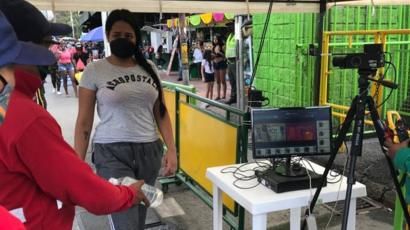
| This Market Is Using AI To Combat The Pandemic Posted: 19 Jul 2020 10:50 AM PDT
Plaza Minorista is a market that sits in the heart of Medellín, Colombia. Fifteen thousand people flock to the market where three thousand vendors sell their goods. Since a crowded area like Minorista is a possible hotspot where the virus can spread, director Edison Palacio decided to use artificial intelligence to aid in their fight against the pandemic: Mr Palacio explains how they use facial recognition software connected to cameras at the entrances and to security cameras around the building to collect data on the vendors and market-dwellers. Among the data they collect is their age range, gender, and if the person is wearing their mask correctly in order to assess risks and more vulnerable demographics. Thermal cameras can take the temperature of 200 people per minute, he says. If someone has a high temperature or wears their mask incorrectly, an alarm will go off and alert market security. image via BBC |
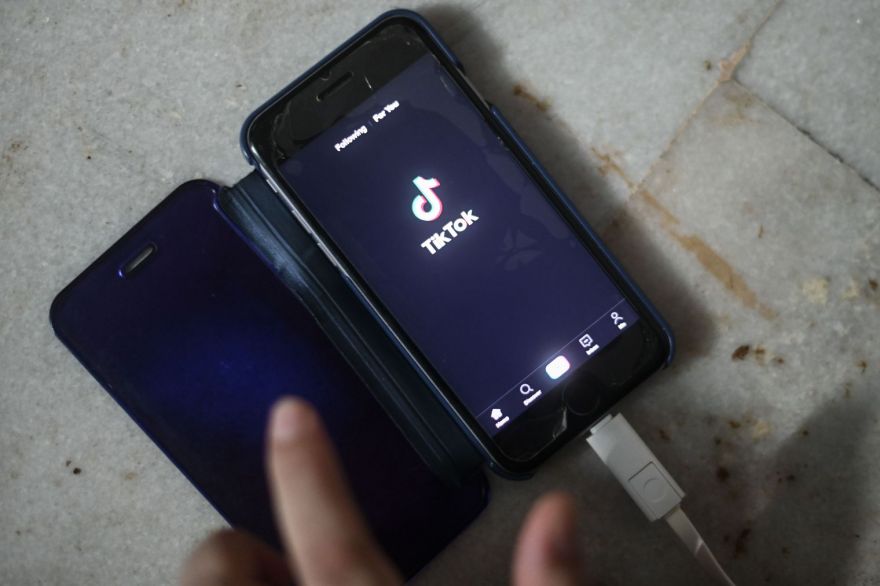
| Posted: 19 Jul 2020 10:50 AM PDT
The question is: how do people in jail get to post videos of themselves dancing to the latest TikTok craze when no cellphones are allowed? It's all thanks to contraband phones. Prison TikTok is an actual hashtag that lets TikTok users view videos shared on the app by people who are incarcerated, as Vox detailed: The content depicted on prison TikTok varies; some videos show terrible living conditions inside US prisons, like overcrowding and flooding, whereas others depict people in prison uniforms doing renditions of trending TikTok dances. But what's surprising about prison TikTok isn't that people who are incarcerated appreciate great choreography, just like anyone else. Rather, it's that folks in prison have access to smartphones at all. Cellphones are not allowed in American prisons. And people who are found with contraband in their possession can get hit with serious penalties. "You can get charged with a misdemeanor or a felony depending on what jurisdiction you're in," said Nazgol Ghandnoosh, a senior research analyst at the Sentencing Project. "And at the very least, you're going to lose good time credits or harm your chances of parole." So why would anyone run the risk of posting on TikTok or calling a family member using a contraband cellphone? For Khan, having a cellphone while in prison, even for a short time, was a way to mend his relationship with his mother. It allowed him to have real emotional conversations with his family without being monitored by corrections officers and without having to deal with a 15-minute time limit or the large fees that typically come with using a prison landline. image via Vox |








| You are subscribed to email updates from Neatorama. To stop receiving these emails, you may unsubscribe now. | Email delivery powered by Google |
| Google, 1600 Amphitheatre Parkway, Mountain View, CA 94043, United States | |


No comments:
Post a Comment
Keep a civil tongue.