

Neatorama |
- What the COVID Vaccine Does to Your Body
- The Lindbergh Kidnapping and a Media Revolution
- The First Animal To Ask An Existential Question
- The Mystery of Beethoven's Metronome
- Freeze Frame
- Scientists Investigate Radio Beam from the Direction of a Nearby Star
| What the COVID Vaccine Does to Your Body Posted: 03 Jan 2021 03:07 AM PST
 |
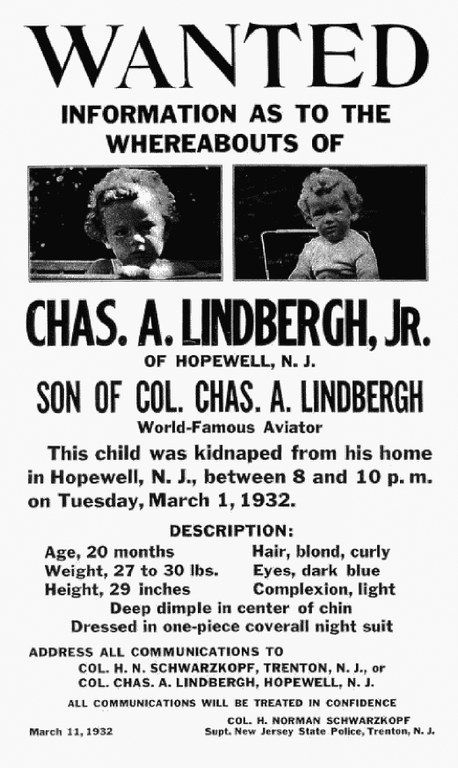
| The Lindbergh Kidnapping and a Media Revolution Posted: 03 Jan 2021 03:07 AM PST
When Charles Lindbergh's infant son was kidnapped and killed in 1932, news media covered the story extensively. Newspapers, radio, and newsreels gave us details from the crime to the ransom to the arrest and conviction of Bruno Richard Hauptmann. While many books have been written about the kidnapping, Tom Doherty focuses on the journalism around it in his book Little Lindy Is Kidnapped: How the Media Covered the Crime of the Century. Doherty gives us an overview of the ways the kidnapping changed how news outlets cover crimes and how we consume those stories.
There are other ways the Lindbergh case changed news media, which you can read at BrandeisNOW. -via Strange Company |
| The First Animal To Ask An Existential Question Posted: 02 Jan 2021 08:41 PM PST
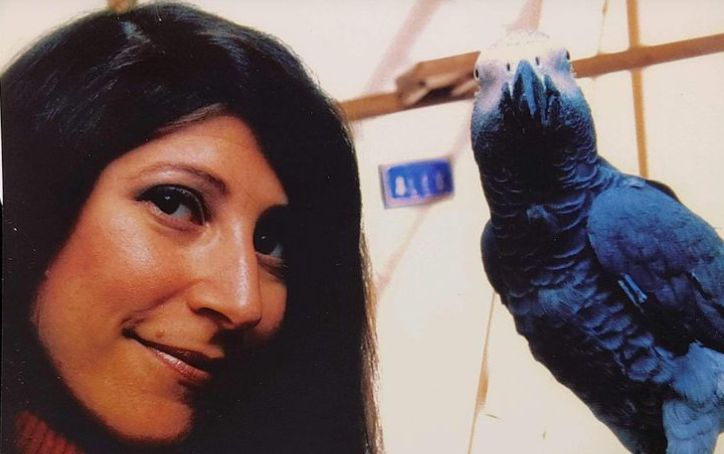
Alex the African grey parrot was the subject of Dr. Irene Pepperberg's research into animal psychology. With the help of Alex, Dr. Pepperberg has shown the capabilities of birds through various exercises in cognition. Alex is also the first ever animal to have an 'existential crisis' or alternatively, the first to ask an existential question, as My Modern Met details: By the time of his death in 2007, Alex had amassed a variety of skills generally thought beyond animal reasoning. He had proven that some birds' intelligence is even on par with that of dolphins and primates—typically considered to be some of the world's smartest animals. [...] One of Alex's most impressive moments was when he asked an existential question about his own appearance. He had been presented with a mirror, and—after observing himself for a moment—he asked, "What color?" He then learned the word "gray"—the color of his feathers—after having it taught to him six times. Image via My Modern Met |
| The Mystery of Beethoven's Metronome Posted: 02 Jan 2021 07:32 AM PST
Orchestra conductors all over the world present the music of Beethoven, but even when they are trying hard to reproduce his original work, they almost always slow down the tempo of his written directions. Why did Beethoven want his music played so fast?
A few years ago, scientists posited the theory that Beethoven's metronome might have been broken -or even sabotaged. However, new research says it's possible that the composer suffered from early adopter syndrome, before usage standards were commonly agreed upon. Read about the research into Beethoven's metronome use, and the conclusions so far at EurekAlert! -via Strange Company (Image credit: Mutatis mutandis) |
| Posted: 02 Jan 2021 07:31 AM PST Belgian animator Soetkin Verstegenused ice for her experimental stop-motion film Freeze Frame. There's ice cubes, ice spheres, ice sculpture, ice as background, ice as water, and melting ice. You can imagine she had to work quickly to take stills of each scene! The result is hypnotic, and kind of cold. -via Nag on the Lake |
| Scientists Investigate Radio Beam from the Direction of a Nearby Star Posted: 02 Jan 2021 07:31 AM PST
Astronomers scanning the skies for signals at the Parkes telescope in Australia picked up an unusual radio beam last spring. They've been analyzing it since then, and have not yet found a terrestrial source to attribute it to. The Guardian has more.
Cute. The search for the source of the radio wave continues, and before you consider it proof of intelligent alien life, Phil Plait has a broader explanation and some cautionary words at Bad Astronomy. -via Metafilter |



| You are subscribed to email updates from Neatorama. To stop receiving these emails, you may unsubscribe now. | Email delivery powered by Google |
| Google, 1600 Amphitheatre Parkway, Mountain View, CA 94043, United States | |


No comments:
Post a Comment
Keep a civil tongue.