

Neatorama |
- The “Shadow” In The “Self”
- The Fossils That Changed Human History
- What It’s Like To Drive A Mars Rover
- UPS Man Bumps Into Glass Door
- The Real Story Behind Aztec Crystal Skulls
- It’s A Woolly Rhino
- Skywatching Events To Look Forward To This Year
- It’s A Walking Piece Of Popcorn!
- This Museum Has Digitized 709,000 Works Of Art
- Extreme Buildings
- Inside A Ghost Town Of Abandoned Disney Castles
- An Insane Number of Cool Space Things Happening in 2021
| Posted: 08 Jan 2021 09:04 PM PST
On this side of the human psyche lies "whatever we deem as evil, inferior, or unacceptable", such as lust, greed, envy, anger and rage. This side is the counterpoint to the persona or the conscious personality. The Swiss psychiatrist Carl Gustav Jung calls this the "shadow." According to Jungian analyst Aniela Jaffe, the shadow is the "sum of all personal and collective psychic elements which, because of their incompatibility with the chosen conscious attitude, are denied expression in life" (cited in Diamond, p. 96). [...] Yet, the shadow, while very real, is not meant to be taken concretely or literally, but rather allegorically. It is not an evil entity existing apart from the person, nor an invading alien force, though it may be felt as such. The shadow is a universal (archetypal) feature of the human psyche for which we bear full responsibility to cope with as creatively as possible. Because the shadow wreaks havoc and causes suffering to many individuals, it is often described as evil and sinister. However, it is not entirely true, for good things can also come with the shadow. In Jung's words… "[the shadow] also displays a number of good qualities, such as normal instincts, appropriate reactions, realistic insights, creative impulses, etc" (cited in Diamond, p. 96). In other words, the shadow is still an essential part of the self, and the person has to integrate it unto himself. More about this over at Psychology Today. What are your thoughts about this one? (Image Credit: jameswheeler/ Pixabay)  |
| The Fossils That Changed Human History Posted: 08 Jan 2021 08:36 PM PST
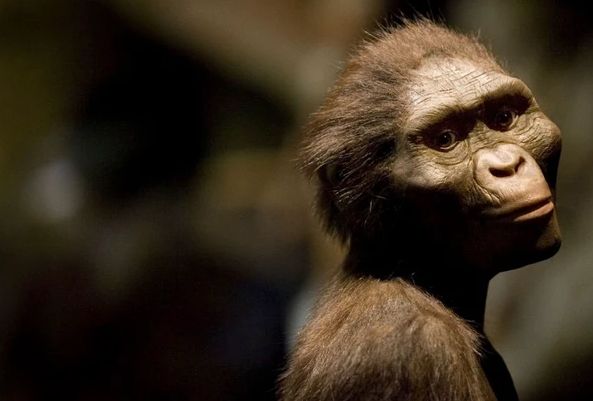
A pair of ancient remains from Ethiopia have changed how we perceived human history. The skeletons, named Lucy and Ardi, reveal much about early human evolution. Lucy is the widely-known ancient human ancestor, found in 1974 by anthropologist Donald Johanson and his graduate assistant Tom Gray: When reconstructed, the pieces composed about 40 per cent of the skeleton (or 70 per cent after lab technicians created mirror image replicas of bones missing on the opposite side) of a petite female with an ape-sized brain who stood just over 1 metre tall. The Hadar team collected hundreds more specimens of the same species later dubbed Australopithecus afarensis. These filled in parts missing from Lucy, including skull, hands, and feet. Today this fossil species is one of the best-known in the human family with more than 400 specimens ranging from 3 to 3.7 million years old. The lesser known of the duo is Ardi, a 4.4 million year-old skeleton found by Ethiopian scholar Yohannes Haile-Selassie. Ardi was 1.2 million years older than Lucy: Shortly after the Ardi skeleton had been transported back to the lab, paleoanthropologist Tim White made a shocking discovery – Ardi had a grasping big toe of a tree climber. This revelation arrived alongside seemingly contradictory ones; Ardi's other four toes displayed anatomy similar to upright bipeds. More revelations affirmed the hybrid style of Ardi's locomotion: she climbed trees, but also walked erect on the ground. Although badly damaged, Ardi's pelvis showed muscle attachments unique to bipeds – alongside other anatomy typical of arboreal apes. As the discovery team later reported, "It is so rife with anatomical surprises that no one could have imagined it without direct fossil evidence." Ardi defied predictions in many ways. By the time she was discovered, molecular biology had amassed compelling evidence that humans were closely and recently related to chimpanzees (at the time scientists estimated the two lineages diverged as recently as 5 million years ago, but most now think the split was much earlier). Many scholars shared the expectation: the older the fossil, the more it would resemble a modern chimp or bonobo. Image via Science Focus |
| What It’s Like To Drive A Mars Rover Posted: 08 Jan 2021 08:36 PM PST
It's been a little over a year ever since NASA engineer Evan Hilgemann was selected to join the team of scientists responsible for the well-being of the Curiosity rover on Mars. Now, Hilgemann shares with us the things he learned during that amount of time. Among the things he shares is the rover driver's main job, as well as the three modes of the rover. Read Hilgemann's article over at Medium.com. Via Futurism (Image Credit: NASA/ Wikimedia Commons) |
| Posted: 08 Jan 2021 08:36 PM PST
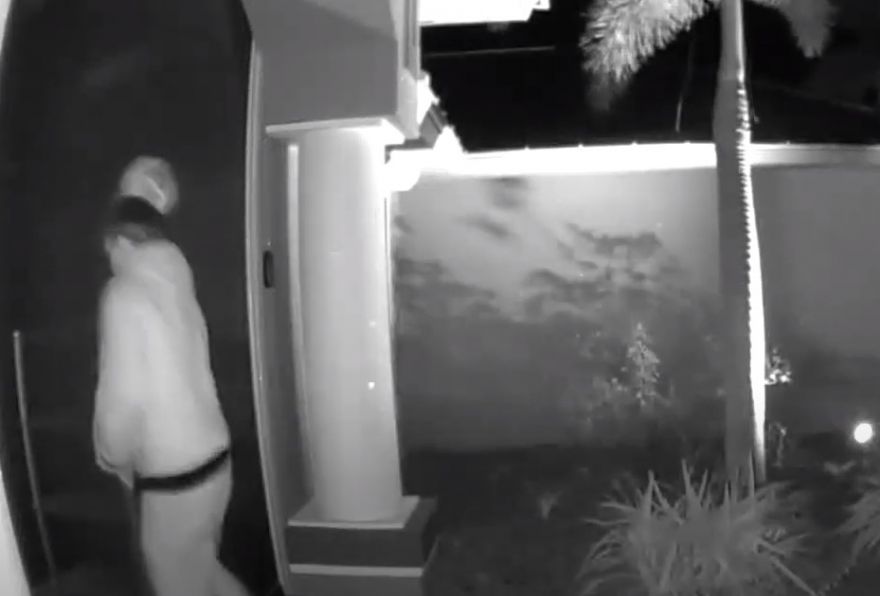
With the many packages that he has delivered to people at various places, it is without saying that this man is tired. That, and it's already nighttime. He's a pretty tough guy, though. He didn't even say "ow". He just looked up, placed the package beside the glass door, and said "UPS" as he went away with his hand on his head. (Image Credit: ViralHog/ YouTube)
|
| The Real Story Behind Aztec Crystal Skulls Posted: 08 Jan 2021 07:15 PM PST
There's something very appealing about human skulls carved out of crystal. We now associate them with an Indiana Jones movie and the inspiration for a celebrity vodka, but for more than a century, they were sought-after relics of the Aztec Empire. In the late 1800s, these beautiful icons that illustrated the Aztecs' fascination with skulls began to be found in Mexico and sent to museums. It appears now that they are all fakes.
So how did the crystal skull craze get started? Research traces them back to one man, who was able to profit handsomely on their authenticity because he was himself an expert on the authenticity of Mexican relics. Read that story at Discover magazine. -via Strange Company |
| Posted: 08 Jan 2021 07:15 PM PST
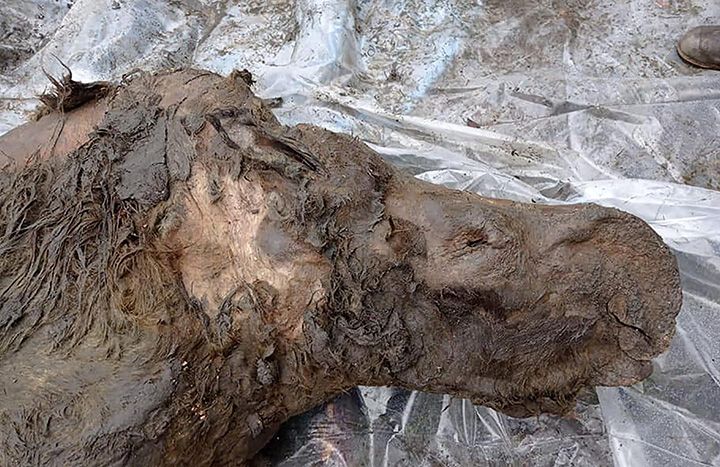
As global warming continues to be a problem for our planet, the permafrost in the Arctic region continues to melt, and with that, more frozen prehistoric animals are uncovered. Just recently, the remains of a baby woolly rhino was discovered in Siberia. Compared to previous woolly rhinos discovered in the region (Arctic Yakutia), this is said to be the best preserved, with all of its limbs and most of its internal organs, including the intestines, still intact. "The young rhino was between three and four years old and lived separately from its mother when it died, most likely by drowning," palaeontologist Valery Plotnikov from the Russian Academy of Sciences, who made the first description of the find, told The Siberian Times. "The gender of the animal is still unknown. We are waiting for the radiocarbon analyses to define when it lived, the most likely range of dates is between 20,000 and 50,000 years ago." More about this news over at ScienceAlert. (Image Credit: Valery Plotnikov/The Siberian Times) |
| Skywatching Events To Look Forward To This Year Posted: 08 Jan 2021 07:15 PM PST
Gazing at the cosmos will always be part of the human experience. In any era, and in any age, there will always be some of us who will be curious at the events happening above us. If you're one of those people that I've described, then it is for certain that you would not want to miss the skywatching events this year. Live Science lists some of these events over at their site. Have a look at the list and check the dates. For now, here's some of them. April 16 to 25 — Lyrids meteor shower May 25 — Total lunar eclipse June 10 — Annular solar eclipse (also called a "ring of fire") (Image Credit: Pexels/ Pixabay) |
| It’s A Walking Piece Of Popcorn! Posted: 08 Jan 2021 03:06 PM PST
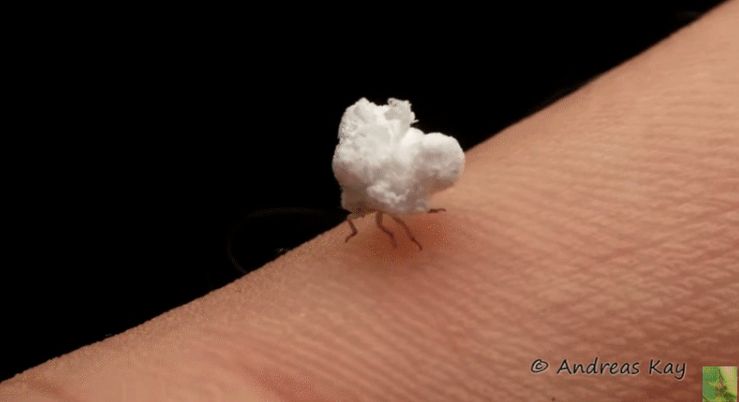
Just kidding, it's not. It does look like one, though. Late physicist, biologist, and photographer Andreas Kay documented this odd creature during his time in Ecuador. The insect, a flatid planthopper nymph, looks like a walking piece of popcorn. Kay first shared the video of the strange creature in May 2019, where the tiny insect is seen scurrying across his fingertip: This is no ordinary bug, though—it looks like a tiny cloud or a piece of popcorn resting on little insect legs. There's a reason for this strange appearance. The insect—which can be found in the Amazon rainforest—is covered with waxy white filaments for protection. The unusual bug is one of roughly 12,500 known planthopper species on Earth. Planthoppers are insects that closely resemble plants that grow in their own environments. As their name suggests, planthoppers are able to "hop" around from A to B. Kay doesn't capture this movement in the video, but we're sure the insect would look just like a popping kernel. Image via My Modern Met |
| This Museum Has Digitized 709,000 Works Of Art Posted: 08 Jan 2021 03:06 PM PST
The Rijksmuseum has doubled its collection of works online. From Rembrandt, to Vermeer, and to other artists who used art to cope with loss and loneliness during the plagues of their time, the museum in Amsterdam has digitized 709,622 works of art. Their expansive digital collection is free for downloading, sharing and editing with a free Rijksmuseum account, which is just great. Image via Open Culture |
| Posted: 08 Jan 2021 03:06 PM PST
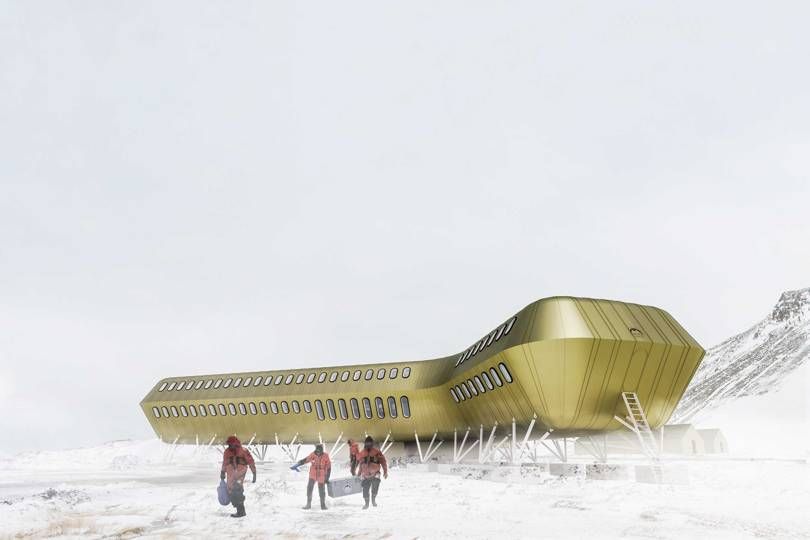
How extreme you might ask? Some of them are standing at the ends of the Earth! These structures are built to withstand incredible temperatures and other environmental factors, so that scientists and researchers can work on tackling some of the planet's biggest problems at their source (eg. climate change, rising sea levels). A series of research facilities and laboratories are built in the Antarctic, deep underwater, and some are alongside remote ecosystems. Wired lists some extreme structures that have been built and are just being built. Check the full piece here. Image via Wired |
| Inside A Ghost Town Of Abandoned Disney Castles Posted: 08 Jan 2021 03:06 PM PST
Now this is something that archaeologists in the future might discover and then spend years wondering how the civilization living in it disappeared without a trace. Sadly, no one actually ever lived in this town. The Burj al Babas is a $200 million-dollar ghost town that was a development project gone wrong. After the Turkish real estate crisis, the real estate company handling this project went bankrupt, and the once-lavish area is now in ruins. |
| An Insane Number of Cool Space Things Happening in 2021 Posted: 08 Jan 2021 11:26 AM PST
While we look forward to things calming down here on Earth, there's going to be plenty of activity in the heavens. Ars Technica put together an overview of plans that include everything from innovative rockets to private flights to the construction of a new space station. And three different nations have spacecraft scheduled to land on Mars in February!
Read what else 2021 has in store for space exploration at Ars Technica. -via Digg |








| You are subscribed to email updates from Neatorama. To stop receiving these emails, you may unsubscribe now. | Email delivery powered by Google |
| Google, 1600 Amphitheatre Parkway, Mountain View, CA 94043, United States | |


No comments:
Post a Comment
Keep a civil tongue.