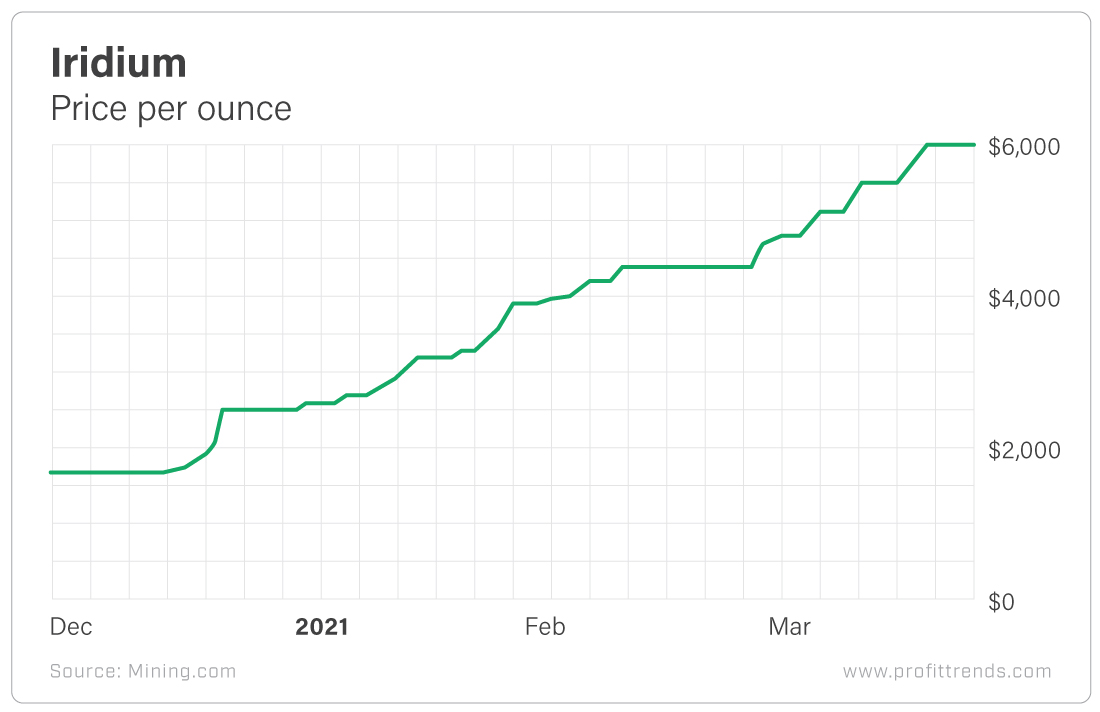
Bitcoin, other cryptocurrencies and "meme stocks" have been grabbing all the headlines. But there's another bull market underway that isn't getting nearly as much press. It's key to what is sure to be one of the fastest-growing markets over the next couple of decades. In fact, this market is expected to be worth $11 trillion by 2050. That's a lot of upside for this scarce resource. Bad Day for Dinosaurs... Good News for AppleSixty-six million years ago, it was just your typical day on Earth. Well, until an 11-kilometer asteroid smashed into what would eventually be known as the Gulf of Mexico. The Chicxulub crater, discovered in the 1990s, is a staggering 200 kilometers wide. The impact from the asteroid sent vaporized rock into the atmosphere. The sun was blocked out. And a winter descended upon the world that lasted for decades. The result was a mass extinction that affected 75% of the species on Earth, including nonflying dinosaurs. But it did pave the way for humans. Now, the reason we know it was an asteroid that killed off the dinosaurs is the "iridium anomaly." In the rock strata between the Cretaceous and Paleogene eras, there is a thin layer of clay that contains 100 times more iridium than any other layer. Iridium is rare on Earth. That's because it's a siderophile - meaning it loves iron, like its platinum group metal kin. So it tends to sink to the planet's core. But in asteroids, iridium is much more abundant. (There's definitely an opportunity for asteroid mining... someday.) Back here on Earth, though, iridium is the ideal catalyst for electrolysis. This is the process used to produce hydrogen from water. Hydrogen fuel cells and hydrogen-powered vehicles are poised to be the next wave in green energy. In turn, this is part of what's triggering a meteoric rise in iridium prices. | 




No comments:
Post a Comment
Keep a civil tongue.