

Neatorama |
- Relatable Car Memes
- The Immune System Has A Schedule, Apparently
- Say Hello To The Worm With A Virtually Unbreakable Jaw
- It’s the 56th Anniversary of The Byrds’s Mr. Tambourine Man
- The Alauda Mk3’s Test Flight Was A Success, Says Airspeeder
- The Devil In The Horizon
- Gut Microbiome Related To The Fear Responses of Babies
- The Treat Position
- The Undying Hydra
- Extremely Eccentric Minor Planet to Visit Inner Solar System This Decade
- Recreating Historic Fireworks
- $700M Superyacht Is A Climate Research Vessel
- New Art Search Engine
- Why Did Medieval Europeans Reopen Graves?
- Trusting Your Gut Could Lead To Better Decision-Making
| Posted: 21 Jun 2021 07:23 PM PDT
Have you experienced driving on a snowy evening? Or did you ever get lost so you had to turn down the music volume so that you can "see better"? Or how about the sudden existential crisis that dawns on you in the middle of driving? Chances are you experienced all of these already, and you would probably be able to relate to most, if not all, of these car memes. Have a look at them over at Bored Panda. Which one is your favorite? (Image Credit: Bored Panda)
 |
| The Immune System Has A Schedule, Apparently Posted: 21 Jun 2021 07:23 PM PDT
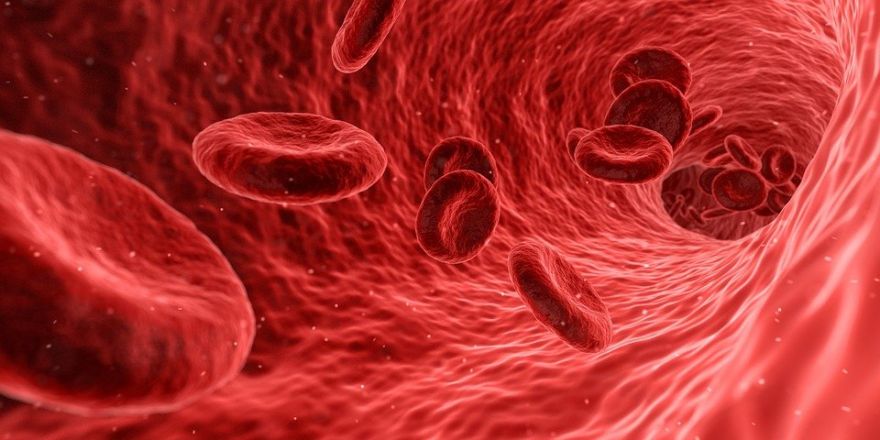
It is often understood that the immune system works the same regardless of the time of day when an infection hits the body, but apparently, this was a misconception. Scientists have found out that the immune system works differently depending on the time of day, thanks to the body's circadian rhythm. Our body clock has evolved over millions of years to help us survive. Every cell in the body has a collection of proteins that indicate the time depending on their levels. Knowing whether it's day or night means our body can adjust its functions and behaviours (such as when we want to eat) to the correct time. Our body clock does this by generating 24 hour rhythms (also termed circadian rhythms) in how cells function. For example, our body clock ensures that we only produce melatonin as night falls, as this chemical makes us tired – signalling it's time for sleep. Our immune system is composed of many different types of immune cells that are continually patrolling the body looking for evidence of infection or damage. But it is our body clock that determines where those cells are located at particular times of the day. This means that the effect of viruses, medicines, and even vaccines, may be stronger or weaker depending on the time of day. More about this over at The Conversation. (Image Credit: qimono/ Pixabay) |
| Say Hello To The Worm With A Virtually Unbreakable Jaw Posted: 21 Jun 2021 07:23 PM PDT
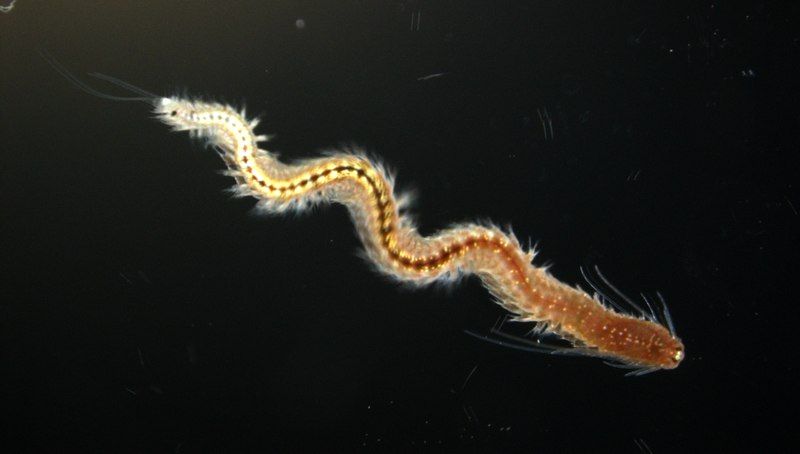
Meet the bristle worm. It is said that their kind has already been around on Earth for about 500 million years, surviving five mass extinctions over that time. Today, there are some 10,000 species of the bristle worm. Of these many species, scientists have been amazed by one particular bristle worm, Platynereis dumerilii, due to its virtually unbreakable jaw, which apparently, scientists found out, is made of metal atoms. That's right. This bad boy has a metal jaw. This is pretty unusual. The study's senior author Christian Hellmich explains: "The materials that vertebrates are made of are well researched. Bones, for example, are very hierarchically structured: There are organic and mineral parts, tiny structures are combined to form larger structures, which in turn form even larger structures." The bristle worm jaw, by contrast, replaces the minerals from which other creatures' bones are built with atoms of magnesium and zinc arranged in a super-strong structure. It's this structure that is key. "On its own," he says, "the fact that there are metal atoms in the bristle worm jaw does not explain its excellent material properties." But even if its jaws are made of metal, it is deformable enough, which makes it even more amazing. Learn more about this bristle worm over at Big Think. Ah, the wonders of nature really are fascinating. (Image Credit: Martin Gühmann/ Wikimedia Commons) |
| It’s the 56th Anniversary of The Byrds’s Mr. Tambourine Man Posted: 21 Jun 2021 07:23 PM PDT
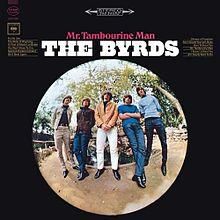
On June 21, 1965, the debut album from The Byrds, called Mr. Tambourine Man was released. This particular album is said to have marked the beginning of the folk-rock revolution. The two-sided album had six tracks on each side, and contained band originals and song covers, one of which was "Mr. Tambourine Man," originally by Bob Dylan. The album was a great success, and... In just a few months, the Byrds had become a household name, with a #1 single and a smash-hit album that married the ringing guitars and backbeat of the British Invasion with the harmonies and lyrical depth of folk to create an entirely new sound. You can hear the band's 1966 performance of the song over here. (Image Credit: Wikimedia Commons) |
| The Alauda Mk3’s Test Flight Was A Success, Says Airspeeder Posted: 21 Jun 2021 07:23 PM PDT
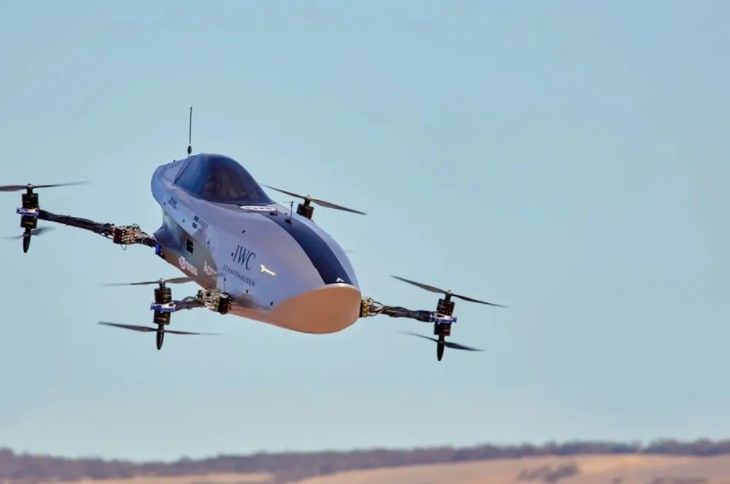
Airspeeder's Alauda Mk3, the electric flying racecar of the aforementioned company, just had its first unpiloted test flights in Southern Australia. The said test was a success, according to the company. For the company, this means that the uncrewed electric flying car Grand Prix will be held this year. According to Airspeeder (pdf), the unpiloted Mk3 weighs 130 kilograms (about 286 pounds), can go from zero to 62 mph in 2.8 seconds, and climb to 500 meters. It has a removable battery, which its pit crews have been able to replace in under 20 seconds. It can fly for 10 to 15 minutes on one battery pack, the company says, and it's equipped with lidar and radar to create a "virtual forcefield" to help prevent collisions. Airspeeder says its initial EXA Series races, which it's planning for later this year, will include up to four teams with two remote pilots per team. The future of racing is here. (Image Credit: Airspeeder/ The Verge) |
| Posted: 21 Jun 2021 04:23 PM PDT
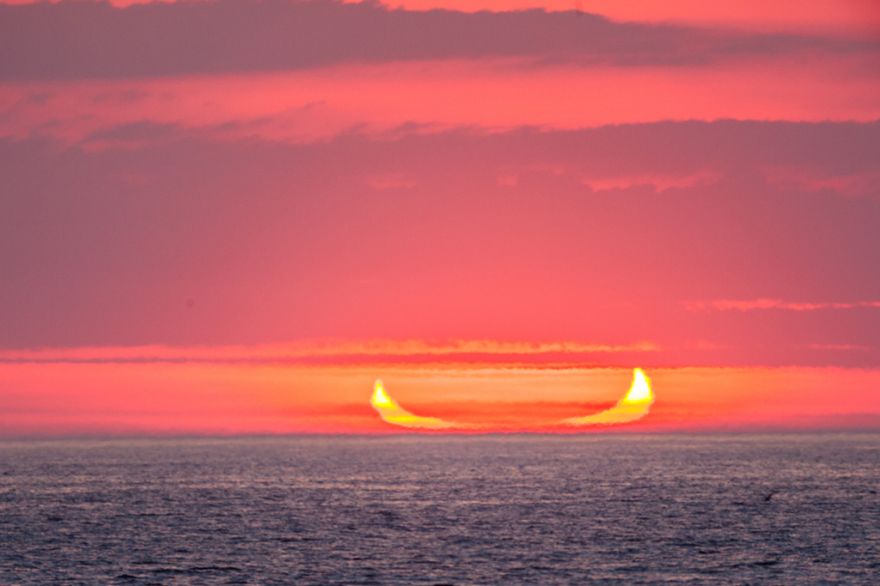
Belmar, New Jersey — The horns of the Devil seemed to have appeared on the horizon on the 10th of June. The reason for this stunning phenomenon was the Moon's partial silhouette, which gave the Sun a crescent shape. Atmospheric refraction, which flattened and distorted the solar disk, also had a hand in this event. But at its full annular phase this eclipsed Sun looked like a ring of fire in the heavens. Magnificent. (Image Credit: Madhup Rathi/ APOD NASA) |
| Gut Microbiome Related To The Fear Responses of Babies Posted: 21 Jun 2021 04:23 PM PDT
Scientists have found previously that there is a relationship between the gut and the brain. This new research further strengthens this finding. The new research, which was published recently in the journal Nature Communications, reports that infants who have uneven gut microbiome have a strong fear response (how someone reacts to a scary situation), while those who have even gut microbiome have a milder reaction. Uneven microbiomes are dominated by a small set of bacteria, whereas even microbiomes are more balanced. The researchers also discovered that the content of the microbial community at 1 year of age related to fear responses. Compared with less fearful children, infants with heightened responses had more of some types of bacteria and less of others. The team, however, did not observe a connection between the children's gut microbiome and how the children reacted to strangers who weren't wearing masks. Knickmeyer said this is likely due to the different parts of the brain involved with processing potentially frightening situations. More about this over at Science Daily. (Image Credit: Mylene2401/ Pixabay) |
| Posted: 21 Jun 2021 04:22 PM PDT
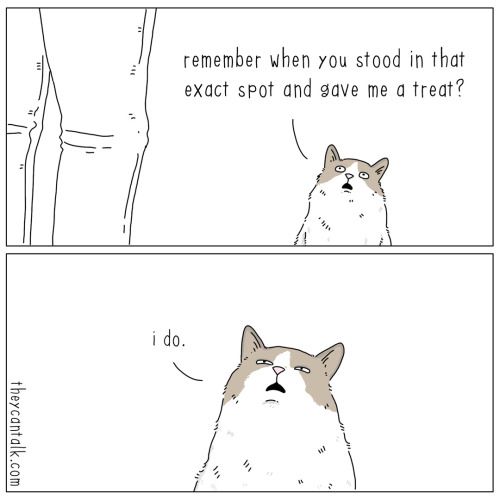
The cat is attempting to train you to give treats when you stand at a particular place. You are failing these educational goals. Shape up. |
| Posted: 21 Jun 2021 01:06 PM PDT
The tiny animal known as the hydra is the closest thing we've seen to an immortal being. They don't have a lot of organs, and the ones they have stay young because the cells are completely replenished regularly. Cut it in half, and it doesn't die -rather it reproduces. Put it in a blender and separate all its cells? It will just reform itself! The secret is stem cells, which the hydra has plenty of. -via Aeon |
| Extremely Eccentric Minor Planet to Visit Inner Solar System This Decade Posted: 21 Jun 2021 01:06 PM PDT
As kids, we learned that our solar system is made up of nine planets (now eight) and the sun. Oh yeah, there's the asteroid belt. And the moons of other planets. And solar winds, comets, and the Oort cloud. But even as we learn about exoplanets and other galaxies, our own solar system hides a lot more mysterious objects that are too small and far away to know much about. One such object, designated 2014 UN271, revolves in a manner that brings it close enough to study only once every 600,000 years! What's more, that time is coming soon. But what is it? Astronomers call it either a tiny planet or a really big comet.
Considering the relatively short time that mankind has studied the stars with telescopes, you have to wonder how many other distant objects are orbiting the sun without us ever getting the chance to see them. Read more about 2014 UN271 at New Atlas. -via Kottke |
| Posted: 21 Jun 2021 01:06 PM PDT
|
| $700M Superyacht Is A Climate Research Vessel Posted: 21 Jun 2021 12:30 PM PDT
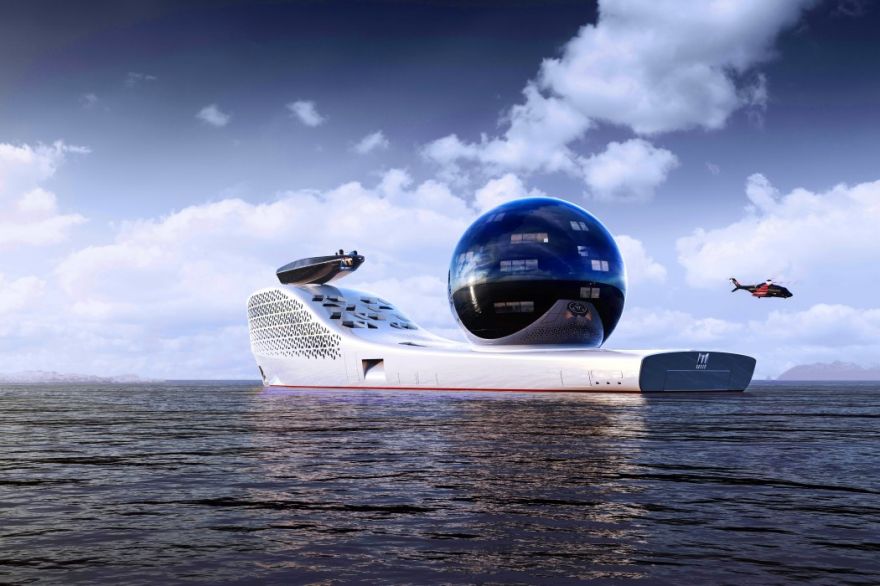
Well, at least it's not just for rich people to flaunt when they want to, right? Meet the Earth 300 Climate Research Vessel, conceptualized by naval architect Iván Salas Jefferson (founder of Iddes Yachts). The huge yacht has 22 state-of-the-art laboratories, a cantilevered observation deck, and enough space for 160 scientists for research. The most impressive feature of the vessel is that it runs entirely on 'clean' nuclear energy: The Earth 300 vessel boasts of an incredibly captivating design, with its 'floating marble on a surfboard' aesthetic that's supposed to resemble the planet earth on a path to the future. The vessel has an almost sculptural quality to it, of which designer Iván Salas Jefferson said "We wanted to create a design that would inspire. When one looks at the sphere, we want them to be inspired to protect Earth. When one walks into the sphere, now housing the science city, and feels the action of all the ongoing scientific works, we want them to be inspired to become an alchemist of global solutions." Expected to set sail as soon as 2025, the Earth 300 vessel is currently being constructed by Polish naval architecture firm NED. The construction of the gigayacht is projected to cost anywhere between $500-700 million, and prominent backers of this project include names like IBM, Triton Submarines, EYOS Expeditions, and RINA, an international leader in maritime safety. The Earth 300 will also be powered by a unique 'Molten Salt Reactor', a new generation of atomic energy that's safe, sustainable, 100% emission-free, and is developed by TerraPower – the nuclear innovation company founded by Bill Gates. Image via Yanko Design |
| Posted: 21 Jun 2021 12:30 PM PDT
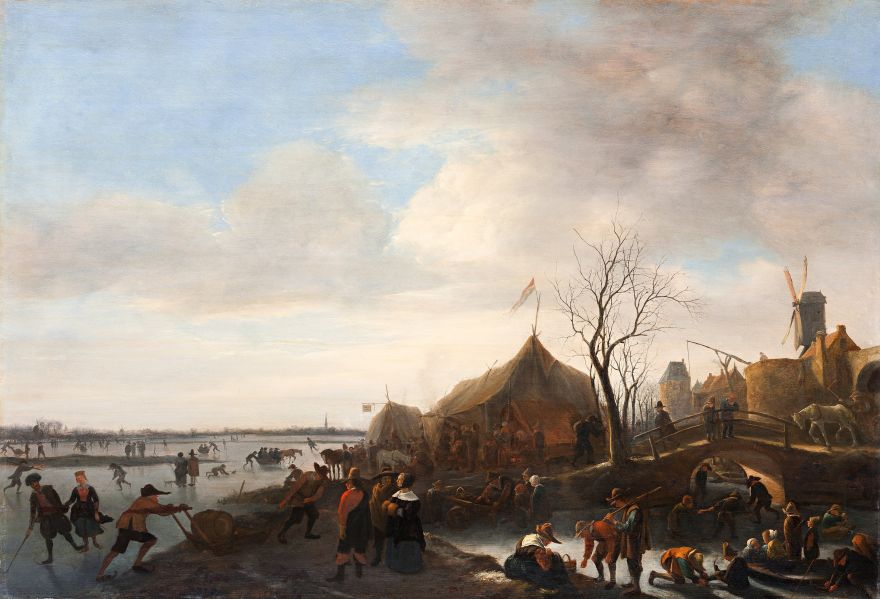
Are you looking for references or are you just in the mood to browse through different works of art? Well, this new search engine has you covered! Artvee is a new search engine that lets you look at and download high-resolution public domain artworks. The engine features collections of more than 40 international institutions: Artvee constitutes one answer to this question. Using its search engine, writes Denise Tempone at Domestika, "you can filter categories such as abstract art, landscape, mythology, drawings, illustrations, botany, fashion, figurative art, religion, animal, desserts, history, Japanese art, and still life. The site also gives you the option to search by artist. You will find works by Rembrandt van Rijn, Claude Monet, Raphael, and Sandro Botticelli in this amazing gallery." Other collections, created by Artvee itself as well as by its users, include "illustrations from fairy tales; covers of popular American songs; and some even more peculiar ones, such as adverts selling bicycles that are over a hundred years old." The variety of artists browsable on Artvee also includes Alphonse Mucha, Edvard Munch, and Hilma af Kint; other collections offer the wonders of political illustrations, book promo posters, and NASA's visions of the future. All of the items within, it bears repeating, are in the public domain or distributed under a Creative Commons license, meaning you can use them not just as sources of inspiration but as ingredients in your own work as well, a possibility few us could have imagined at the dawn of the Web. Back then, you'll recall, we all used a variety of different tools and portals to navigate the internet, according to personal preference. The emerging field of art search engines, which includes not just Artvee but other options like Museo, may remind us of those days — and how far the internet has come since. Image courtesy of Artvee |
| Why Did Medieval Europeans Reopen Graves? Posted: 21 Jun 2021 10:56 AM PDT
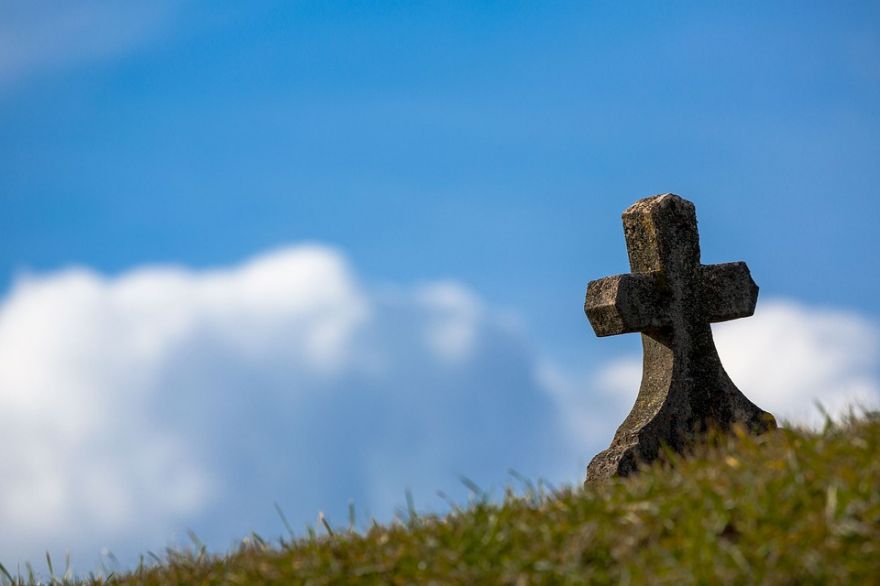
Around 1,400 years ago, from the 6th to the 7th century, people that lived across Europe had a strange habit of reopening graves and taking stuff out from these for reasons unknown to the archaeologists of today. Of course, this practice could be easily dismissed as grave robbing, but researchers found that this is not true. In their study, the researchers reanalyzed previously excavated cemeteries from five regions of Europe. They found that between roughly the sixth and eight centuries A.D., people frequently opened graves and took out objects for reasons that don't seem linked to grave robbery. "They made a careful selection of possessions to remove, especially taking brooches from women and swords from men, but they left behind lots of valuables, even precious metal objects, including necklace pendants of gold or silver," lead study author Alison Klevnäs, a researcher at Stockholm University, said in a statement. What could be the reason behind this act that spread over western Europe? Researchers think that it has something to do with symbolic motivation. "Swords and brooches are some of the most symbolically laden objects in the graves," Klevnäs told Live Science in an email. "These were given as gifts and passed on as heirlooms; they're objects used to link people, including across generations. They bring stories and memories. So it's likely that they are retrieved for these reasons." What are your thoughts about this one? (Image Credit: artbejo/ Pixabay) |
| Trusting Your Gut Could Lead To Better Decision-Making Posted: 21 Jun 2021 10:55 AM PDT
When it comes to making decisions under high uncertainty, reliance on data analysis seems to be counterproductive, and this consumes more time but does not ensure accuracy. In situations like this, it is better to trust your gut. This is what a report, authored by researchers from various business schools, found out after examining 122 different companies. This may explain why 12 different publishers initially rejected the opportunity to publish "Harry Potter and the Philosopher's Stone' – because it had no data to inform its potential. [...] "Under extreme uncertainty, managers, particularly those with more experience, should trust the expertise and instincts that have propelled them to such a position. The nous developed over years as a leader can be a more effective than an analytical tool which, in situations of extreme uncertainty, could act as a hindrance rather than a driver of success." More details about this over at Neuroscience News. (Image Credit: geralt/ Pixabay) |







| You are subscribed to email updates from Neatorama. To stop receiving these emails, you may unsubscribe now. | Email delivery powered by Google |
| Google, 1600 Amphitheatre Parkway, Mountain View, CA 94043, United States | |


No comments:
Post a Comment
Keep a civil tongue.