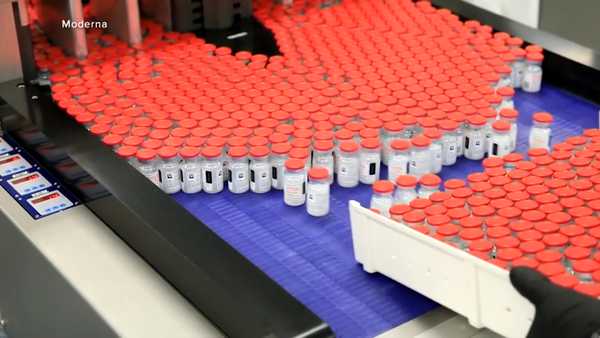
| Vaccine makers are preparing for a next possible phase of the COVID-19 vaccine rollout: booster doses.
Currently, three coronavirus vaccines are authorized for emergency use in the United States — the two-dose Pfizer/BioNTech vaccine for people 12 and older, the two-dose Moderna vaccine and the single-dose Johnson & Johnson, also known as Janssen, vaccines for everyone 18 and older.
Researchers and health officials suspect that the immunity against COVID-19 these vaccines elicit in the body might wane over time — possibly after a year or more — and might not protect as well against coronavirus variants that could emerge and evolve.
A vaccinated person might need a booster dose to stay protected against the original coronavirus strain and newly emerging variants — somewhat similar to how a tetanus booster is recommended every 10 years or different flu vaccines are recommended each year.
“Many people may be familiar with tetanus-toxoid vaccines that are recommended every 10 years — that’s a booster dose. It’s reminding our immune system so that if we ever got exposed to that toxin, our immune system would remember it and respond very quickly,” Dr. William Moss, professor and executive director of the International Vaccine Access Center at Johns Hopkins Bloomberg School of Public Health, told CNN in May.
In the case of COVID-19 vaccines, it remains unknown for how long immune protection lasts, but vaccine developers and health officials know it may not be forever — and that emerging variants could escape immunity.
“There is a little nuance with COVID-19 vaccines,” Moss said.
While typical booster doses use the same vaccine someone previously received to remind the immune system about immunity to a pathogen, any future boosters for the COVID-19 shot could use different vaccines altogether.
Read more about this story. | 






No comments:
Post a Comment
Keep a civil tongue.