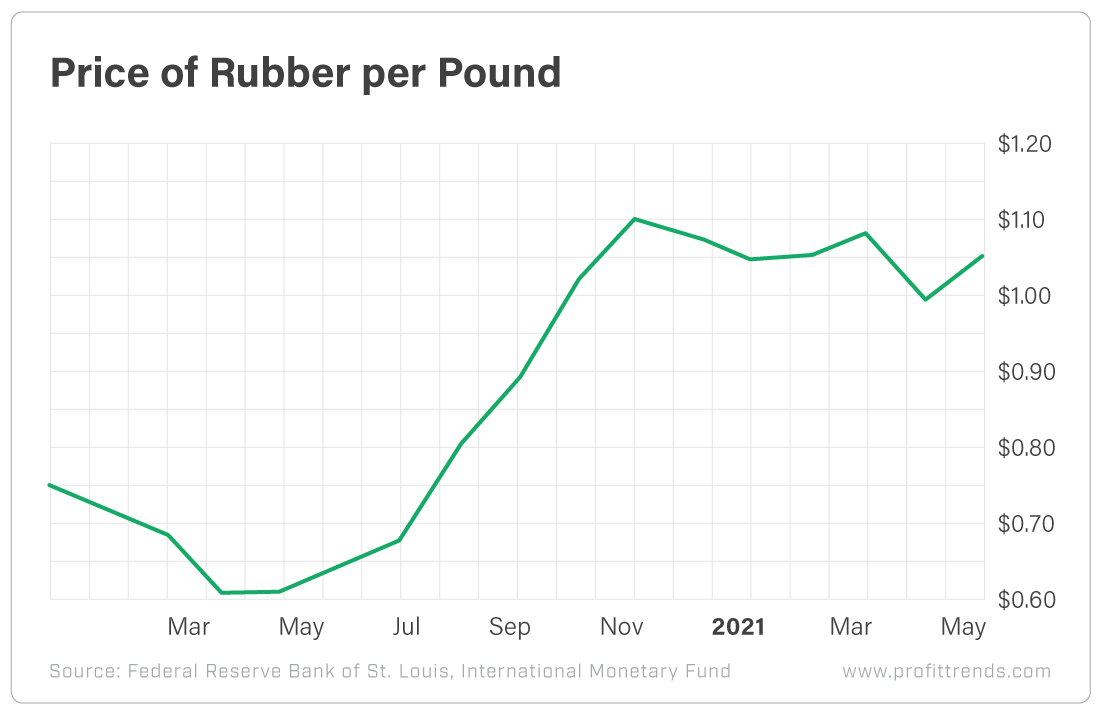
It seems the world is facing a lot of shortages these days. I've written articles about shortages in semiconductor chips, copper, platinum, palladium and nickel. As if those weren't enough, now there's another looming shortage in a very important commodity: natural rubber. Now, as we know, when a resource is in short supply but demand remains the same, prices skyrocket. As the U.S. has reopened and cars have returned to the roads, demand for rubber tires has picked back up. But, at the same time, the region that produces rubber has been devastated by a fatal fungus. This is the perfect recipe for high prices... and record sales for a few lucky manufacturers. When Rubber Doesn't Meet the RoadNatural rubber comes from rubber trees, which are tapped for their sap in a manner similar to sugar maple trees. Workers collect the sap, concentrate it and dry it in large sheets. Natural rubber is further processed into car tires, rubber gloves, elastic and gaskets, among other essentials. About 90% of rubber trees are grown in Southeast Asia, namely Thailand. It has about 5.5 million acres of rubber tree plantations. The country produces about 2.6 million metric tons of rubber annually. But right now, a fungal disease is spreading throughout Thailand's rubber plantations. The fungus makes the leaves fall off the trees. It causes rubber sap production to drop by 50%. Indonesia is another major rubber producer. But it's seen almost 950,000 acres damaged by the fungus. When the pandemic hit, demand for rubber slowed. Consumers were hunkered down at home, buying computers and video games instead of cars. That caused rubber prices to plummet. In order to save money, producers neglected to follow proper fertilization techniques. But this created unhealthy trees and allowed the fungus to spread. Many of the smaller plantation owners can't afford the cost of the antifungal chemicals. So they are faced with reduced output and lower income. | 






No comments:
Post a Comment
Keep a civil tongue.