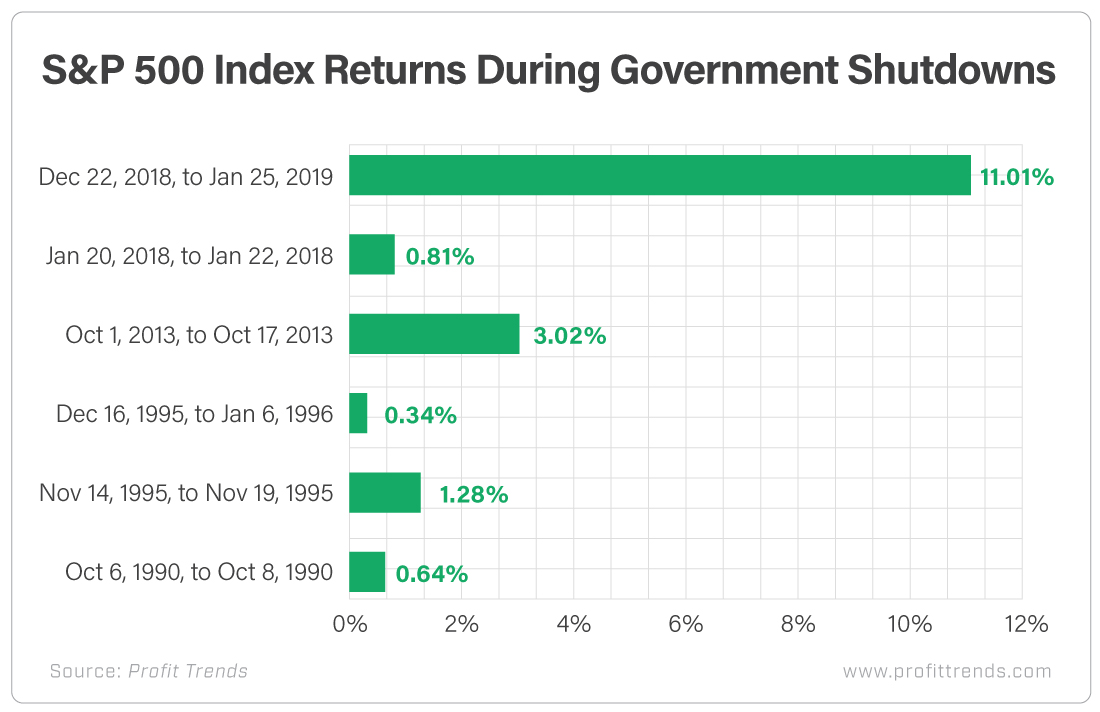
It's baaackkkk! Like a creature emerging from a fetid swamp... Just when investors thought they had to worry only about pork belly politics, the bitter partisanship in Washington, D.C., has the threat of a government shutdown back on the table. With Halloween around the corner, it seems apropos that these specters are once again haunting investors... A government shutdown sounds horrible and frightening. But what would that really mean for the markets? It's Not Just Mom Jeans and Clogs Last week, the White House told government agencies to prepare for a government shutdown. The House of Representatives passed a measure that would temporarily fund the government through this December and suspend the $28.4 trillion debt ceiling until December 2022. But yesterday, the Senate blocked the bill in its entirety. Now Congress needs to approve government funding before midnight on Thursday to avoid a shutdown - a daunting task for the next 48 hours. Sadly, government shutdowns are nothing new. In fact, the last one wasn't even that long ago. From December 22, 2018, to January 25, 2019, the U.S. government was closed for business. And that 35-day stretch was the longest and most expensive government shutdown in history. On top of that, it wasn't the only shutdown of 2018. From January 20 to January 22, disputes over the Deferred Action for Childhood Arrivals policy triggered a shutdown. And over the last four decades, we've also had shutdowns in 1980, 1981, 1984, 1986, 1990, 1995, 1996 and 2013. The budget deadlocks went out of vogue for a brief spell in the early 2000s. But like "mom jeans" and clogs, they're back in style. But what happens to your portfolio if Washington's gridlock moves from the Beltway to the vacant halls of the Capitol? | 






No comments:
Post a Comment
Keep a civil tongue.