Exquisitely-preserved mammoth tusk found 10,000 feet underwater | The Omicron variant: What we know so far | Facial reconstruction shows powerful Bronze Age woman's serene expression and huge earrings
Created for ignoble.experiment@arconati.us | Web Version
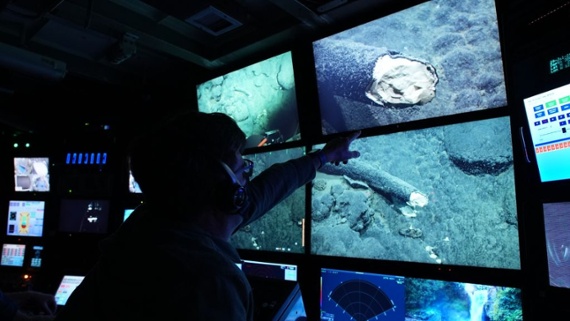
(Monterey Bay Aquarium Research Institute (MBARI))
Researchers have discovered a Columbian mammoth's (Mammuthus columbi) tusk 185 miles (300 kilometers) off the coast of California. Scientists estimate that the tusk, which was found at a depth of about 10,000 feet (3,070 meters), is well over 100,000 years old.
"You start to 'expect the unexpected' when exploring the deep sea, but I'm still stunned that we came upon the ancient tusk of a mammoth," Steven Haddock, a marine biologist at the Monterey Bay Aquarium Research Institute (MBARI) and one of the researchers who found the tusk, said in a statement.
On Nov. 26, the World Health Organization (WHO) named a new coronavirus variant "Omicron" and designated it as a "variant of concern."
But what makes this SARS-CoV-2 variant different and why are scientists worried about it? Because the variant has only been recently identified, there's a lot we don't know about it.
Scientists are concerned that Omicron has a very high number of mutations, many of them in genes that code for the spike protein, which the coronavirus uses to latch onto and invade human cells. Early evidence suggests that people who previously recovered from COVID-19 may have a higher risk of reinfection with Omicron compared with prior variants, according to a statement from the WHO.
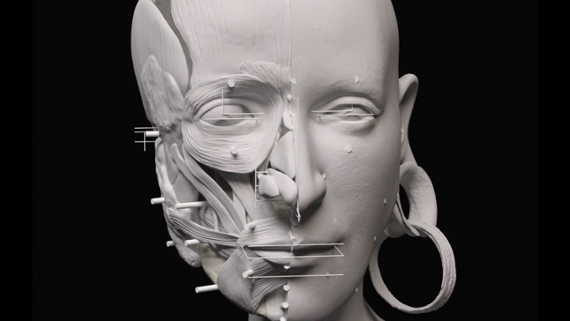
(Copyright Joana Bruno/ASOME/Universitat Autònoma de Barcelona)
A "powerful, maybe even frightening" woman buried with a silver diadem in Bronze Age Spain now has a virtually reconstructed face that shows her wearing a serene expression and huge hoop earrings dangling from earplugs.
Earlier this year, researchers announced they had discovered the woman's and a man's remains interred together in a large ceramic pot buried in what was likely an ancient palace. The man had died a few years before the woman; after she died at a later date, someone reopened the pot and placed her body next to his. Now, using the partial skull and jewelry from the burial, a scientific Illustrator has digitally recreated the woman's face, as well as the faces of others buried at the site, known as La Almoloya.
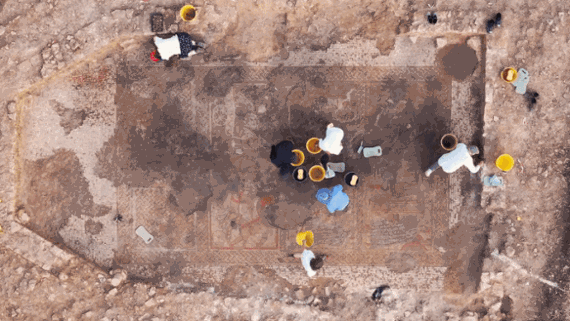
A U.K. man's leisurely stroll on his father's farm led to the discovery of an expansive Roman villa complex and striking mosaic beneath the soil.
"I noticed these bits of pottery, oyster shells and what I now know to be orange Roman roof tiles," Jim Irvine, son of farmer Brian Naylor, told i, a U.K.-based newspaper. Irvine spotted the artifacts in the summer of 2020 while he, his wife and his daughters were taking a walk across the farm, located in the county of Rutland. Out of curiosity, Irvine looked up the site of his discovery on Google Earth and saw a distinct crop mark in the field — one that his family had never noticed in their decades working the land.
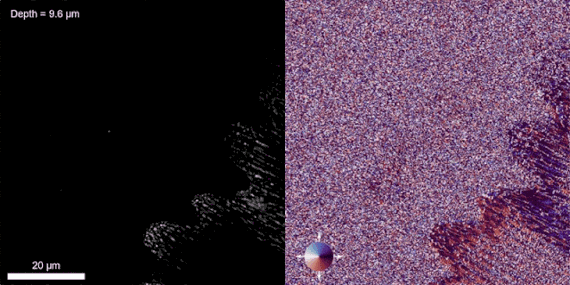
To transform into a butterfly, a caterpillar must first dissolve into a goopy soup within its chrysalis. Now, in striking new videos, scientists have revealed how this goo reassembles into the delicate scales on a butterfly's wings. To watch this process unfold in living caterpillars undergoing metamorphosis, the researchers behind the videos reared painted lady caterpillars (Vanessa cardui) in their laboratory, according to the new study, soon to be published in the journal Proceedings of the National Academy of Sciences (PNAS).












No comments:
Post a Comment
Keep a civil tongue.