Analysis of ancient teeth questions theory that Native Americans originated from Japan
1,000-year-old mummy in fetal position found in underground tomb in Peru | Analysis of ancient teeth questions theory that Native Americans originated from Japan | China's Mars orbiter snaps amazing selfies above Red Planet
Created for ignoble.experiment@arconati.us | Web Version
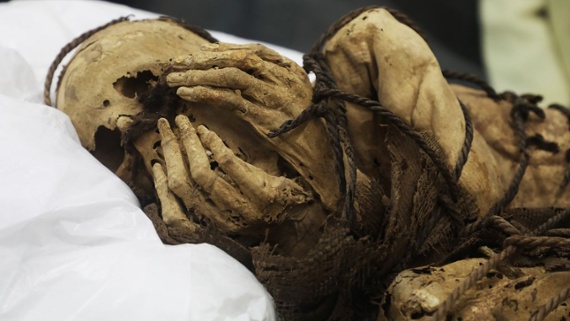
Archaeologists have unearthed a mummy dating back around 1,000 years at the site of Cajamarquilla in Peru. The researchers discovered the mummy lying in a fetal position and bound by rope.
At the time the mummy was buried, Cajamarquilla was a thriving city located on the right bank of the Rímac river about 16 miles (25 kilometers) inland, and was a place where people from the coastal and mountainous areas of Peru engaged in trade, researchers said in a statement. More than 10,000 people might have lived in the city at the time, the researchers said.
Native Americans may not have originated in Japan as previous archaeological evidence has suggested, according to a new study of ancient teeth.
For years, archaeologists had predicted that the first people to live in North America descended directly from a group called the Jomon, who occupied ancient Japan about 15,000 years ago, the same time people arrived in North America around 15,000 years ago via the Bering Land Bridge, a strip of land that previously connected Russia to North America before sea levels rose above it. This theory is based on archaeological similarities in stone tools, especially projectile weapons, found in Native American and Jomon settlements.
China's Tianwen-1 spacecraft at Mars pulled a big New Year's surprise with stunning new images captured by a small camera that flew free of the orbiter to snap epic selfies above the Red Planet.
The new images published by the China National Space Administration show Tianwen-1 above Mars' north pole, with its solar arrays and antennas on display, as well as a partial closeup of the orbiter and a view of the Red Planet's northern ice cap.
The Mars shots were taken by a small camera device released by the orbiter which then took images and sent them to Tianwen-1 via WiFi.
A physics problem that has plagued science since the days of Isaac Newton is closer to being solved, say a pair of Israeli researchers. The duo used "the drunkard's walk" to calculate the outcome of a cosmic dance between three massive objects, or the so-called three-body problem.
Another year of skywatching is upon us, and there's a lot to look forward to in 2022! Here are some of the more noteworthy sky events that will take place this upcoming year. Space.com's Night Sky column will provide more extensive coverage of most of these events as they draw closer.
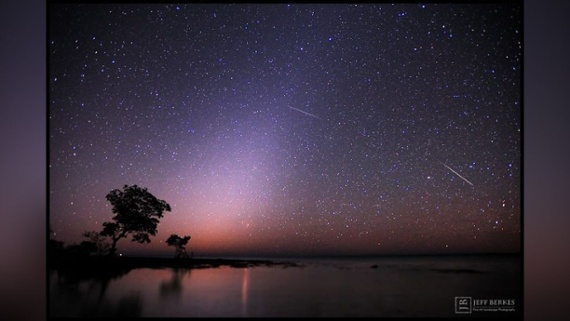
Of the 10 biggest annual meteor showers, just two could produce over 100 per hour: the December Geminids and the January Quadrantids, due to peak Monday (Jan. 3).
Every year, Earth briefly encounters the Quadrantid meteor shower in early January. Using constellations as a guide, Quadrantid meteors, or "Quads," appear to fan out from a spot in the night sky midway between the Big Dipper's handle and the four stars marking the head of Draco, the dragon.
Just six months has passed since the killing and mutilation of six lions in the Ishasha sector of Uganda's Queen Elizabeth National Park (QENP).
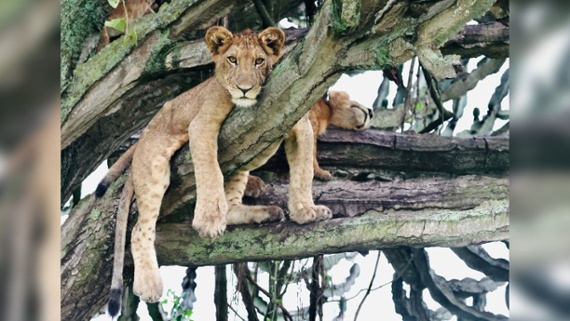
If you were to visit the park, you would see these so-called Ishasha lions lazing around in the myriad branches of towering fig trees. This group is one of only two populations of lions known to climb trees, making the majestic beasts fascinating subjects for study and a popular tourist attraction. Sadly, however, these lions face numerous threats, including habitat loss, snaring, human-wildlife conflict, illegal wildlife trade and the trafficking of lion body parts.














No comments:
Post a Comment
Keep a civil tongue.