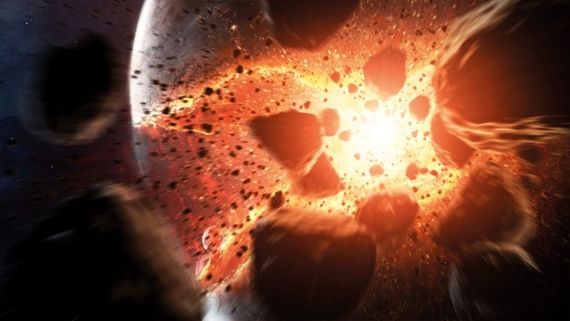
After dominating the Earth for more than 160 million years, the dinosaurs finally met their doom thanks to a visitor from space. Around 66 million years ago, an asteroid measuring at least 6 miles (10 kilometers) across dealt the dinosaurs' world a devastating blow, triggering earthquakes, tsunamis, volcanic eruptions and climate catastrophes that soon rendered 75% of all living creatures extinct.
But, through all this, Earth itself remained. Does this mean our planet is immune to an asteroid Armageddon? If the dreaded dino-killing asteroid wasn't enough to end the world, then what would it take? Could a space rock actually destroy the entire Earth — and how big would it have to be?
Just the Facts, Ma'am "I stopped watching TV news a year ago, so sick of the bias everywhere. But in doing so, I was out of the loop. I decided to give 1440 a try & I've not been disappointed. Finally, Walter Cronkite-style reporting! Just the facts. I also love that I can click a link to see more on many stories. Keep up the good work!" Join for free now.
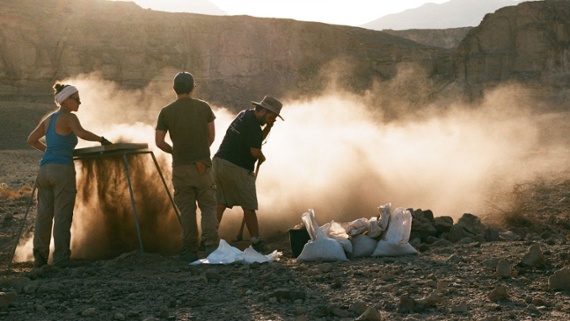
(Photo by Hai Ashkenazi, courtesy of the Central Timna Valley Project)
Copper mines in Israel's Negev Desert — ancient sites that may have inspired the legend of King Solomon's mines of gold — were abandoned 3,000 years ago, when people there used up all the plants to make charcoal for smelting, a new study finds.
The researchers studied fragments of charcoal from ancient furnaces in the Timna Valley near Eilat, where a prosperous copper industry thrived from the 11th to ninth centuries B.C.
Fall has arrived, and with it the annual call to get your flu shot. But when's the best time to get the jab?
Ideally, it’s better to get vaccinated before flu starts to circulate in your community; but exactly when flu season will start is unpredictable, according to the U.S. Centers for Disease Control and Prevention (CDC). For this reason, the CDC recommends that people who are eligible for a flu shot — generally everyone ages 6 months and older — get it in September or October, preferably by the time Halloween rolls around, as flu typically isn't widespread yet in these early fall months.
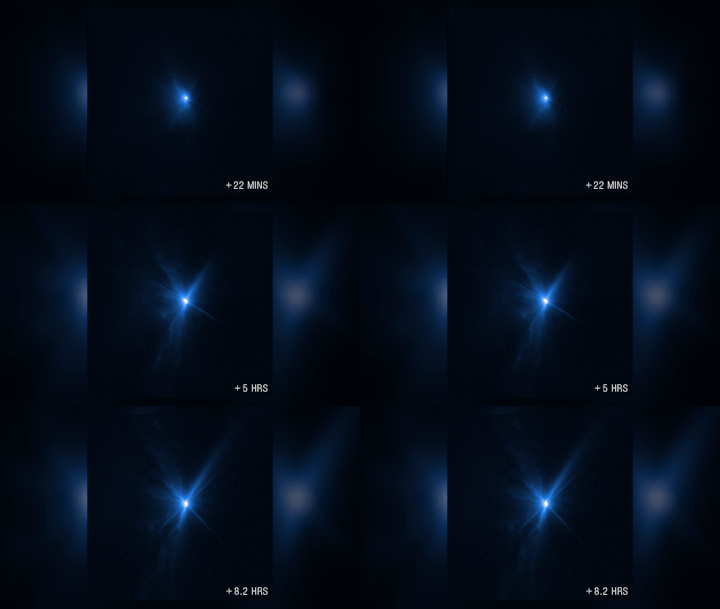
The spectacular moment NASA’s Double Asteroid Redirection Test (DART) craft smashed into a distant asteroid has been captured by the James Webb Space Telescope (JWST) and the Hubble Space Telescope — and the footage is incredible.
The DART spacecraft smashed into the asteroid Dimorphos, which is 7 million miles (11 million kilometers) from Earth, at 7:14 p.m. ET on Monday (Sept. 26), marking humanity's first attempt to test its planetary defense system by altering an asteroid's trajectory.
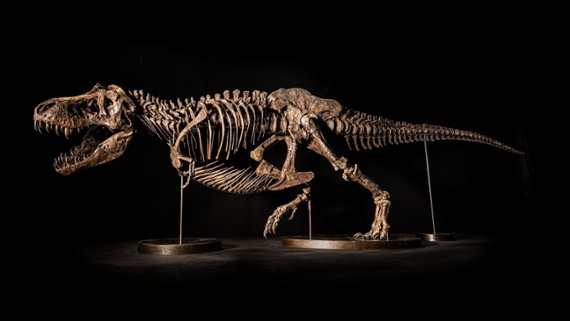
The mighty Tyrannosaurus rex once stalked western North America, but now, in a first, the fossil remains of the dinosaur king are hitting an auction block in Asia, where the prehistoric beast's bones might sell for as much as $25 million, according to Christie's Hong Kong.
The 3,000-pound (1,400 kilogram) specimen — nicknamed Shen for now; whoever buys it gets exclusive naming rights — was uncovered in Montana's Hell Creek Formation, a region renowned for its fossils dating to the late Cretaceous period, which ended about 66 million years ago. Shen measures about 40 feet (12.2 meters) long, 15 feet (4.6 m) tall and 6.8 feet (2.1 m) wide, according to Christie's.













No comments:
Post a Comment
Keep a civil tongue.