| |
| |
| |
| Presented By Business Roundtable |
| |
| Axios AM |
| By Mike Allen · Mar 25, 2023 |
| 🎈 Happy spring Saturday — and happy birthday to Erica Pandey, who's usually your weekend host. - Smart Brevity™ count: 1,448 words ... 5½ minutes. Edited by Donica Phifer.
|
| |
| |
| 1 big thing: Living like it's 2019 |
 |
|
| Illustration: Shoshana Gordon/Axios |
| |
| The pandemic changed everything — and yet a lot of the world would feel very familiar to a time traveler from late 2019, Axios' Felix Salmon writes. - Why it matters: Change doesn't affect everything equally, and sometimes it takes us on a roundabout journey that deposits us unceremoniously exactly where we started.
What's happening: Air travel is crowded and unpleasant. 20-somethings are flocking to cities. People prefer to pick out their own groceries rather than trust someone else to choose and deliver them. Zoom stock is back to being about $70 per share, after trading at $500+ at the end of 2020. - "The most interesting thing about post-COVID life is how little things have changed," Morning Brew co-founder and CEO Austin Rief tweeted this week.
🔎 Between the lines: Often, the surface stasis belies deep change. - In 2019, Zoom was a fast-growing company trying to get corporations to buy into the idea that their employees could work from anywhere; in 2023, that battle has been won, and it's now an established company trying to compete against rival products from Google and Microsoft.
- If you find yourself in a crowded interior where no one is wearing masks, that's because a huge number of things have changed, including the development of the COVID vaccine.
🔭 Zoom out: Many enormous and highly visible changes would shock our time traveler, in ways both good and bad. - Wages at the bottom end of the income spectrum have risen substantially, and a rise in understanding of mental health issues has helped create the fastest-selling nonfiction book of all time (Prince Harry's "Spare")
- On the other hand, inflation is stunningly high, there's a devastating war in Europe, and a microscopic virus has killed more than 1 million Americans and many times that number globally.
Go deeper: Felix's forthcoming book, "The Phoenix Economy," out May 9, is about ways the pandemic's repercussions will surprise us for decades. |
    |
| |
| |
| 2. 😡 Trump's new rage |
 |
|
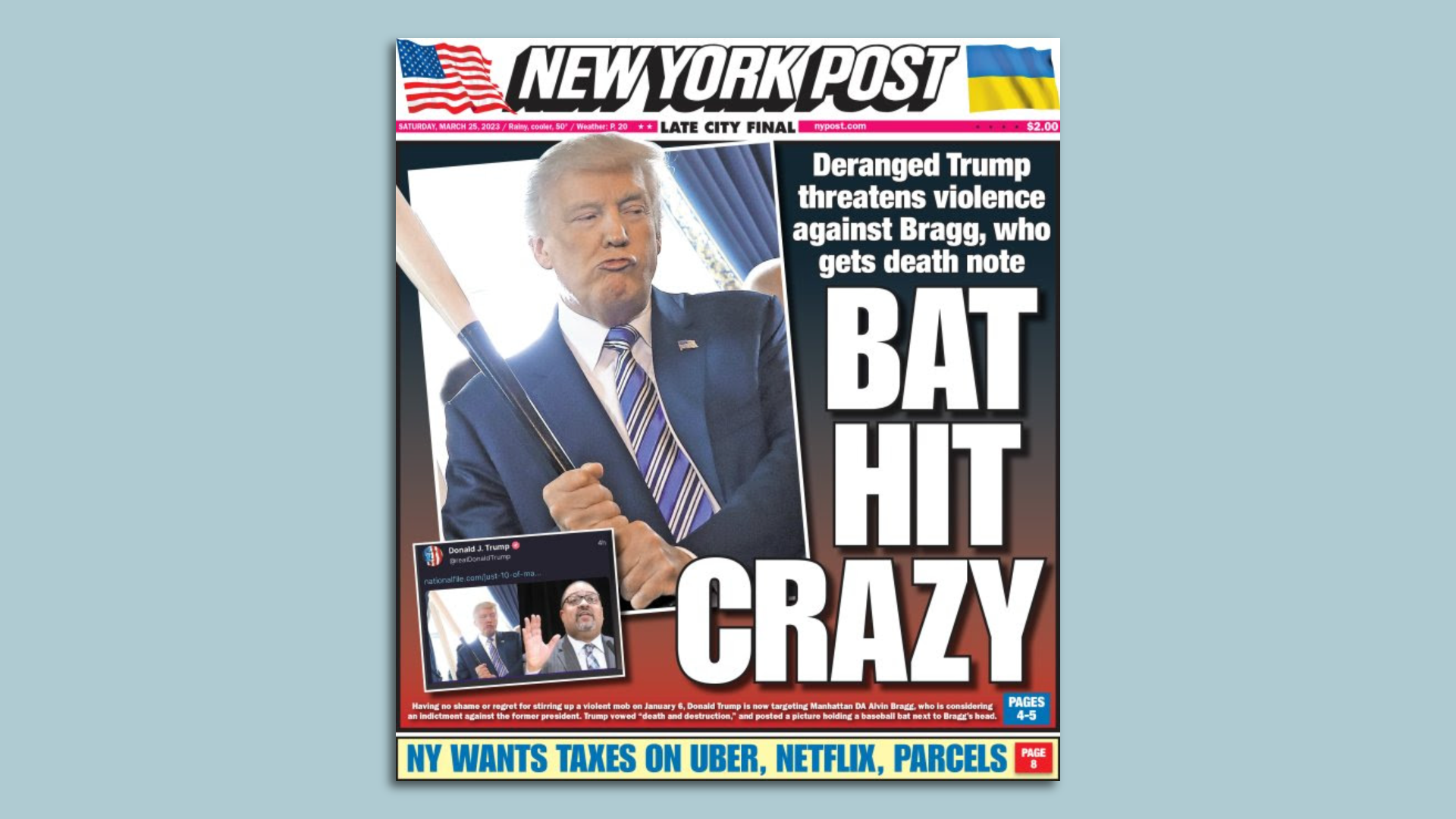
| Today's N.Y. Post cover |
| |
| Just a week ago, former President Trump's team was touting his more disciplined approach to campaigning. Now there's a more familiar Trump — an angry, scorched-earth force on social media, trying to rally his base by casting himself as a victim, Axios' Sophia Cai reports. - Why it matters: Trump's tirades on Truth Social over his potential indictment have been filled with the type of incendiary rhetoric that preceded Jan. 6 — and reflect colliding forces inside his campaign.
What's happening: The forces pit a fiery candidate who's a social media bulldozer when he feels wronged, vs. the more measured, policy-focused ex-president his staff has been hoping to show voters. - Trump called Alvin Bragg — the Manhattan district attorney weighing charges against Trump over alleged hush money to an adult film star — an "animal" who "doesn't care about right or wrong."
- Trump called for protests and warned of violence in a way that many saw as encouraging it: "Our country is being destroyed, as they tell us to be peaceful!"
🔮 What's next: When Trump feels cornered, he attacks. And judging by the reactions (and donations) of his most loyal MAGA followers this week, his campaign could see a bounce in GOP polls. |
| |
| |
| |
| 3. Mississippi tornadoes kill 23 |
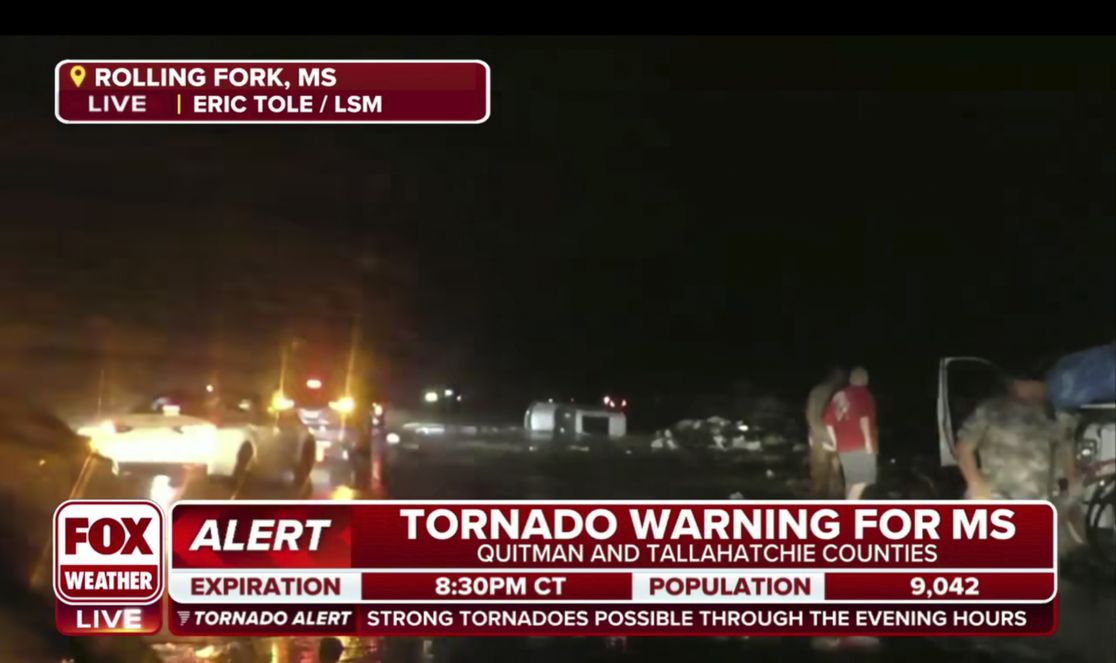
| Screenshot: Fox Weather via AP Deadly and destructive tornadoes spiraled through parts of Mississippi overnight, killing at least 23 people, injuring dozens, and destroying homes and towns, Axios' Herb Scribner and Andrew Freedman report. 🧠 What's happening: The violent tornadoes resulted from a surge of warm, humid air northward from the Gulf of Mexico, along with a fast-moving current of air known as a low-level jet stream. Between the lines: Nighttime tornadoes are deadlier than those that strike during the day, in part because people are less attuned to sources for tornado warnings. The bottom line: Multiple risk factors scientists have been warning about for years combined last night to create this unfolding disaster. |
| |
| |
| |
| A message from Business Roundtable |
| Permitting reform will spur economic growth and create American jobs |
| |
 |
| |
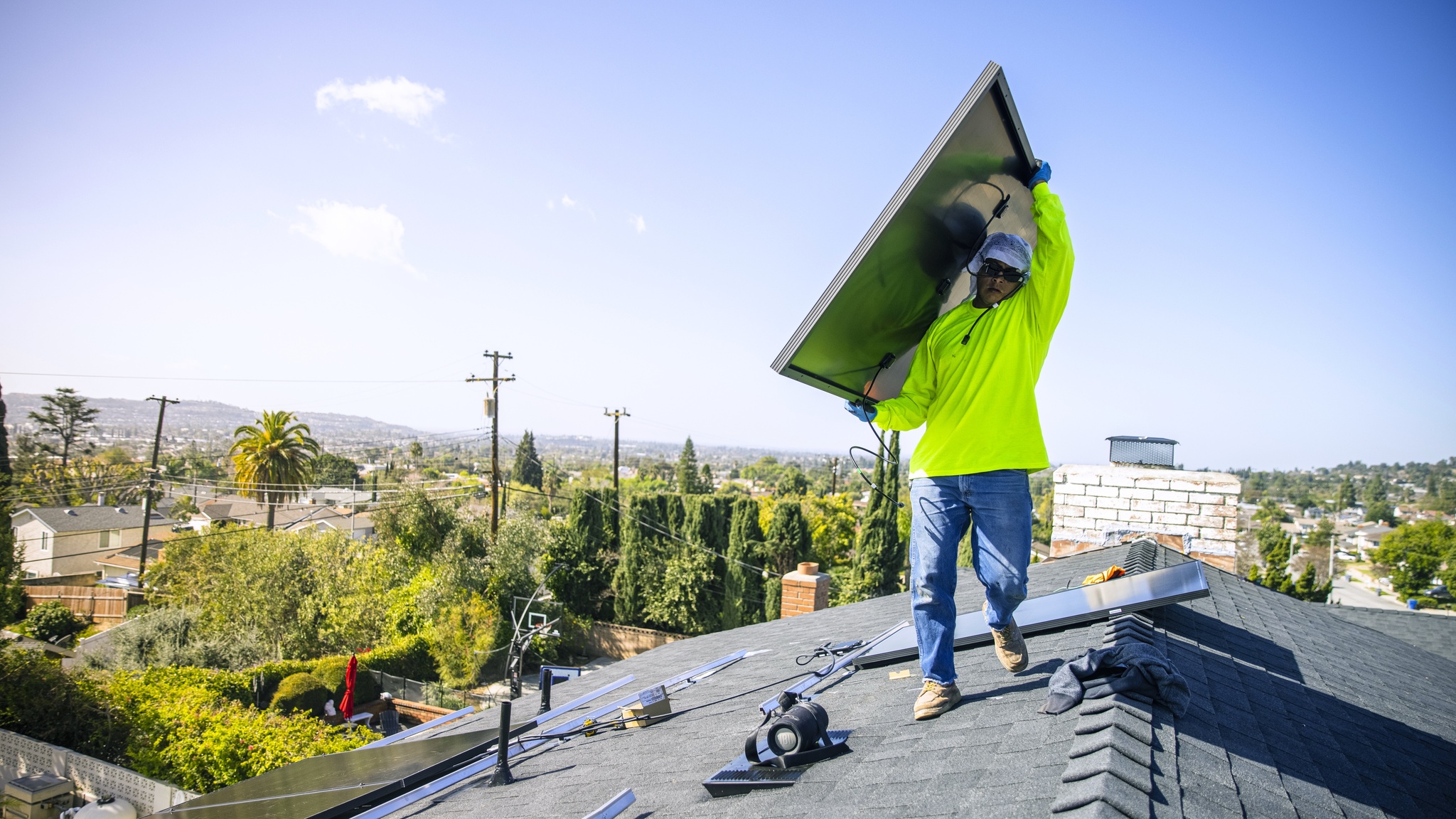
| Updating the permitting process for energy infrastructure projects is good for American workers and businesses. Next steps: Business Roundtable encourages Congress to pass bipartisan permitting reform legislation. Learn more about the benefits of permitting reform. |
| |
| |
| 4. 🏂 Coming attraction: Summer snowboarding! |
| A home covered with snow yesterday in Twin Bridges, Calif., near Lake Tahoe. Photo: Fred Greaves/Reuters Ski resorts around Lake Tahoe are extending the ski and snowboard season into summer — as late as July 4 — thanks to the Sierra Nevada Mountains' second snowiest season in 77 years of record-keeping. - The snowiest year was 1952 — 71 years ago.
|
| |
| |
| |
| 5. 🏦 Top banks warn against poaching |
 Data: Yahoo Finance. Chart: Axios Visuals. More on Deutsche BankSeveral top U.S. banks have a message for their employees: Don't take advantage of banks under stress. - JPMorgan Chase, Bank of America and Citigroup warned their staffs not to make the uncertainty — and stress — around banks worse, Reuters reports.
JPMorgan, the country's largest bank, told employees they "should never give the appearance of exploiting a situation of stress or uncertainty," according to an internal memo. - "We do not make disparaging comments regarding competitors," the memo adds.
- The bank's consumer and business banking unit told branch employees they "should refrain from soliciting client business from an institution in stress."
Bank of America execs were briefed that employees shouldn't go after customers of distressed firms, or do anything to exacerbate the situation. - Citigroup has given its business heads similar guidance — including not speculating about market rumors or other banks.
Share this story. |
| |
| |
| |
| 6. 🦾 Axios HQ raises $20 million |
| Image: Axios HQ Axios HQ — the communications software company spun off from Axios last year — raised $20 million in Series A funding at nearly a $100 million post-money valuation, Axios' Sara Fischer, Dan Primack and Eleanor Hawkins first reported. - Why it matters: It's rare for media companies to create software startups.
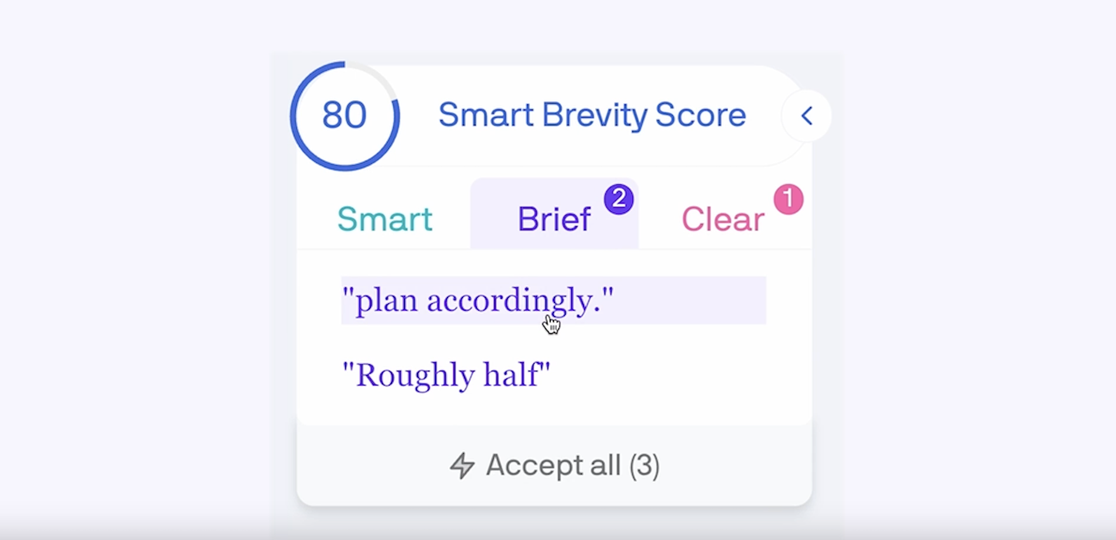
💭 What they're saying: The Wall Street Journal, which first reported the raise (subscription), said Axios HQ "makes software that helps businesses communicate with employees and investors in a concise way that was championed by Axios — snippets that break down the main points of an article and explain why it matters." 🧠 How it works: Axios HQ is leveraging the brand equity and trust built by Axios, which is primarily an email-driven news company, to attract clients that need better email communication tools to reach internal and external stakeholders. - Axios HQ is leaning heavily into artificial intelligence tools to help its clients write clearer emails.
The software helps users automatically sharpen their writing with stronger wording suggestions. It uses AI to suggest pictures, headlines and summaries that can be used to strengthen communications. - Disclosure: Axios co-founder and president Roy Schwartz is CEO of Axios HQ. Axios co-founder and CEO Jim VandeHei is chairman of the board.
Go deeper. |
| |
| |
| |
| 7. 💻 Remembering the father of Moore's Law |
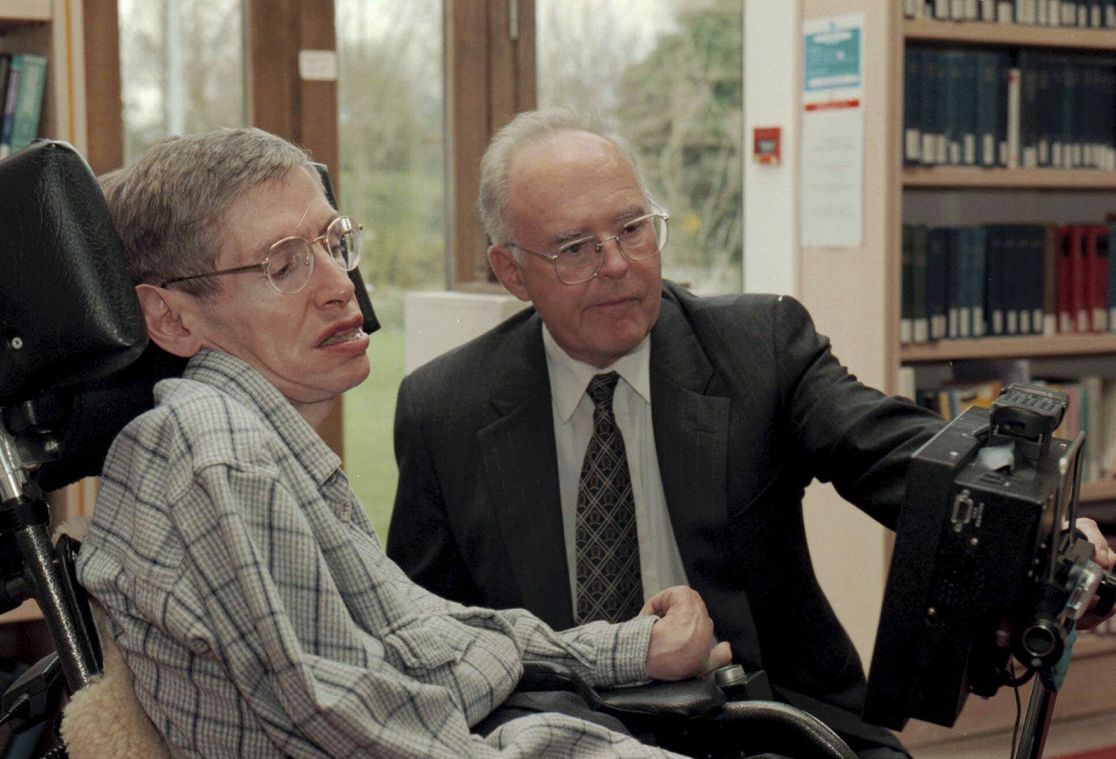
| Gordon Moore (right) shows the late physicist Stephen Hawking a computer designed and custom-built especially for him, in Cambridge, England, in 1997. Photo: AP Gordon Moore, a digital-age pioneer and philanthropist who co-founded Intel in 1968, died Friday at age 94, surrounded by family at his home in Hawaii. - Intel CEO Pat Gelsinger said: "He was instrumental in revealing the power of transistors, and inspired technologists and entrepreneurs across the decades. We at Intel remain inspired by Moore's Law and intend to pursue it until the periodic table is exhausted."
Moore's Law is Gordon Moore's famous observation in 1965 that the capacity and complexity of integrated circuits would double each year. - Strictly speaking, Moore's Law referred to the doubling of transistors on a semiconductor. But over the years, it has been applied to hard drives, computer monitors and other electronic devices.
Read a tribute. |
| |
| |
| |
| 8. 🏀 Crazy 8: No top seeds |
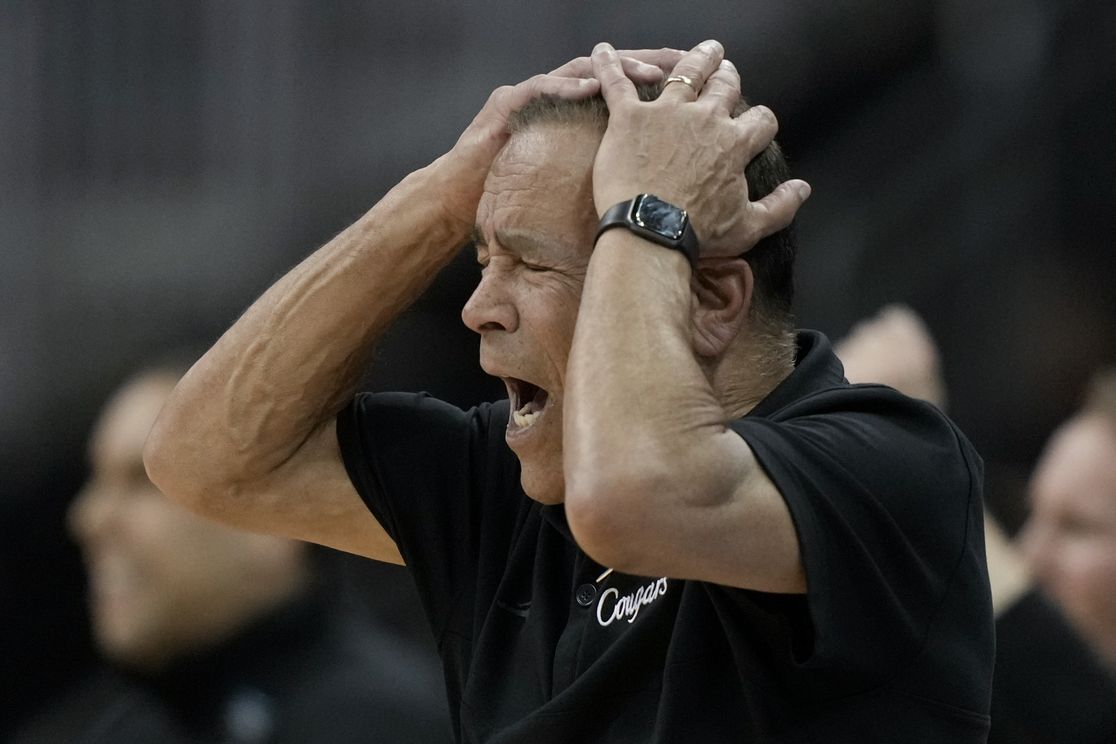
| Houston head coach Kelvin Sampson during the second half of his Sweet 16 loss to Miami. Photo: Charlie Riedel/AP With Miami's win over Houston and San Diego State's takedown of Alabama last night, the men's NCAA Tournament will have no No. 1 seed in the Elite Eight — for the first time since seeding began in 1979. - "There's not a lot of difference between the best team in the country and the worst team in the country," San Diego State coach Brian Dutcher said. "You're seeing that on this stage."
Purdue, Kansas, Houston and Alabama are all gone, ensuring the Final Four will have no No. 1 team for the first time since 2011, AP's John Marshall writes. - Why it matters: The four teams deemed by the NCAA to be the best in the country combined to win five tournament games — the fewest by three among No. 1 seeds since the field expanded to 64 teams in 1985.
Texas Longhorns' Timmy Allen celebrates after scoring on Xavier last night. Photo: Jamie Squire/Getty Images State of play: Texas is the lone No. 2 seed remaining after bouncing Xavier out of the bracket 83-71 last night under interim coach Rodney Terry. - How crazy has it been? The national title game is guaranteed to have at least one of these teams: San Diego State, Creighton, Florida Atlantic or Kansas State. The Aztecs, Bluejays and Owls have never been to the Elite Eight. The Wildcats were picked to finish last in the Big 12.
Also a lock: The winning coach will be a first-time champion. |
| |
| |
| |
| A message from Business Roundtable |
| Permitting reform is a win-win for the economy and environment |
| |
 |
| |
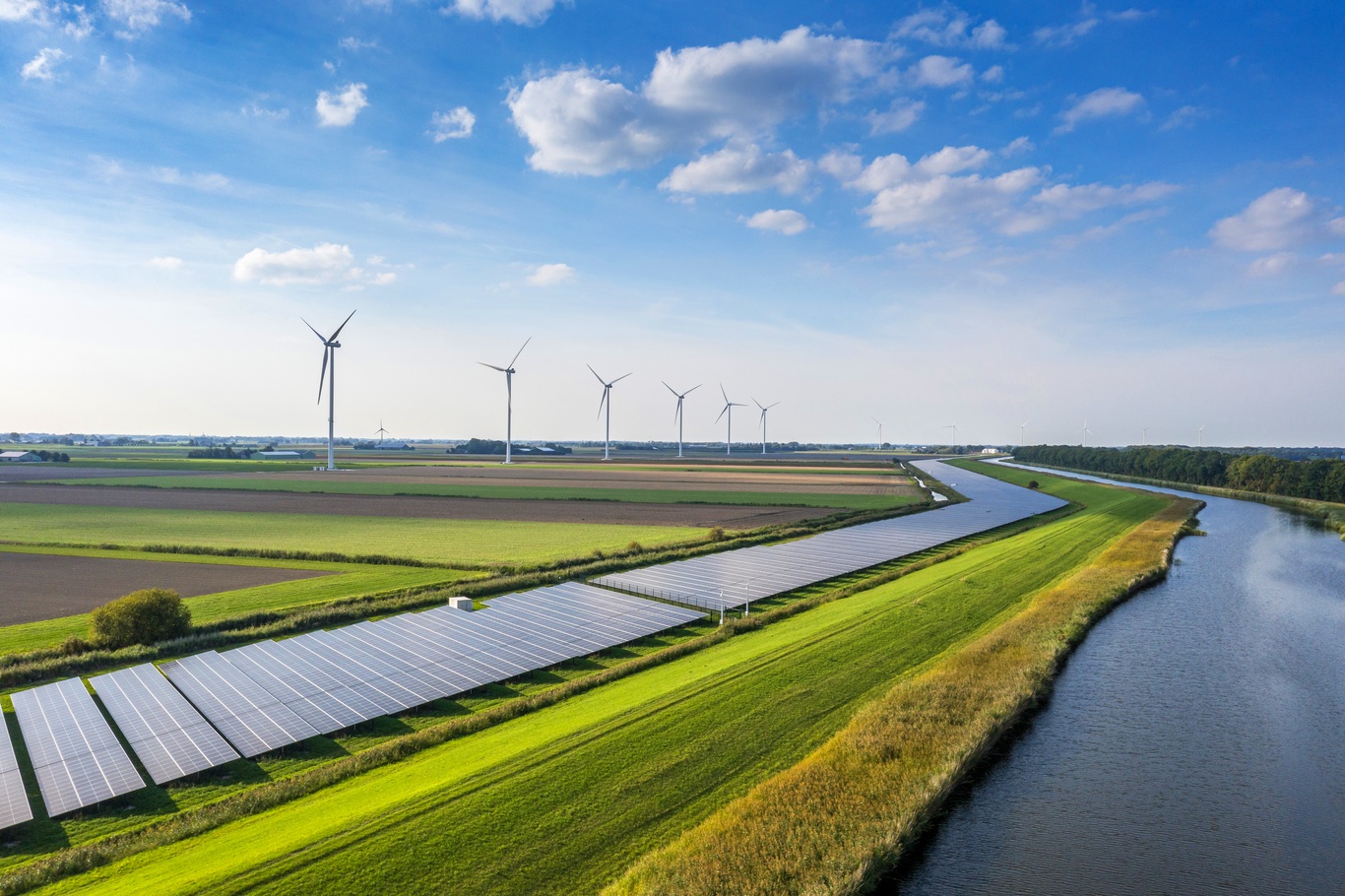
| Modernizing the permitting process would speed the approval of new infrastructure projects that balance today's traditional energy needs with tomorrow's growing demand for clean energy. Business Roundtable encourages Congress to pass bipartisan permitting reform legislation. Learn more. |
| |
| 📬 Thanks for sharing your weekend with us. Please invite your friends to join. |
 | | Are you a fan of this email format? Your essential communications — to staff, clients and other stakeholders — can have the same style. Axios HQ, a powerful platform, will help you do it. | | |






No comments:
Post a Comment
Keep a civil tongue.