Hi Indiana,
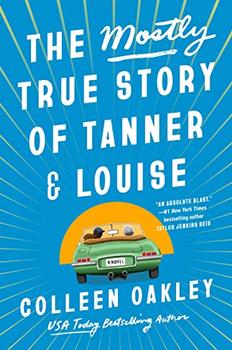
Need an entertaining, discussion-worthy book to get you out of a reading slump? Many of our First Impressions readers loved The Mostly True Story of Tanner & Louise by Colleen Oakley, a touching novel about an unlikely bond formed between two women with more than a 60-year age difference between them.
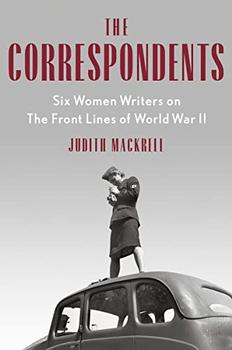
In Editor's Choice, we bring you Judith Mackrell's The Correspondents, a new nonfiction paperback release that tells the stories of six groundbreaking women journalists in the World War II era, along with an accompanying "beyond the book" article on the Spanish Civil War, as well as other articles in our "People, Eras and Events" category. You can also explore upcoming book club discussions. | | With best wishes,
Davina Morgan-Witts BookBrowse Publisher | | Each month we give away books to BookBrowse members who live in the U.S. to read and review. Here are their opinions on one recently released title. | | The Mostly True Story of Tanner & Louise by Colleen Oakley | | "I will take Tanner and Louise over Thelma and Louise any day! I so enjoyed this novel. The characters were engaging and realistic and the plot was fast-paced and linear with just enough explanation to fill in gaps in the story. ... I love a book where characters evolve, I love a book with unusual friendships, I love a book with surprises: The Mostly True Story of Tanner & Louise has it all! As I mature, it is refreshing to find senior characters that still have sass and vigor. I will be recommending this book to my book club, I think it would lead to a great discussion." - Catherine O. (Altavista, VA)
"Tanner is 21, angry and adrift since she lost her soccer scholarship due to her leg injury. Louise is 84, smart, spunky, quirky, and has a mysterious past that even her family doesn't know about. Her daily routine includes a crossword puzzle and 4 pm vodka happy hour. After Louise breaks her hip, her daughter hires Tanner as caregiver. Their adventure begins when Louise wakes Tanner in the middle of the night to drive her from Atlanta to California to help a friend. Tanner only agrees when Louise offers to pay her. They have challenges and scares on the trip as they try to outrun the FBI. Was Louise the woman on the news who masterminded a 3 million dollar jewelry heist forty years ago? In spite of their sixty-year age difference, the unlikely pair learn lessons from each other and develop a caring friendship. I laughed a lot at their misadventures and I enjoyed this delightful book." - Sylvia L. (Suwanee, GA)
"I have been in a reading funk lately, not able to finish the last three books I picked up. This book was the perfect remedy. It was fun, while also being mysterious and heartfelt. The characters were so fully developed, I felt as if I knew them intimately by the end of the story." - Jennie W. (Denver, CO) | | The Correspondents by Judith Mackrell
Review and article by Kim Kovacs
In the introduction to The Correspondents, author Judith Mackrell points out that although there had been women journalists reporting from the front lines of earlier wars, it was the Second World War "which was to become the defining opportunity for female correspondents." By the end of the conflict, she continues, "around 250 of the reporters and photographers accredited to the Allied armies were women." The author focuses on six of these intrepid journalists, each of whom not only braved the dangers of reporting from a war zone but had to fight rampant sexism to do so.
Virginia Cowles began her career as a gossip columnist for New York and Boston publications, but became the first person of either gender to report from both sides of the Spanish Civil War. Clare Hollingworth, the lone Brit on Mackrell's list, was a novice reporter for London's Daily Telegraph when she was sent to Poland before the outbreak of war. Martha Gellhorn began reporting in the United States early in her life, but her first war reporting was during the Spanish Civil War.
Highly-educated American Helen Kirkpatrick was the first woman provided with full war credentials, at the request of then-General Dwight Eisenhower, whom she had impressed with her reporting. Lee Miller had a career as a model and fashion photographer before becoming a war correspondent for Vogue magazine, recording the fall of Germany as well as the liberation of the Nazi death camps. And Sigrid Schultz, born in Chicago, was the first female foreign bureau chief of a major US newspaper, reporting from Berlin for the Chicago Tribune. ... continued | | The Correspondents is one of our featured newly released paperbacks. View our other recent paperback recommendations here. | | Beyond the Book: The Spanish Civil War
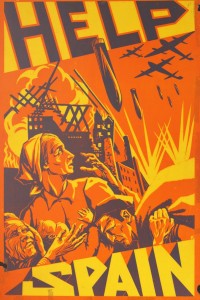
Several of the women highlighted in Judith Mackrell's The Correspondents started their journalistic careers covering the Spanish Civil War (1936-1939).
Spain had been in political turmoil for many years before the war; while the country was still officially a monarchy, a 1923 coup had placed Miguel Primo de Rivera in charge of the nation, transforming it into a military dictatorship. He had the initial support of the populace, but when the economic condition of most of Spain's citizens worsened due to corruption and mismanagement, he was forced to step down. King Alfonso XIII (who had actually supported Rivera) agreed to hold a referendum, with the end result being that voters overwhelmingly chose to abolish the monarchy in favor of a democratically-elected government. The Second Republic was subsequently declared on April 14, 1931, with those in power being predominantly middle-class liberals and moderate socialists.
However, there was widespread dissatisfaction with this government's land and religious reforms, and another election was held in October 1933, in which conservative factions prevailed. Liberal policies enacted during the previous administration were rolled back, which caused considerable discontent among those who had benefited from them, particularly agricultural workers and miners. General strikes, protests and random class clashes occurred, culminating in a massive, bloody uprising in October 1934 that was brutally put down by General Francisco Franco. A third election was held in January 1936, and a leftist coalition once again prevailed. Three generals — Franco, José Sanjurjo and Emilio Mola — plotted an overthrow of the government and staged a well-planned coup in July 1936. They failed to win control of the entire country, however, and the situation devolved into a civil war. ... continued | | Beyond the Book: People, Eras and Events | | For every book we review, we also write a "beyond the book" article that focuses on a related cultural, historical or contextual topic — a great way to discover books!
Recent articles in our "People, Eras and Events" category, in addition to our article on the Spanish Civil War above, include:
- Colonialism's Ecological Damage in Cyprus (accompanying The Island of Missing Trees)
- Phoolan Devi: The Real-Life "Bandit Queen" (accompanying The Bandit Queens)
- Little Vienna, a Jewish Haven in Shanghai (accompanying The World and All That It Holds)
🔒Individual members and patrons of subscribing libraries have full access to all articles, while others have limited access. | | Discussions are open to all, so please join us! If you would like to receive a message when a particular discussion opens, you can sign up for a one-time notification. | | With so many new books published every month, it's difficult to find the standouts, the ones which are really worth your time. This is why hundreds of thousands of readers rely on BookBrowse to do the hard work of sifting though the multitude of titles to find the most promising new books, with a focus on books that entertain, engage and enlighten. | | BookBrowse Highlights is one of our four free newsletters. We also offer Publishing This Week every Sunday, and Book Club News and Librarian News monthly. | |
1-408-867-6500 Toll Free: 1-800-745-5306 (US & Canada)
Copyright 2023 | | | | | | |








No comments:
Post a Comment
Keep a civil tongue.