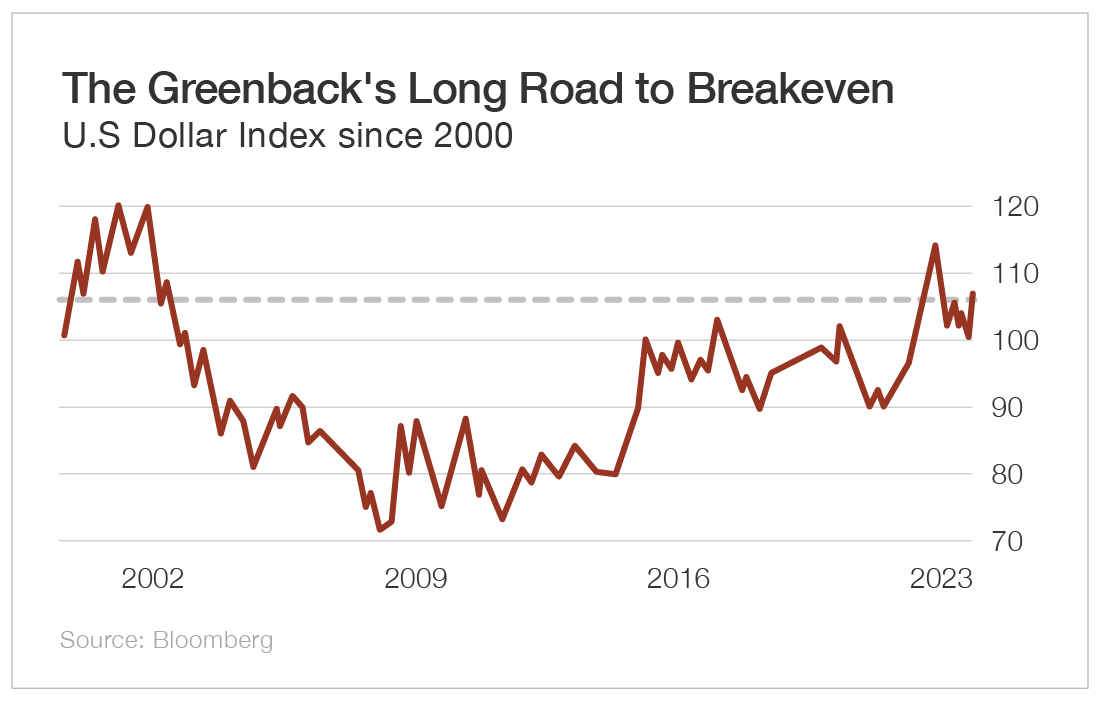
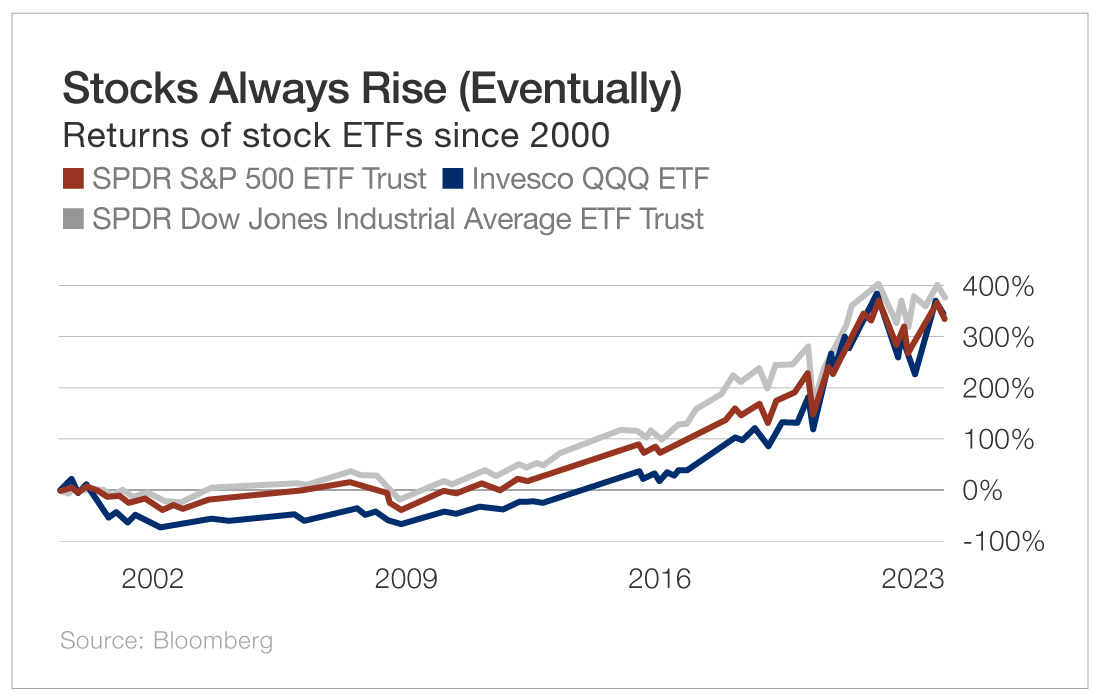
| It's been a tough three months for U.S. stocks. All of the major indexes are down between 1.8% and 3.8%. But stocks weren't the worst place to have your money over the last 90 days. Since July, bonds have also slipped - with U.S. Treasurys logging a negative 4.6% return, U.S. municipal bonds down 4.7% and U.S. corporate bonds falling 5.1%. It all leads investors to question whether last year's so-called exception to the rule - when bonds and stocks fell in tandem - was more than just an anomaly. And gold, once a "safe haven" asset during times of market turmoil, has fallen 5.5% over the same time period. Two seemingly bright spots are oil and the dollar. Even after last week's worst performance since March, crude is up 7.7%. And the U.S. Dollar Index, which measures the dollar against a basket of other foreign currencies, is up more than 6% from its 52-week low. It now sits around 105.82 - and has many pundits declaring, "King Dollar is back!" Now, a stronger dollar is good news for consumers because it means that goods imported into the U.S. from other countries get a default discount. It can help dampen some of the impact of inflation. But I wouldn't be bowing down to King Dollar just yet... 23 Years of Flat Returns While the dollar is up in the short term, its performance isn't as impressive when you zoom out... In fact, not a lot has changed for the dollar since the start of the 21st century. The U.S. Dollar Index is at the same level as it was in April 2000 - and it's actually down 8.7% from October 2000. But while the value of the dollar has remained virtually the same over the past 23 years, the prices we pay for necessities have skyrocketed. Since the turn of the century, gasoline is up 113%. The price of medical care - including services, drugs and insurance - has risen 115%. Average home prices are up 142%. College tuition and fees are up 186%. And don't get me started on food. The prices of the "basics" in your grocery cart have more than doubled. A pound of ground beef now costs 154% more than it did in 2000. A loaf of bread will set you back 114% more. Eggs are up 113%. Of course, inflation is nothing new... It's why the Federal Reserve has been on its rate hiking binge. (And along with all of the conflicts overseas, it's also a big part of why the dollar has been growing stronger.) But no one feels the impact of inflation more than consumers. The purchasing power of the consumer dollar has fallen 45% since 2000. And even though wages are at record levels, median hourly earnings have risen only 65%. That makes it tough to keep up with the triple-digit increases in the costs of the goods I mentioned above. Retirees don't have it much better. Average monthly Social Security payments have grown 78% over the last 23 years. That's why investing in stocks has been so important over the past two-plus decades. The Long-Term Trajectory for Stocks Is Always Up Indeed, investing in stocks has proved to be the best way to preserve and grow your wealth. As the chart below shows, an investment in the SPDR S&P 500 ETF Trust (NYSE: SPY), the Invesco QQQ ETF (Nasdaq: QQQ) and the SPDR Dow Jones Industrial Average ETF Trust (NYSE: DIA) at the beginning of 2000 would have generated total returns of 356%, 371% and 394%, respectively. These results represent actual returns you could have seen by buying the ETFs - and not just their respective indexes. What's even more impressive is that there were four bear markets during this time period. Over the long term, investing your money in stocks is the best way to lessen the blow of declining buying power. That's why it's so important to build a solid portfolio filled with the stocks of good companies that will increase revenues, earnings and dividends over the next few decades and beyond. The dollar will go up and down - and may even negatively impact corporate earnings and revenues for a short while. However, as we've learned, good companies will learn to adjust, grow and operate profitably in any dollar environment. You just need to know where the biggest opportunities lie. So I urge you to join us for The Oxford Club's 26th Annual Investment U Conference this coming February 26-29 at the breathtaking Ojai Valley Inn & Spa in Ojai, California. During this closed-door event, our team of nearly two dozen analysts (including me) will unveil your 2024 Election Year Profit Plan for the first time ever. To get a sneak peek at what we have in store for this event - and to reserve your seat - go here. Keep in mind that if you act by October 31, 2023, you can also save big on the cost of registration! Good investing, Kristin | 




No comments:
Post a Comment
Keep a civil tongue.