 Welcome back to another edition of Buffering, where this week's biggest news is also the least surprising: Disney has gone and made things official by announcing that, yes, it will be buying up Comcast's one-third stake in Hulu, ending five years of "will-they-or-won't-they?" over the Mouse House's level of commitment to the O.G. streamer. We've got the details on what happens next below. | | Up first, though, my colleague Jason Frank has the latest on one of the silliest Hollywood news stories in quite some time: The revelation that Casey Bloys, HBO's respected content chief, asked some underlings to craft fake identities so they could surreptitiously respond to TV critics on Twitter and anonymous commenters on Deadline. The fake replies weren't particularly personal or mean, and they certainly weren't effective, but they were, as Bloys himself admitted Thursday, "very, very dumb." They are also yet another reason for any executive with any sort of public profile to not only never tweet but also to avoid reading social media as much as possible. There was a time when I actually thought it was good for creatives to be on Twitter and other platforms so that they could get a sense of how audiences are responding to their programs, and because it connected them to the real world (vs. their Hollywood bubbles.) But if that were ever true— and I'm not sure it was—it certainly isn't now. Better to let your PR staff alert you of anything important and just focus on doing your day job. –Joe Adalian | | Enjoying Buffering? Share this email with your friends, and click here to read previous editions. | | Stay updated on all the news from the streaming wars. Subscribe now for unlimited access to Vulture and everything New York. | 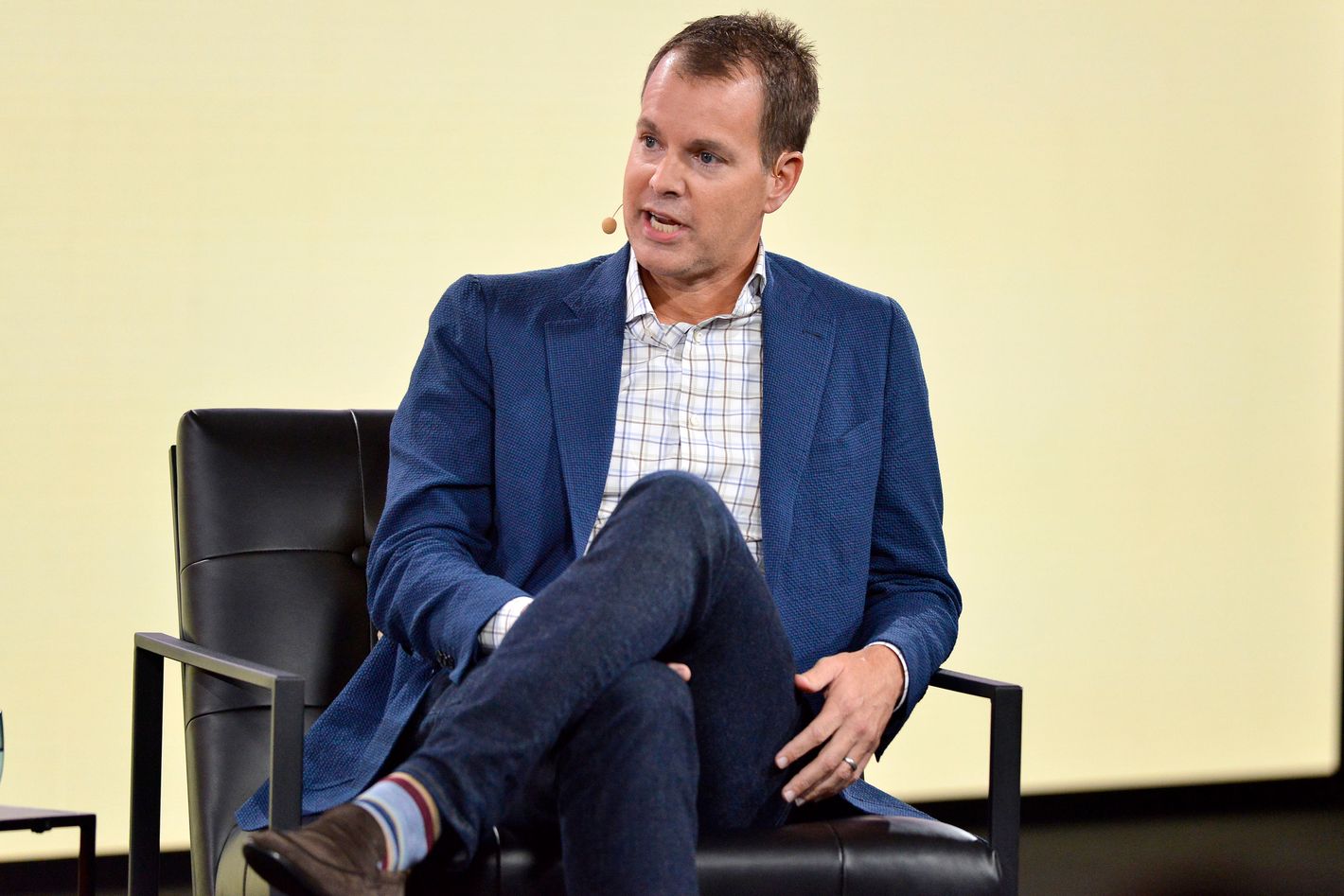 | ![]() | | HBO's Casey Bloys. Photo: Jerod Harris/Vox Media | | | | Direct messages have so many purposes! Returning someone's wallet, getting a little horny, fighting over political opinions, etc. But now there's a new option for TV critics — hearing opinions about their opinions from HBO CEO Casey Bloys. On November 1, it was revealed that the TV exec had gotten his underlings to tweet at TV critics during the pandemic when they would criticize HBO shows. Today, Bloys apologized onstage at the 2024 HBO slate presentation (attended by those very TV critics), and revealed how he would respond to them moving forward. | | "I have progressed over the past couple of years to using DMs," Bloys told the critics. "So now when I take issue with something in a review or take issue with something I see, I've DMed many of you. And many of you are gracious enough to engage with me in a back-and-forth. And I think that is a probably much healthier way to go about this." We at Vulture welcome all Bloys DMs, specifically if he's going to share his plans on how to get Myha'la the Emmy she so richly deserves for Industry. | | When the news broke, the whole world (fine, a select group of entertainment journalists and media nerds) turned their eyes to one person: Esteemed Vulture TV critic and potential Casey Bloys victim Kathryn VanArendonk. (Bloys plotted some undercover tweets directed at her but ultimately opted not to send them. This guy was not so fortunate.) Luckily, colleague Choire Sicha was able to score an exclusive interview with VanArendonk in New York's Dinner Party newsletter (which you can subscribe to here). Here's what she had to say. | | CHOIRE: Kathryn, am I reading this correctly that Casey Bloys decided that someone needed to start secretly tweeting at you to undermine your opinions online because you were mildly disparaging of the terrible HBO show Perry Mason? | | KATHRYN: According to a piece in Rolling Stone, that appears to be accurate! Except that I do want to be very clear that season two of Perry Mason was great and I wish HBO had not canceled it. | | Wow, I appreciate your honesty, and I'm happy for Matthew Rhys. Does this tactic, coming from the now-august streamer, the place that essentially invented prestige television, strike you as … hilariously childish and petty? | | Yes? It would be hypocritical of me to say that I don't understand why the people who make television shows would want to post extensively about those television shows. I am in this story entirely because I obviously cannot stop myself from posting about TV. I can only imagine that if I had invested a lot of time and money in those shows, I would also want to snap at critics who I felt were not appreciating them enough. But Bloys and the rest of HBO seems to have been aware that doing it under their own names would look unprofessional, would make critics even more combative, and … yeah, it'd look really petty. And thin-skinned! So they opted for the tried-and-true method of using sock puppets. | | You've been online a long time. Does this rock your world to know that some people online may not be operating honestly or in good faith? | | I am shocked, shocked, to discover that Twitter is populated by such dishonest nonsense! | | Maybe you'll actually leave the venal platform formerly known as Twitter! But finally, is there anything we can do to support the victims of this truly hilarious campaign? Are the TV critics okay? | | Thank you so much for your kind thoughts at this challenging time. Sadly, TV critics have always been a little too convinced of our potential influence, and I fear this will only embolden us. | | It wasn't at all surprising, but it's still a pretty big deal: Disney on Wednesday said it's planning to write a check for at least $8.6 billion to rival media giant Comcast in order to buy out that company's silent ownership stake in Hulu. | | While Disney has had full operational control of Hulu since 2019, Comcast — the parent of NBCUniversal and thus Peacock — never gave up its one-third stake in the pioneering streamer. Instead, the two sides agreed to wait five years and see where things stood in the streaming industry circa 2024, and then figure out what to do. While there was some speculation last year that maybe Disney would try to abandon Hulu completely or sell its two-thirds control to Comcast, within the last few months, execs from both companies had made it clear things were going to end up with Hulu being folded fully into the Mouse House. Yesterday's press release simply makes it all official. | | But while Disney says it will fork over that $8.6 billion by December 1, there's still some finagling to be done before Comcast gives up its joint custody agreement for Hulu. Remember how we said Disney would pay at least $8.6 billion for Hulu? That's because that figure represents the minimum price for the streamer Comcast and Disney set back in 2019, give or take a few hundred million. Disney could well end up paying even more once appraisers for both companies determine what Comcast's stake in Hulu was worth as of the end of September, and then, if necessary, a third-party arbitrator settles on a final price if the two appraisals are far apart. Disney said it expects the whole process should be done by the end of next year. Until then, nothing really changes — except that, at some point soon, Disney is expected to begin letting customers who subscribe to one of the Disney bundles access Hulu programming in Disney+. | | Longer-term, however, I expect there will still be lots of guessing about Disney's ultimate plan for Hulu. It's obvious that the company very much wants consumers to view Hulu and Disney+ as matching accessories that work best when paired together. It's been pushing its so-called Disney Bundle hard for a couple of years, and in the wake of Hulu's big price hike it just rolled out a skinny bundle — called Disney Duo — that lets consumers stream both platforms for $10 per month (with ads). That's just $2 more than the cost of either Hulu or Disney+ a la carte, making it sort of a no-brainer for all but the most price-sensitive consumers. What's more, Disney has said it plans to offer a "one-app experience" in which Disney+ bundle subscribers will be able to watch Hulu content by clicking on a tile in the D+ app, essentially turning the two platforms into one, even if they continue to co-exist separately. | | The real question is whether this single app plan is actually a short-term solution, the equivalent of training wheels to get American audiences used to the idea of The Bear co-existing in the same app as Winnie the Pooh. After all, outside of this country, Hulu content is already folded into D+, just minus the Hulu branding. I don't think there's a need to force the matter, since there are probably a few million people out there who really do care about saving a few dollars or simply have zero use for D+ programming and don't like the idea of being forced to convert. Plus, Disney has a moderately successful live TV business tied to Hulu, and while it's surely technologically possible to integrate such functionality into D+, it's not an easy lift. | | Then again, companies like Disney are now in major penny-pinching mode, and maintaining a separate app and ecosystem for Hulu is not without costs. Disney reports its quarterly earnings next week, and it seems a safe bet analysts will hit up CEO Bob Iger for answers. | | Sign up to receive Vulture's 10x10 crossword every weekday. | | | |







No comments:
Post a Comment
Keep a civil tongue.