Nvidia went hard on January - and on us poor PC hardware reviewers, too - by releasing three new graphics cards in the space of three weeks. Okay, so they're not necessarily completely new, but the RTX 40-series Super GPUs give the Ada graphics card generation a worthwhile shot in the arm, and in one particular case a necessary rehabilitation.
The RTX 4070 Super launched first, followed by the card with the most stupid name Nvidia has ever picked, the RTX 4070 Ti Super, and finally the RTX 4080 Super. And in contrast to when the green team first launched the RTX 40-series, it's either offering more performance for the same money or a significant price cut. So, what's not to like?
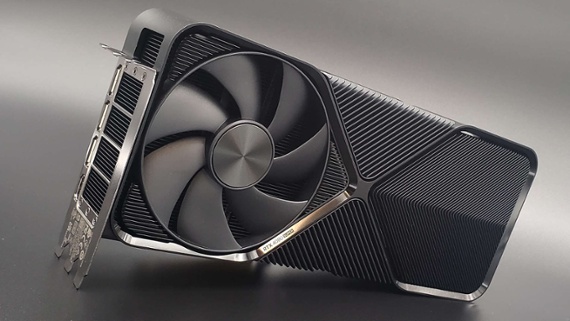
The RTX 4080 Super is the most straightforward of all the newly refreshed Ada-based graphics cards because, y'know, it's actually just a cheaper RTX 4080. Sure, the GPU at its heart has a few more shaders, but we're talking about negligible performance gains that can almost be waved away as being within normal realms of benchmark variance.
It is, however, dropping at a significantly lower cost than its RTX 4080 forebear, and a $200 price cut for the same essential level of gaming performance can only be a good thing. Though that does have to be taken with a certain level of necessary cynicism. I would argue the original card's $1,200 sticker price bordered on foolhardy greediness on the part of the green team, and that takes some of the shine off.
It does, however, now mean the RTX 4080 makes more sense within its position in the Ada tech tree. With the $1,600 RTX 4090 now placed well above it—both in terms of specs, overall performance, and finally price—there is less of a chance of that top-end card cannibalising sales of this second-tier GPU.
After a year of reportedly poor RTX 4080 sales—and worse press around its launch and pricing—the RTX 4080 Super does feel like a pretty successful relaunch. It's got a pretty new shroud, as good an AD103 GPU as it could jam in there, and the same great performance but for a lower price.
The mid-life RTX 4070 Ti Super refresh addresses the concerns we had when the initial line-up went on sale. With the RTX 4070 Ti Super, any worries over weak memory specifications are put to rest. It's the RTX 4070 Ti we really wanted, and it would have most likely ended up as our pick of the initial generation assuming it had still launched at $799.
At just over half the price of the formerly mighty RTX 3090, while handily beating it, the RTX 4070 Ti Super is the perfect advertisement for an intergenerational performance improvement. If it beats out the RTX 3090, just imagine the kind of upgrade it will deliver for owners of popular cards like the GTX 1070 and RTX 2070. Add to that the benefits of DLSS 3 and Frame Generation and gamers looking for an upgrade that's a big step above the likes of the RTX 4060 Ti will be very happy.
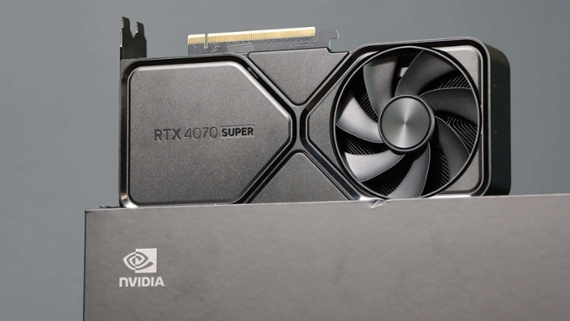
The RTX 4070 Super is a smartly respecced graphics card, one that lays the foundation for a very welcome refresh of Nvidia's Ada lineup. With this first Super card, and the ones that follow it, the RTX 40-series is finally starting to resemble the GPU generation we'd hoped it would be.
But where the RTX 4070 Super is eating into the performance lead of the soon-to-be-dead RTX 4070 Ti, there are still another two graphics cards that are causing it problems; one from AMD and the erstwhile Nvidia mid-ranger it should have been entirely replacing. While the RTX 4070 Ti and RTX 4080 are being killed off by their Super replacements, the RTX 4070 remains, and even gets a price cut down to an initial $549.
Lenovo's handheld PC is as powerful as they come and boasts a luscious, big screen. The detachable controllers are really sweet and one can even double as a mouse, albeit a very basic one. It is huge, though, so not the most portable of devices and games with fancy graphics will struggle with native resolution.
The Yumi is a bit of a classic when it comes to gaming PC deals, as it's always there or thereabouts. At the moment this is the cheapest RTX 4060-based PC we've found, and comes with a supporting spec that is absolutely solid, even if it's not the latest and greatest. The combo of Alder Lake Core i5 and DDR4 memory means you still get the capacity, and a healthy core count, but without the expense of the very latest hybrid Intel chips or pricier DDR5 memory. And gaming performance will vary very little.
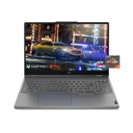
We've become big fans of Lenovo laptops here at PC Gamer this generation, and this particular budget machine is ticking a lot of boxes. For an RTX 4060 laptop it has to be under $1,000, and you also get a better than average screen, though I'm a little confused over Walmart's listing of it as 2160 x 1350 when Lenovo itself claims a 1440p panel. That 512GB SSD, however, is disappointing, even in a budget laptop, but is a cheap and easy issue to fix if it becomes annoying down the line.






No comments:
Post a Comment
Keep a civil tongue.