Also: Mass evacuations in Russia due to worst flooding in decades
͏ ͏ ͏ ͏ ͏ ͏ ͏ ͏ ͏ ͏ ͏ ͏ ͏ ͏ ͏ ͏ ͏ ͏ ͏ ͏ ͏ ͏ ͏ ͏ ͏ ͏ ͏ ͏ ͏ ͏ ͏ ͏ ͏ ͏ ͏ ͏ ͏ ͏ ͏ ͏ ͏ ͏ ͏ ͏ ͏ ͏ ͏ ͏ ͏ ͏ ͏ ͏ ͏ ͏ ͏ ͏ ͏ ͏ ͏ ͏ ͏ ͏ ͏ ͏ ͏ ͏ ͏ ͏ ͏ ͏ ͏ ͏ ͏ ͏ ͏ ͏ ͏ ͏ ͏ ͏ ͏ ͏ ͏ ͏ ͏ ͏ ͏ ͏ ͏ ͏ ͏ ͏ ͏ ͏ ͏ ͏ ͏ ͏ ͏ ͏
Welcome to The Independent's weekly round-up on the climate crisis, and the solutions to tackle it. Thanks for reading - LB |
|
|
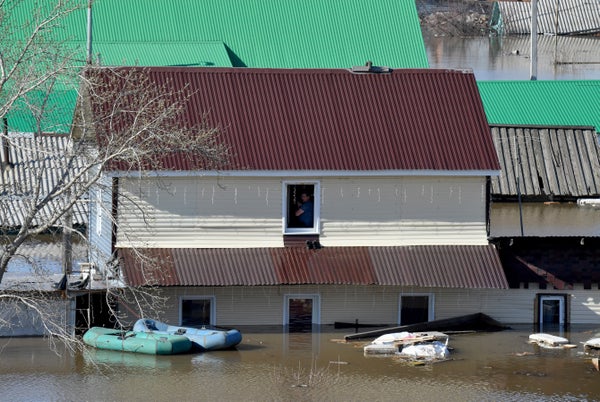
A man is seen in the window of a house in a flooded residential area of the city of Orenburg on April 13, 2024. Russian emergency services aid they had evacuated thousands of people from the Orenburg region in the south of the Urals as flood water continued to rise (Credit: Photo by OLGA MALTSEVA/AFP via Getty Images) |
|
|
The United Nations climate chief has warned that there is "two years to save the world" and called for a "quantum leap" in finance to help countries speed up plans to cut planet-cooking emissions.
Simon Stiell, United Nations executive climate secretary, acknowledged last week in his speech at London's Chatham House that he may sound "melodramatic".
"When I say we have two years to save the world, it begs the question – who exactly has two years to save the world?" he said. "The answer is every person on this planet."
Stiell went on to explain why the months between now and 2026 are so critical. The world has experienced "record-shattering heat and massive damage to economies", he said. Extreme weather events are increasing, and last year was the hottest in human history, a record that could be surpassed in 2024 due to all-time high emissions from burning fossil fuels.
To rein in more devastating climate impacts, the world has agreed to curb global temperature rise to 1.5C. Achieving this goal will mean cutting global emissions by 45 per cent in the next six years, and reaching net zero by 2050.
But the world is far off course, Stiell warned, particularly the highest-polluting G20 countries responsible for the bulk of emissions.
"As of today, national climate plans – called Nationally Determined Contributions or NDCs – in aggregate will barely cut emissions at all by 2030," the UN climate chief said."We still have a chance to make greenhouse gas emissions tumble, with a new generation of national climate plans. But we need these stronger plans, now."
To turn these plans into reality requires a "quantum leap" in climate finance, which Stiell declared "entirely achievable". This funding needs to be driven by the world's richest countries, and support developing countries that are facing disproportionate climate catastrophes, he added. Much of southern Africa is spiralling into extreme hunger after droughts wiped out essential crops this year.
"Every day, finance ministers, CEOs, investors, and development bankers direct trillions of dollars. It's time to shift those dollars from the energy and infrastructure of the past, towards that of a cleaner, more resilient future," he said."And to ensure that the poorest and most vulnerable countries benefit."
Stiell then turned to upcoming events intended to tackle this suite of challenges by improving money flows. Later this month, at meetings of the World Bank and other global financial institutions, Barbados prime minister Mia Mottley and Kenyan president William Ruto will lead a push for major reform in how money is loaned to poorer countries, particularly concerning climate adaptation and disaster recovery projects.
The UN climate chief also pointed to the need for new sources of international climate finance, and providing debt relief for the most vulnerable countries.
"Experts have shown that if we do all of this together, we can meet developing country needs, mobilising hundreds of billions of dollars," he said. He added that what the world cannot afford is a "talkfest".
Stiell closed by underlining that the climate crisis goes beyond world leaders, hinting at the wave of elections around the world this year. Roughly half the planet is going to the polls in 2024 including the US, UK, India, Pakistan, Russia, Mexico, Indonesia and the European Union.
A recent Gallup survey of 130,000 people in 125 countries found that 89 per cent want stronger climate action by governments.
"The only surefire way to get climate at the top of the cabinet agenda is if enough people raise their voices," he said. "So my final message today is for ordinary people everywhere. Every voice matters. Yours have never been more important."
More climate news this week from The Independent
US wildfires destroy 1.7m acres of land in first three months of 2024 – half of last year's total
Mass evacuations in Russia and Kazakhstan during worst flooding in decades
Greece offers more than 25,000 'free' holidays to Brits who fled 2023 wildfires
First limits on toxic 'forever chemicals' in tap water set by Biden administration
Living near green spaces 'linked with fewer emotional issues in preschoolers'
Water quality could cancel Paris Olympic event despite billion euro clean-up
|
|
|
This isn't a Jurassic Park-style de-extinction project, but it will have a major impacts. |
|
|
Life in the climate crisis |
|
|
Enjoy 6 months of Independent Premium for just £66 £6 |
Get unlimited Premium news analysis, advert-free reading, a digital newspaper every morning, and more |
|
|
|
|
|
| Join the conversation or follow us |
|
|
Download the free Independent app |
|
|
Please do not reply directly to this email You are currently registered to receive The Independent's climate newsletter. To unsubscribe from The Independent's climate newsletter, or to manage your email preferences please click here. This e-mail was sent by Independent Digital News and Media Ltd, 14-18 Finsbury Square, London EC2A 1AH. Registered in England and Wales with company number 07320345
Read our privacy notice and cookie policy
|
|
| |




No comments:
Post a Comment
Keep a civil tongue.