Sponsor

2025/07/01

Summer Safety Zone: Roofing Fall Protection | Work Zone Safety | Heat Injury Prevention

Safety Zone Header

Summer 2025

Roofer Safety

Elevate Safety: Your Guide to Safe Roofing Procedures

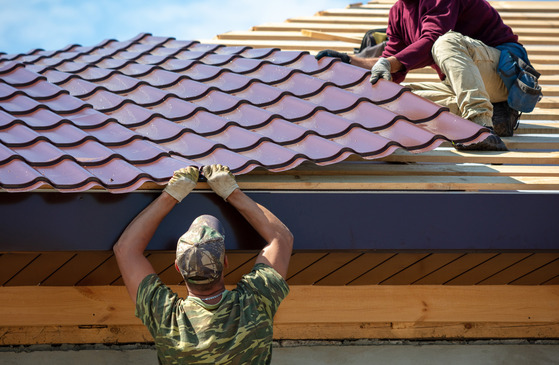
The roofing industry has a high fatality rate compared to other industries, especially in residential roofing. The lack of proper safety equipment and fall protection contribute to these fatalities. In construction, it is required that employers protect their employees from falls by the use of guardrails, safety nets, or personal fall arrest systems from distances of 6 feet or more.

Roofing Work on Low-Slope Roofs

29 CFR 1926.501(b)(10): A low-slope roof has a slope less than or equal to 4 in 12 (where the roof rises 4 inches for every 12 inches across). When engaged in roofing work on a low-slope roof that has one or more unprotected sides or edges 6 feet or more above lower levels, workers must be protected from falling by either:

  • Guardrail systems
  • Safety net systems
  • Personal fall arrest systems
  • A combination of conventional fall protection systems and warning line systems
  • A warning line system and a safety monitoring system

When engaged in roofing work on low-slope roofs 50 feet or less in width, the use of a safety monitoring system without a warning line system is permitted.

Working on Steep Roofs

29 CFR 1926.501(b)(11): A steep roof has a slope greater than 4 in 12 (where the roof rises 4 inches for every 12 inches across). When working on a steep roof that has one or more unprotected side or edge 6 feet or more above lower levels, each worker must be protected by either:

  • Guardrail systems with toeboards
  • Safety net systems
  • Personal fall arrest systems

It is also the responsibility of the employer to train the workers on the use of fall protection systems. It is always important to stress the importance of safety while working on roofs and the use of appropriate fall protection for workers.

Reference Tools

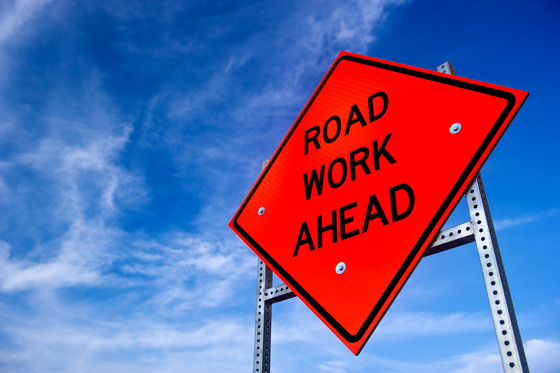
Road Work Ahead Sign

Navigating Work Zones Safely

Summer is prime time for road work, and this is a historically busy road construction season with the Improve I-70 Project, bridge repairs, road resurfacing, and mowing happening all across the state. Although these can be a headache for drivers, remember they are repairing critical infrastructure to make roads safer for everyone to travel on. These workers also have loved ones who want them to come home safely at the end of the day.

Last year, distracted driving contributed to 356 work zone crashes and five fatalities in Missouri. Remember, it is now against the law to physically hold or support a cell phone while driving. Slow down and move over for road/shoulder crews and law enforcement. Plan ahead by checking the Traveler Information Map, and most importantly try to be patient when traveling through a work zone.

MoDOT reminds all drivers:

  • Buckle Up! Every trip, every time – safety belts save lives.
  • Put Your Phone Down! Dedicate your full attention to the roadway.
  • Follow Signs! They'll guide you through work zones safely.
  • Expect the Unexpected! Watch for flaggers, workers and equipment.
  • Pay Attention! Turn the radio down and don't use your cell phone.
  • Be Patient! Remember workers are improving the road for future travels.
  • Don't Speed! Follow posted limits and adjust for weather conditions.
  • Don't Drink and Drive! Impairment of any kind is unacceptable.
  • Be Nice! Merge as directed, don't tailgate and don't change lanes in a work zone.

Heat Safety

Beat the Heat: How to Prevent, Treat Heat-Related Injuries

With weather experts forecasting persistent high heat this summer, heat injury and illness prevention is even more critical. Excessive heat not only causes heat-related illnesses such as heat exhaustion, heat stroke and burns, but can also increase the risk of other injuries such as falls and cuts.

OSHA has proposed a heat injury and illness prevention rule which would require employers to create a heat injury and illness prevention plan and take necessary steps to effectively protect employees from both indoor and outdoor hazardous heat. Until the new rule goes into effect, employers must still protect workers from recognized serious hazards under the General Duty Clause (OSHA also has a National Emphasis Program on heat). Employers can start preparing now not only to ensure they are in compliance with the proposed rule but also to protect their employees from injuries and illnesses.

The National Weather Service (NWS) uses a heat index (HI) to classify environmental heat into four categories:

  • Caution (80°F – 90°F HI)
  • Extreme Caution (91°F – 103°F HI)
  • Danger (103°F – 124°F HI)
  • Extreme Danger (126°F or higher HI)

When the heat index is 80°F or higher, serious occupational heat-related illnesses and injuries become more frequent. This is especially true for workplaces in which unacclimatized workers are performing strenuous work (e.g., intense arm and back/lifting work, carrying, shoveling, manual sawing, pushing/pulling heavy loads, or walking at a fast pace), and:

  • No easy access to cool water
  • No easy access to cool/shaded areas
  • Working in direct sunlight or areas where other radiant heat sources are present

The Heath Safety Tool mobile app is a tool that employers can use to calculate the heat index for their worksite and receive reminders about the protective measures that should be taken, such as:

  • Drinking enough fluids
  • Scheduling rest breaks
  • Planning for and knowing what to do in an emergency
  • Adjusting work operations
  • Gradually building up the workload for new workers
  • Training on heat illness signs and symptoms
  • Monitoring for signs and symptoms of heat-related illness

First Aid for heat related illness:

  • Take the affected worker to a cooler area (e.g., shade or air conditioning).
  • Cool the worker immediately. Use active cooling techniques such as:
    • Immerse the worker in cold water or an ice bath. Create the ice bath by placing all of the available ice into a large container with water. This is the best method to cool workers rapidly in an emergency.
    • Remove outer layers of clothing, especially heavy protective clothing.
    • Place ice or cold wet towels on the head, neck, torso, armpits, and groin.
    • Use fans to circulate air around the worker.
  • Never leave a worker with heat-related illness alone. The illness can rapidly become worse. Stay with the worker.
  • When in doubt, call 911!

Confusion, slurred speech, or unconsciousness are signs of heat stroke. When these types of symptoms are present, call 911 immediately and cool the worker with ice or cold water until help arrives.

Did You Know? MO Injury Data

Safe At Work Logo

The Missouri Department of Labor provides workers' compensation injury and fatality statistics on the Safe at Work page. These numbers come from what is reported to the Missouri Division of Workers' Compensation as required by law. The data is updated monthly and includes information that can be used by employers and safety professionals to prevent future workplace accidents.

MWSP

Sign-Up for Workers' Safety Services

The Missouri Workers' Safety Program helps employers improve workplace safety and reduce their workers' compensation insurance costs. The program ensures that Missouri businesses have access to individualized safety and health services. There are three ways for an employer to receive service:

  1. Your workers' compensation insurance carrier must provide you with individualized safety assistance at your request. Ask your carrier about these services today. If you feel that your carrier is not providing you with adequate service, contact the Missouri Workers' Safety Program.
  2. The Missouri Workers' Safety Program maintains a list of certified safety consultants and engineers that can offer you independent services.
  3. The Missouri Workers' Safety Program offers free safety and health services to Missouri businesses. Contact us today for additional information by completing a Request for Services.

UPCOMING EVENTS/LABOR NEWS

Aug. 11-17: OSHA Safe+Sound Week
Management leadership, worker participation, and a systematic approach to finding and fixing hazards are key to having a good safety and health program. Safe+Sound Week is a campaign to encourage every workplace to have a safety and health program. This year's campaign will focus on emergency preparedness. To participate in this year's Safe+Sound week visit: Safe + Sound Campaign | Occupational Safety and Health Administration

Aug. 19-20: Missouri Division of Workers' Compensation Educational Seminar
The 30th Annual Missouri Division of Workers' Compensation Educational Seminar will be held August 19-20, 2025, at the Tan-Tar-A Conference Center in the Lake of the Ozarks. For details visit: DWC Educational Seminar | Missouri Department of Labor and Industrial Relations

Aug. 28: Safety and Health Program Management Training
This is a free class offered by the Missouri On-Site Safety and Health Consultation Program. Attendees will learn how to develop a fully functioning safety and health management program. Space is limited, so reserve your seat today by calling 573-522-7233. To find out more, view this Safety and Health Management Systems info sheet.

Contributing authors:

Jennifer Hyleck, GSP – Missouri Workers' Safety Program

Amanda Kremer, CSP – Missouri Workers' Safety Program

Safety Zone Subscribe Button

This email was sent to ignoble.experiment@arconati.us using GovDelivery Communications Cloud on behalf of: Missouri Department of Labor · P.O. Box 59 · Jefferson City, MO 65104-0059 · 1-800-320-2519 GovDelivery logo

No comments:

Post a Comment

Keep a civil tongue.

Label Cloud

Technology (1464) News (793) Military (646) Microsoft (542) Business (487) Software (394) Developer (382) Music (360) Books (357) Audio (316) Government (308) Security (300) Love (262) Apple (242) Storage (236) Dungeons and Dragons (228) Funny (209) Google (194) Cooking (187) Yahoo (186) Mobile (179) Adobe (177) Wishlist (159) AMD (155) Education (151) Drugs (145) Astrology (139) Local (137) Art (134) Investing (127) Shopping (124) Hardware (120) Movies (119) Sports (109) Neatorama (94) Blogger (93) Christian (67) Mozilla (61) Dictionary (59) Science (59) Entertainment (50) Jewelry (50) Pharmacy (50) Weather (48) Video Games (44) Television (36) VoIP (25) meta (23) Holidays (14)

Popular Posts (Last 7 Days)