 Editor's Note: Tech legend Jeff Brown picked Nvidia in 2016 before it jumped 23,000% higher. Today, he’s recommending another explosive opportunity. While everyone has been focusing on Nvidia and other popular AI stocks, he believes a little-known company with a virtual monopoly in a key “AI metal” could hold the key to the $100 trillion AI boom. Click here for details or read more below.
Dear Reader, As you can see in the picture below… I recently traveled to a ghost town in the middle of an American desert… And what I found there will blow your mind. Click here to see the details, because this could be the biggest technology story of this decade. In short, I believe what I’m holding in my hand below… Is the key to the $100 trillion AI boom… And only one company here in the U.S. can mine this obscure metal. Click here, and I’ll give you all the details on this virtual monopoly. Regards, Jeff Brown
Founder & CEO, Brownstone Research
Just For You Why Platinum May Catch Up to Gold in 2026—And How to Get ExposureSubmitted by Jeffrey Neal Johnson. Article Published: 12/30/2025. 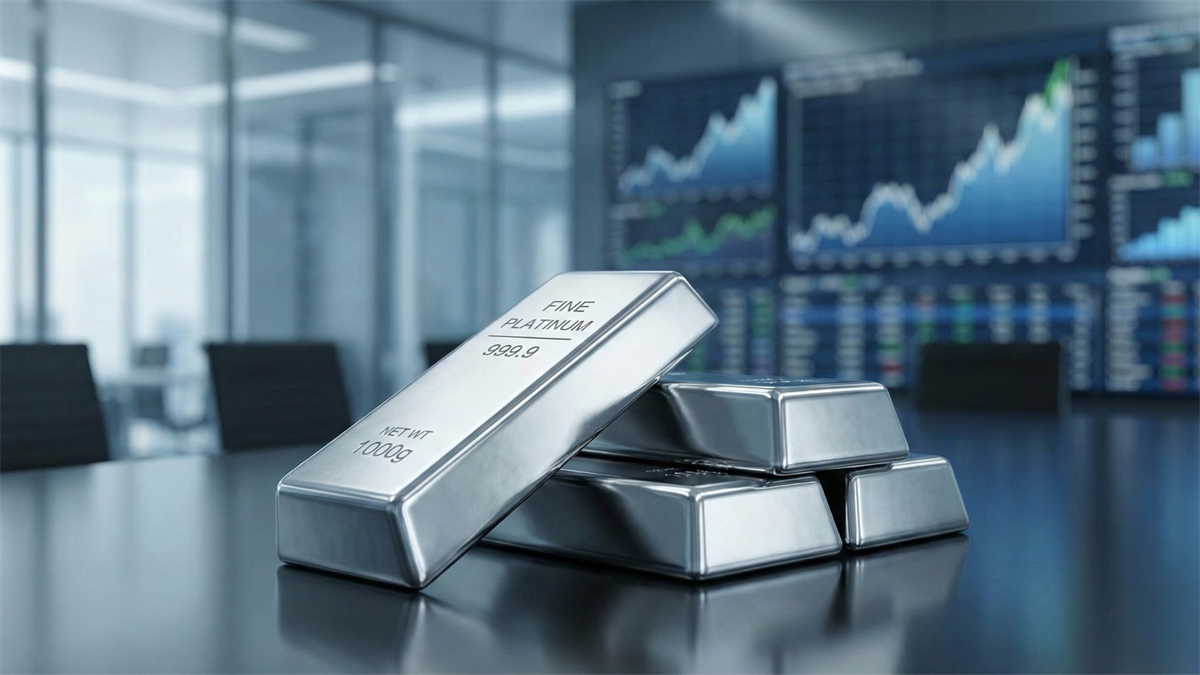
What You Need to Know- Platinum remains historically undervalued relative to gold and offers a compelling value proposition for investors seeking a catch-up trade in precious metals.
- A persistent structural supply deficit, combined with expanding demand from the green hydrogen economy, is putting upward pressure on platinum prices.
- The abrdn Physical Platinum Shares ETF provides investors with a liquid, transparent way to gain exposure to physical platinum without the logistical hurdles.
As 2025 draws to a close, the financial world is fixated on gold, and rightly so. The yellow metal has shattered nominal records, driven by geopolitical instability and central bank buying. Yet while gold dominates the headlines, a quieter — and potentially more lucrative — opportunity has emerged in the precious metals complex. Platinum, the industrial workhorse often overshadowed by its monetary cousin, is staging a breakout. Trading near $2,100 per ounce, platinum rallied considerably in the fourth quarter. Despite those gains, it remains historically inexpensive relative to gold. For investors, that disconnect presents a classic value proposition. While gold often functions as a panic hedge, platinum is driven by physical scarcity and a global pivot in the industrial sector. Looking toward 2026, the data suggest platinum — sometimes called the rich man's gold — is poised for a major catch-up trade. The Valuation Gap: Why Platinum Is Technically CheapA tiny government task force just wrapped up 20 years of work.
And buried in their federal filings, I found something remarkable:
American citizens now have a legal birthright claim to something previously inaccessible.
Under U.S. law, you can stake your claim right now. The name and ticker are available here now >>> To gauge platinum's upside, investors should consider the Gold-to-Platinum ratio, which shows how many ounces of platinum are required to buy a single ounce of gold. Historically, that relationship favored platinum. Prior to 2011, platinum frequently traded at a premium to gold — often around a 1.2 times level (roughly a 20% premium). Geology supported that premium: platinum is roughly 30 times rarer than gold in the Earth's crust. Over the past decade, however, market dynamics reversed that relationship. As of December 2025, the ratio sits at about 1.4. In other words, gold is about 1.4 times more expensive than platinum. Although the spread has narrowed from recent extremes, it remains an anomaly compared with the long-term historical average near parity (1:1). The investment thesis for platinum is largely one of mean reversion. Markets seldom tolerate persistent price inefficiencies. If the ratio normalizes back toward 1:1, platinum prices would need to rise substantially relative to gold even if gold itself stays flat. That mathematical leverage provides a margin of safety for value-oriented investors that is largely absent in an already record-high gold market. The Supply Floor: Analyzing the Structural DeficitValuation metrics are persuasive, but physical scarcity provides the real price floor. Platinum's fundamentals point to a structural deficit. According to data from the World Platinum Investment Council (WPIC), 2025 was the third consecutive year in which global demand exceeded supply, with a shortfall estimated between 850,000 and 966,000 ounces. Why don't miners simply ramp production when prices rise? The answer lies in the geography and economics of platinum mining. About 70% of global supply originates in South Africa, where producers face multiple constraints: - Energy instability: The national grid (Eskom) has struggled with reliability, forcing mines to limit power usage. Deep-level mining requires a steady electricity supply to operate efficiently.
- The basket-price problem: Platinum is usually recovered alongside palladium and rhodium. Weak prices for those companion metals can make mining uneconomic even when platinum prices are elevated, slowing supply responses.
Secondary supply from recycling has also disappointed. High interest rates and economic uncertainty have encouraged consumers to keep vehicles longer, delaying the return of scrap platinum from end-of-life catalytic converters. From Industry to Vaults: Who Is Buying Platinum?With constrained supply, demand is expanding on two fronts: the emerging green economy and traditional physical investment. The most compelling narrative for 2026 is the hydrogen economy. Platinum is a critical catalyst in two key technologies underpinning hydrogen's growth: - PEM electrolyzers: Devices that use electricity to split water into oxygen and green hydrogen.
- Fuel cells: Systems that convert hydrogen into electricity to power heavy-duty vehicles and provide flexible power for data centers or the grid, all without direct emissions.
For years much of this demand was theoretical. In 2026, however, large-scale projects in Europe and the Middle East are moving from planning into commercial operation, turning projected needs into actual procurement and physical purchases. The China FactorBeyond industrial demand, investment appetite is rising. Investment demand from Chinese buyers increased by nearly 47% in 2025, reflecting a shift in sentiment that treats platinum not just as an industrial input but increasingly as a store of value and a hedge against currency weakness. Executing the Trade: Understanding the VehicleFor most U.S. investors, buying physical bullion is inefficient because of dealer markups, shipping fees, and storage risks. The abrdn Physical Platinum Shares ETF (NYSEARCA: PPLT) provides a practical alternative. PPLT is structured as a grantor trust, which is a meaningful distinction from other ETF structures. Shares are backed by allocated physical platinum bars stored in secure vaults in London and Zurich, and the holdings are inspected twice annually to provide transparency that the metal exists. The fund is designed to track the spot price of platinum, minus the trust's expenses, which are currently 0.60% per year. PPLT is liquid, making it straightforward for investors to enter and exit positions. A Critical Note on TaxesInvestors should be aware of the tax treatment. Because PPLT holds physical metal, the IRS treats it as a collectible for tax purposes: - Short-term gains: Taxed at your ordinary income rate.
- Long-term gains (held >1 year): Taxed at a maximum rate of 28%, rather than the 15% or 20% treatment that typically applies to stock capital gains.
Why Platinum Belongs in Your PortfolioThe setup for platinum as we enter 2026 looks favorable. A multi-year structural deficit is unlikely to be closed quickly given infrastructure and economic constraints on mining. At the same time, the green-energy transition is creating a new, growing source of physical demand just as investment flows begin catching up with gold. Risks remain — notably a global recession that could reduce industrial activity — but the mix of historical undervaluation and real scarcity creates an attractive risk-reward profile. For investors who feel they missed the move in gold, the abrdn Physical Platinum Shares ETF offers a practical way to participate in what could be the next leg of the precious-metals bull market.
| 




No comments:
Post a Comment
Keep a civil tongue.