Saturday, January 31, 2026 |
|
|
January's most exhausting food trend isn't a diet, a supplement or a new ingredient. It's the creeping sense that you have to be an investigator every time you go to the supermarket: label-scanning, ingredient-googling, second-guessing whether your yoghurt is secretly out to get you. Which is why the most useful take on ultra-processed foods this week is also the least dramatic: not all UPFs are bad, and the point isn't purity, it's better defaults. We speak to Dr Federica Amati about swapping the highest-risk stuff (the "health" bars, the low-fat, flavoured tubs, the jarred sauces) for lower-risk staples you'll actually keep buying. "Health isn't won or lost in a single meal," she says. In other words, you don't need a new personality. You just need a better breakfast.
Of course, breakfast is only one part of the modern problem, because sometimes the issue isn't what's in the trolley but that you're too knackered to decide what to eat in the first place. Enter Just Eat's new AI voice assistant, launched this week as a cure for "menu anxiety". The pitch is simple: talk vaguely and let the algorithm translate your hunger into dinner. But there's a slightly bleak logic here: ultra-processed food exists to remove effort from cooking, delivery apps remove effort from accessing it, and now AI removes effort from choosing it. If takeaway was already the shortcut, what does it say about us that we now need a shortcut to the shortcut?
Which might explain why gym culture still clings to its own blunt certainty: meat equals protein equals strength, end of. Except it isn't. Former semi-pro footballer Jeffrey Boadi once thought a plant-based athlete would "wilt away". Now he's heavier, stronger and entirely plant-based – and far less dogmatic than the discourse around him. His most interesting point, though, isn't about tofu or tempeh; it's about recovery. That's where fibre, long ignored by gym culture, becomes quietly powerful. Not as a bodybuilding hack, but as a way to reduce inflammation, show up consistently and keep training without feeling like you've been hit by a bus.
If you want the midweek version of that philosophy – high impact, low faff – chef Ryan Riley's kimchi salmon with ginger greens is the kind of dinner that looks like effort without demanding any. And if you're currently in your high-protein era but refuse to eat like you're being punished, The Good Bite founder Niall Kirkland is preaching to your exact demographic. His thing is making fibre-and-protein goals feel achievable, not joyless, while treating plant variety like a game you can win over the week. The recipes back it up: firecracker beef loaded sweet potatoes (sticky, sweet, a little unhinged in the best way), crispy garlic salmon bites with bang bang sauce, and a creamy butter bean and lentil situation that proves "plant-based" can still mean deeply comforting and vaguely addictive.
| |
|
Menu anxiety? No problem – AI is here to choose your dinner for you |
|
|
As Just Eat rolls out an AI voice assistant to help users choose what to have for dinner, Hannah Twiggs asks what it means when we outsource not just cooking and ordering, but the decision itself – and whether convenience has finally gone too far
|
Cooking dinner used to be the hard part. Then came takeaways – the quiet admission that you couldn't be bothered to chop an onion or wash a pan – ordered from plastic menus at fluorescent-lit counters, handed over to harried parents and eaten out of foil containers. After that, takeaways came to you, summoned by an app and delivered straight to your door, without even having to speak to another human being. Now, even that final sliver of effort is being automated.
This week, Just Eat announced the launch of an AI voice assistant designed to help users decide what to order, framing it as a cure for "menu anxiety" and "choice overload". The pitch is simple: talk to the app, describe your cravings, however vague and rambling, and let the algorithm think for you.
Just Eat says this flexibility is the point: users can ask for anything from a "precise order for a Greggs sausage roll" to "a rambling stream of consciousness", with the assistant designed to "deliver accurate, meaningful answers".
In practice, when I tried it the experience felt less like a mind-reading concierge and more like educated guesswork. When I asked for "something healthy but filling", the assistant nudged me towards a familiar ecosystem of salad chains, juice bars and protein bowls. Later, when I said I was hungry but didn't really know what I fancied, it offered to narrow things down: something light, like a salad, or something more substantial, such as a vegan burger? I'm not vegan, and it had no way of knowing whether I was or not. But "vegan", here, seemed to function less as a dietary choice and more as shorthand for healthy. I chose the latter. The recommendation was Thunderbird Fried Chicken.
On one level, this outcome makes perfect sense. Food delivery apps are vast, noisy places, filled with thousands of options that all start to blur into one another when you're hungry and tired at seven-thirty on a Tuesday evening. Just Eat says its new assistant is designed to "cut through the noise" and make ordering "more intuitive than ever before". According to its chief technology officer, Mert Öztekin, "This custom-built conversational assistant represents a major step forward, making our service more intuitive and accessible. We are harnessing the power of AI to empower everyday convenience."
Read the full article here
|
|
|
| Best Valentine's Day supermarket meal deals, from M&S to Aldi |
|
|
Don't forget to complete your registration |
You haven't completed your registration with The Independent. It's free, quick, and helps support our journalism while tailoring your experience.
Register now to enjoy benefits including access to limited Premium articles, The Independent app, more than 20 newsletters and commenting on independent.co.uk.
Complete your registration today to unlock access.
|
|
|
| More tasty recipes inside |
Enjoy endless inspiration with recipes, interviews and more in your latest Indy/Eats food and drink magazine, one of your Independent Premium subscription benefits |
|
|
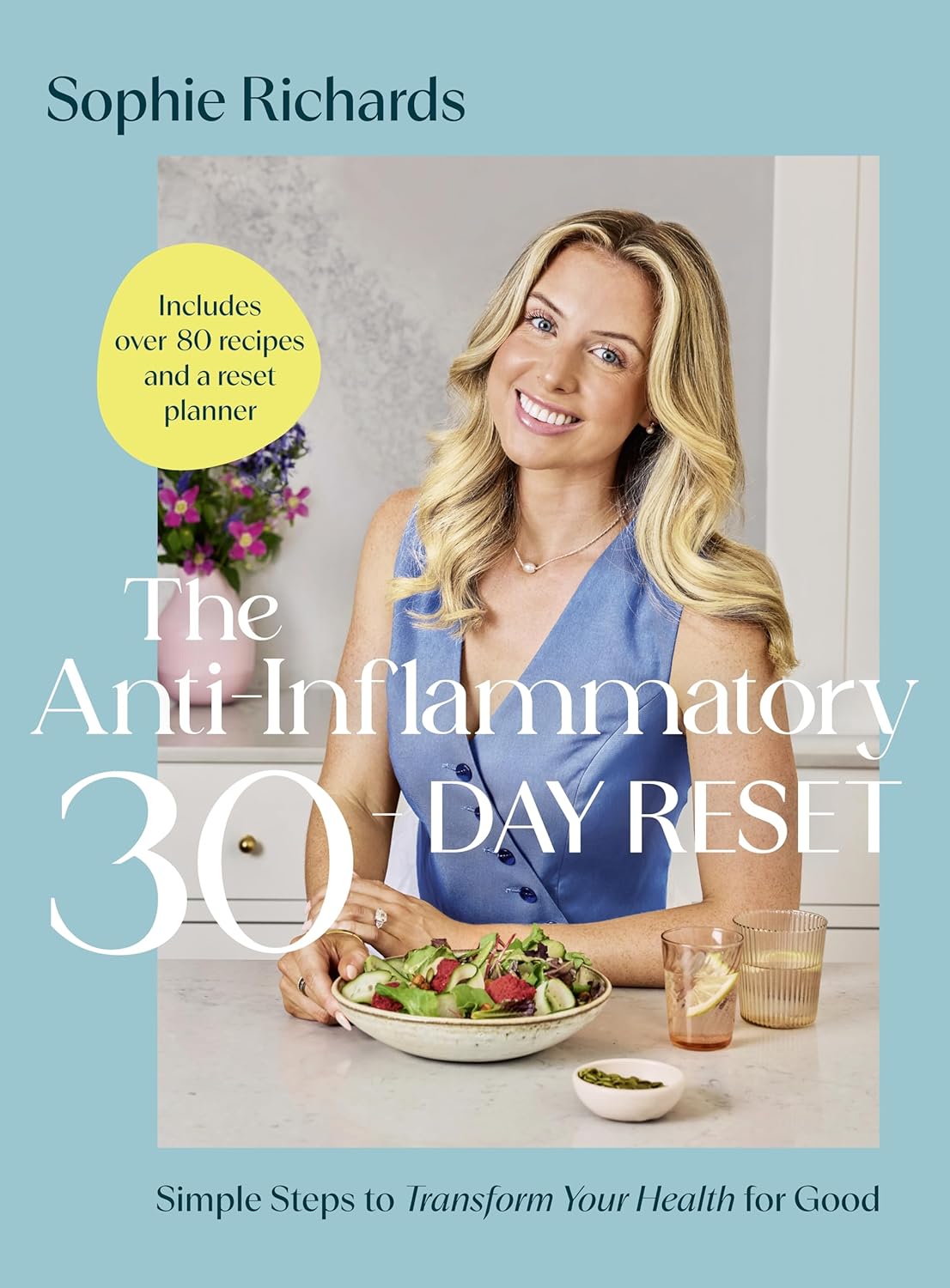
| Sophie Richards' Anti-Inflammatory 30-Day Reset is a practical, empowering guide rooted in her own journey from chronic pain to vitality. Blending science with real-life experience, it shows how simple diet tweaks and daily habits can calm inflammation, ease symptoms and boost wellbeing. With approachable advice and 80 feel-good recipes, this 30-day plan sets you up for lasting health without rigid rules.
|
|
|
Choosing The Independent as one of your preferred sources ensures that you'll see our coverage more prominently displayed in your searches. That way, you can be sure you're accessing the latest headlines from a trusted source. |
|
|
Join the conversation and follow us |
| | Please do not reply directly to this email You are currently registered to receive The Independent's IndyEats newsletter. To unsubscribe from The Independent's IndyEats newsletter, or to manage your email preferences please click here. This e-mail was sent by Independent Digital News and Media Ltd, 14-18 Finsbury Square, London EC2A 1AH. Registered in England and Wales with company number 07320345
Read our privacy policy and cookie policy
|
|
|
|









.png?quality=75&width=1368&crop=3%3A2%2Csmart&trim=85%2C0%2C85%2C0&auto=webp "Aldi")








No comments:
Post a Comment
Keep a civil tongue.