Thanks for signing up for DividendStocks.com! It's the daily newsletter built for dividend and income investors. Before we can begin sending your daily updates, there’s one quick step left. Please confirm your subscription using the link below so our emails reach your inbox. Click Here to Confirm Your Subscription to DividendStocks.com Here’s a small glimpse of what you’ll get access to: Dividend Stock Ideas — Each newsletter features dividend stocks with high yields, sustainable payouts, and strong growth potential. Ex-Dividend Stocks — Want to capture upcoming dividend payouts? Find out which stocks are going ex-dividend this week. Market News and Events — Stay in the loop on the latest developments impacting popular dividend names like AT&T, Exxon Mobil, IBM, Procter & Gamble, and Verizon. Bonus: As a thank-you for confirming, you’ll also receive a free PDF copy of Automatic Income, our popular guide to building wealth through dividend investing. Let’s get your dividend journey started! Discover Top Income-Generating Stocks Here See you in your inbox soon,
The DividendStocks.com Team P.S. Don’t miss out click here to verify your subscription and secure your daily dividend insights and your free investing guide!
Special Report Meta Compute: Inside Zuckerberg's Massive Data Center BetReported by Leo Miller. Publication Date: 1/15/2026. 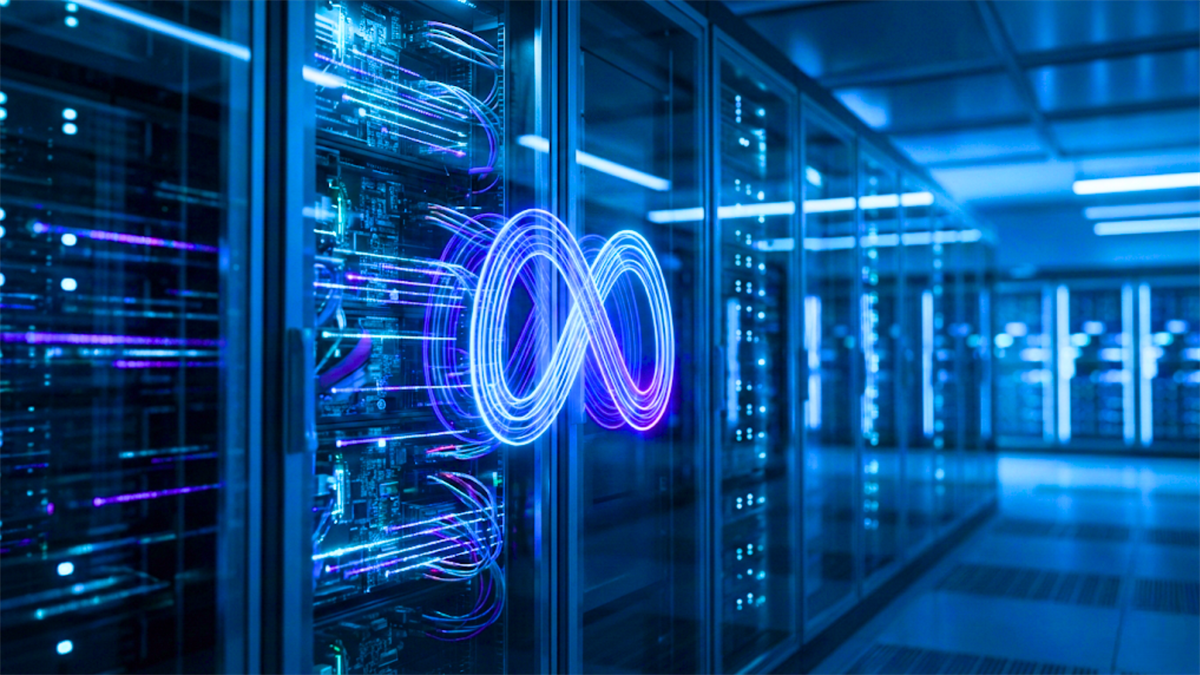
Key Takeaways - Meta’s new Meta Compute initiative highlights Zuckerberg’s commitment to large‑scale AI infrastructure and data center expansion.
- The strategy involves significantly growing Meta’s data center footprint—potentially with government collaboration—to support advanced AI workloads.
- Meta Compute reinforces Meta’s competitive AI positioning, offering practical advantages while presenting execution and investment risks.
Meta Platforms' (NASDAQ: META) CEO Mark Zuckerberg recently put the Magnificent Seven company back in the spotlight. He announced a new top-level initiative called Meta Compute. Elon Musk just declared war on the wireless giants with a $17 billion spectrum deal that gives SpaceX the rights to deliver direct-to-cell service nationwide — a move tech analyst Jeff Brown says could shape the backbone of the coming space economy and create fortunes on a scale not seen since the rise of NVIDIA. Click here to watch Jeff's urgent briefing The move sheds light on Meta’s long-term strategy and underscores the company's commitment to becoming a major force in artificial intelligence (AI). This initiative presents both opportunities and risks that could shape Meta’s trajectory in 2026 and beyond. Meta Compute Emphasizes Control, Potential Govt. Support Via social posts, Zuckerberg announced the Meta Compute initiative on Jan. 12. Meta Compute centers on the company’s plan to build "tens of gigawatts this decade, and hundreds of gigawatts or more over time." Those figures refer to the data center power capacity Meta aims to deploy. The industry commonly measures data center size by power; tens of gigawatts represent very large-scale deployment, with one gigawatt (GW) providing enough electricity to power roughly 750,000 homes. By expanding its data center footprint, Meta intends to secure independence, data sovereignty, and optionality for its AI efforts. Greater capacity gives the company more control over how it pays for, uses, and monetizes AI—an attractive strategy if widespread AI adoption is still in its early stages. Meta’s push into AI infrastructure aligns with its longer-term bets, including AI-enabled glasses. Zuckerberg has suggested these devices could one day eclipse smartphones as the "ideal form factor for AI." While that outcome is distant, supporting it would require massive AI infrastructure. Investments in data centers may also help Meta differentiate itself from competitor ByteDance, owner of TikTok. Meta is expected to spend over $100 billion in capital expenditures (CapEx) in 2026, while ByteDance reportedly plans about $23 billion in AI-related investment. That gap strengthens Meta’s position in AI infrastructure and could improve its content recommendation and user engagement versus ByteDance, potentially increasing Meta’s share of content creation and advertising dollars. Notably, Meta plans to seek government support to accelerate this buildout. Dina Powell McCormick, Meta’s president and vice chair and a former Trump advisor, will pursue government partnerships to "build, deploy, invest in, and finance Meta's infrastructure." The specifics are unclear, but government backing could yield favorable financing and smoother regulatory pathways. Meta’s All-in-on-AI Strategy Could Hurt Investor Confidence Still, the ramp-up carries risks. Hyperscalers such as Alphabet (NASDAQ: GOOGL), Microsoft (NASDAQ: MSFT), and Amazon (NASDAQ: AMZN) have clearer routes to AI monetization because they operate large cloud businesses and can rent out AI infrastructure directly. Meta lacks a comparable cloud offering, so investors primarily expect AI benefits to materialize indirectly through improved ad performance over time. That indirect path helps explain investor caution. Although Meta’s advertising revenue growth accelerated throughout 2025, uncertainty around a discrete AI revenue stream increases scrutiny of its AI spending. The company’s Oct. 29, 2025 earnings report illustrated this: despite record revenue, shares fell more than 11% the next day after Meta warned its "capital expenditures dollar growth will be notably larger in 2026 than in 2025." So, the sustained, large-scale spending implied by Meta Compute runs counter to hopes that the firm would moderate investments, and that reality could fuel share price volatility. The initiative also has implications for cash flow. Meta’s last-12-month (LTM) free cash flow (FCF) peaked at about $54 billion in Q4 2025; in the most recent quarter it was roughly $44.8 billion. Over the same LTM period, CapEx rose to $62.7 billion from $37.3 billion in Q4 2024. Analysts expect FCF to continue declining in 2026 as the company invests heavily, and the long-term commitments behind Meta Compute could extend the timeline for a FCF recovery. Meta’s Future Lies in the Details Despite the Meta Compute announcement, investors should continue to focus on the company’s financials, management commentary, and official guidance. Key metrics to watch include ad impressions, prices paid, engagement, and overall revenue growth—these will determine whether the infrastructure investment translates into sustainable returns.
| 




No comments:
Post a Comment
Keep a civil tongue.