Sponsor

2026/01/04

The Fatal Flaw of “Smart” Money Managers

And Your Edge Over the Wall Street Pros  ‌ ‌ ‌ ‌ ‌ ‌ ‌ ‌ ‌ ‌ ‌ ‌ ‌ ‌ ‌ ‌ ‌ ‌ ‌ ‌ ‌ ‌ ‌ ‌ ‌ ‌ ‌ ‌ ‌ ‌ ‌ ‌ ‌ ‌ ‌ ‌ ‌ ‌ ‌ ‌ ‌ ‌ ‌ ‌ ‌ ‌ ‌ ‌ ‌ ‌ ‌ ‌ ‌ ‌ ‌ ‌ ‌ ‌ ‌ ‌ ‌ ‌ ‌ ‌ ‌ ‌ ‌ ‌ ‌ ‌ ‌ ‌ ‌ ‌ ‌ ‌ ‌ ‌ ‌ ‌ ‌ ‌ ‌ ‌ ‌ ‌ ‌ ‌ ‌ ‌ ‌ ‌ ‌ ‌ ‌ ‌ ‌ ‌ ‌ ‌ ‌ ‌ ‌ ‌ ‌ ‌ ‌ ‌ ‌ ‌ ‌ ‌ ‌ ‌ ‌ ‌ ‌ ‌ ‌ ‌ ‌ ‌ ‌ ‌ ‌ ‌ ‌ ‌ ‌ ‌ ‌ ‌ ‌ ‌ ‌ ‌ ‌ ‌ ‌ ‌ ‌ ‌ ‌ ‌ ‌ ‌ ‌ ‌ ‌ ‌ ‌ ‌ ‌ ‌ ‌ ‌ ‌ ‌ ‌ ‌ ‌ ‌ ‌ ‌ ‌ ‌ ‌ ‌ ‌ ‌ ‌ ‌ ‌ ‌ ‌ ‌ ‌ ‌ ‌ ‌ ‌ ‌ ‌ ‌ ‌ ‌ ‌ ‌ ‌ ‌ ‌ ‌ ‌ ‌ ‌ ‌ ‌ ‌ ‌ ‌ ‌ ‌ ‌ ‌ ‌ ‌ ‌ ‌ ‌ ‌ ‌ ‌ ‌ ‌ ‌ ‌ ‌ ‌ ‌ ‌ ‌ ‌ ‌ ‌ ‌ ‌ ‌ ‌ ‌ ‌ ‌ ‌ ‌ ‌ ‌ ‌ ‌ ‌ ‌ ‌ ‌ ‌ ‌ ‌ ‌ ‌ ‌ ‌ ‌ ‌ ‌ ‌ ‌ ‌ ‌ ‌ ‌ ‌ ‌ ‌ ‌ ‌ ‌ ‌ ‌ ‌ ‌ ‌ ‌ ‌ ‌ ‌ ‌ ‌ ‌ ‌ ‌ ‌ ‌ ‌
Truth and Trends
January 04, 2026

The Fatal Flaw of “Smart” Money Managers

Dear Reader,

Over the summer, I had the great honor of participating in a virtual investor conference hosted by my old friend George Noble.

There were 18 presentations in total from money managers with centuries of combined experience.

Many of them are friends of mine and include some of the most experienced people in the business.

My presentation was on the challenges that will emerge for Nvidia, which I have shared with you here before.

After the conference, I asked an analyst I work with to take notes on the rest of the presentations. 

Specifically, I asked him to flag stocks with the potential to at least triple, or even rise 5–10x. 

He went through each of the presentations and found that almost NONE of them named stocks with that kind of upside.

This perfectly captures a larger problem with professional money management. Let’s talk about it…

Video Message from VP of Publishing
— ALL READER ALERT —

Why “Smart” Money Managers Fail at Investing

As surprising as it may sound, professional investors don’t necessarily aim for the big winners.

Some of that has to do with the fact that many of them — including me and George — have a background in short-selling.

And with short selling, you can only make a 100% return on your money. Sure, you can use options, but this is tricky.

Going back to the conference, there were about a dozen presentations left after you take out the ones that presented shorts.

Out of those, only two or three featured the kind of massive upside I asked my analyst to look for.

This is a great example of what I see as a structural problem in professional money management.

You may recall a note I sent you yesterday about the legendary hedge fund manager Ken Griffin, who warned regular folks that they shouldn’t try to beat the markets on their own.

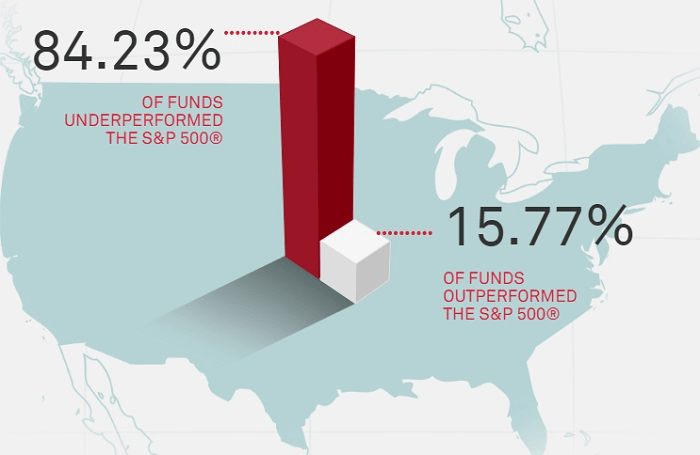
While Griffin says you should put your money with professionals, I pointed out that 85% of professional money managers fail to beat the indices.

Source: ETF Trends

If you are not beating the stock market indices as a professional money manager, then why bother?

In that case, it would be much better for an investor to save the fees and buy an ETF, for example.

One of the biggest problems behind this huge failure amongst money managers is that they don’t set their sights high enough.

It seems obvious that finding a stock that can go up 10 times is better than finding one that can go up by 50%. But there are many reasons why managers don’t make that their primary focus.

First, many of them think these stocks are too volatile. They are not wrong, but the overall goal is the returns.

Even adjusting for volatility, portfolios powered by stocks that go up a lot are more powerful for investors.

Second, most stocks with this kind of upside are already well-known.

These companies have been identified by investors and don’t fit the “smart money” view of finding undiscovered gems.

To that, I would say that undiscovered may sound smart — but finding 10-baggers sounds successful.

Third, most money managers are simply bad at trading and even simple math. They are taught that if a stock has doubled, then they have missed the opportunity.

Well, if the opportunity is to make 150%, then I suppose this is true. But if you are looking for companies with huge upside, then a double is only the beginning.

Every stock that has ever gone up five- or tenfold first had to double. It is simply math.

Your Edge Over the Wall Street Pros

It is my view that most money managers are more concerned about sounding smart than focusing on the returns. This is a massive mistake.

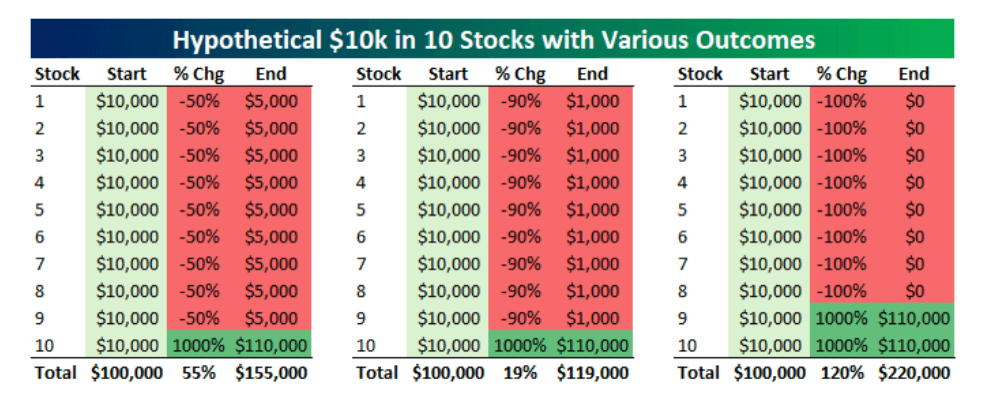
Here is a table showing the impact a 10-bagger can have on your portfolio.

If you have a portfolio of 10 stocks and 90% of them get cut in half — but one goes up tenfold — then you have +55% return on the overall portfolio.

If 90% of them go down 90%, you STILL get a +19% return.

If you have two 10-baggers and the other eight go to $0? That is more than doubling your capital.

This is the power of big winners.

The good news is that while professional money managers have biases that prevent them from identifying these types of stocks… you don’t have that problem.

You only work for yourself. And the best measure of “smart” is how much you can grow your portfolio.

One or two 10x winners can do more for your portfolio than a dozen “safe” bets.

That’s the simple math professional investors keep ignoring — and your biggest advantage as an individual investor.

Focus on the big winners, and investment success will follow.

To Making YOU Money,

Enrique Abeyta

Enrique Abeyta
Chief Strategist, Truth & Trends
Feedback

Paradigm
© 2026 Paradigm Press, LLC. 1001 Cathedral Street, Baltimore MD 21202. By submitting your email address, you consent to Paradigm Press, LLC. delivering daily email issues and advertisements. To end your Truth & Trends e-mail subscription and associated external offers sent from Truth & Trends, feel free to click here.

Please note: the mailbox associated with this email address is not monitored, so do not reply to this message. We welcome comments or suggestions at AskGreg@paradigmpressgroup.com. This address is for feedback only. For questions about your account or to speak with customer service, contact us here or call (844)-731-0984. Although our employees may answer your general customer service questions, they are not licensed under securities laws to address your particular investment situation. No communication by our employees to you should be deemed as personalized financial advice.

We allow the editors of our publications to recommend securities that they own themselves. However, our policy prohibits editors from exiting a personal trade while the recommendation to subscribers is open. In no circumstance may an editor sell a security before subscribers have a fair opportunity to exit. The length of time an editor must wait after subscribers have been advised to exit a play depends on the type of publication.

All other employees and agents must wait 24 hours after on-line publication or 72 hours after the mailing of a printed-only publication prior to following an initial recommendation. Any investments recommended in this letter should be made only after consulting with your investment advisor and only after reviewing the prospectus or financial statements of the company.

Truth & Trends is committed to protecting and respecting your privacy. We do not rent or share your email address. Please read our Privacy Statement. If you are having trouble receiving your Truth & Trends subscription, you can ensure its arrival in your mailbox by whitelisting Truth & Trends.

Reference Number: 000055791417

No comments:

Post a Comment

Keep a civil tongue.

Label Cloud

Technology (1464) News (793) Military (646) Microsoft (542) Business (487) Software (394) Developer (382) Music (360) Books (357) Audio (316) Government (308) Security (300) Love (262) Apple (242) Storage (236) Dungeons and Dragons (228) Funny (209) Google (194) Cooking (187) Yahoo (186) Mobile (179) Adobe (177) Wishlist (159) AMD (155) Education (151) Drugs (145) Astrology (139) Local (137) Art (134) Investing (127) Shopping (124) Hardware (120) Movies (119) Sports (109) Neatorama (94) Blogger (93) Christian (67) Mozilla (61) Dictionary (59) Science (59) Entertainment (50) Jewelry (50) Pharmacy (50) Weather (48) Video Games (44) Television (36) VoIP (25) meta (23) Holidays (14)

Popular Posts (Last 7 Days)