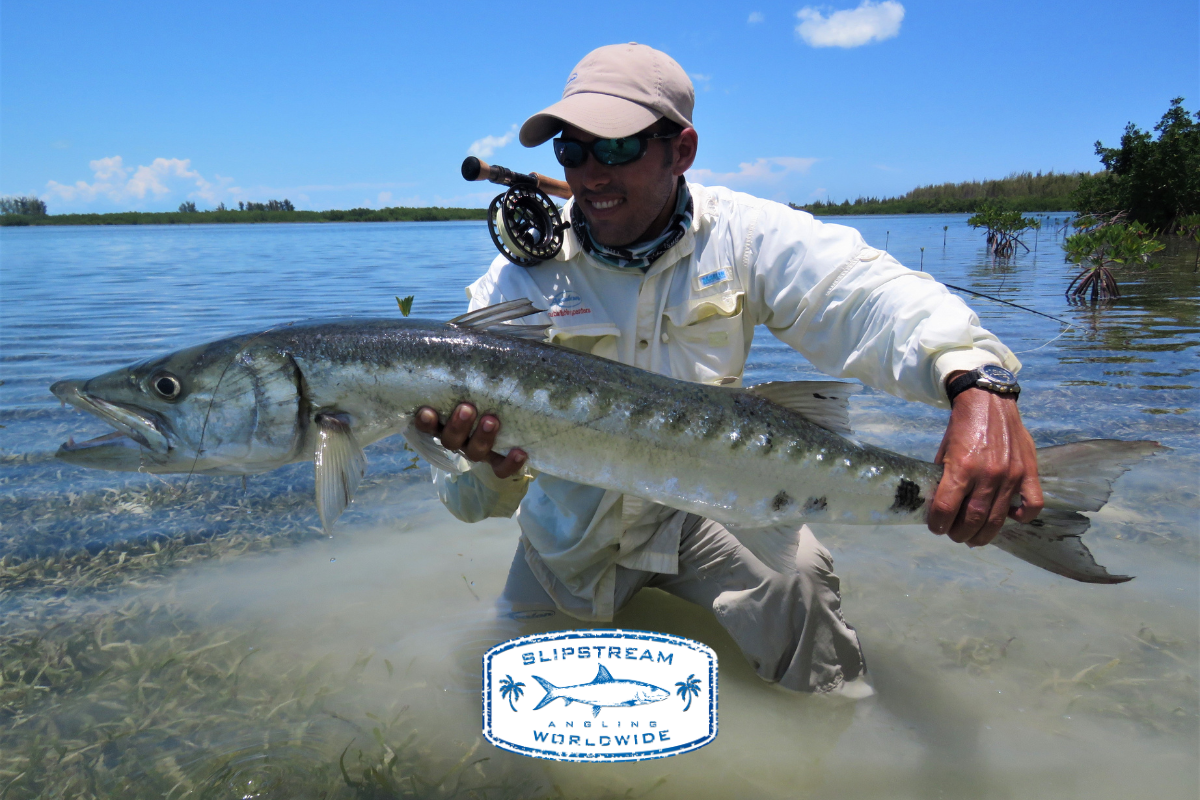
FEBRUARY PRO TIP Targeting Barracuda Richard French, owner of Slipstream Angling Worldwide, shares his expert strategy for successfully targeting barracuda on your next flats trip. | | With the TCO South Andros Bahamas trip coming up, and plenty of anglers heading to The Bahamas over the next few months, it's worth shining a light on a flats fish that doesn't get nearly the respect it deserves: the barracuda. Often overlooked, the barracuda is what I like to call the "Dangerfield of the flats." It gets no respect. And that's a mistake. I spend a lot of time deliberately targeting big 'cudas on fly when I'm on a flats trip, and I view them as one of the most exciting gamefish available in shallow water. When hooked, they'll run like a big bonefish and jump like a tarpon. There is absolutely zero downside. And when handled properly, they make for a spectacular photo opp. I generally only cast to fish over 40 inches and won't bother with anything under a yard long. The smaller fish simply don't offer much of a fight. But the bigger barracuda? They are a real challenge. Once hooked, they put on a highly satisfying aerial display that is electric. You can certainly use a tandem-hook fly like a Gamechanger in chartreuse or any long needlefish imitation that includes a stinger hook. That said, I actually prefer poppers. A lime green foam popper has produced more big barracuda for me than anything else. There's something about the noise and surface disturbance that flips a switch in these fish.
For all their fearsome reputation, big barracuda are surprisingly skittish. Drop the fly too close and they'll often spook — especially the larger fish. Instead, cast the fly 15 feet past the fish, well in front of its line of sight. Strip it back so it crosses in front of the fish, but not directly at it. One or two sharp pops is often all it takes. If the fish refuses but stays within range, here's a trick that has worked for me many times. Cast in front of the fish and immediately rip the fly off the water the moment it lands. Repeat this four to five times. Then cast again and let it land naturally. Then pop it once or twice and be ready. They often get irritated enough that they finally decide to annihilate it.
I always keep a dedicated "cuda rod" in the skiff, ready to go. Below is my setup.
Rod: 9-weight
Line: Matching weight-forward fly line in a neutral color
Leader: No more than nine feet of straight 20-pound mono connected to the fly line
Wire: 12–18 inches of wire bite tippet is absolutely mandatory
A 40+ inch barracuda has serious teeth. I'm a big fan of Rio Powerflex Wire Bite in 30-pound strength. It's easy to tie and connect to your leader and is more than capable of handling the razor-sharp teeth that a big barracuda possess. I connect it to the leader using a Triple Surgeon's Knot.
If you'd like a photo — and with a big fish, you probably will, let your guide handle it until you've gained experience with these fish. Those teeth are no joke. They are razor sharp and can do some real damage in the blink of an eye. Better to be safe than sorry.
| |
FEBRUARY 2026 Upcoming Trips Explore extraordinary travel opportunities with TCO's worldwide travel partner, Slim stream Angling Worldwide. Contact Richard at info@slipstreamangling.com for all trip inquiries.
| |
QUEBEC, CANADA Gaspe Coastal Lodge Trip Targeting Atlantic Salmon & Striped Bass
$9,083 CAD DBL (tax included)
June 1 - 7, 2026 4 rods
June 29 - July 5, 2026 2 rods
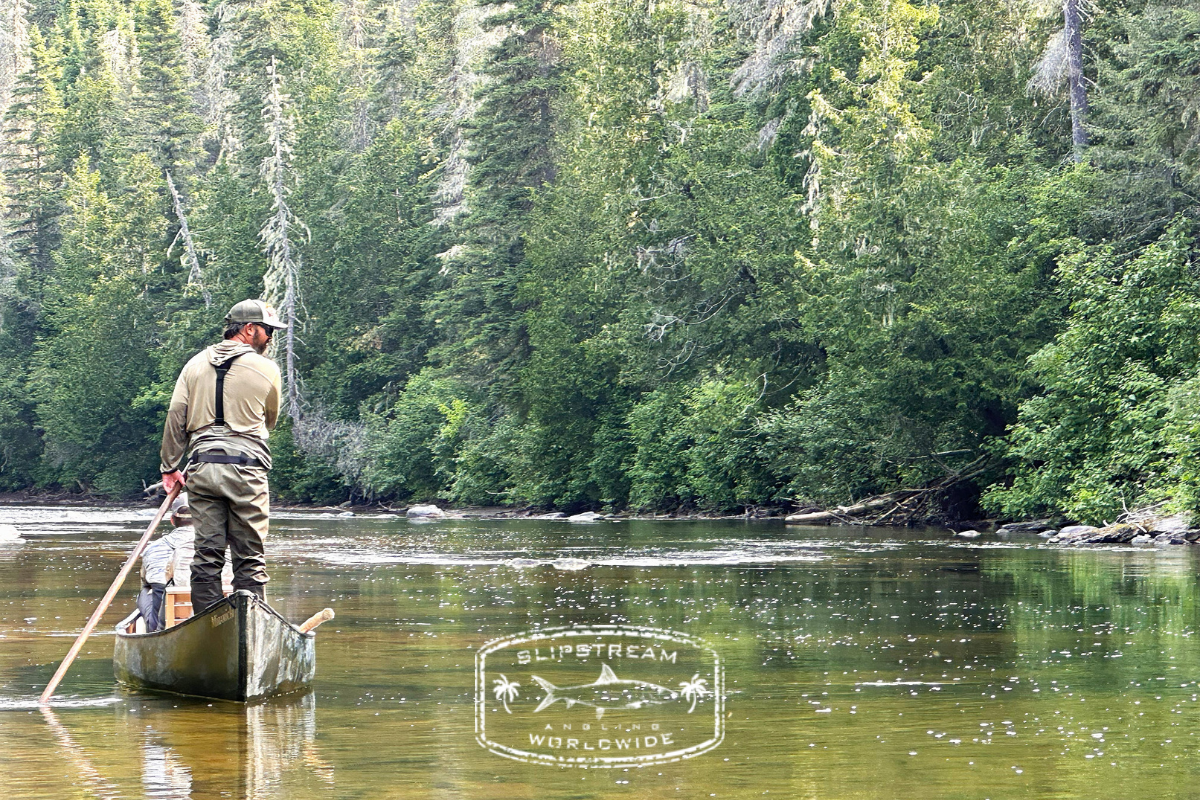
July 27 - August 2, 2026 4 rods | | I spend several weeks a year scouting new locations and lodges, and every so often I come across a new operation that just works on every level. Gaspé Coastal Lodge, located in eastern Quebec, is one such facility—where everything has a smooth, easy flow that anglers naturally embrace. I couldn't get out to check it out until last August, the lodge's second year in operation, but the wait was well worth it.
What makes this operation so unique and attractive is its ability to focus on two key species: Atlantic Salmon and Striped Bass.
The Atlantic Salmon program takes full advantage of the lodge's proximity to three of the great salmon rivers in Canada: the Grand Cascapedia River, the Petit Cascapedia River, and the Bonaventure River. These venerable, world-class rivers have been drawing anglers from around the globe for decades, and all three are within an easy drive of the lodge.
Then there's the Striped Bass program, which runs out into the massive shallow-water estuary of Chaleur Bay, separating the Gaspé Peninsula from the province of New Brunswick to the south. This fishery absolutely stunned me in terms of the sheer number of fish I saw over the two days I spent chasing them. Having fished for stripers in Montauk and on Cape Cod, I thought I had a solid benchmark for what good striper fishing looked like. I was not prepared for the numbers of fish I encountered here. Most of our fishing took place in water ranging from 18 inches to about four feet deep. It was all sight casting—either to fish finning in the shallows or to schools out in slightly deeper water. The lodge operates a fleet of four traditional flats skiffs (think bonefishing skiffs) and during the week I was there, multiple 20- to 30-fish days were the norm. The fishing was simply superb.
If you're looking for a unique angling experience this summer—one that's easily accessed from the East Coast of the U.S.—I cannot recommend this lodge highly enough. Everything about it is excellent.
| |
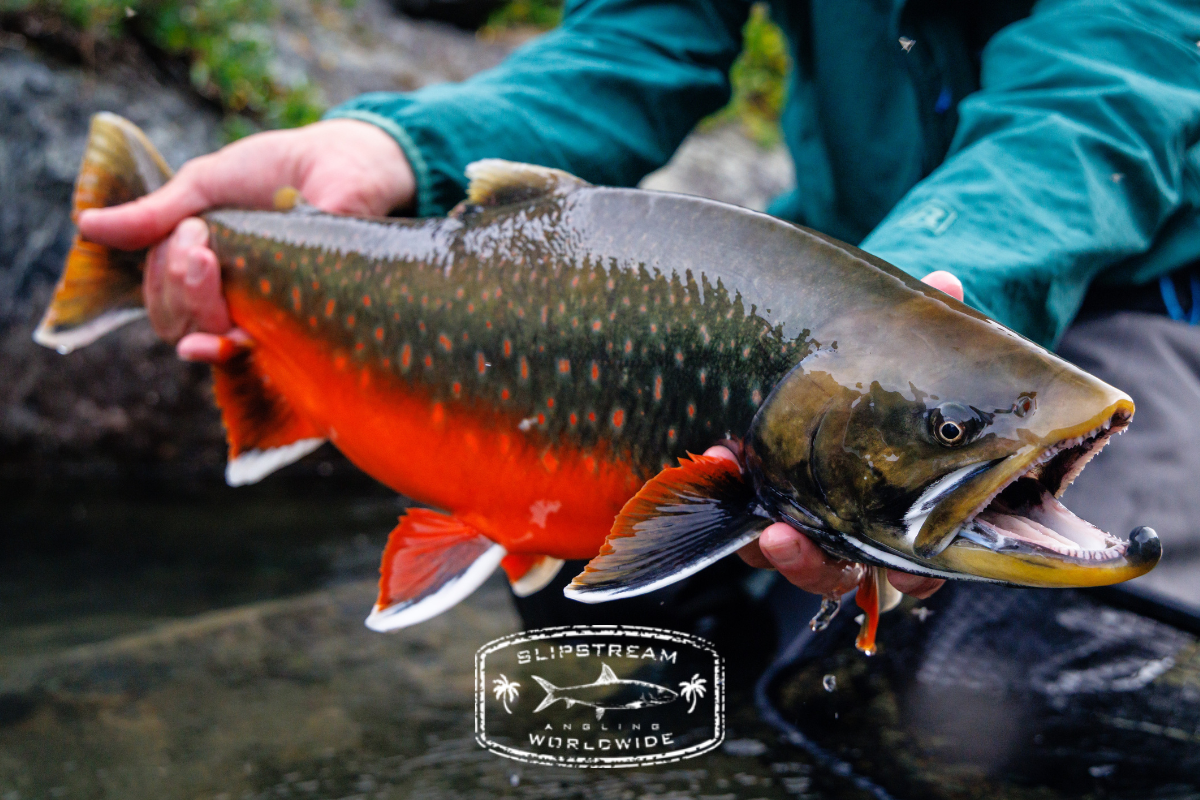
GREENLAND Camp Isua Arctic Char Trip $7,850 USD DBL Shared accommodation and guide
July to Mid September | | Camp Isua offers a fly-fishing experience unlike anything else on earth. Set against the raw, untamed beauty of Southern Greenland's vast network of fjords, it provides one of the most dramatic angling backdrops in existence. Nestled deep within Greenland's pristine wilderness, this remote Arctic char paradise delivers unparalleled access to untouched rivers where fishing pressure is virtually nonexistent.
Each season, the camp hosts a maximum of just eight guests per week, ensuring ideal fishing conditions and an intimate connection with the landscape. Here, anglers will fly fish waters that have remained largely undisturbed for centuries, embracing the solitude and authenticity that only a place like Camp Isua can offer. Given the incredible remoteness, this is as much an adventure expedition as it is a fishing trip. Guests should be in reasonable physical condition, and for those who make the journey, the rewards are extraordinary. The season is short, lasting only 10 weeks, and every week is fully guided with a 2:1 client-to-guide ratio.
The journey begins in Nuuk, Greenland's capital, where guests overnight before heading south the following morning. From there, a spectacular 3.5-hour boat ride traces Greenland's rugged west coast, weaving through a labyrinth of fjords and passing several river mouths that will be fished during the week. The voyage alone is a visual kaleidoscope of towering mountains and ancient valleys—an experience that makes it nearly impossible not to feel awe at nature's scale.
Upon arrival at Grædefjorden, anglers step into a pristine valley that feels untouched by time. The camp itself is exceptionally comfortable and thoughtfully designed, with talented chefs who feed hungry anglers like kings. Over the course of the week, guests fish three distinct river systems and their tributaries, targeting prolific annual runs of Arctic char. It's a rare combination of world-class fishing, dramatic Arctic scenery, and true wilderness immersion.
| |
FIORDLAND, NEW ZEALAND Heli Trip 2 Spots Available
$9,400 USD, Single room & shared guide
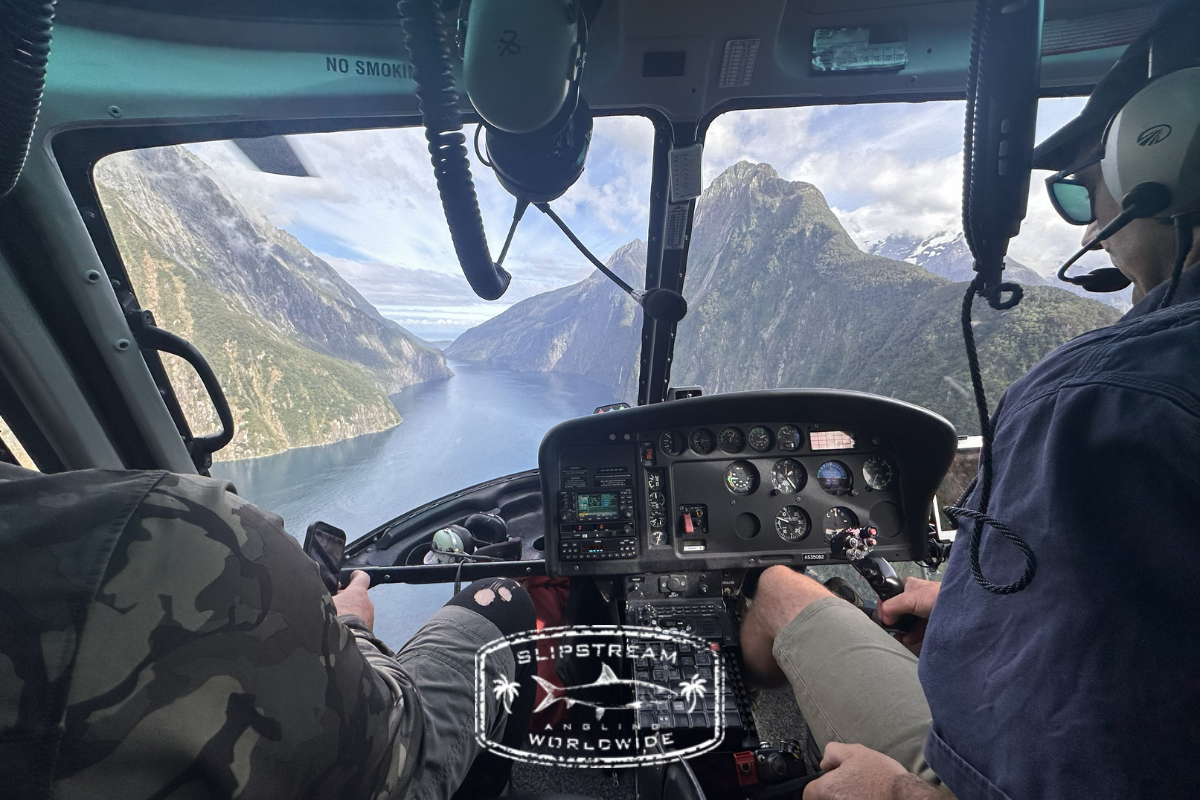
January 4-11, 2027 | | If anyone feels like getting away immediately after the holiday season, we have just two slots remaining on my Fiordland, New Zealand Heli Trip in early January 2027. This is an exceptional way to kick off the New Year—combining world-class sight fishing with some of the most pristine, crystal-clear waters on the planet. Our base for the week is near the bottom of the South Island, in the lakeside town of Te Anau, roughly two hours southwest of Queenstown. Widely regarded as the gateway to Fiordland National Park and Milford Sound, this region is famous for its dramatic mountain scenery, glacier-fed lakes, and postcard-perfect landscapes that seem to appear around every bend.
The week is fully guided, with each guest fishing six days total. Three days are guided helicopter fly-out days, allowing access to remote rivers that see very little angling pressure. The remaining three days are guided walk-and-wade days, with guides driving to carefully selected rivers and streams each morning.
Fishing is predominantly dry-fly, with proven patterns including cicadas, blowflies, Elk Hair Caddis, and Parachute Adams. Unlike regions farther north on the South Island that are exclusively brown trout fisheries, Fiordland offers a diverse mix of both Brown and Rainbow Trout. Some rivers hold healthy populations of both species, while others are dedicated brown or rainbow waters, providing excellent variety throughout the week.
For those looking to extend the adventure, additional fishing can easily be added either elsewhere on the South Island or by heading north to the North Island to round out a truly memorable New Zealand angling experience. If you've been thinking about a trip to New Zealand, 2027 is definitely the year to do it!
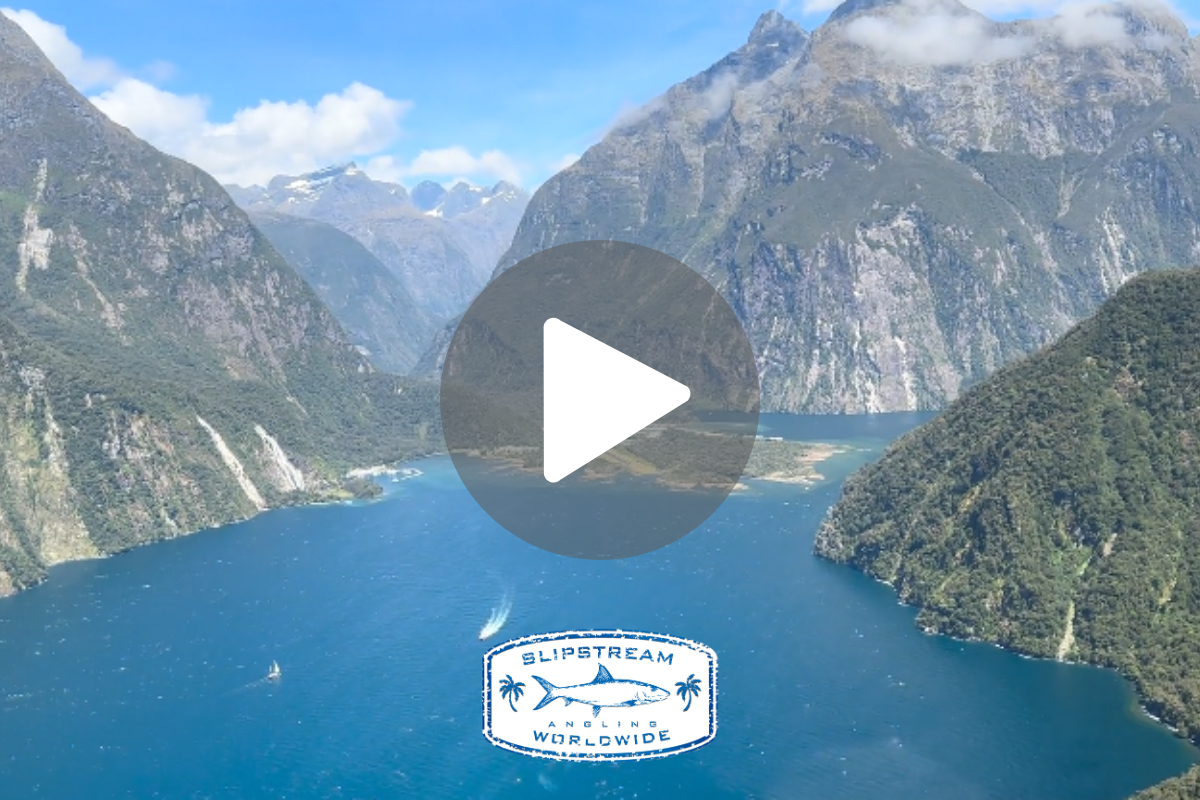
| | To see some of the most scenic post fishing video I have ever shot, view the video of my landing back in Milford Sound after a day of fishing.
| | Contact Richard at info@slipstreamangling.com for all trip inquiries.
| | FREE Shipping on Most Orders of $50+ Questions? We're here to help!
Reply to this email, fill out our contact form or chat with a live person during business hours on our website. | | | | |






No comments:
Post a Comment
Keep a civil tongue.