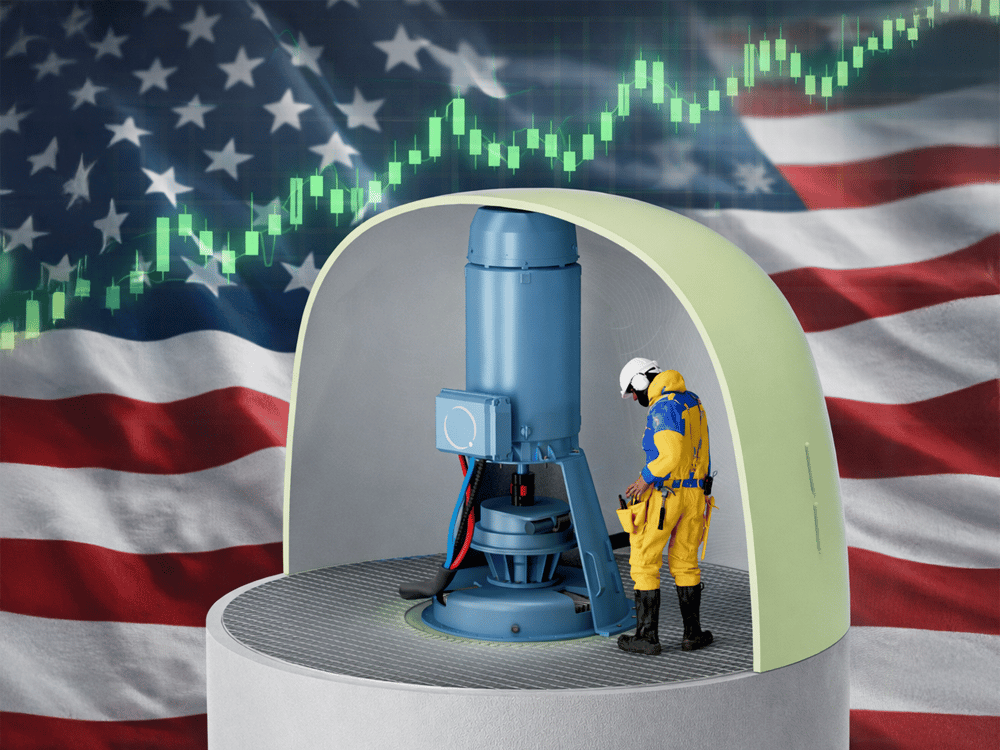
GOOD MORNING. | | THE LEAD | The unemployment rate is low. That is the number most people hear. But a sweeping new survey from Gallup tells a more complicated and more troubling story about where ordinary American workers actually stand. | For the first time since Gallup began tracking the life evaluation of the U.S. workforce, more workers report struggling in their lives (49%) than thriving (46%). This contrasts with 2022 and 2023, when the reverse was true, with the share of U.S. employees considered thriving staying in the low-to-mid 50s. After staying steady between 57% and 60% from 2009 to 2019, the thriving rate among workers fell to 55% in 2020 before rebounding in 2021 then steadily decreasing after that. | The survey was conducted in the fourth quarter of 2025, before the Iran war added energy costs and economic uncertainty on top of an already weakening picture. In other words, Americans were already struggling before gas prices jumped 30%. | This American Energy Upstart Has $110M in Commitments | | America shouldn't depend on overseas manufacturing for its energy future. Yet the go-to storage solution, lithium-ion batteries, are built abroad, leaving us vulnerable to supply chains we don't control. | If America is going to lead the energy transition, it needs energy storage made here at home. | Qnetic delivers that. It ditches chemicals for a breakthrough that feels like magic. By spinning a rotor at 12,000 RPM, their energy storage tech lasts 30 years without degrading and costs half as much. And it's fully engineered and manufactured in America. | For energy companies, that means reliability, speed, and competitive advantage. For America, it means innovation, jobs, and energy security inside our borders. | Eight major energy players have already made the bet on American-made energy storage, committing $110M+ in letters of intent to Qnetic. | Invest before Qnetic scales this American breakthrough worldwide. | Just 28% of workers said now is a good time to find a quality job, with 72% saying it is a bad time. Those figures are a sharp reversal from just a few years ago, in mid-2022, when 70% said it was a good time. | The pessimism is backed up by hard data. Government data shows that overall hiring is at its weakest level in more than a decade. The hiring rate dropped to 3.2% last November, the lowest since March 2013. When it was last that low, the unemployment rate was 7.5%, as millions of Americans were still struggling after the Great Recession. It suggests it is much harder to find a job now than the unemployment rate would indicate. Government data also shows that there are more unemployed people, 7.4 million, than available jobs, at 6.9 million. That is a reversal from the first few years after the pandemic, when vacancies outnumbered those out of work. | Confidence in the job market has collapsed to a new low, with just 28% of workers saying now is a good time to find a quality job, down from 70% in mid-2022. More than half of workers are actively looking for a new job or at least watching for opportunities. | Federal workers have seen a more severe and rapid decline in their outlooks. Federal workers were more likely than the average U.S. worker to be thriving in 2022, when 60% said they were thriving. By late 2025, federal workers' thriving rate fell 12 points to 48%. |
|
| For retirees, this matters in several ways that go beyond empathy. If your adult children or grandchildren are among the workers struggling to find or keep quality jobs, it affects their financial security and potentially yours. More broadly, when workers feel financially stretched, they spend less. Weaker consumer spending slows corporate earnings growth, which puts pressure on the stock dividends and share values that many retirees depend on. It also reinforces the stagflation risk that has been building since the war began: a weakening labor market combined with rising energy prices is the classic recipe for an economy that slows even as prices stay elevated. | The March jobs report, which will be the first real data capturing the Iran war's impact on hiring, is scheduled for release on April 4. That day is Good Friday, when markets are closed. Investors will not be able to trade on it until futures open that Sunday evening — an unusual dynamic worth knowing about. | | | THE NUMBER THAT MATTERS | 3.2% | National Hiring Rate | European natural gas prices have jumped 60% since the start of the Iran war. That figure illustrates, in plain terms, how far the energy shock has traveled beyond the United States. The Strait of Hormuz is not just an oil route. It carries liquefied natural gas, fertilizer, aluminum, and a wide range of other commodities that feed directly into consumer prices around the world. When Europe's gas prices jump 60%, it drives up manufacturing costs, electricity bills, and the cost of goods that Americans import from European suppliers. It also puts pressure on European economies, which in turn affects global growth. The broader the energy disruption, the harder it is for any central bank, including the Federal Reserve, to cut rates. Thursday's coalition statement is the first serious international signal that the world's major economies intend to resolve this disruption rather than simply absorb it. |
| | |
| | | WHAT WE'RE WATCHING THIS WEEK | | INFLATION DATA | JOBS: Worker Engagement Has Hit a 10-Year Low | U.S. worker engagement has dropped to the lowest level on record in the past decade, with just 31% of employees engaged at work. Gallup research finds that workers who are not thriving are more likely to miss work due to illness and to be seeking or watching for a new job. Thriving employees miss 53% fewer days of work due to health problems and are 32% less likely to be actively seeking a new job. For investors who hold stock in companies across the economy, disengaged workers represent a real cost. Lower productivity, higher turnover, and more sick days all squeeze corporate margins. This is not abstract: it shows up in quarterly earnings results, and earnings results drive dividends and share prices. The next major wave of earnings reports begins in mid-April and will offer the first clear look at how the combination of energy costs and workforce disengagement is affecting American companies. | | SMART MONEY SIGNAL | LABOR MARKET: The Jobs Gap Has Reversed Since the Pandemic | There are now more unemployed people, 7.4 million, than available jobs, at 6.9 million. That is a reversal from the first few years after the pandemic, when vacancies outnumbered those out of work. This shift is significant because it changes the bargaining power between workers and employers. When jobs outnumber workers, wages tend to rise, supporting consumer spending and corporate revenues. When workers outnumber jobs, wage growth slows, spending softens, and the risk of a broader economic slowdown increases. The Federal Reserve is watching this carefully because slowing wage growth, if it materializes, would help bring inflation down — but too sharp a slowdown risks pushing the economy into contraction. The Gallup data suggests the labor market was already moving in that direction before the Iran war added a new layer of pressure. | | WORTH KNOWING | ECONOMIC CALENDAR: Durable Goods Report Delayed, Jobs Report Comes on a Holiday | Two pieces of economic data that investors were counting on this week and next have been disrupted. The February 2026 Advance Report on Durable Goods, originally scheduled for release today, March 25, has been rescheduled for April 7, 2026, according to the U.S. Census Bureau. Durable goods orders measure business investment in long-lasting manufactured products and are a useful leading indicator of economic health. The delay adds to the information gap investors are already navigating. Meanwhile, the March jobs report is scheduled for April 4, which is Good Friday. Stock markets will be closed that day. Investors will be digesting a potentially market-moving number over a long holiday weekend, with no chance to respond until Sunday evening futures trading begins. That is an unusual setup worth putting on your calendar. | | | | | A major Gallup survey confirmed this week that the American workforce is more pessimistic and struggling more than at any point since tracking began in 2008, and the underlying labor market data supports that finding. The hiring rate is at its lowest in more than a decade, there are more job seekers than available jobs, and worker engagement has hit a 10-year low. These trends were developing before the Iran war made the economic picture more complicated. For retirees, the practical implication is clear: the economy was already showing signs of strain, and that means corporate earnings, consumer spending, and dividend growth all face headwinds in the months ahead. |
| |
| | |
| Disclaimer: This is a paid advertisement for Qnetic Regulation CF offering. Please read the offering circular at https://invest.qnetic.energy/ |
|






No comments:
Post a Comment
Keep a civil tongue.