Every Great City Needs Its Beach. We’re Buying on This One for Under $300K REAL ESTATE TREND ALERT
(FOR MEMBERS ONLY)  | | DOUG
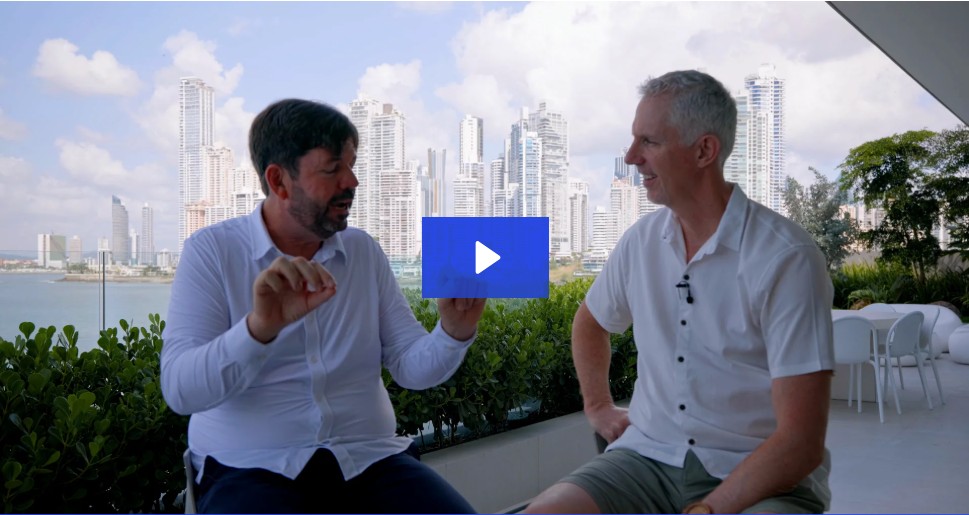
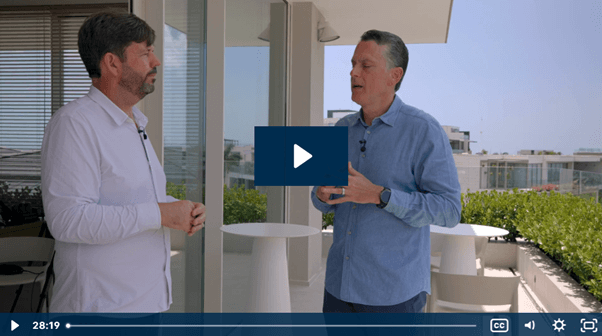
HILL | Dear Reader, I recently flew to Panama for The Gathering XII — Ronan’s annual meet up where the RETA operation descends on a market and goes deep. Ronan was kind enough to sit down with me while we were there for our monthly call. And I have to say, being on the ground made the conversation very different. We met out at Ocean Reef, on the man-made islands. You'll see it in the video below. What Ronan laid out about Panama is one of the most compelling macro cases I've heard him make in all our time doing these calls together. The momentum, the capital flowing in, the stability, why this city has become a genuine safe haven for international business and wealth… And there's a deal coming. True Pacific beachfront, from under $300,000, with gains of $181,100 expected five years from delivery. Watch our conversation first. Then read every word of what Ronan has sent you today. | | | | The view from the balcony was spectacular. Try not to let it distract you as Ronan explains why Panama is such a compelling spot for luxury real estate! | This is exactly what RETA membership is for. Regards, | | | Doug Hill
For Real Estate Trend Alert P.S. I bought into a RETA deal myself last year. The process was far simpler than even I expected. If you have questions about this Panama opportunity or aren't sure how to move forward, reach out to the Smart Money Homes team. They're representing the developer in the upcoming deal and will walk you through it. Every Great City Needs Its Beach  | | RONAN
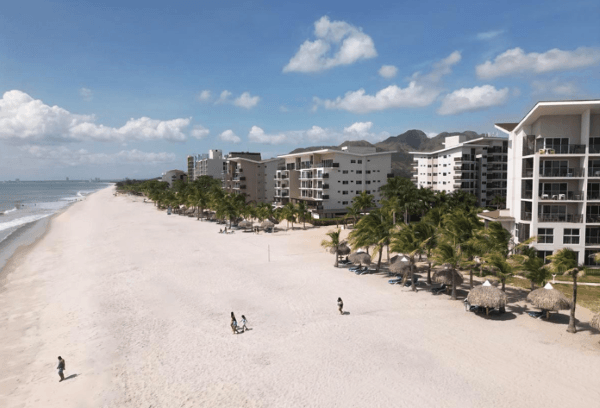
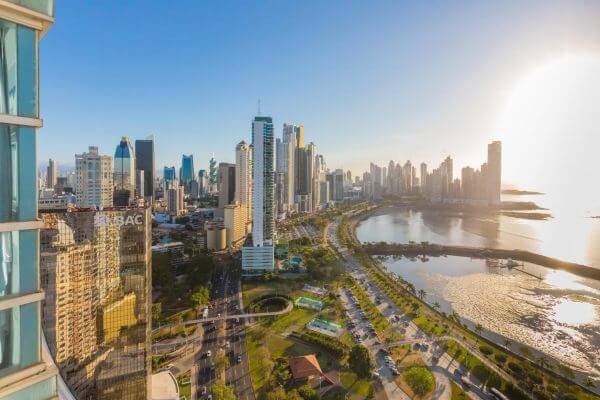
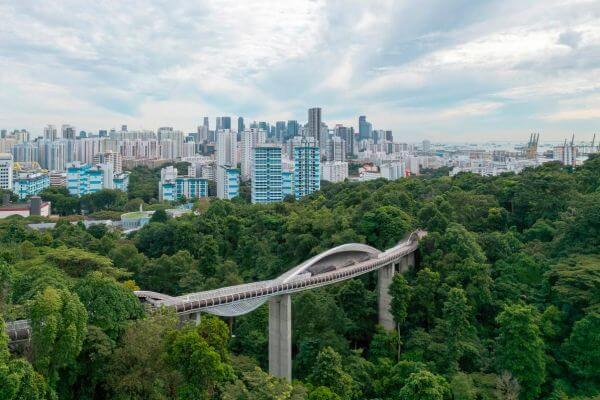
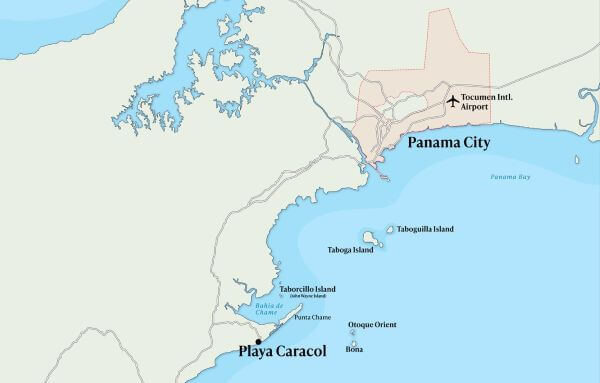
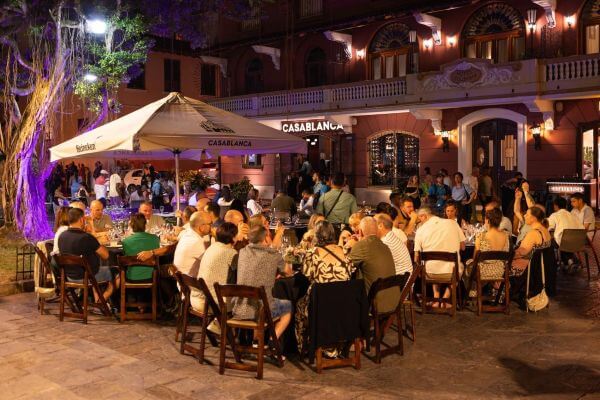
MCMAHON | Every great city has its beach. New York has the Hamptons. London has Brighton. Lisbon has Cascais. Even cities that seem sealed from the sea find their outlet… Paris has Deauville, two hours north through Normandy. Milan has Portofino and the Ligurian coast, just over the mountains. As cities grow richer, denser and more international, a pattern begins to emerge. First comes the infrastructure of global success: finance, trade, banking, international schools, good health care, a major airport, fine dining, the comforts and conveniences of a modern hub. That is the part every ambitious city chases. But then comes the second stage… People start looking for relief. Because no matter how successful a city becomes, urban life creates pressure. Noise. Density. Traffic. Pace. You can have the best restaurants, the best schools, the best hospitals, the best business environment in the world… and still feel the need, at the end of the week, to get out. That is why, in city after city, the beach becomes the pressure valve. | | | | Playa Caracol is the closest, finest beach to Panama City, a unique community now firmly established and realized. Yet we still have a window to act at RETA-only prices and lock in what I expect will be gains of $181,100. | This Friday, March 27, at 1:00 p.m. ET, I'm going to show you how we can get a two-bed condo for an insane RETA-only price under $300,000 — off market, on miles of wide Pacific beach, in a true beachfront community unlike anything else in this part of the world. On our doorstep: one of the great trading cities of the Americas. Safe. Stable. A proven haven for people, capital and business. Our track record in Panama speaks for itself. And on this deal, I expect gains of $181,100 five years from delivery. | | | | Panama City has more skyscrapers than almost any city in Latin America, rising in a tight wall of glass along the Pacific. This didn’t happen slowly. Since the early 2000s, global capital has poured in — drawn by the canal, a dollarized economy and a strategic location that punches far above its weight. This isn’t just real estate. It’s a sign of incredible momentum. | Panama City is entering the next phase of its phenomenal growth. By bringing all my team together with RETA members there for The Gathering XII, we were able to focus our full attention on what’s going on there. In the days leading up to our Gathering, my team members disappeared into the city’s neighborhoods. They pounded pavements in the international banking district and hopped in Ubers to outlying residential zones. Some ate ice cream in cavernous air-conditioned malls, snapping photos of Rolex and Gucci stores… others stopped for coffee and cake in refined corner cafés surrounded by business folk working for the many multinationals that make Panama City home. A once-sleepy tropical city is now a shining example of what happens when smart policies meet a globally strategic location. Consider what Panama has become: - Panama has had average real GDP growth of 4.7% over the last decade.
- 5% of the world’s trade passes through the Panama Canal. It holds 46% of the total market share of containers moving from Northeast Asia to the U.S. East Coast.
- The largest free trade zone in the Western Hemisphere sits on the Atlantic side of Panama. On the Pacific, Panama Pacifico houses Fortune 500 multinationals on a former U.S. air base. Panama has 16 free trade zones in total.
- More than 189 multinational corporations have relocated corporate management functions to Panama drawn by tax incentives, a dollarized economy and access to a Latin American market of 670 million people.
- Panama has consolidated its position as the largest exporter of services in Central America and the third largest in Latin America.
- In 2022, Panama doubled the capacity of Tocumen airport with a $917 million terminal expansion. It now directly connects Panama to over 90 destinations in the Americas and Europe, and passenger numbers are smashing records.
- A multibillion-dollar fourth bridge over the Panama Canal is scheduled to open in 2028, a crossing carrying six lanes of traffic plus Metro Line 3 rail lanes.
- The Pan-American Highway has been widened, opening a corridor west along the Pacific Riviera from the city.
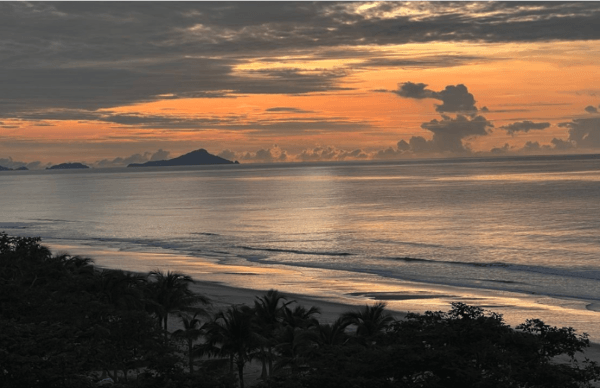
| | | | Sunrise over the islands. Playa Caracol is miles of Pacific beach just an hour–90 minutes from the global haven of Panama City. We have our latest RETA-only deal here on ocean-view condos steps from the sand for under $300,000. A brand-new beach town is emerging close to a world-class capital. | Panama City is booming… And across continents and cultures, the pattern repeats. A city grows powerful and wealthy. Density and pressure build. And sooner or later, that city begins to reach for the coast. It needs its beach. Not a distant vacation destination. Not a once-a-year resort trip. A reliable coastal outlet. A place close enough for the weekend. Close enough for a spontaneous Friday departure. Close enough to become part of the city’s wider lifestyle ecosystem. - Look at Singapore. One of the great trading hubs of Asia — rich, efficient, global but dense and intensely urban. Residents escape to Sentosa, to Bintan, to Batam. Those Indonesian resort markets did not emerge by accident. They exist largely because Singapore needs a beach.
- Look at Dubai. A city built on trade, aviation, finance and ambition. Residents have beaches in the city, yes, but the pattern still holds. They escape to Fujairah, Ras Al Khaimah, Oman’s Musandam Peninsula, the Maldives. The urban engine generates demand for coastal escape.
- London shows the same pattern. The city itself is far from the sea, but Londoners head constantly to Brighton, the Kent coast, Cornwall, the south of France. Brighton has effectively become London’s beach suburb.
- New York does it through the Hamptons, Fire Island and the Jersey Shore. Entire real estate markets exist because New Yorkers want proximity to the sea. A house in the Hamptons is not really about the Hamptons. It is about New York needing a beach.
- Hong Kong follows the same model. One of the great trading ports of the world, dense and vertical, it pushes residents outward toward Repulse Bay, Sai Kung, Lamma Island and frequent escapes to Thailand and the Philippines.
- Sydney shows the pattern in its purest form. The city’s beach districts — Bondi, Manly, Coogee — are not separate resort destinations. They are lifestyle extensions of the city itself.
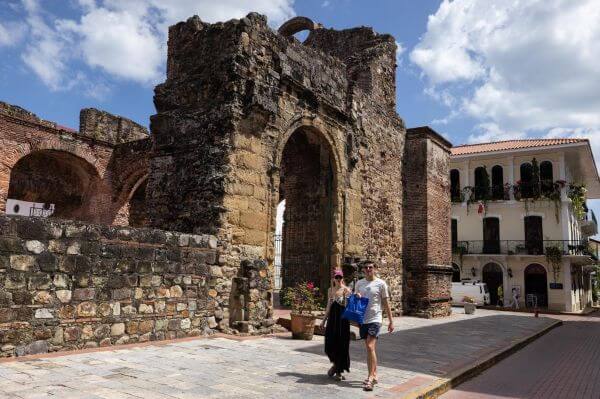
The same dynamic appears elsewhere. Tokyo residents escape to the Shonan Coast and Kamakura, about an hour from the capital. Paris has Deauville and the Normandy coast. San Francisco’s wealthy residents head to Carmel, Monterey and Santa Cruz. Los Angeles pushes toward Malibu, Newport Beach, Laguna Beach and Santa Barbara. Shanghai’s wealthy fly to Sanya in Hainan. Toronto’s financial elite escape to the lakes and waterfront of Muskoka and Prince Edward County. Even Miami, despite its own beaches, sees wealth concentrate farther along the coast in Palm Beach, Naples and the Florida Keys. And that is what makes our Panama opportunity so compelling… | | | | Singapore was once an impoverished corner of Asia. But smart policies and a strategic location mean today it's among the richest places in the world. Panama City was watching and has borrowed much from the Singapore playbook. | Panama City is taking on the characteristics of these global hubs. It is a strategic logistics center anchored by the canal. It is a regional banking capital. It attracts multinational headquarters. It operates on the U.S. dollar. It is politically stable and welcoming to international residents and investors. In a world that feels increasingly uncertain, Panama City has quietly become something rare: a safe haven. International people are arriving. International businesses are establishing themselves. Capital is flowing in. And when a city takes on that role, something predictable follows. It begins to need its beach! Not some far-flung vacation beach requiring flights and planning. A coastal escape close enough to function as part of everyday life. A place where residents can decompress, surf, walk the sand and bring their families without traveling far. This is where Playa Caracol enters the picture… Caracol is not just another beach development on the map. It occupies a very particular geographic relationship to Panama City. It is the closest truly beautiful, destination-style stretch of coastline to a capital that is rising in stature and attracting global wealth. And with the road improvements underway, the connection continues to tighten. In light traffic, the drive is about an hour. That places Caracol firmly within the outer lifestyle orbit of Panama City. | | | | Playa Caracol was once a bone-shaking and difficult drive from Panama City. A barely populated stretch of coast with a stunning beach. Today, thanks to road improvements, it’s an hour away in light traffic. | | | I shot this video discussing Panama’s remarkable journey of growth with the developer of Playa Caracol, Alfredo Aleman. | In most global cities, once that relationship forms, prices move accordingly. The beach that serves the city does not remain cheap for long. It becomes prized. It becomes scarce. It becomes a place where the urban population stores both lifestyle value and real estate value. Yet here we are. A true beachfront community. A master-planned destination. Within easy reach of a rising international capital. And because of our connections and RETA buying power, we can still buy in for under $300,000. That disconnect is what makes Playa Caracol so compelling right now. And there’s another way to think about this that I personally find even more compelling. In most of the examples we’ve just talked about, the pattern runs in one direction. People live in the city… and escape to the beach. They work in Manhattan and drive to the Hamptons. They live in London and head to Brighton. They live in Singapore and ferry across to Bintan. The city is home. The beach is the escape. But what I love about Playa Caracol is that the geography allows you to flip that equation. Because Caracol is so close to Panama City, you don’t necessarily have to live in the city and escape to the beach. You can live on the beach… and escape to the city. That changes the whole lifestyle equation. Instead of battling traffic, noise and density five days a week and waiting for the weekend to get out, you wake up to the ocean. You walk the beach in the morning. You surf, swim or simply watch the Pacific roll in. And when you want your city fix — great restaurants, international hospitals, shopping, cultural events, business meetings — you drive in. An hour later you’re in the heart of one of the most dynamic capitals in the Americas. Then you leave again. Back to the beach. Back to the space. Back to the ocean air. | | | | The historic Casco Viejo part of the city is a great place to dine outdoors, find a rooftop bar or just stroll around soaking up the atmosphere. | | | | Explore the city’s history, high-end boutiques and fancy restaurants, and then head back to your beach base in Playa Caracol. | For me, that inversion is incredibly powerful. You’re not using the beach as a temporary escape from urban life. You’re using the city as a resource that enhances your coastal life. You get the calm and beauty of the Pacific as your daily backdrop… while still having the infrastructure, energy and opportunities of a global capital within easy reach. That’s a rare combination. This is one of the most important structural shifts in lifestyle geography since 2020. Researchers, planners and real estate economists have been studying exactly this phenomenon. The “city to beach escape” model that dominated the 20th century is beginning to invert in certain markets. People are increasingly living in lifestyle locations and accessing the city when needed, rather than the other way around. Several forces collided to make this possible: - Remote and hybrid work.
- The pandemic forcing millions to re-evaluate dense city living.
- Better digital infrastructure.
- Wealthy urban professionals realizing proximity to the office is no longer necessary five days a week.
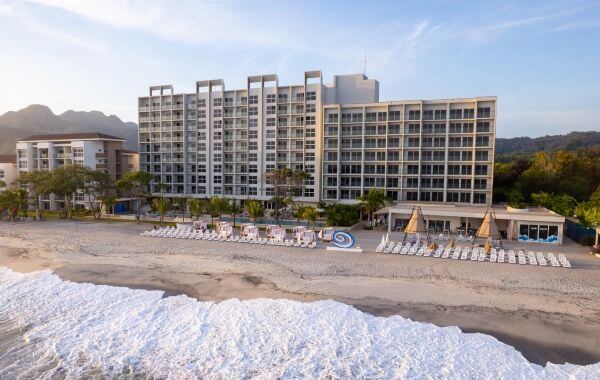
| | | | The Radisson at Caracol is open for business. A Margaritaville is under construction. And two other international brands are in talks with the developer. Playa Caracol is established and no pie-in-the-sky idea. It’s real, and the window to get in before the next phase is closing. | One of the most dramatic shifts occurred in South Florida. During the pandemic and afterward, thousands of finance and tech professionals left New York and relocated to Miami, Palm Beach and surrounding coastal towns. But even inside Florida the pattern inverted. For instance, many professionals now live in Palm Beach, Naples or Delray Beach. They go into Miami when necessary, not the other way around. This inversion also happened around New York. Pre-2020, the Hamptons were mostly second homes. After the pandemic, many residents moved there permanently and hybrid commuting became normal The Portuguese capital, Lisbon, has seen a similar dynamic. Before 2020 most professionals lived in Lisbon proper. Now large numbers live in Cascais and Ericeira. They go into Lisbon for meetings or dinners, but daily life happens by the ocean. Sydney, Australia, already had this pattern to some degree, but it accelerated. You’ll find the pattern in San Francisco, in London… These places historically were weekend escapes. Now they are primary residences with occasional city trips. I can see this happening in Playa Caracol… Panama City is booming, a new world-class city of trade, commerce and wealth. Now road improvements — billions of dollars poured into road improvements — mean Caracol is easy to get to and from… There are specific historical moments we can look at where cities “discovered” their beach and prices exploded… Caracol has similarities with those patterns. Because it’s not just that big cities “need a beach.” It’s that, at certain moments in their development, they suddenly discover which beach is going to become theirs. That discovery usually happens when the city itself reaches a new stage of wealth, confidence and international relevance. Then access to a nearby stretch of coast improves dramatically. And finally, someone with vision starts building the right kind of product there. Not just random real estate. Not just a few scattered homes. But a real place. A community. A lifestyle ecosystem people can imagine themselves using again and again. When those three things line up, the relationship between city and coast changes. The beach stops being just “somewhere out there.” It becomes part of the city’s mental map. Part of its rhythm. Part of how its people imagine a good life. And once that happens, prices rarely stay where they were. Playa Caracol is sitting right at the beginning of this kind of shift. Panama City is not some sleepy provincial capital. It is internationally relevant, economically strategic, more connected and more valuable as a base for business, banking, trade and lifestyle. As a rising global hub, the city is undergoing a land squeeze, drawing in capital and maturing into a city where prime real estate becomes scarcer and more expensive over time. At the same time, Playa Caracol is no longer an inaccessible anomaly. It’s now a true beachfront community with international hotel brands already in operation and more coming, close to Panama City. Prices for real estate look absurd in international terms, but our price looks unbelievable. And then there is the third ingredient: product. Not just condos. Not just “units.” A real beachfront community. Master-planned. Walkable. Amenity-rich. This is beachfront living right on the sand, with the beach club, pools, hotel amenities, restaurants and the beginnings of a genuine beach-town ecosystem. That’s what turns geography into a market. Panama City is reaching the stage where a global city begins to claim its beach. And Playa Caracol is that beach… Get ready… This Friday, March 27, at 1:00 p.m. ET, I’ll bring you the full details of our deal. Wishing you good real estate investing, | | | Ronan McMahon P.S. One more thing worth knowing before Friday. Developer financing is available on this deal. That means owning in a true beachfront community steps from the sand for under $300K and the option of doing it with financing, too. If you have questions about how that works, or anything else about this Panama opportunity, reach out to the Smart Money Homes team today. They're representing the developer and are ready to walk you through every detail. Remember, I'm expecting gains of $181,100 five years from delivery. | |




No comments:
Post a Comment
Keep a civil tongue.