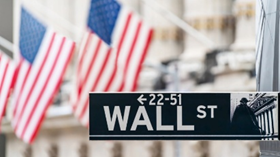
| WEEKLY ROUNDUP The Market Is Distracted. You Shouldn’t Be. VIEW IN BROWSER Hello, Reader. This morning, we got word that a “complete and total resolution of our hostilities in the Middle East” is in the works between the U.S. and Iran. Plus, there will be a five-day postponement on U.S. strikes against the country. Oil and gas prices fell immediately and stock prices jumped, as Wall Street interpreted the delay as a step toward deescalation. Iran, on the other hand, says there is “no dialogue between Tehran and Washington.” Meanwhile, the International Energy Agency (IEA) warns that the global economy faces a “major threat,” describing the current energy crisis as more severe than the oil shocks of the 1970s. The Iran conflict belongs to a category of risk called “known unknowns.” Everyone wants to know if this conflict will catapult oil prices toward $150 a barrel… or crater the stock market… or both? Neither is also a possibility. Despite claims of "productive conversations" from the administration, no one knows the answer – which is why I hesitate to add my commentary to the pile. Instead, I will simply remind readers that good things tend to happen to cheap stocks, while bad things tend to happen to pricey stocks – no matter how serene or chaotic the world might be. To illustrate this point with a bit of history, let’s roll back the calendar… Any investor who purchased a basket of U.S. stocks shortly after the Japanese bombed Pearl Harbor would have been wading into the most uncertain geopolitical waters of their generation. On the other hand, those investors would have been buying their stocks at bargain-basement valuations of roughly 10 times earnings. Over the next three years of worldwide chaos, U.S. stocks advanced more than 50%. In other words, even though World War II was raged in both Europe and the Pacific, U.S. stocks managed to deliver annualized gains of more than 15%. Similarly, any investor who purchased a basket of U.S. stocks shortly after the Pentagon doubled its troop deployment to Vietnam in 1966 would have been stepping into one of America’s most uncertain and contentious military adventures, both at home and abroad. On the other hand, those investors would have been buying their stocks for less than 13 times earnings. Over the next three years, the S&P 500 advanced more than 40%. U.S. stocks were trading for nearly 20 times earnings when America effectively exited Vietnam – the draft ended in late 1972 and U.S. combat troops came home soon after. But the waning days of that war did not bestow any sort of “peace dividend” on America’s pricey stock market. Instead, the S&P 500 slumped 15% over the ensuing three years. These contrasting examples corroborate a decades-long stock market tendency… Cheap stocks tend to fare better than pricey ones, no matter what else is going on in the world. I get into where I am looking for these cheap stocks below. But before we dive into that, let’s take a look at what we covered here at Smart Money over the past seven days… | 











No comments:
Post a Comment
Keep a civil tongue.