Welcome back to Buffering, where our focus this issue is on the unscripted side of TV. All this week, Vulture has been spotlighting the Reality Masterminds who’ve made the genre such a huge part of the small-screen landscape. You’ll find selections from this series below, starting with my conversation with the NBCUniversal unscripted gurus who have helped give the still-struggling Peacock its biggest successes. We’ve also got highlights from my profile of Disney unscripted chief Rob Mills, while my colleague Nick Quah caught up with Netflix unscripted boss Brandon Riegg, whom we talked to in 2020 and again in 2023. Finally, I have some thoughts on the passing of Ted Turner. Thanks for reading, and here’s wishing all the moms out there (including my own!) a happy Mother’s Day.
|
— Joe Adalian, West Coast editor
|
Editor's Note: Because of a publishing error, an earlier version of this email included a few lines from last week's Buffering. We've corrected this week's edition below.
|
|
|
|
Subscribe now to get unlimited access to everything New York, including subscriber-only newsletters, exclusive perks, the New York app, and more.
|
|
|
|
In this edition: Rachel Smith, Sharon Vuong, Rob Mills, Brandon Riegg, Scott Speedman, James Cameron, David Zaslav, Josh D’Amaro, David Ellison, and Ted Turner.
|
|
|
|
➽ Season of Renewal (or Not)
|
Light a candle for the handful of broadcast-network shows still on the bubble awaiting news of renewal or cancellation ahead of next week’s upfront presentations in New York. I’m saying hourly prayers for ABC’s R.J. Decker, the Scott Speedman–led detective show that, based on ratings, should be a slam dunk for renewal. Even though it only got a nine-week run on the network this spring, the show is averaging just over 5 million viewers when delayed viewing is tallied, putting it ahead of several other big network shows already renewed. ABC has done really well with smartly written procedurals anchored by unconventional lead characters, such as High Potential and Will Trent, and early signs suggest the network’s audience is already embracing R.J. It deserves more time for an even bigger audience to find it. —Josef Adalian
|
|
|
|
The CEOs made the shareholder rounds this week. David Ellison doubled (tripled? quadrupled? how many times has he promised this?) down on Paramount Skydance’s 30-theatrical-movies-a-year commitment. Josh D’Amaro said Disney+ would be “the primary relationship between Disney and its fans” in the near future. And David Zaslav got to present Warner Bros. Discovery’s higher-than-expected growth in streaming revenue. —Eric Vilas-Boas
|
|
|
|
Photo Illustration: Vulture/NBCUniversal
|
When NBCUniversal jumped into the streaming business in 2020, it was barely keeping up with its competitors. Netflix and HBO Max, with their respective Friday binge drops and buzzy Sunday-night lineups, were unequivocally winning the streaming wars. Meanwhile, NBCU’s cable-content pipeline had all but dried up: USA Network had long since succumbed to stormy weather, while E! failed to keep up with the Kardashians and allowed reality TV’s First Family to defect to Disney’s Hulu in December of that year.
Once NBCU launched its own flashy streaming service with Peacock, however, one cable brand not only managed to rise above the noise but also command all the conversation surrounding its reality-TV niche: Bravo. Even as NBCU execs followed its competitors’ lead and took a wrecking ball to much of its linear TV business, they continued investing in the home of Real Housewives and Below Deck, betting that a still-popular Bravo cable network could function as a vital programming pipeline for Peacock. It was exactly the right call: Six years after Peacock launched, NBCU’s portfolio of unscripted content — including streaming phenomenons Love Island USA and The Traitors and broadcast warhorses America’s Got Talent and The Voice — is more potent than ever.
Bravo still boasts a robust slate of roughly two dozen original series, so the network weathered the cable-ratings apocalypse far better than most of its peers. (Last year, it ranked as a top-five entertainment cable network among viewers under 50; by contrast, MTV and VH1, two cable networks whose unscripted programs once battled Bravo shows for eyeballs and attention, barely have a pulse after Paramount execs reduced content spending.) But its real value lies in streaming on Peacock. In 2022, NBCU took the bold step of streaming all Bravo content on Peacock the day after it aired on cable. Broadcast networks had been doing this for years, but basic cable channels were far more restrictive about giving folks outside the pay-TV bundle access to their entire content slates. Having the contemporary Bravo library as part of its offerings gave Peacock a powerful tool to attract new subscribers and hold on to the ones it already had. It also allowed Bravo franchises to stay relevant with younger audiences who would never think of signing up for cable but were interested when scandal broke out on Vanderpump Rules or Summer House.
Establishing Peacock as the digital home for all things Bravo — including thousands of hours of library shows from the last 20 years — gave Peacock a content base upon which to build and expand, something it did to spectacular effect with the mid-2022 reboot of Love Island USA (poached from CBS) and the early 2023 launch of The Traitors. These shows were designed to attract viewers from reality TV’s other major genres, namely, dating and strategy, and they succeeded: Both shows rank among Peacock’s most-watched titles, scripted or unscripted, according to Nielsen’s streaming ratings charts. And yet Bravo personalities helped both series build their viewership: VPR alum Ariana Madix made a crucial cameo on Love Island in its second season and then took over as host, while titans from Real Housewives, Below Deck, and Summer House have appeared in every season of The Traitors.
Two execs are responsible for helping to make Peacock the biggest name in streaming reality TV: Rachel Smith and Sharon Vuong. Smith has day-to-day oversight of all Bravo and Peacock unscripted content, working with longtime Bravo boss Frances Berwick, who now serves as chairman of Bravo and head of all of Peacock unscripted. Vuong, meanwhile, works with NBC Entertainment chairman Pearlena Igbokwe and oversees all unscripted shows at the network after previously developing both Love Island and The Traitors at Peacock. As two members of our inaugural class of Reality Masterminds, Vuong and Smith discuss how Peacock found its unscripted identity, the role the Bravo-verse continues to play in shaping its streaming success, and why the NBC broadcast network still matters.
|
|
|
|
Sharon, when you got started in 2020, you already had a core base of content and viewers from the Bravo library, and the goal was to broaden that audience. You started with poaching Love Island from CBS. Why did you go after it? I know you had developed the show when you were at CBS, but why did you think it made sense for Peacock?
|
Sharon Vuong: Look, it’s a massive franchise. One of the best fandoms in unscripted is the Love Island fandom. Those are hard to come by. I always felt like there was unreached potential to that show and it really just needed to find the right home. It was a godsend that it was available.
|
|
|
|
What could you do for Love Island at Peacock that couldn’t be done on a broadcast network?
|
S.V.: We could do more days a week. We could lean into the cheekiness of it, like what they were able to do across the pond at ITV, where there are fewer content restrictions for broadcast. There was a need to build at Peacock, and we felt like Love Island was a perfect format to build. It offered a playground for us to reimagine it for streaming.
|
|
|
|
Last season, Love Island exploded in popularity. What triggered that growth?
|
S.V.: Love Island Games really set the groundwork. That was the first iteration of the competitive version of Love Island. It’s the idea of treating the show like it’s a sporting experience, like the Olympics in a way. The producers have taken all the learnings from Love Island Games and integrated that into seasons six and seven. We leaned into having the cast take ownership of their decisions. We layered in the competitive nature of U.S. sensibilities. If you look at the different iterations of the franchise, ours is very different. We build to these big moments. That all started with Love Island Games.
|
|
|
|
As important as Love Island and The Traitors have been to building the Peacock streaming offering, Bravo content is still the base on which it’s all built. Rachel, talk me through how you define what makes a Bravo show in 2026. What makes it different from a pure Peacock original or docu-soaps you might find on other streamers?
|
Rachel Smith: The Bravo stew is humor; earned drama, not gratuitous drama; the Bravo wink, which is the ironic wink at the audience so they know they’re in on the joke; and the meme-able moment. For a show to succeed, it has to be — and it can sound a bit trite using this word — authentic. We start with real people living real lives who know each other and are engaged with each other, whether that’s the backdrop of a docu-soap like Below Deck or the Housewives. It has to be rooted in the real world. And it has to have social currency and pierce through and become part of the conversation. Whether it’s a Top Chef or more of a format, we do have a recipe.
|
|
|
|
You’ve got about two dozen different Bravo shows. When you decide to launch a new series, or an extension of an existing franchise, how do you set about making sure it’s going to fit into your universe? How do you make sure you’re not just repeating yourselves?
|
R.S.: We’re constantly looking at surprising new subcultures. We’re looking at the whole tapestry that is the country: We want to be in the middle of the country; we want to be coastal. We want to be representative of a broad swath of America. And then we’re looking for the right aspirational and glamour ingredients and they can come in lots of different guises. This is escapist, fun, enjoyable TV for people, so we really need to make sure we’re delivering on those fronts.
|
|
|
|
The Housewives franchise is now two decades old, and it’s become this institution. What’s the process like now for figuring out when to launch a new edition like The Real Housewives of Rhode Island and then where to locate it? Has it become like the NBA or Major League Baseball, where cities are pitching themselves to be the home of a new Housewives series?
|
R.S.: We’re really being led by how compelling the cast is and how long they’ve known each other. If that comes in a surprising or unexpected package or place, all the better. There’s a level of curiosity that will help to fuel interest. In the last decade, other cable networks have trod in Atlanta and L.A. and New York over and over again. We see the whole of the U.S. as our fishing ground for really dynamic and diverse characters.
|
|
|
|
How did that play out with regard to Rhode Island?
|
R.S.: When we started casting, the casting director said, “There’s this one woman, and she literally lives right on the water, and she jumps in her boat, and she goes to lunch with her friends. She uses her boat like a car.” And I was like, “Oh, that’s a great visual.” The Rhode Island cast went to grade school together; their parents are friends. That can’t be underestimated.
|
|
|
|
These days, are you more interested in launching new shows or keeping your existing franchises fresh?
|
R.S.: My most important job is making sure the existing franchises are strong: that we have the right alchemy of cast, the right producers and executives working on the show, and that we continue to have an incredibly high standard of storytelling. We have a couple of exciting docuseries we haven’t announced yet that are definitely pushing the envelope, with unique organizing principles that feel quite fresh.
|
|
|
|
Sharon, you’re now focused on the linear side of the business and NBC. Arguably, the last big network hit in unscripted came seven years ago with Fox’s launch of The Masked Singer. So much energy and cash is devoted to streaming now. Is it still possible for a broadcast platform to come up with a breakout success?
|
S.V.: The same question was asked for Peacock: “Can we launch a huge format on a streaming platform?” And I think we can. It’s about finding the great formats, that diamond in the rough. We’ve built such great pipelines to develop shows with the BBC, and with producers like Studio Lambert, Fremantle, and our own studio, Universal. But there’s no platform better for an unscripted hit than network television. I believe that, truly.
|
|
|
|
You’re expanding The Traitors franchise to network TV with a new non-celebrity edition of the show that’s coming to NBC next season. What can you say about the show?
|
S.V.: It’ll be a very different game from what we see on Peacock. The strategy will come out of having complete strangers without any history who will create a new version of the game. And having it on NBC, having it go to a broad audience, and still having Alan host has the potential of growing the show even further. Then, potentially, those people on the NBC edition can go on to play the Peacock version, too, so we can keep that NBCU flywheel going.
|
|
|
|
On Peacock and the BBC, episodes of The Traitors run for about an hour before commercials. A typical broadcast hour in the U.S. only has about 42 minutes. Have you figured out yet whether you’re going to make shorter episodes for NBC in order to fit into an hourlong slot, or air the show in a 90-minute block, the way CBS does with Survivor and Amazing Race?
|
S.V.: We’re in deep discussions in the development stage of figuring out how to make the experience specific for NBC and also fitting it into the timeframe on network television. But Survivor has worked as a 43-minute show as well as as a 90-minute or a two-hour show. This show is the same. It can work in the time it has on Peacock, but it can also work in a traditional 42- or 43-minute timeframe. What will always be there will be the tried-and-true format beats: the roundtable, the Traitors’ turret, the missions, Alan’s wonderful hosting. All of that is not going to change.
|
|
|
|
He hopes Bachelor Nation can see Taylor Frankie Paul’s season, but there’s other drama to manage.
|
|
|
|
|
|
It was supposed to be a textbook case of small-screen synergy. In September, ABC tapped Taylor Frankie Paul, the TikToker turned reality star who boosted The Secret Lives of Mormon Wives to pop-culture phenomenon, to headline the new season of its long-running dating competition, The Bachelorette. Bachelor Nation diehards immediately clocked Paul, whose rocky off-and-on relationship with ex Dakota Mortensen has driven multiple seasons of SLOMW drama, as a bad fit for the franchise, a too-famous figure who wouldn’t be entering Bachelor Mansion for “the right reasons.” But Disney executives, led by unscripted chief Rob Mills, saw the chance to give a fading format dogged by canceled engagements and controversy a much-needed creative and ratings revival. Instead of the tradition of pulling the next Bachelor (or -ette) from a previous season of the show, Mills dipped into his expanding reality universe at Hulu. “The Bachelor franchise definitely needed a little rejuvenation,” he says. “It was really about a lead that had stakes. It felt like a long time since we had that.”
And then it all blew up….
|
|
|
|
“Sports to me is the ultimate soap opera,” says Brandon Riegg, Netflix VP of nonfiction and sports.
|
|
|
|
|
|
Netflix has developed a hybrid form for sports that sits somewhere between documentary and reality television. These “docu-follows,” as Riegg describes them, both draw viewers into insular worlds and foreground personal drama, just like conventional lifestyle reality-TV programming. Series like Drive to Survive may nominally follow a race calendar, but their real structure lies in tightly edited, conflict-driven story lines about personality, rivalry, and off-track tension that are closer in spirit to Real Housewives than Hard Knocks. That same sensibility can be detected in Netflix’s live-sports strategy. When the streamer airs an NFL game or a boxing card like the stunty Jake Paul vs. Mike Tyson, it tends to lean hard into narrative buildup. Riegg discusses that convergence, the editorial dynamics of working with powerful subjects, and the corners of unscripted he still wants to conquer….
|
|
|
|
Turner in 1970. Photo: mptvimages.com
|
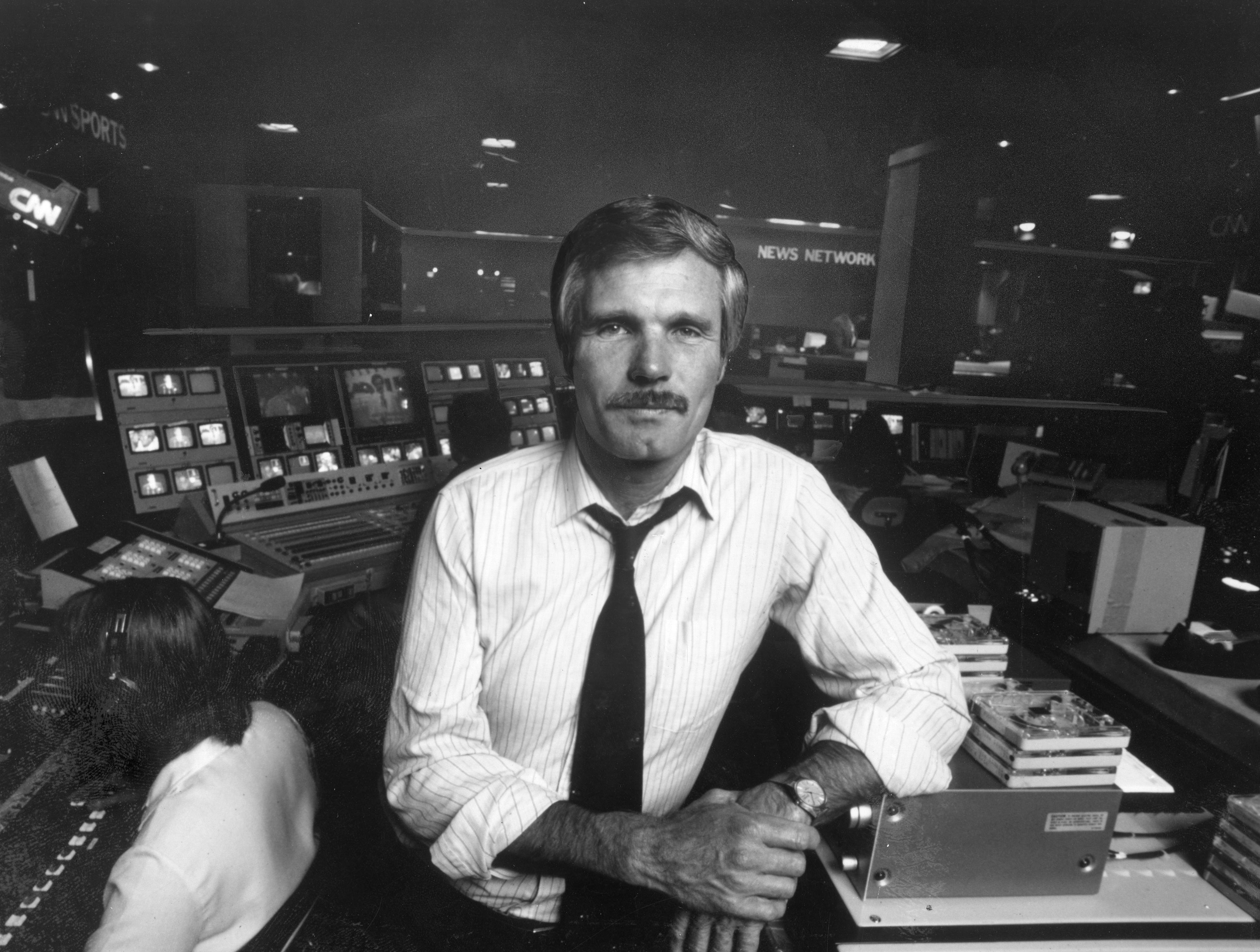
Ted Turner was called many things during his 87 years on earth, including “cable pioneer,” “Mouth of the South,” “Captain Courageous,” and, of course, “CNN founder.” All of those descriptors are apt and rightly made it into the many obituaries published following his death on May 6, but Turner’s legacy is not just of a media mogul who created cable news or birthed several other iconic channels. As important as those business accomplishments were, Turner also deserves to be remembered for the role he and his creations played in shaping late-20th-century American culture….
|
|
|
|
|
|
Sign up for Stage Whisperer |
Weekly theater news, delivered a little louder for the people in the back every Wednesday.
|
|
|
|
https://linkst.vulture.com/oc/5703d2ee487ccdf2088b5cd5r5ovd.27u/7eabbb73
|
|
|
|
|








No comments:
Post a Comment
Keep a civil tongue.