Dear Reader,
Every generation experiences a technological breakthrough that changes the course of history.
For our great-grandparents, it was electrification.
For our grandparents, it was the Interstate Highway System.
For our parents, it was the rise of commercial aviation and global telecommunications.
For many of us, it was the internet.
Today, artificial intelligence and quantum computing are emerging as the defining technologies of the next era.
Artificial intelligence is already reshaping how businesses operate, how information is consumed, and how decisions are made.
Quantum computing promises to unlock solutions to problems that today's most advanced supercomputers can’t even solve.
Chasing the Wrong Story
Governments are racing to gain an advantage. Corporations are spending hundreds of billions of dollars.
And investors are scrambling to identify the next Nvidia, the next OpenAI, or the next breakthrough quantum computing company.
But history suggests they may be asking the wrong question…
Because the greatest fortunes of transformational eras are rarely created by predicting the invention itself.
More often, they're created by understanding what the invention requires.
And what artificial intelligence and quantum computing require is an enormous amount of physical infrastructure.
That reality may be setting the stage for one of the most significant commodity booms of the modern era.
The Light Bulb and the Copper Mine
History has a habit of celebrating breakthroughs while overlooking the enormous industrial effort required to make them possible.
We remember Thomas Edison and the light bulb.
We rarely think about the copper mines that supplied the miles of wire needed to electrify cities and homes.
We remember the railroad barons.
We rarely think about the mountains of iron ore and coking coal that became the rails connecting a continent.
We remember Henry Ford.
We rarely think about the steel mills, oil fields, refineries, and pipelines that powered the automotive age.
And we remember the internet.
But we rarely think about the millions of miles of fiber-optic cable buried beneath streets, stretched across deserts, and laid across ocean floors.
Every generation remembers the invention.
Few remember the inputs.
Yet those inputs often become some of the most profitable investments of all.
Artificial intelligence and quantum computing are likely to become the defining technologies of the 21st century.
But before they can reshape society, they must first be supported by an extraordinary amount of physical infrastructure.
And that infrastructure must be mined, transported, manufactured, and built.
The $4 Stock Sitting on a $500 Billion Opportunity
While the world obsesses over AI, almost nobody's asking what powers it.
One tiny company is unlocking an energy market projected to surge from $8 billion to as much as $500 billion.
Its shares still trade around $4.
See why this could be the next great energy boom.
Roads, Rails, and Fiber Optics
When President Eisenhower signed the legislation creating the Interstate Highway System in 1956, most Americans saw it as a transportation project.
In reality, it became the foundation for an entirely new economy.
The roads connected cities, accelerated commerce, expanded suburbs, transformed manufacturing, and changed how Americans lived and worked.
The highways themselves were important. But what happened because of those highways was even more important.
The same thing happened with the internet…
Today, we think of websites, streaming platforms, cloud computing, and social media.
But before any of those businesses could exist, somebody had to lay the fiber.
Millions of miles of it.
Telecommunications companies spent decades building the physical network that made the digital world possible.
Data centers were constructed. Semiconductor fabrication facilities expanded. Power systems were upgraded.
Only after that infrastructure existed did the internet become what it is today.
Artificial intelligence and quantum computing appear poised to follow a similar path.
The software may capture the headlines. But the infrastructure will create the wealth.
The Power Problem
Every discussion about artificial intelligence eventually arrives at the same conclusion…
Power.
Modern AI systems require extraordinary amounts of computing power. Future systems will require even more.
Quantum computing introduces an entirely new set of infrastructure demands, including advanced manufacturing, specialized materials, cryogenic cooling systems, and highly controlled operating environments.
The result is that many technology companies are beginning to behave less like software businesses and more like industrial companies.
Across the industry, hyperscalers are competing for land, power, transmission capacity, and grid access as aggressively as they once competed for computing power.
They’re securing energy contracts. They’re searching for land. They’re funding power generation projects. They’re investing in transmission infrastructure.
They’re doing many of the same things railroads, utilities, and industrial giants did during previous periods of economic expansion.
The future of computing is becoming a story about infrastructure. And infrastructure is ultimately a commodity story.
Pentagon Cover-Up Crumbles!
Get the Ticker Before the Mass Awakening…
Some people will deny this. Most will be too puzzled to act. And a few will get filthy rich.
Because what I’m about to reveal involves a hall of mirrors and a rabbit hole 1000 miles deep, constructed for ONE REASON.
To keep a lid on the World’s Greatest Secret.
Copper's New Golden Age
If there’s one metal positioned at the center of this transformation, it’s copper.
For more than a century, copper has been the foundation of electrification. It carries electricity from power plants to homes, businesses, factories, and data centers.
Artificial intelligence is increasing the demand for electricity…
Electricity requires transmission…
And transmission requires copper.
Every new data center requires copper. Every transformer requires copper. Every substation requires copper.
Every single effort to modernize aging electrical grids requires copper.
The challenge is that new copper supply is becoming increasingly difficult to develop.
Major discoveries have become rarer. Permitting timelines have become longer. Development costs have increased…
And at the same time, demand projections continue to move higher…
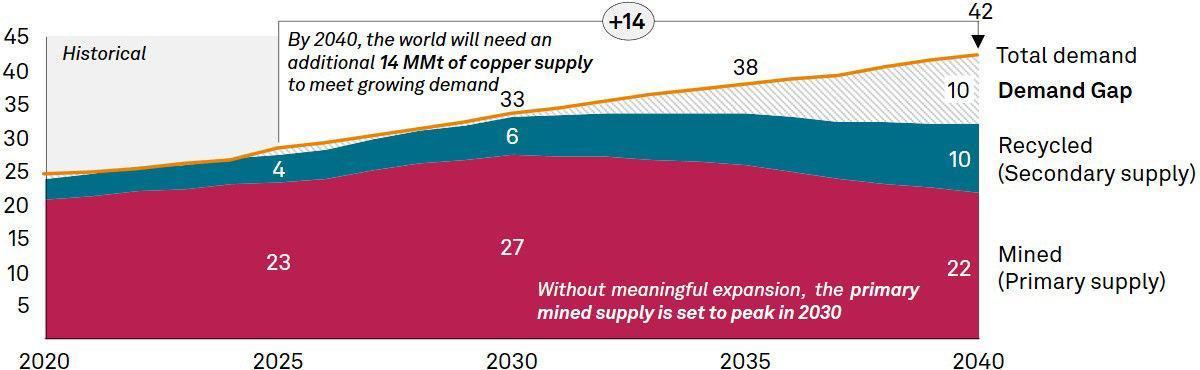
A century ago, oil became the indispensable commodity of industrialization. And copper could very quickly become the indispensable commodity of intelligence.
Uranium's Unexpected Comeback
Not long ago, uranium was viewed as a forgotten commodity, but today, it’s becoming an increasingly important part of the artificial intelligence story.
Because AI requires reliable electricity, and lots of it.
And the world's largest technology companies are discovering that access to consistent power may become one of their most valuable strategic assets.
That reality has renewed interest in nuclear energy.
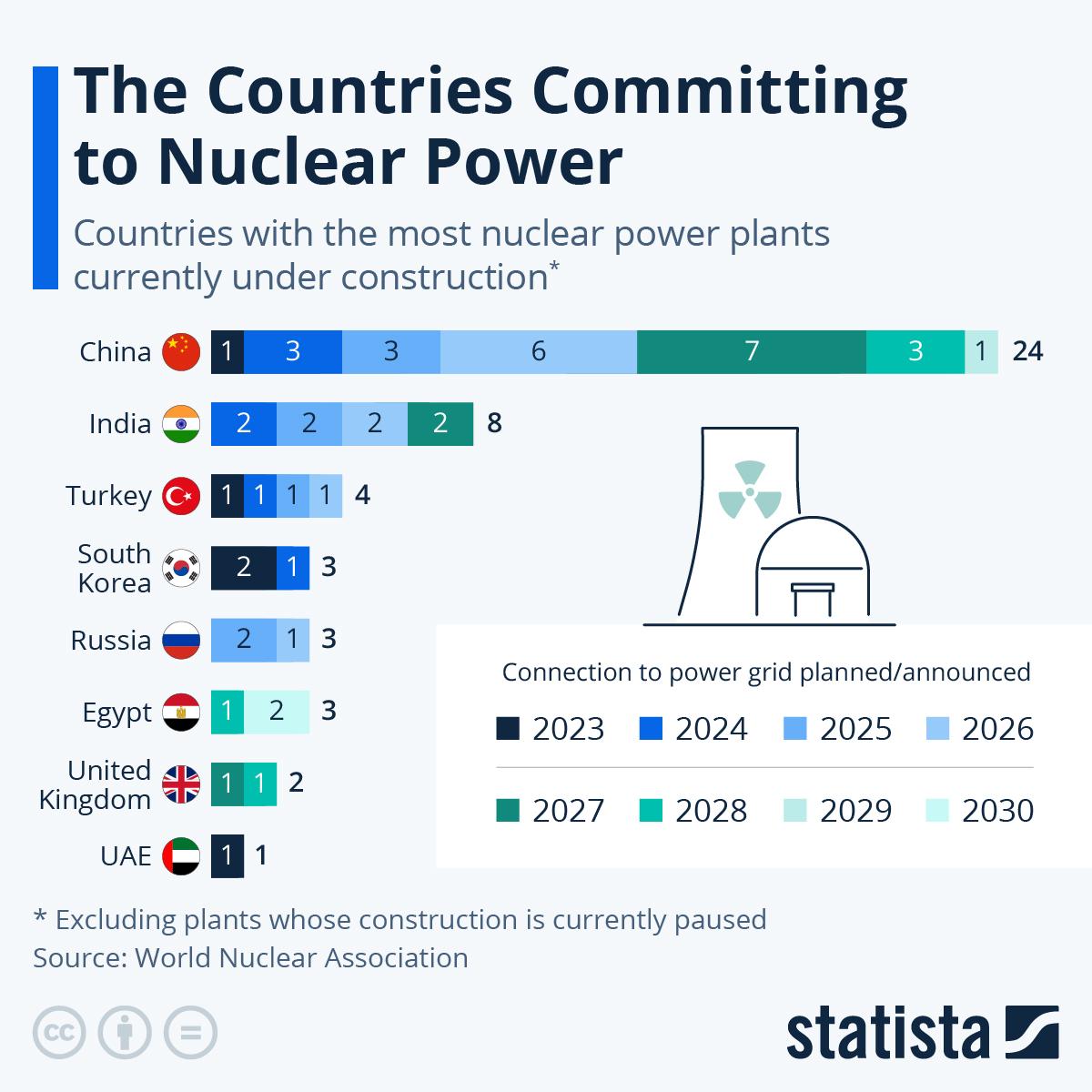
Unlike intermittent power sources, nuclear reactors provide continuous baseload electricity.
Governments recognize its importance. Utilities recognize its importance.
Technology companies are increasingly recognizing its importance.
And every nuclear reactor ultimately requires fuel. That fuel begins with uranium.
One of the oldest commodity stories in the market is suddenly becoming one of the newest.
Trump, Billionaires, and Gold Are Colliding
The U.S. is racing to secure critical minerals. Billionaire investors are already moving ahead of it.
One of them — known as the "Buffett of Gold" — has taken a massive stake in a tiny $2 Alaskan miner tied to both gold and defense-critical metals.
The last time this alignment happened... one stock jumped 260% overnight.
This could be next.
Gold Goes High-Tech
Most investors think of gold as money, but engineers often think of it differently…
Gold is one of the most conductive and corrosion-resistant materials on Earth. It performs exceptionally well in environments where reliability matters more than cost.
That’s why gold has long been used in satellites, aerospace systems, telecommunications equipment, defense technologies, and advanced electronics.
Now, artificial intelligence and quantum computing are expanding the importance of those applications.
Modern processors rely on thousands of precision connections that must transmit information quickly and reliably.
Gold is frequently used in connectors, bonding wires, contacts, and other critical components because it maintains conductivity and resists degradation over time.
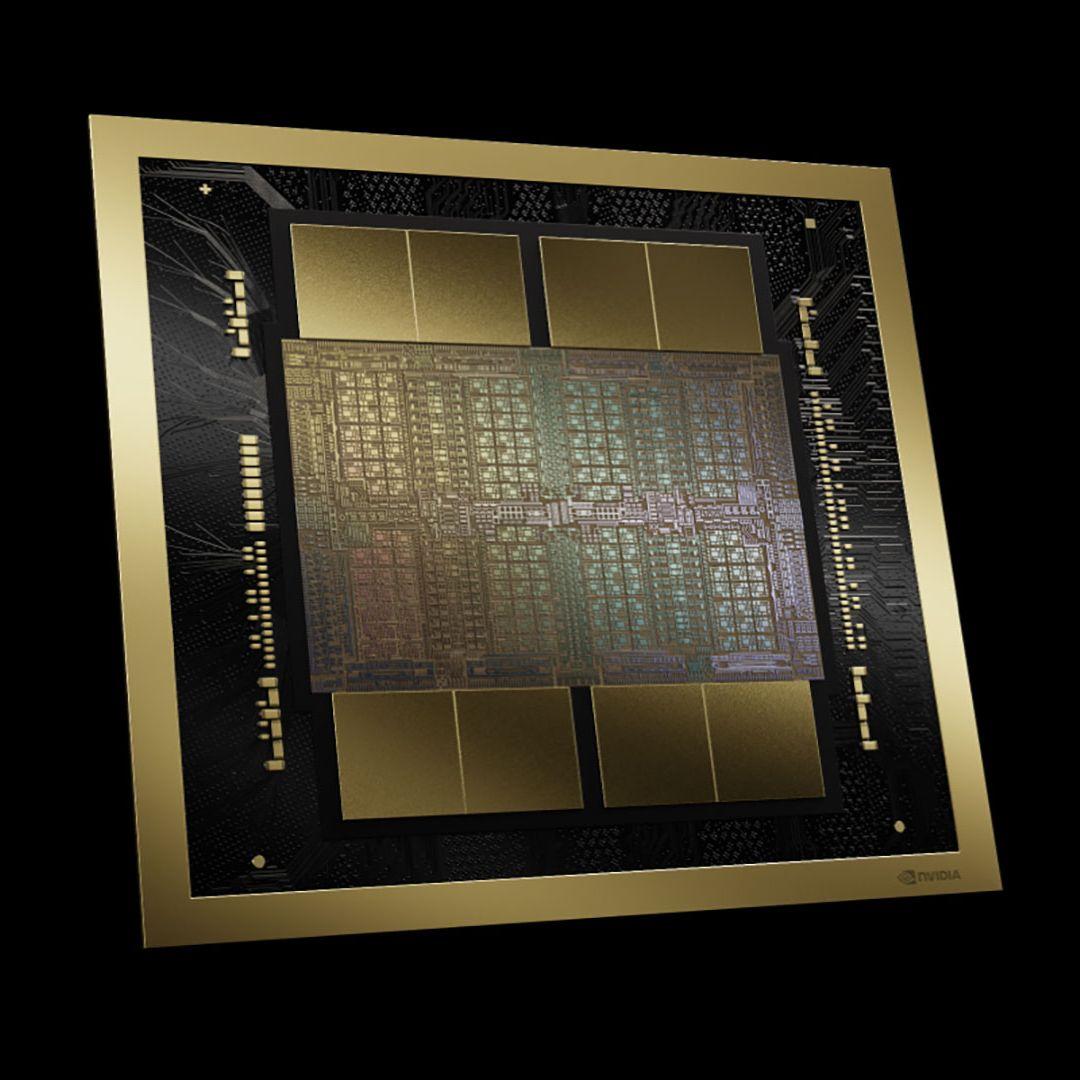
And quantum computing presents an even more compelling use case…
Many quantum systems operate under highly specialized conditions where precision is paramount. Even minor imperfections can affect performance.
Gold's conductivity, stability, and resistance to corrosion make it incredibly valuable in specialized circuitry, sensors, cryogenic systems, and other advanced computing applications.
Now, no one expects AI and quantum computing to consume gold on the same scale they consume copper.
But that misses the point…
The importance of gold lies in its unique properties.
When engineers are building systems worth billions of dollars, reliability often matters more than material cost.
That has been true in aerospace. It’s been equally true in defense.
And it is becoming increasingly true in advanced computing.
The Next Commodity Supercycle
Commodity supercycles don’t emerge because economic growth improves slightly. They emerge because society changes.
Railroads created one. Electrification created another. Postwar industrialization created another. China's rise created perhaps the most recent example.
Artificial intelligence and quantum computing may now be creating the next.
The world is preparing to build new power systems, new transmission networks, new manufacturing facilities, new data centers, new supply chains, and new computing infrastructure.
That process will consume extraordinary quantities of metals, minerals, and energy.
The headlines will continue focusing on software, algorithms, and technological breakthroughs.
But investors should remember the lesson history teaches again and again…
The light bulb needed copper.
The railroad needed steel.
The automobile needed oil.
The internet needed fiber.
And before artificial intelligence and quantum computing can reshape the world, they too must be mined from the ground.
Digging Up the Future
If you'd like to learn more about the companies we believe are best positioned to profit from this emerging commodity supercycle, you can claim your report right here.
Inside, you'll discover our favorite opportunities across copper, uranium, and other essential resources that could help power the next generation of technology.
While most investors focus on the companies designing the future, some of the biggest winners may be the companies supplying the materials needed to build it.
Get your copy now and discover the stocks we believe are positioned to benefit from one of the largest infrastructure and commodity booms of the 21st century.
To your wealth,

Jason Williams
 @TheReal_JayDubs
 Angel Research on Youtube
After graduating Cum Laude in finance and economics, Jason designed and analyzed complex projects for the U.S. Army. He made the jump to the private sector as an investment banking analyst at Morgan Stanley, where he eventually led his own team responsible for billions of dollars in daily trading. Jason left Wall Street to found his own investment office and now shares the strategies he used and the network he built with you. Jason is the founder of Main Street Ventures, a pre-IPO investment newsletter; the founder of Future Giants, a nano cap investing service; and authors The Wealth Advisory income stock newsletter. He is also the managing editor of Wealth Daily. To learn more about Jason, click here.
Want to hear more from Jason? Sign up to receive emails directly from him ranging from market commentaries to opportunities that he has his eye on.



No comments:
Post a Comment
Keep a civil tongue.